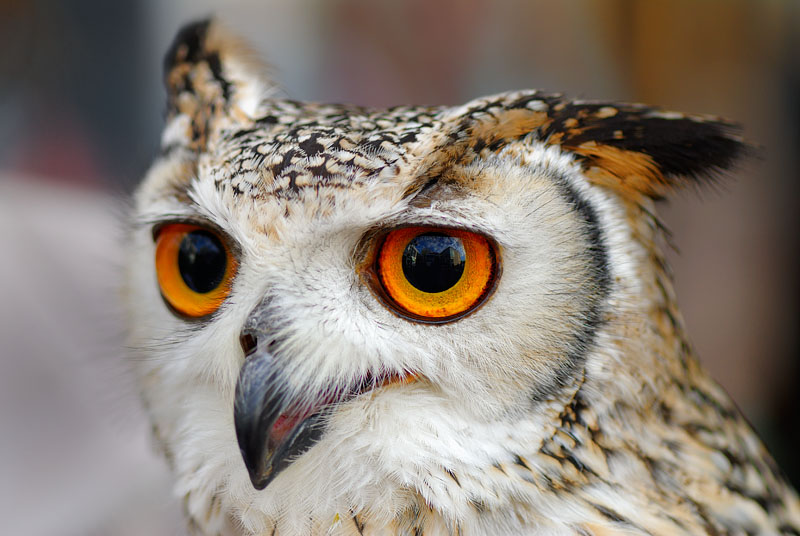
Anyone been to a bird of prey centre? Lens advice please!

Joe T

TPer Emeritus
Messages
15,801
Edit My Images
Yes
Ladybird and I are doing a bird of prey session in the next few months. We are trying to figure out what gear to take for photos! Basically we will have two bodies plus one lens each ( or more?) from the following:

17-55 2.8
18-70
18-105 vr
105 2.8
70-200 2.8
70-300 vr
120-300 2.8 plus 1.4x
400 2.8 vr plus 1.7x (tc can also be used on 70-200)

Any thoughts anyone? Cheers!
 
Hi Joe,

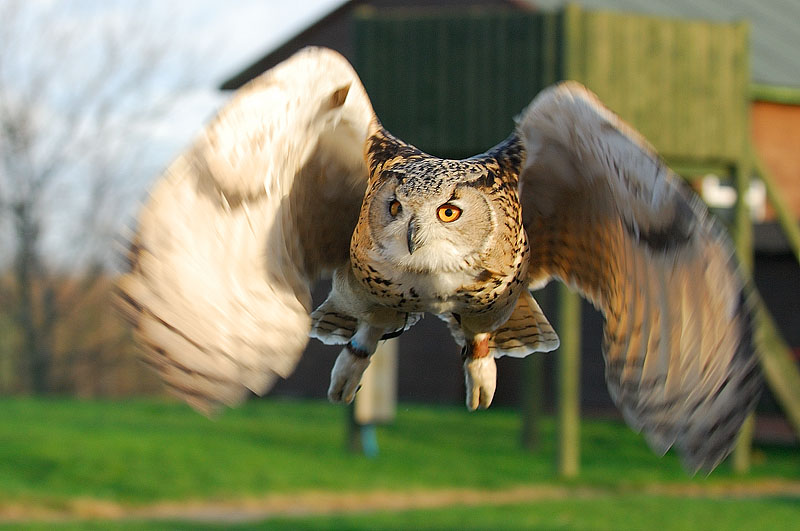
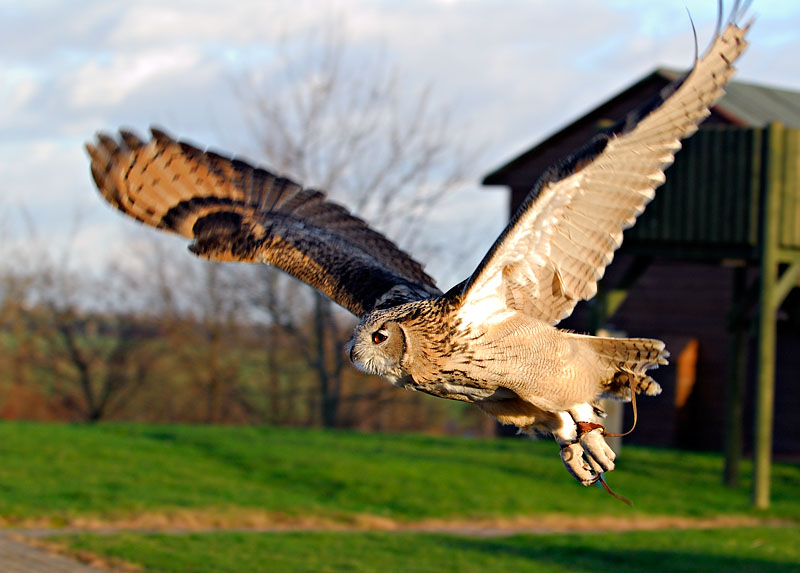
I used a 70-200 at the Shuttleworth BOP centre, they actually fly the birds straight at your head so AF speed is more important than length :D


twit.jpg
 
+1

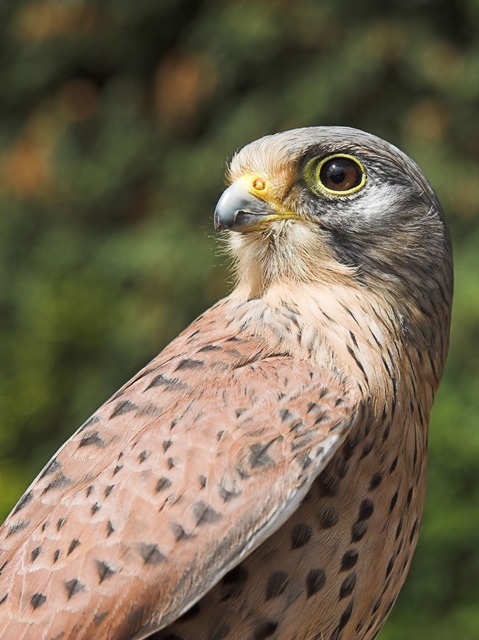
I would go with your 70-200 f2.8 - the fast max aperture will help the AF. I go to the Raptor Foundation near St. Ives regularly so have literally 1000+ examples from there.

A friend with a D300 came with me last time I was up there. Based on that experience, maybe keep to the centre focussing points. The 3D AF system can end up focussing on a near wingtip at such close range if you are not careful.

Don't expect a lot of keepers first time round, it does take a lot of practice.

Check out my picasa gallery for examples - mainly with the Zuiko 50-200 SWD - which focusses very quickly.

_X046584.jpg
 
Nikon 70-200 VR:


364873134_c9dbd547ef_o.jpg


367240374_6b8e7d8468_o.jpg


297510388_447f4a1abb_o.jpg


(the old unfashionable 70-200 VR)

And a nice macro lens:


305743541_6c20ada549_o.jpg


Don't think you'll need much longer than 200mm, maybe chuck a TC in the bag.
 
17-55 and 70-200mm will cover the lot.
I found i was using a Tammy 17-50mm at the display stage when i was last at one.
 
Perhaps the 105 prime for portraits as well as the 70-200...

_X045660.jpg
 
Andy (Puddleduck)

Nice to see your pics at the RF - fancy a meet-up some time?

Andy
 
Andy (Puddleduck)

Nice to see your pics at the RF - fancy a meet-up some time?

Andy

Yeah, I'm up for that - myself and the other Andy here (MScotts) were trying to get something going a while back here. Group meet IIRC.
 
Yeah, I'm up for that - myself and the other Andy here (MScotts) were trying to get something going a while back here. Group meet IIRC.

I'm pretty much free all the time (I don't work), so just PM me if you get a date sorted, I'll probably be able to make it!
 
Joe...do you mind if I ask ?

- you all seem to have fast zooms

my starting kit is........

Sigma 17-70mm f2.8-4.5
and Nikon 55-70mm f4-5.6 *VR*

Planning a visit to the Scottish Deer Centre - will these be ok ?
 
Joe...do you mind if I ask ?

- you all seem to have fast zooms

my starting kit is........

Sigma 17-70mm f2.8-4.5
and Nikon 55-70mm f4-5.6 *VR*

Planning a visit to the Scottish Deer Centre - will these be ok ?

Did you mean the 70-300 f4-5.6 VR? Or the 55-200 f4-5.6 VR?

If so, that should be okay for deer and fine for birds on a bright day - the AF will be a bit more hesitant on a dull day or nearer to sunset (A friend has a D300 and has used the 70-300 lens for BIF)

Andy
 
I see from your camera bag you meant the 55-200 - that should be fine.
 
I see from your camera bag you meant the 55-200 - that should be fine.

thanks -- yes typo - its the 55-200 VR

only interested in BIF
technical point explanation please - why does a fast lens AF quicker - as stated above ?
 
thanks -- yes typo - its the 55-200 VR

only interested in BIF
technical point explanation please - why does a fast lens AF quicker - as stated above ?

Before you press the shutter, the lens is 'wide open' - aperture isn't closed. Faster (aka brighter or lower max f number) allow more light for the AF sensors to work with. More light means more signal, more accurate AF...

There is also 'faster' in terms of how fast the lens can change focus. Often the newer ring motors (i.e HSM, USM, SWD, AF-S ... blah de blah) can change focus faster than the older micromotors. This isn't always true though. Some ring motors are comparatively slow (e.g. Canon 100-400 or the Sigma 150-500) and can be beaten on speed by micro-motor designs.

Andy
 
There is also 'faster' in terms of how fast the lens can change focus. Often the newer ring motors (i.e HSM, USM, SWD, AF-S ... blah de blah) can change focus faster than the older micromotors. This isn't always true though. Some ring motors are comparatively slow (e.g. Canon 100-400 or the Sigma 150-500) and can be beaten on speed by micro-motor designs.

Andy

You're not confusing the 100-400 with the 85, are you? The 100-400 always seemed to be pretty snappy, to me.
 
You're not confusing the 100-400 with the 85, are you? The 100-400 always seemed to be pretty snappy, to me.

It 'snaps' to focus quite well, but relatively, isn't that fast a focusser. There are loads of them around. Almost everyone who has a Canon and does wildlife (and hasn't the budget for humungus prime) has one. It's a relative thing. It's not as fast as the 70-200 (either version) or, say, the 300 (either version). The 100-400 has a ring-type motor, but it isn't that fast.
 
It 'snaps' to focus quite well, but relatively, isn't that fast a focusser. There are loads of them around. Almost everyone who has a Canon and does wildlife (and hasn't the budget for humungus prime) has one. It's a relative thing. It's not as fast as the 70-200 (either version) or, say, the 300 (either version). The 100-400 has a ring-type motor, but it isn't that fast.

I was questioning your assertion that there are faster micro-motor lenses. I've had quite a few Canon lenses and cannot think of a micro-motor lens that is faster to focus than the 100-400.
 
I was questioning your assertion that there are faster micro-motor lenses. I've had quite a few Canon lenses and cannot think of a micro-motor lens that is faster to focus than the 100-400.

I don't know about Canon micro-motor lenses, but the old version of the Zuiko 50-200 f2.8-3.5 (the non-SWD version) on my E-3 focussed faster, as does the Zuiko 300 f2.8. I'm basing this on folks using the 100-400 on both a 5D and a 40D - the focussing when you had birds flying at you (i.e. so the bird-camera distance changes the most in the shortest time). Using the Canon 70-200 f4, it was fine - the lens and camera combos could keep up. Using the Zuiko lenses (both micro-motor), in the same situation, it was also fine. The 50-200 SWD (Olympus's ring-motor system, different from the Canon system in the way they modulate the ultrasonic waves and that there are two motors, not one, so it is really very quick) is obviously faster than the micro-motor Zuiko lenses.

That doesn't eliminate differences in bodies, I appreciate. What I do know is the bigma (which uses Sigma's HSM ring motor) focusses significantly more slowly on the Olympus E-3 than the other micro-motor lenses I mentioned.

Not very scientific, but I'm just saying that micro-motor doesn't always mean slow and ring motor doesn't always mean fast.

Andy
 
I can certainly agree with you there.

It is certainly true that the fastest micro-motor drive lenses are faster at refocussing than the slowest ring motor lenses. As to whether there are any micro-motor driven Canon lenses than can refocus faster than the slowest Canon USM lenses, I have no idea! :thinking:
 
It is certainly true that the fastest micro-motor drive lenses are faster at refocussing than the slowest ring motor lenses. As to whether there are any micro-motor driven Canon lenses than can refocus faster than the slowest Canon USM lenses, I have no idea! :thinking:

As I alluded to earlier, the 85 f/1.2 takes a couple of days to drive from one end of its focus range to the other.
 
As I alluded to earlier, the 85 f/1.2 takes a couple of days to drive from one end of its focus range to the other.

:D

Long-live focus-limiting switches!

Edit: Thinking about it, the 85 f/1.2 has such shallow DOF, that it makes sense that each focus 'increment' would be really, really small, hence end-to-end is a lot of increments!
 
I go to the same place as Andy every now and then. I tend to use my 70-200 with a 1.4TC on my FF bodies. So I guess that's about the same as you using the 70-200 without a TC. HTH
 
I go to the same place as Andy every now and then. I tend to use my 70-200 with a 1.4TC on my FF bodies. So I guess that's about the same as you using the 70-200 without a TC. HTH

Pretty much!

Longer reach would be nice for when the falcons go very high up, but for 90% of the time, the 70-200 range is ideal.
 
:D

Long-live focus-limiting switches!

Edit: Thinking about it, the 85 f/1.2 has such shallow DOF, that it makes sense that each focus 'increment' would be really, really small, hence end-to-end is a lot of increments!

I think that it's more to do with the amount of glass that needs to be moved.
 
I think that it's more to do with the amount of glass that needs to be moved.

True, but it's still less than a 500/4 or a 300/2.8.
 
When I met with Yv and another friend from a different forum a few years ago, I used everything from 12mm up to 300mm. IIRC, I had the 12-24 on the D200 most of the time, unless I had swapped it over for the 18-70. The D70 had the 70-300 VR on it all the time.

877448223_e4ad228941_o.jpg
 
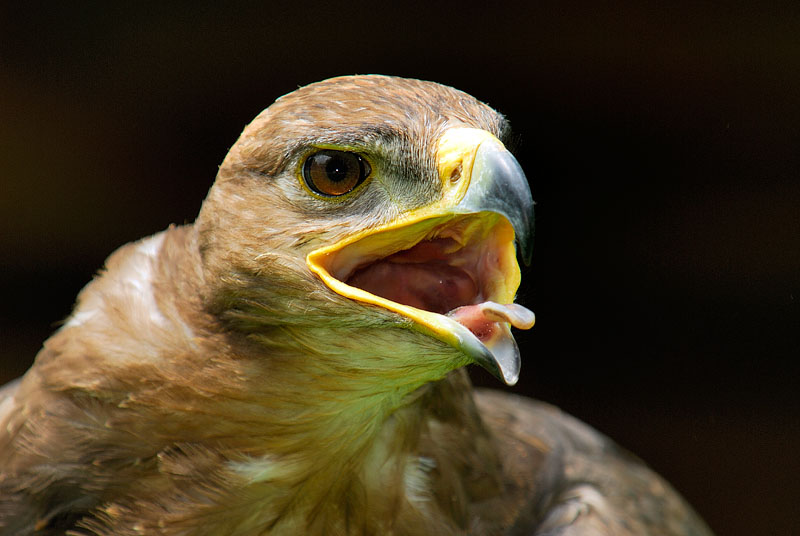
70-200 and the 105 macro for close work with plenty of detail.
 
Thanks for all the advice! I'm really looking forward to seeing some owls closer than the wild ones, I might try for mostly portraits and close ups leaving the majority of the flight shots to Joe, (will make my kit bag lighter to carry too :D)
 
Back
Top