Best for Aviation?

Messages
328
Edit My Images
Yes
Which would you say is the best camera?
It will be used solely for taking pictures of aviation/airplanes/helicopters etc

Sony A200
Sony A300
Pentax K10d
Samsung GX10
Olympus E510
Olympus E520
Panasonic G1


They will be with the normal kit lens and a telephoto lens (50-200mm)

I havent included Nikon or Canon as i want image stabilization in the body.

The only downside i have seen with the a300 is the viewfinder is very small compared to the a200 due to the live view

Cheers
 
For aviation you want very good autofocus.

I would check out the capabilities of each one you are looking at. I would also consider a longer telephoto for aviation.
 
I think it is more down to the quality of the lens on the camera than the camera itself to a large degree with the cameras you are looking at.
 
I was steering more towards olympus as the crop factor means i will get more focal length but they all come with only 3 autofocus points and the viewfinders are tiny arent they?
 
Why do you specifically want stabiisation in the body?
 
Why do you specifically want stabilisation in the body?

To save money, as indicated by the choice of bodies.

With Pentax it also, of course, reduces shake on the excellent current medium/short primes that are available.

Trap-focus is a possibility for manual focus lenses with Pentax. The K10D/GX10 do not have the fastest focus capabilities, but not all aviation photography requires it.

If I were the OP I'd go for a 2nd-hand Pentax/Samsung with the aim of moving on to the Pentax K-7 when the price has dropped. Unless restricted by work requirements, I would strongly advise against limiting the type of photography.
 
To save money, as indicated by the choice of bodies.

With Pentax it also, of course, reduces shake on the excellent current medium/short primes that are available.

Trap-focus is a possibility for manual focus lenses with Pentax. The K10D/GX10 do not have the fastest focus capabilities, but not all aviation photography requires it.

If I were the OP I'd go for a 2nd-hand Pentax/Samsung with the aim of moving on to the Pentax K-7 when the price has dropped. Unless restricted by work requirements, I would strongly advise against limiting the type of photography.


I'm a Samsung GX10 owner and find the camera excellent for my requirements, landscape photography...must admit though that against the competition it doesn't stand up well for "action" shots and I would be more tempted to go Canon/Nikon if that type of photography was my main requirement...as mentioned though, the forthcoming K7 seems to have resolved any current weaknesses in the Pentax line-up so should be on your list if time isn't of the essence

Simon
 
Personally I would go for the Sonys or the Oly 520.
The Panasonic is a Micro 4/3 & there are currently very few native lenses for that mount so it kind of loses the advantage of being small (& assuming that you want that).
of those left the A200 has the best viewfinder, decent AF, decent fps & it's cheap which leaves you more money to improve your glass.
btw the Sony 70-400mm G SSM is imo the new best allrounder lens for aviation photography bettering the Canon 100-400mm L IS which again imo has held that place for many years.
 
I think most people would say the lens is the first consideration for aircraft, and that it needs to be longer than 200mm.

I would also question the need for in-body stabilisation. It seems unnecessarily limiting, and in-lens is better.
 
I think most people would say the lens is the first consideration for aircraft, and that it needs to be longer than 200mm.

I would also question the need for in-body stabilisation. It seems unnecessarily limiting, and in-lens is better.

Not really, you can shoot aircraft with a 200mm lens. Took this the other day, 200mm.

ci_001.jpg


Aviation Photography Article

In body IS works extremely well. This photograph of a great horned owl was taken with an E-520 at 1/50 f/5.6 at 150mm (equiv. 300mm) handheld at ISO 200. It was a basic kit lens which costs next to nothing. Without the in body IS this photograph would be very hard to achieve handheld. In body IS is a useful, very attractive feature and one that can save the user a lot of money compared to other manufacturers in lens stabalization.

gho_001.jpg


Dan.

EDIT: 1500 posts! Woo!
 
I would say go for either of the Sony's but then I am biased as I own the A350 ;) :lol:

Not really, you can shoot aircraft with a 200mm lens. Took this the other day, 200mm.

ci_001.jpg


Aviation Photography Article

I agree, to a point. Focal length depends solely on where you are in relation to your subject, so a long focal length is not always needed, but having longer than 200mm will always come in handy from time to time.

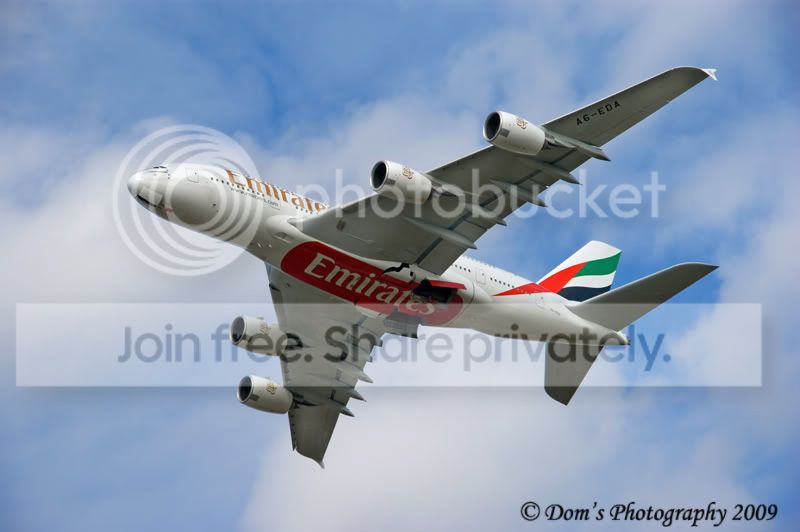
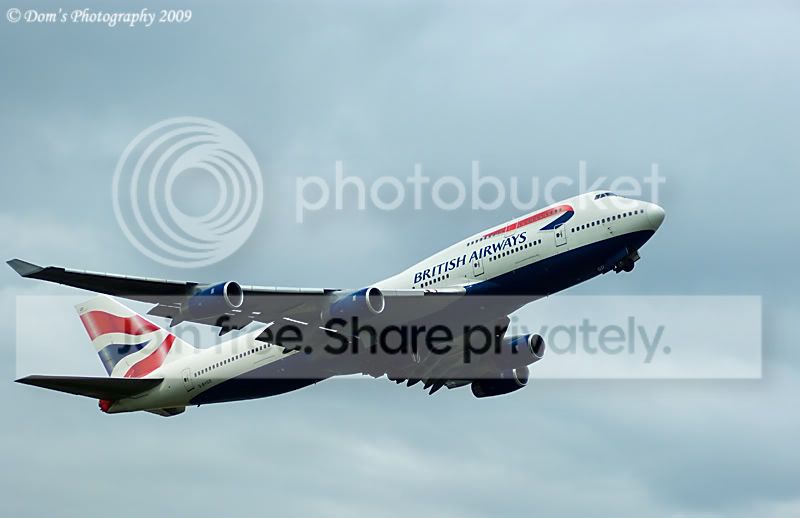
It took these two shots a few weeks back. The A380 was shot at 70mm and the 747 at 110mm.

AirBusA380HeathrowTakeOff.jpg


DSC05945.jpg
 
of those left the A200 has the best viewfinder

Is that from just the Sonys and Olympus? The Pentax/Samsung has a better, brighter pentaprism viewfinder, with better magnification (than the pentamirror-equipped A200).
 
I think most people would say the lens is the first consideration for aircraft, and that it needs to be longer than 200mm.

The OP mentions a kit lens, so static displays probably need catering for, too.

I would also question the need for in-body stabilisation. It seems unnecessarily limiting, and in-lens is better.

In what way "limiting"? It expands the range of lenses, both available and affordable, with stabilisation.

In-lens stabilisation is better in some respects (e.g. steadying the view in the viewfinder) but given a choice of otherwise equal lenses is its "betterness" worth the extra?
 
Your unlikelyto need stabilisation for aviation. Myself, Xup, Markjayne and many others have chosen Nikon setups for aviation stuff especially low flying aircraft.

The D300 or the D3 if you can afford it are picks of the bunch atm in my opinions - spectacular AF!

Length wise it depends what your mean by aviation but if your looking at UK airshows, your going to want 300mm or longer imho
 
Quote:
Originally Posted by HoppyUK
"I would also question the need for in-body stabilisation. It seems unnecessarily limiting, and in-lens is better."

In what way "limiting"? It expands the range of lenses, both available and affordable, with stabilisation.

In-lens stabilisation is better in some respects (e.g. steadying the view in the viewfinder) but given a choice of otherwise equal lenses is its "betterness" worth the extra?

In-camera stabilisation is limiting in that it rules out the two major manufacturer's cameras from the options list. There is a reason why they use in-lens stabilisation - because it's better. And most of the time, the cost penalty is small.
 
I have an A200 and my dad has a Nikon D60 and the A200 was a LOT better at focusing on the planes.

Quick and accurate focus is as much to do with the lens as the camera.
 
IronHammer its alright posting images of aircraft at airports, usually it more excessible to got closer to the action and the subject is usually large.

Your A380 shot for example. At Farnborough last year when the A380 was taking off, 70mm gave me the undercarriage, but in the air I needed a 300mm lens because the aircraft aren't allowed to fly close to the crowd line, something aircraft don't have to worry about at a commerical airport.

If the OP wants to take shots at airshows etc then we are talking alot smaller subjects, usually going faster than a standard jumbo jet taking off from an airport and a 200mm lens will not cut the mustard.

The most used lens is something like the canon 100-400mm for aviation, or one of the sigma variants on a budget.

300mm lens + 1.4x TC (Shoreham)
IMG_3566_edited-2.jpg


300mm lens (Biggin Hill)
IMG_1951_edited-3.jpg


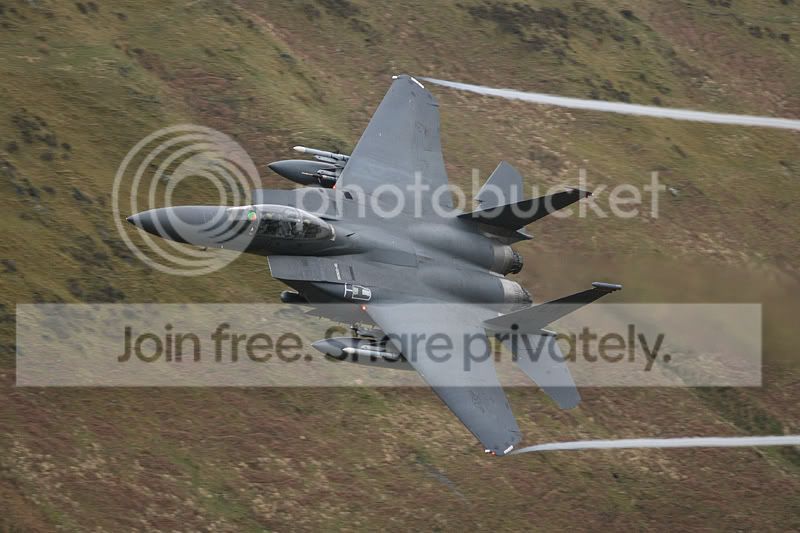
300mm lens (Mach Loop)
IMG_3792_edited-2.jpg


Can't comment on the camera's, have never used or owned any of these brands, so will not comment, inbuilt image stablisation are not being adopted by the main 2 manufactures and live view can not be seriously used for aviation/motorsport photography, primarily used for indoor studio work.

Peter
 
Quote:
Originally Posted by HoppyUK
"I would also question the need for in-body stabilisation. It seems unnecessarily limiting, and in-lens is better."


In-camera stabilisation is limiting in that it rules out the two major manufacturer's cameras from the options list. There is a reason why they use in-lens stabilisation - because it's better. And most of the time, the cost penalty is small.

If im honest i didnt believe that quote until i have read some reviews on Nikon D80 vs SOny A350 and it does look like lens based IS is much better than body based.

The shots from the Sony looked so blurry at a low shutter speed.

Im in a dilemma now as i only have about £370 to spend and the only Nikon i can afford that comes with a VR lens is the D60 which i dont want due to it having no in body af motor.

I can get a Sony A200 with twin lens (18-70 and 75-300) for that money or a Samsung Gx10 twin lens for the same.

The only nikon is the d60 and the only canon is 1000d (which i dont want due to no spot metering)

ARRRRRRRRRRRRRGH!!!!:bang::bang::bang:
 
If im honest i didnt believe that quote until i have read some reviews on Nikon D80 vs SOny A350 and it does look like lens based IS is much better than body based.

The shots from the Sony looked so blurry at a low shutter speed.

Im in a dilemma now as i only have about £370 to spend and the only Nikon i can afford that comes with a VR lens is the D60 which i dont want due to it having no in body af motor.

I can get a Sony A200 with twin lens (18-70 and 75-300) for that money or a Samsung Gx10 twin lens for the same.

The only nikon is the d60 and the only canon is 1000d (which i dont want due to no spot metering)

ARRRRRRRRRRRRRGH!!!!:bang::bang::bang:

If it helps, I would also say that spot metering is not what you want to shoot aircraft. Get your meter reading off the grass or something else mid-grey, check and adjust against the histogram, and nail that manually. IMHO spot metering is mainly a marketing gimmick, as unless you have a really tiny spot, like 1 degree angle of view, it's not really spot anyway. Folks that have come from film often seem to like it for some reason, but each to their own. Bottom line is that spot is not the best way to go, unless it is very narrow and every aircraft is perfectly 18% grey.

Now you have introduced a tight budget, that changes things. I still think that the lens is the most important bit, so I would choose that first. Since it's quite likely to be third-party considering the budget, then you can get it to fit any camera. Sony A200 is exceptional value.
 
Massive difference...

Sony....

Nikon....

I assume you're showing the bad camera shake in the Sony image? But that has also had a lot more exposure, perhaps a longer shutter speed?
 
Well i know £370-£380 will get me any of the cameras in the first post i made. What canon or nikon with a vr/IS lens would that amount get (dont mind second hand in good condition)

Cheers
 
I assume you're showing the bad camera shake in the Sony image? But that has also had a lot more exposure, perhaps a longer shutter speed?

They have both had identical shutter length. Its on this review..

http://www.digitalreview.ca/content/Sony-Alpha-A350-Compared-to-Nikon-D80-pg1.shtml

It says the Sony is.. Sony A350K SLR lens kit, 200 ISO, Shutter Priority 1.6 sec at F8, Steady Shot On, 50mm, AWB

And Nikon... Nikon D80 with AF-S 18-55mm VR lens, 200 ISO, Shutter Priority 1.6 sec at F10, VR On, 48mm, AWB

And both were.. The shooting parameters were; shutter priority exposure mode set to 1.6" sec with full area evaluative metering, ISO set to 200, Auto WB, and standard processing.

Cheers
 
If im honest i didnt believe that quote

I have to say I agree with Lens stabilisation should be better
AS the movement is greater, the longer the lens (physical length not focal), at the front element. The nearer the stabilising is to this point the better it can compensate it.
If it’s in camera then there will be less movement at the point of the stabilising.
And is the stabilising is digital then forget it. The best stabilising is optical in the lens
 
They have both had identical shutter length. Its on this review..

http://www.digitalreview.ca/content/Sony-Alpha-A350-Compared-to-Nikon-D80-pg1.shtml

It says the Sony is.. Sony A350K SLR lens kit, 200 ISO, Shutter Priority 1.6 sec at F8, Steady Shot On, 50mm, AWB

And Nikon... Nikon D80 with AF-S 18-55mm VR lens, 200 ISO, Shutter Priority 1.6 sec at F10, VR On, 48mm, AWB

And both were.. The shooting parameters were; shutter priority exposure mode set to 1.6" sec with full area evaluative metering, ISO set to 200, Auto WB, and standard processing.

Cheers

I would call that evidence, not necessarily a verdict. But if you push it to extremes, then in-lens should beat in-camera stabilisation.

But all these things are secondary to getting a quality image in frame. And with a generally distant subject like aircraft, that's a lens job. With the right lens, I would be quite happy to use any of the cameras you've listed, in preference to a posh camera with a second rate lens.
 
I suppose you could always take a tripod anyway couldnt you?

My local airfield has a tower where you can clime to the top of it with railings around and take pics there.
 
Is that from just the Sonys and Olympus?
yes, because I had already ruled out the Pentax/Samsungs.

and in-lens is better.
No, it's not.

Your unlikelyto need stabilisation for aviation. Myself, Xup, Markjayne and many others have chosen Nikon setups for aviation stuff especially low flying aircraft.
& I know plenty of aviation photographers (professional & amateur) who use Canon & Nikon stabilised lenses so they obviously see some benefit as they coughed up extra ££s for it.

Quick and accurate focus is as much to do with the lens as the camera.
Nikon's AF is better once you graduate to the likes of the D300 but at entry level Sony's is 1 of the best & better than the Nikon 1 used in the D40/D40X/D60 line.

Massive difference...
can you post the link to the full review?
there are so many variables (lens, file settings, processing software etc. etc.)
I don't believe that stabilisation would have been used in that situation so you can't consider it a test of stabilisation systems. If the test used stabilisation on whilst mounted on a tripod that's their error,
if they did it hand-held then how reproducible is a 1.6s shot, there is plenty of room for a discrepancy between the 2.
Also notice the difference in the basic lens quality, the Nikon is noticeably better (at least on 10Mp v14Mp) but then it's a newer design (which I imagine that the new Sony 18-55mm kit lens will catch up with. The Nikon has also used F10 with the Sony at F8 so there is a DoF difference.
 
Well i know £370-£380 will get me any of the cameras in the first post i made. What canon or nikon with a vr/IS lens would that amount get (dont mind second hand in good condition)

Cheers

Have you looked at the secondhand market, you can get a decent camera, canon 20D for example for £200-250, leaving the rest for a budget lens. Unfortunately your budget doesn't leave too much room to manouvre, but with a budget of less than £400, I think 2nd market might be the way to go.
 
Just been on the net and had a look round for prices and cant see how i could get a nikon or canon with vr/is for my money (apart from d60 and 1000d but then only got 18-55)
 
Out of interest, what sort of aviation photography are you thinking about? Maybe I'm missing something here, but I'm struggling to think of a situation where IS is an absolute must-have when photographing aircraft.
 
Maybe I'm missing something here, but I'm struggling to think of a situation where IS is an absolute must-have when photographing aircraft.
it's not an absolute must have but it's definitely a cherry on top ;)
Imagine standing at the fence with a 400mm lens taking a picture of something on the flightline or holding for departure, during most of the year in the UK it's going to be gloomy, you are probably limited to a max. aperture of f5.6 so you aren't going to get great shutter speeds & camera shake (especially if there is a breeze) is a definite possibility.
I agree that if you are panning that it's not a necessity.
 
Just been on the net and had a look round for prices and cant see how i could get a nikon or canon with vr/is for my money (apart from d60 and 1000d but then only got 18-55)

Check out these links.

new
http://www.camerapricebuster.co.uk/index.html

used
http://www.camtechuk.com/
https://secure.ffordes.com/index.htm
http://www.mpbphotographic.co.uk/
http://www.mifsuds.com/acatalog/ActChange.htm
http://www.parkcameras.com/Article/88/Used-Equipment.html

As I said before, your budget doesn't leave you very much room to manouvre, but it is possible, saw a canon 20D (£249) and Sigma 135-400mm (£199), so not far off your budget.

Peter
 
Out of interest, what sort of aviation photography are you thinking about? Maybe I'm missing something here, but I'm struggling to think of a situation where IS is an absolute must-have when photographing aircraft.

General Aviation (light aircraft)

I am learning to fly myself and just love the whole GA thing.
 
Out of interest, what sort of aviation photography are you thinking about? Maybe I'm missing something here, but I'm struggling to think of a situation where IS is an absolute must-have when photographing aircraft.

I think you have a point Chris. Stabilisation is not at its best when tracking a fast moving subject, and you're not panning in order to deliberately unduce an impression of speed with a slowish shutter. There's no substitute for a fast shutter speed. I'd rather wack up the ISO to get that.

I'm a big fan of IS but it's not a universal solution. I'd even go so far as to say that some stabilisation systems wouldn't take to it and would be better turned off.
 
Back
Top