Can you still get slightly OOF/burred pictures with a VR lens?

Messages
4,367
Name
Steve
Edit My Images
Yes
Can a VR lens give you slightly OOF/blurred pictures.. I know that its supposed to help with having to "hand hold" a camera with out the need for a tripod.. But I'm wondering if you can still get slight OOF pictures..

Just that I was out in the garden as finally got some blue tits, robins & sparrows visiting the "caged nuts" & "fat balls" that have been hanging in there for the last 3 weeks instead of the pesky starlings & pidgeons/wood doves..

So thought that I pop a couple whilst they were feeding, & its just that a few pictures seemed sharp & a few not so sharp..

The lens in question is a Nikon 70-200 VR...
 
forgot to add that it has got a "B+W 77mm 010 UV - haze 1x MRC" filter on the front of it... Which I purchased from a member on here (TP) & not ebay...
 
What sort of shutter speed were you using? VR isn't going to help with fast moving things like birds.
 
Post some examples with intact exif data.

Any lens can give oof results if used outside a set of parameters.
 
VR/IS will help prevent blur caused by camera motion due to hand holding at slow shutter speeds. It doesn't have any effect on subject motion. With the birds you need a high shutter speed to stop their motion.
 
What sort of shutter speed were you using? VR isn't going to help with fast moving things like birds.

VR/IS will help prevent blur caused by camera motion due to hand holding at slow shutter speeds. It doesn't have any effect on subject motion. With the birds you need a high shutter speed to stop their motion.


Thanks for that as I was in a way wondering....

Post some examples with intact exif data.

Any lens can give oof results if used outside a set of parameters.

This is one of them... Its been cropped to fit..


The first one looks soft alright - I'd put money on camera-shake on that one regardless of shutter-speed.
The second one is back-focussed - look at the bright green leaves above and to the left of the feeder.

Shooting through a bunch of foliage doesn't exactly help matters either...
 
Even with VR 1/30 of a second is way to slow, especially for small fast moving birdies

Up the shutter speed quite a bit and you will cure it

For those shots I would not use the VR .
 
The first one looks soft alright - I'd put money on camera-shake on that one regardless of shutter-speed.
The second one is back-focussed - look at the bright green leaves above and to the left of the feeder.

Shooting through a bunch of foliage doesn't exactly help matters either...

Rob when you say that the #2 is "back focused" wouldn't that happen to all pictures thou ... & does that mean that I will need to get the lens sorted out :shrug:

Even with VR 1/30 of a second is way to slow, especially for small fast moving birdies

Up the shutter speed quite a bit and you will cure it

For those shots I would not use the VR .

Cheers for that Mark much appreciated :thumbs:
 
Not necessarily - the AF may have just 'missed' the target slightly - it happens - no AF system is foolproof and the subject here is about as tricky as it gets - all similar hues, tones and not much contrast - with a lot of clutter around your subject.
Shooting 'through' cover is an aquired skill and AF doesn't always cut it.
We teach our surveillance guys to shoot on MF in situations like these - there's no difference between small birds at 30m and large tanks at 300m.
This is definitely one occasion I'd be shooting MF to be honest, since you're in a static location and the feeder isn't going anywhere in a hurry.
 
For Birds it's almost imperative to have your shutter up at 1/125th or faster and use centre focus.

I don't know how you set that on a Nikon but only your centre spot should flash to comfirm focus.

Taking pictures of birds is as hard as hell and takes loads of practice. I am still amazed by some of the shots I see and I have been photographic our feathered friends for a couple of years now.

It's largely hit and miss getting your subject in focus.

:D
 
Not necessarily - the AF may have just 'missed' the target slightly - it happens - no AF system is foolproof and the subject here is about as tricky as it gets - all similar hues, tones and not much contrast - with a lot of clutter around your subject.
Shooting 'through' cover is an aquired skill and AF doesn't always cut it.
We teach our surveillance guys to shoot on MF in situations like these - there's no difference between small birds at 30m and large tanks at 300m.
This is definitely one occasion I'd be shooting MF to be honest, since you're in a static location and the feeder isn't going anywhere in a hurry.

Cheers for that Rob - much appreciated - I'll have to try & get used to using MF....


For Birds it's almost imperative to have your shutter up at 1/125th or faster and use centre focus.

I don't know how you set that on a Nikon but only your centre spot should flash to comfirm focus.

Taking pictures of birds is as hard as hell and takes loads of practice. I am still amazed by some of the shots I see and I have been photographic our feathered friends for a couple of years now.

It's largely hit and miss getting your subject in focus.

:D

Cheers Chris,

I've recently in the last few weeks started to use just the single focusing point - its a blessing to read that it is a case of "hit & miss" getting them in focus as was worried that it was down to me or the lenses...

I must admit that trying to shoot these little buggers is a task & a half - :shake: they just dont seem to stay still long enough :p & I take my hat off to those that manage to bag "that shot" with them..

Like many say & I have said it myself - "practice makes perfect"


Cheers thou guys - comments & advice is & very much appreciated :thumbs:
 
Those who photograph birds on a regular basis might have better ideas, but if I were going to do this sort of thing with no prior experience of it (sorry - wildlife doesn't do it for me, but the techniques don't change) - the situation you have is where I'd start:
Pre-focus on a known point - the feeder. Make sure shutter-speed is high enough to capture any movement you're interested in, but slow enough to show a tiny bit of motion blur on wings - otherwise they'll look like stuffed-birds in a display cabinet.
Make sure you have enough DoF to cover a couple of inches either side of the feeder to allow for positioning errors by the birds...

Shoot LOTS...
 
2 very small points

on the D40 - I use the thumbwheel to pick the focus point of your choice

on low contrast images - like #2 brown bird - the AF may wander [and pick up the leaves]
as Rob^^says use MF
 
Cheers John...

Will have to get in to MF.. but am too used to AF tbh, mainly as to get a shot of them before they fly away....

Saying that thou, lately they have been staying a bit longer so will try MF on them..
 
I don't want to start an argument but I never use MF, the bird will be gone before you get it in focus.

Just use centre spot focusing, I'm told Nikons focusing is faster than Canons.

If you use centre spot the camera shouldn't focus on anything around the bird itself, and if it does then it's jsut hard luck, you wait and take another shot.

4455752160_1a794c3f51_o.jpg


Bird photography is similar to shooting motor racing, you either get the shot or don't but given 2 minutes the bird will be back again.

It's down to perseverence and good luck.

A little bribery does also help :D
 
I don't want to start an argument but I never use MF, the bird will be gone before you get it in focus.

I dont think that you will or have, any comments are more than welcome Chris...

Prob why I mainly use AF is for the reason that they are gone before I get to get them in focus.... Then again I should really get used to using MF thou & not let the camera do everything for me - not so much for the birdies but for other things as well...

I had to MF with a film camera so really should use it at some stage with a DSLR..

Just use centre spot focusing .. If you use centre spot the camera shouldn't focus on anything around the bird itself, and if it does then it's jsut hard luck, you wait and take another shot.


Started to do this ( in the last few weeks) & have waited for their return, which is usually when I put the camera down :lol:


Bird photography is similar to shooting motor racing, you either get the shot or don't but given 2 minutes the bird will be back again.

It's down to perseverence and good luck. A little bribery does also help :D

Have noticed that as well... Crafty little sods thou :lol:

Thanks for your input, its much appreciated by me .....
 
For grab-shots AF all the way - I was assuming a static stalk or hide situation where you deliberatly set out to take images of birds. - Settle-in with the camera on a tripod and a thermos-flask etc...
Pre-focus the camera then watch through binos or a spotter-scope with a cable-release in one hand.
It's how I used to do covert surveillance in NI...lol
 
Arkady

LOL I think we are talking about birds here not strange people dressed in black carrying AK47's.

Mind you if the day ever comes when a Bluetit turns round and points something at me I may poop my pants.

I'm just about to try some thethered shooting experiments that will mean I can get the camera closer to the subject. I think then I may try MF and do the waiting thing.

Most of my shots have been with the 100-400L handheld, I just couldn't manual focus fast enough in this situation.
 
lol...it was more a case of pre-focussed on someone's window or doorway with a 600mm and 2x converter...
You can't sit with your eye to the viewfinder for more than a few minutes and sometimes we'd be there for days...
 
Generally speaking a stabilised lens allows you to go about 2 stops slower with your shutter speed than you'd normally be able to manage hand held. Sometimes you can go a bit slower still and get away with it but it's luck you're then relying on - not technique.

Don't forget that stabilisation only stops camera movement, and it wont do anything at all to freeze subject movement, so despite having VR or IS you need to be keeping your shutter speed up freeze the movement of those small birds which are usually very animated.

Always use a tripod if possible, because more than anything it relieves the fatigue of hand holding a heavy lens for long periods and with a prooper head, makes tracking of those very small targets in your viewfinder much easier. It's all too easy when hand holding to get your AF spot off the bird and onto the background just at that crucial moment as you press the shutter.
 
Generally speaking a stabilised lens allows you to go about 2 stops slower with your shutter speed than you'd normally be able to manage hand held. Sometimes you can go a bit slower still and get away with it but it's luck you're then relying on - not technique.

Don't forget that stabilisation only stops camera movement, and it wont do anything at all to freeze subject movement, so despite having VR or IS you need to be keeping your shutter speed up to freeze the movement of those small birds which are usually very animated.

Always use a tripod if possible, because more than anything it relieves the fatigue of hand holding a heavy lens for long periods and with a prooper head, makes tracking of those very small targets in your viewfinder much easier. It's all too easy when hand holding to get your AF spot off the bird and onto the nbackground just at that crucial moment as you press the shutter.
 
Cheers for that CT... Seems like that I will have to invest in a tripod, not that they really appeal to me as I prefere a mono-pod...

Will look at gettin one with some feet - shouldn't have sold my last one comin to think about it now :lol:
 
LOL. You don't see weedy little pros lugging great heavy tripods around because they enjoy it. ;) A really good tripod will do more for your shots than most other more glamorous bits of kit you'd usually prefer to buy first, but it's the item most people resent spending the wonga on.They tend to finally invest in a decent set of legs after trying all the cheaper options. I was no different.:shrug:

Nobody relishes the idea of lugging a tripod about with all the rest of the gear you have to carry, but for seriously tackling bird photography with anything near consistant results it's essential.
 
LOL. You don't see weedy little pros lugging great heavy tripods around because they enjoy it. ;) A really good tripod will do more for your shots than most other more glamorous bits of kit you'd usually prefer to buy first, but it's the item most people resent spending the wonga on.They tend to finally invest in a decent set of legs after trying all the cheaper options. I was no different.:shrug:

Nobody relishes the idea of lugging a tripod about with all the rest of the gear you have to carry, but for seriously tackling bird photography with anything near consistant results it's essential.


:suspect: So my little Tech-Trek T'pod doesn't cut the mustard then... It does stand quite high with the tube attached..... & stuck on a table :lol:
 
LOL. Hardly. The thing is to enjoy it as you try to improve . More than anything else try to get that AF spot on the eye of the bird, or on the head at least. Ultimately there's just no substitute for a decent tripod and a gimbal head, but unless daddy's in merchant banking, most of us have to acquire the gear as and when we can.
 
You've got both camera shake and missed focus there :( And the light's not too good either, pushing your shutter speed far too low.

Get closer, don't crop, high shutter speed, AF with centre point on the eyes - DoF will be too shallow, you'll never do it with manual focus. It's damn near impossible with a crop format DSLR anyway.

It's not easy!
 
CT

What you've said is true... & advice/comments are truely welcomed & noted & are very much appreciated...

:thinking: Must get Pap's into banking or the OH saying that :lol:

I do enjoy most forms of photography & so am not really set on one particular subject - but do like the wildlife that were trying to "persuade" into the garden thou..

Now that I will be starting work again come Monday.... Equipment will be back on the agenda (said whilst OH is making a cuppa & not reading over my shoulder) :lol:
 
You've got both camera shake and missed focus there :( And the light's not too good either, pushing your shutter speed far too low.

Get closer, don't crop, high shutter speed, AF with centre point on the eyes - DoF will be too shallow, you'll never do it with manual focus. It's damn near impossible with a crop format DSLR anyway.

It's not easy!


Cheers Richard
 
Rob,

You spent a bit of time in Northern Ireland? Don't hold it against me, but I hail from that part of the world. I'm not living there any more though.
 
South Armagh and Belfast mostly... 3 tours... thank God we're all mates now...:thumbs:

On my last trip to new York I bumped into three minor 'players' working door-security at a nightclub (presumably PIRA had R&R as well...lol)...
Once the surprise had worn off (I was with the Missus as well) we had a nice little chat 'outside the box', so to speak...
 
CT

What you've said is true... & advice/comments are truely welcomed & noted & are very much appreciated...
Well you're doing something right anyway - the D300S is definitely the right camera from the Nikon stable to tackle bird photography. :thumbs:

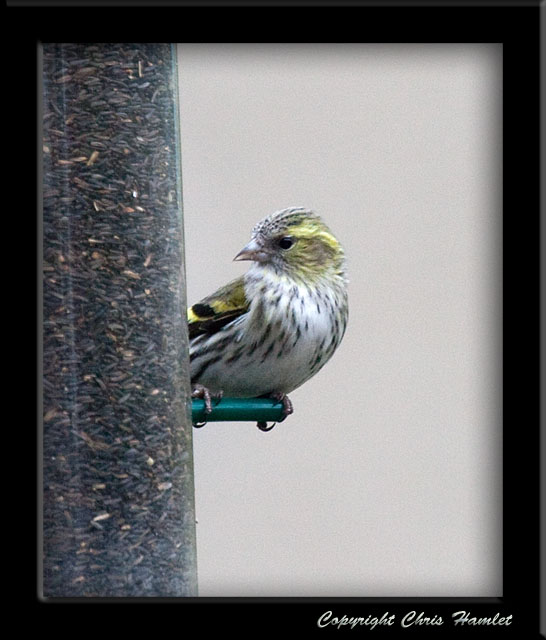
To answer your original question about VR - this shot was taken tripod mounted on a gimbal head, with a 500mm lens wide open at F4, 800 ISO, and the shutter speed was 1/200th sec - just not fast enough to feeze that sudden movenent of the bird. IS was enabled but obviously could do nothing to help in this situation.

4693375738_4a5f08f928_b.jpg
 
Yes Rob, it's nice that things have calmed down.

Believe it or not, the 'Brits' were made feel relatively welcome in my neck of the woods (West Tyrone) by the everyday man on the street.

I don't regret moving away from there though. Great country but the same old attitudes are still there and are holding back the potential of the place, in my view. I do love hearing stories from 'the other side of the fence' as I know someone through my current line of work who was working under cover over there years ago.
 
Well you're doing something right anyway - the D300S is definitely the right camera from the Nikon stable to tackle bird photography. :thumbs:

To answer your original question about VR - this shot was taken tripod mounted on a gimbal head, with a 500mm lens wide open at F4, 800 ISO, and the shutter speed was 1/200th sec - just not fast enough to feeze that sudden movenent of the bird. IS was enabled but obviously could do nothing to help in this situation.

Thanks for posting the pic - as that has explained & helped alot... As I thought that it may have been the lens... I have a few (well alot) that came out like that & thought it was a prob with the lens not being able to "nail" it as so to speak...

I feel rather relieved as well that its not just me, not getting them in focus in shot...

Thats a weight & half on my shoulders now

Cheers CT :thumbs:
 
.
I see that CT says " IS was enabled"
I dont know about Canon but the Nikon suggestion is that when a camera is FIRMLY clamped on a tripod, the VR system looks for vibration, doesn't find any, and goes into a mental meltdown and then makes some.....:thumbsdown:

I CANNOT find this in writing at Nikon USA - might be one of those urban myths

like girls who wear red shoes........:naughty:
 
Canon also advise that when on a tripod their IS lenses are switched to non IS.

Crop frame or not makes no difference to your shots, I started with a Canon 350D then went to a 40D and now use a 5D2.

I actually miss the crop factor for Birdies as now my 100-400L is just that and suffers loss of reach.

Photographing our fine feathered friends just takes practice and patience. Try all sorts of settings until you hit the jackpot, but patience is a virtue you will have to learn.

:D
 
.
I see that CT says " IS was enabled"
I dont know about Canon but the Nikon suggestion is that when a camera is FIRMLY clamped on a tripod, the VR system looks for vibration, doesn't find any, and goes into a mental meltdown and then makes some.....:thumbsdown:

I CANNOT find this in writing at Nikon USA - might be one of those urban myths

like girls who wear red shoes........:naughty:

When they refer to 'on a tripod' they mean with the head locked off and releasing the shutter with a remote release, when obviously there's no movement to be detected anyway and IS is pretty pointless. Earlier versions of Canon IS as still fitted in the 100-400L can actually cause corrupted images if used in this fashion, or even sustain damage to the IS system if IS isn't switched off.

The 2nd generation of Canon IS though, automatically detects the presence of a tripod by there being no detectable movement, and automatically disengages the IS system.

When we're talking about bird photography from a tripod though, we're invariably taking about one hand on the camera, one on the lens and firing the shutter with your finger in the usual fashion, with the camera mounted on a gimbal head.

Think of the tripod used in this way as being similar to a machine gun mount in which it's prime purpose is to relieve you of the weight and to enable smooth tracking of the target because that's exactly the benefit you get, and the IS system is detecting more than enough movement through your hands - no matter how still you think you are- to still be effective.

If anyone doubts that, try this simple test - mount your lens on a tripod and gimbal and focus on some static target holding the camera as still as you can. You'll still see a slight tremor of the image in the viewfinder which is more noticeable the longer the focal length of the lens. Now half press the shutter button and as you hear and feel the IS kick in, the viewfinder image becomes absolutely rock steady.

You can of course argue that if the shutter speed is fast enough it's benefit is questionable, but in the very nature of bird photography you'll be out there in all weathers and all kinds of light, often pushing the envelope with shutter speeds far less than desirable, but if there's movement to detect you can rest assured it will be working away for you and ensuring that at least it wont be your camera movement spoiling the shot.

I can't remember the last time I switched IS off on my long lenses and I don't intend to start any time soon.

Movement of those quick moving birdies is a completely different matter, and IS is never going to help you with that.

 
Photographing our fine feathered friends just takes practice and patience. Try all sorts of settings until you hit the jackpot, but patience is a virtue you will have to learn. :D

Just hope that I can nail it before the end of summer :lol:
 
Nikon recommend you switch off VR if tripod-mounted or supported in any way.
VR is for hand-held (they say).

Dunno about VR-II as I've not used it, but it holds true for VR-I lenses I've used.
 
From the Nikon Knowledge Data Base Rob. Seems the Nikon situation is much the came as with Canon....

Here is what the Nikon Knowledge Database says about this subject:
Question


When using my VR lens on a tripod, do I keep the "VR" On or Off?


Answer
The Vibration Reduction technology built into some Nikon lenses or the COOLPIX 8800 can reduce or eliminate vibration during shooting. When the camera is on a tripod there will be very little (if any) movement so the question arises if VR should be used or not.
There are two techniques when using a camera/lens mounted on a tripod; keeping the pan/tilt head loose or fluid (when panning or moving with a subject) and keeping the pan/tilt head locked down and rigid while using a cable release (time exposures or for the new HDR techniques).


With the following lenses/cameras VR should be "Off" when the camera is mounted on a tripod and the pan/tilt head is locked down and using a cable release:


105mm f/2.8G ED-IF AF-S VR Micro Nikkor
18-200mm f3.5-5.6 ED-IF AF-S VR DX Zoom-Nikkor
24-120mm f3.5-5.6G ED-IF AF-S VR Zoom-Nikkor
70-200mm f2.8G ED-IF AF-S VR Zoom-Nikkor
80-400mm f4.5-5.6D ED VR AF Zoom-Nikkor
70-300mm f4.5-5.6G IF-ED AF-S VR Zoom-Nikkor
Coolpix 8800


With the following lenses/cameras VR should be "On" when the camera is mounted on a tripod and the pan/tilt head is loose (fluid) while using the cameras shutter release button:
105mm f/2.8G ED-IF AF-S VR Micro Nikkor
18-200mm f3.5-5.6 ED-IF AF-S VR DX Zoom-Nikkor
24-120mm f3.5-5.6G ED-IF AF-S VR Zoom-Nikkor
70-200mm f2.8G ED-IF AF-S VR Zoom-Nikkor
80-400mm f4.5-5.6D ED VR AF Zoom-Nikkor
70-300mm f4.5-5.6G IF-ED AF-S VR Zoom-Nikkor
Coolpix 8800


Nikon VR technology in the following lenses can detect minute vibrations that emanate from tripod legs. With the following lenses VR can be "On" when the camera is mounted on a tripod for either technique:


200-400mm f4G ED-IF AF-S VR Zoom-Nikkor
200mm f2G ED-IF AF-S VR Nikkor
300mm f2.8G ED-IF AF-S VR Nikkor


For all lenses VR should be "On" when the camera/lens is used on a monopod
-- From: Nikon Knowledge Database
 
Back
Top