Canon and Nikon

Skies are a perfect example. Colours and the fluidity of colours through the sky in particular. They always seem a little blocky (difficult to describe), as if the range of colours don't flow through smoothly. As if it steps from one colour to another, without the transition in between. That's not something I would attribute to a lens, though I could be wrong.

Blocky skies would suggest (to me) that a high level of JPEG compression was being used - try upping the resolution (I'm a Nikon user so unfamiliar with Canon's terms) as high as it will go and see if that improves the blockiness.

General softness I would put down to lenses rather than the body. Before damning all Canons and/or praising all Nikons, try using an old T2 mount lens on an example of each so you're comparing as closely as possible like for like rather than allowing too many variables to muddy the issue.
 
Everyone is missing a point here.

OP, go out and shoot some shots you think you'd like to keep in RAW. Go home and open them and process them after spending a little while learning the basics of level, curves and sharpening or ask someone to do so for you.

I had a 350D and with a 50mm 1.8 it's capable of incredible shots.
 
Urban Grimshaw said:
You guys have got to be winding me up?

I'm speechless. I have nothing more to say.

Why? We've explained what's wrong, why don't you head out and take some pics bearing in mind the advice re exposure, composition and processing and see what you come up with.

As explained, it does not appear to be the kit that's the issue...
 
Why? We've explained what's wrong, why don't you head out and take some pics bearing in mind the advice re exposure, composition and processing and see what you come up with.

Because exposure, composition and processing have nothing to do with what I'm talking about.

I'd just like a straight answer to the questions I'm posing, not the ones I never asked.

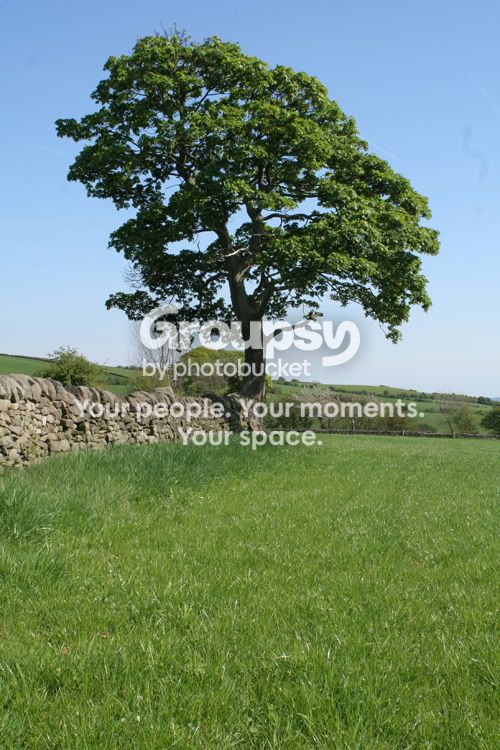
Here's one from today. Totally unprocessed. f16. Canon 28mm Prime. Daylight white balance.
IMG_3357-1.jpg


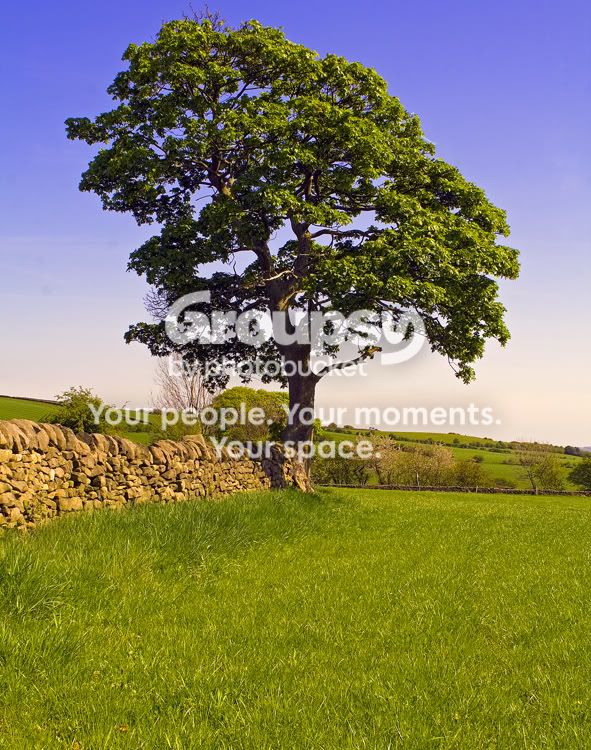
And seeing as you guys insist, here's the processed version - my first time using RAW. I've also been experimenting with smart sharpen over the past few days as opposed to the unsharp mask that I'm used to, and it has been very selective with the sharpening in this instance it seems, but hey ho...more to learn.
tree-1.jpg
 
Last edited:

At f16 on a crop sensor you're well past the diffraction limit of the system and are compromising the sharpness/resolution. f16 isn't needed for that kind of picture anyway, did you choose that or did the camera?
 
Well the image above looks like I might expect and the sharpness looks OK. But I can't say for sure without a 100% crop of the original. I'm actually confused as to what you are asking, if you think there is a focusing issue with the camera (you seem to think its present on all lenses) then shoot a target with it and see if it can focus properly.
 
100% crop of the original..
crop.jpg


I don't believe there's any back/front focus. I've tested it and results were fine. I've tried manually focusing. I've tried everything...which is something people seem to be missing.

I just think they're soft. And perhaps that's exactly how they should be?

It's easy to say it's the user, but I've read a lot of instances of people sending kit back for soft focus issues, to be returned a camera that is 200% better. And quite honestly, I'm unsure if I'm one of those people. I'm unsure if I'll benefit from changing kit, or if this is a level of quality that is acceptable to work with. I feel it could be better, personally...but I have nothing to compare to. That's all.
 
At f/16 there's a good chance they will be soft. For the image of the tree I would be looking to use f/8 at the most. Try shooting some images at f/8 and f/5.6 and see what they come out like.
 
Do this. Take a portrait head shot with your sharpest lens in good light at f8...in fact take several. Focus on the eyes. Then take a 100% crop of the sharpest shot and post it. I'll tell you straight up whether Theres anything wrong with your camera.
 
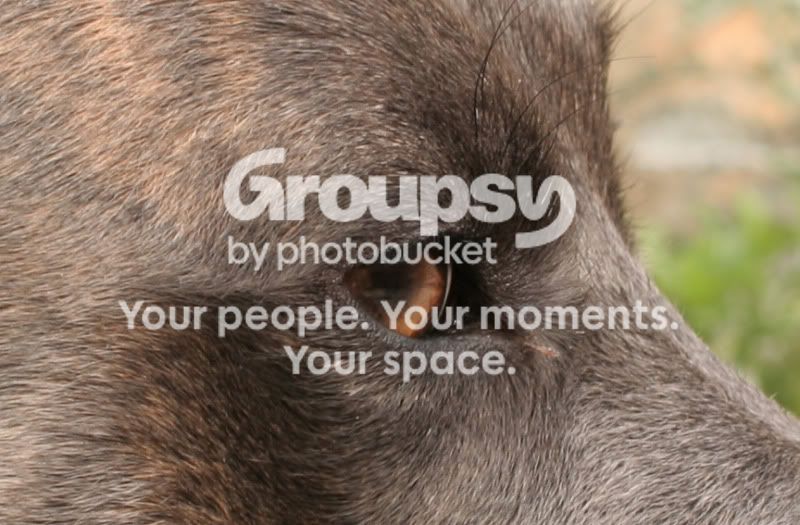
Not the best, I know, but the only subject I have that will sit for the camera is the dog!

f8 - 1/80 - Canon 28mm Prime. Center point focused on the eye. Best of the bunch.
dog.jpg
 
For a 100% crop at f/16, there is nothing wrong with that.

Diffraction softens images at small apertures, generally it becomes visible past f/11.
Either use a larger aperture or just sharpen a little more to compensate.

No other crop camera will handle diffraction noticeably better, the newer cameras with more megapixels actually make it MORE visible at 100% because of higher pixel density/smaller pixels.

Images from all digital cameras (foveon sensors excepted) will look a bit soft at 100% anyway because the camera uses bayer interpolation (link).

Personally, with the proper processing that looks like completely acceptable quality to me.


That dog shot looks perfectly good to me as well. 1/80 is a bit of a slow shutter speed for things like dogs that move, I would up the ISO to 400 or 200 to get speeds that will more reliably freeze motion.
 
Last edited:
Thanks Squishy. If these images look good, that's cool. I've always felt they're very soft, but as I say I have nothing to compare them to. I'm not here to argue, and not asking why my pictures are poor, I'm merely asking why they're soft, and if they're perfectly acceptable, then I'm happy.

If I can improve with a new body, I'd like to know. But if a new body isn't going to make any improvement at all, I'll stick to the one I've got.

Anyway, here's a better image of the dog. Bearing in mind these are all prime lenses. The kit lens is a lot softer.

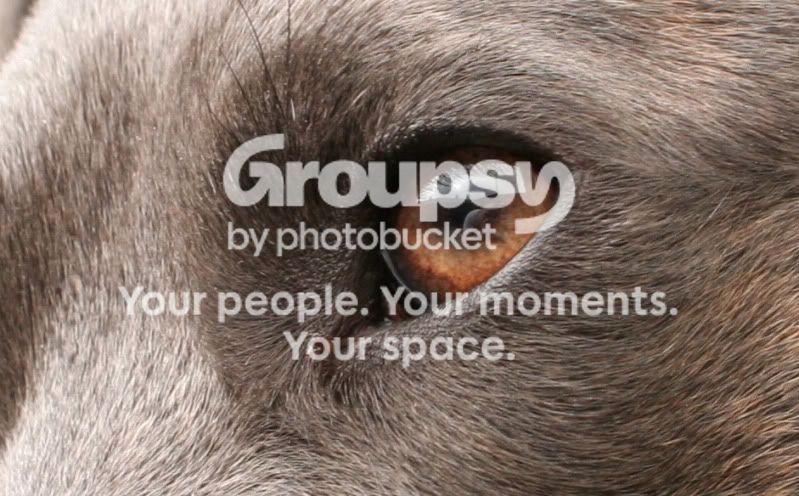
f8 - 1/200 - ISO400. Exif intact.
dog-crop.jpg
 
100%. No resizing at all. Cropped only. No processing. Jpeg - parameters 2 (all jpeg settings set to 0 within the camera).
 
Because exposure, composition and processing have nothing to do with what I'm talking about.

Can you please get it into your *removed* head somehow that these things have EVERYTHING to do with how sharp your images look.

As as has been said by myself and others countless times already,

Over exposure (evident in many of the images you have posted) washes everything out making it look flat, slushy and soft.

Poor composition (evident in many of the images you have posted) means there is no focal point to look sharp, just crap far off in the hazy distance.

Poor or non existent processing (evident in many of the images you have posted) leaves the images looking pretty dull and uninspiring, as they would be from any camera.
 
Last edited by a moderator:
Poor or non existent processing (evident in many of the images you have posted) leaves the images looking pretty dull and uninspiring, as they would be from any camera.

With all due respect fixedimage, the whole point is to show the photographs pre-processed. We're judging the camera, not my photography or processing skills.

Unless you have something constructive to say, zip it :)
 
Poor or non existent processing (evident in many of the images you have posted) leaves the images looking pretty dull and uninspiring, as they would be from any camera.

Ie, there's no problem with your camera.
You've posted crap photos straight from the camera and been told over and over and over that they are just crap photos, not crap photos from a camera that has anything wrong with it.
Not only that but countless people have suggested how you make them less crap.
 
I told you all they were crap photos from the start. I'm not interested in making them better. But thanks for the warm welcome..
 
No, I just want to know how the camera performs in comparison to others. The overall quality of photography is irrelevant. That's another topic...and it won't be with these pictures.
 
With all due respect fixedimage, the whole point is to show the photographs pre-processed. We're judging the camera, not my photography or processing skills.

Unless you have something constructive to say, zip it :)

But pre-processed images will never look good!

They simply wont 'pop' without proper sharpening, contrast, shadow and saturation boost at the very least.

Then you look to dodge and burn etc etc...
 
But pre-processed images will never look good!

That's cool, Odd Jim. That's all I'm looking for. I know they're never gonna pop straight out of the camera. I just thought they were a little below average. But if not, my questions are answered. Thanks.
 
That dog image looks fine. I'd be quite happy with any image that looked that good at 100% and pre-sharpening. Sharpened version.....


dog-crop-sharpen by tonky8203, on Flickr
 
Cheers CT.

I was having a browse though a 7D thread before, with all photos unprocessed. Some of them were a touch soft, and all of them needed a bit of PP to bring them out a bit, but some of them...amazing. Virtually pin sharp from the off. Surely there's got to be some difference between bodies?

Just like anyone else, I'm looking for avenues of improvement, and having already tried the nifty fifty, which is reputed to be sharper than most 'budget' lenses, and then some, I'm unsure if glass is the way to go.
 
Cheers CT.

I was having a browse though a 7D thread before, with all photos unprocessed. Some of them were a touch soft, and all of them needed a bit of PP to bring them out a bit, but some of them...amazing. Virtually pin sharp from the off. Surely there's got to be some difference between bodies?

Just like anyone else, I'm looking for avenues of improvement, and having already tried the nifty fifty, which is reputed to be sharper than most 'budget' lenses, and then some, I'm unsure if glass is the way to go.

My images vary from pin sharp to not -quite -sharp at 1:1 and I can usually judge that the latter will sharpen up easily in post processing anyway. You have to take into account though that you're at the mercy of so many variables - the vagaries of the AF system (locking on to a suitable area with sufficient detail) possible subject movement or camera shake, so even with the best technique in the world there's an element of luck involved, and that isn't going to change with any camera body- you're never going to get that sort of consistency as far as sharpness is concerned.

Remember though that with a 7D, you're looking at a 1:1 image the size of a large table top - very few people are ever going to print at that size or anywhere near it, so while it's nice to see sharp images at 1:1, as images are reduced to more reasonable viewing or printing sizes any slight sharpness issues largely disappear.

Glass in definitely the way to go though for ultimate sharpness and detail.
 
Last edited:
So you just want to take sharp crap photos? Go figure. :bang:

You really need to step away from this thread unless you can stop being abusive. Some of your recent comments are bang out of order.
 
Not the best, I know, but the only subject I have that will sit for the camera is the dog!

f8 - 1/80 - Canon 28mm Prime. Center point focused on the eye. Best of the bunch.
dog.jpg

As a 100% crop from an 8Mp image that doesn't look bad.

Let me dig out some shots from my 20D (Similar sensor) and see what they look like at 100%

BTW, greyhound?
 
Last edited:
Can you please get it into your thick head somehow that these things have EVERYTHING to do with how sharp your images look.

There's no need to be so abusive.
Please consider this a friendly warning. Next time it will attract a suspension.
 
Here is a 100% from one of my 20D shots picked at random

IMG_1530c.jpg


And for comparison, here is the full shot sharpened a touch to counter the web resize down to 800.
IMG_1530.jpg


As you can see the eyes look about like yours did but the overall shot is good.

I'm going to dig out a couple of landscape shots once I've cooked dinner and see how the look at 100% (I've never really bothered with overall sharpness like this, my clients were always happy!)
 
Last edited:
I've no idea what the canon 28mm looks like, but if you have a 50mm f1.8 I'd be interested to see a similar shot. Try to get more shutter speed though so shooting at even f/3.2 should be razor sharp.
 
Landscape time.

Here is one of my images from Buttermere. Nothing special, no tripod, just point the camera and fire the shot.

IMG_4933.jpg

The shot you see above has been sharpened. I ran USM on the whole image with setting 0.8 @ 64% before resizing then afterwards I ran Smart Sharpen with settings 0.3 @ 132%
For web resize I tend to start at 0.3 @ 150% and take it from there.

Anyway, here are a couple of crops from that image before any sharpening was applied - for comparison.

060915_IMG_4933c1.jpg


060915_IMG_4933c2.jpg


Now this shot looks superb as an 20x30 print but when you view at 100% it doesn't actually look that sharp.

Now, I no longer use a 20D, I have a 7D. This camera has a significantly higher pixel count and now I have started looking I see a higher amount of recorded detail. I haven't really used the 7D for landscapes much, but here is one I took on a recent trip to wales (Same lens as before)

IMG_0223.jpg


You will notice the 100% crop area is much smaller in the overall frame that the previous shots.
IMG_0223c.jpg


I used that part specifically to highlight something else - how the light affects the image sharpness. While they both have the same edge detail the part of the tower in the sun just looks sharper on first glance. It has better contrast and that in turn makes the edges more defined. Since sharpness is partially about definition of edges light does have an impact on how sharp an image looks.
 
That's very interesting, Richard. Thanks for that. The one of the dog in particular looks spot on. Do you notice anything in the general image quality of the 7d that is an improvement - at first sight, I mean - or is it much of the same?

I guess from my perspective, how I've looked at it, the 350d is getting on a bit now, and is a pretty young camera in the digital age. One of the early mature dSLRs on the consumer market, I suppose. And technology moves so fast, I assumed image sensors have perhaps came a long way since. But aside from pixel count, I guess the fundamentals are pretty even stevens?

Anyways, despite a few obvious tensions, this whole thread has been very informative and has given me avenues to explore in order to improve my images. Even fixedimage has been helpful in his own little way. Much appreciated guys.
 
The problem is I didn't go directly from 20D to 7D so when it comes to the change I never really saw it. I had a 40D and 50D in between (I know...).

I moved to the 40D for some extra features but at low ISO there was never really much in it for me when it comes to sharpness - but I've always worked in raw and the raw files from canon cameras do need some additional sharpening.

This is do with a fairly strong low pass filter that sits in front of the sensor - the image look softer directly from the camera. But they take a couple of sharpening levels very well - the detail is still there to be brought out in my experience.

Must have been the angle for the shot in our earlier posts - looked like a much longer snout that greys/whipppets/lurhers have. Beautiful hound none the less.
 
I was quite surprised with the RAW files actually. Having never used them before I expected them to be really flat and lifeless. And I assumed the extra work would be a pain. Turns out they look as goos as, if not better than the jpegs..

Just picked up a copy of Amateur Photographer (recommended earlier in the thread). More for the article than the testing. Looks interesting stuff. Cheers for the heads up.

It seems that there's a lot more to it than I ever thought. I've become quite fascinated by it all.

Oh, and the dog does have quite a long snout too, not too dissimilar to a whippet/lurcher. He's just got a fatter face.. You can only see hints of staffy in him, though he's deceptively strong!
 
TBH, I've lost the actual point of this thread, as it's morphed from a sincere (if ill-worded) question into a fight against know-it-alls.

Despite what many people think, there isn't a holy grail' of performance; we just have to deal with what we have at our disposal and hope that in this digital age where improvements come weekly and monthly, we can still keep up with our own expectations as to what is deemed acceptable.

I'd start off by saying that you may be wanting to see too much from your trusty (but dated) 350D, but to counter that, I'd also add that it's not like trying to match the quality of a D3x by using a pinhole. You obviously have a few bits of good glass to go to, but good glass on its own will not be a wholesale fix to issues you have that are based more around inflated expectations than actual real-world results.

You've done yourself no favours posting your first few example shots because A) they weren't that hot, but more importantly B) a lot of TP members want to see masterpieces each and every time and when you do post something a bit naff, it seems to get their photographic hackle up.

However, you've backed it up with some good shots that show you have en eye for things when you want to, which is good news, as it means you're not on a losing battle.

There have been some very salient points made about how bad exposure, poor composition and sub-standard photographic savvy can work against you in any situation. I have it every day when out shooting and unfortunately, none of us are immune to a bit of one (or all three) at some point or another in our shooting lives. I do think that you are being hard on yourself, and in turn, hard on your kit because you are looking at shots that don't have impact and are fundamentally flawed. Post something with amazing composition, attractive DoF and good tonal and colour range and you'll probably think that your gear is more than up to the task. The problem is, I suspect, you're not taking many of these 'amazing' shots so that benchmark, that milestone just seems out of reach. It isn't....well, not if you lets the law of averages work in your favour by getting out there and shooting, shooting, shooting - things will improve the more frequently you push yourself.

And don't think you're the only one who think they have dropped a ballbag; I had a shoot for a very fussy editor today who is a renowned punisher (especially when you don't get what he expects) and the angler I was with had a 41lb carp. It was 6.30am, I was cold and tired, plus the light was pretty dim. My D2x is okay at ISO 800 but for a cover shot of a fish this important, I'd rather go down to ISO 100 but i can't without either overpowering the shot with flash and losing the ambient, or using too slow a shutter speed and getting the shakes. So I underexposed slightly at a compromise of ISO 400, worked on a shallow(ish) Dof and crossed my bits that everything worked. The fish went back after cracking off 30 or so shots, only to chimp them afterwards and they all looked soft on the LCD - pants!! Even though I know LCDs aren't 100 per cent accurate (although my D2x has been better than most) I worried and worried all day about it, always having it at the back of my mind that I'd messed up royally, something i never do because this is what I do and I know I do it well. But when those doubts strike, they fester and your outlook on everything from your ability to the ability of the kit is in question. Anyway, I got home, downloaded everything and went to work in Lightroom. Yep, the raw files look a bit gash and typical of raw files, soft. But a bit of magic with a few custom presets and I got my shot, albeit needing some PS work to remove some reeds. Relieved - I am, but I know that getting a more up-to-date camera would help me. But I don't have the funds, so I'm not going to loose sleep about it. The one thing I will loose sleep about is when I loose that instinct to know how to get around a situation, then I will be scuppered because it will take me some time to get back to the level I know I'm capable of.

Don't sweat it; your gear is fine.....

*BTW, here's a crop of the 'worrying' shot before and after:

laney-crop.jpg


.....and here's the finished full shot (again before and after), albeit run through Photoshop's 'save for web' function which desaturates things a fair bit....

laney-big.jpg


I'm happy. I know the editor will be happy. And ultimately, I'm still happy with my gear, even if I do have to work around certain problems.

 
Back
Top