Diffraction: Does it make a difference in real world shooting?

Messages
7,179
Name
Edward Bray
Edit My Images
Yes
I keep seeing answers in threads about lens quality (which often seems to be aimed at beginners) as to how diffraction softens lens images when you use apertures beyond a certain point and that you shouldn't use them.

This was once again mentioned in a thread this morning.

If this were wholly the case, do you not think that the lens manufacturers would cease to make lenses with very small available apertures? As surely that would save them some money and bring the cost of the lenses down!

So, is it true? Do lenses perform less well at small apertures? The answer is of course YES, but the caveat to that (which is rarely mentioned, if at all) is that Softening due to diffraction only becomes a limiting factor for total sharpness when using a sturdy tripod, mirror lock-up and a very high quality lens.

For normal everyday shooting IT MATTERS NOT A JOT and unless you are a confirmed measurebator (pixel peeper) it certainly should not prevent you using smaller apertures to achieve your desired outcome.

To this end I have undertaken some tests. I have used my Canon 10D a Crop sensor camera (as it is frequently stated that you shouldn’t use lenses with a smaller aperture than f11 on a crop factor sensor), I have put it on a very sturdy tripod (my Manfrotto 058 with 410 geared head) and using a very sharp 24L TSE Mk2 (no tilt/shifts used) with a Canon 1.4x Mk2 extender (this gives in effect a 35mm lens). The reason for using the 24L TSE Mk2 is that it has very little distortion or lens aberrations and is very, very sharp.

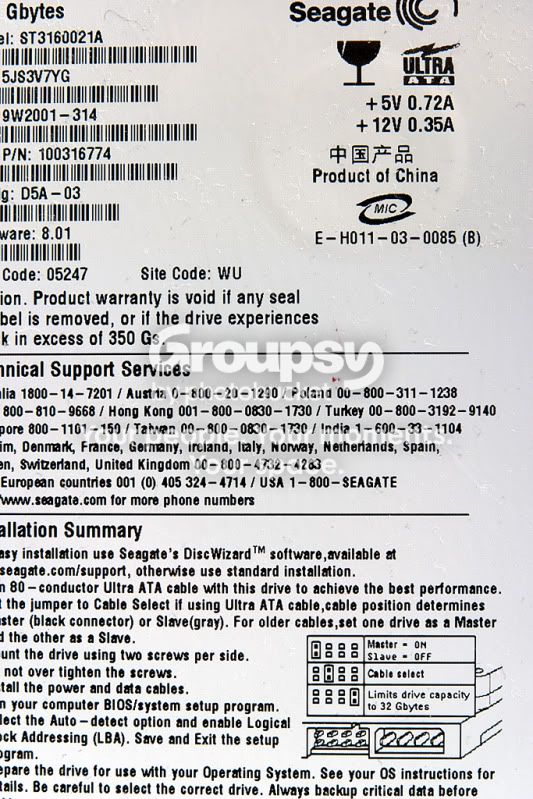
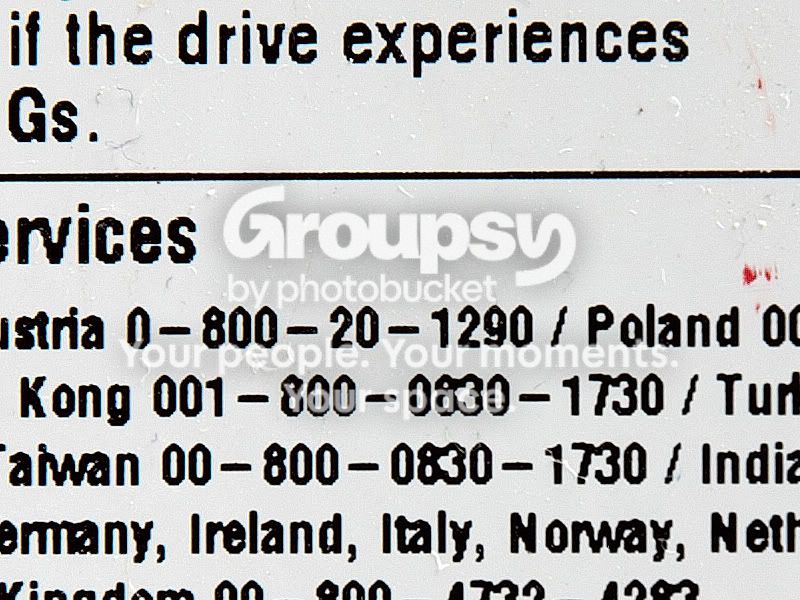
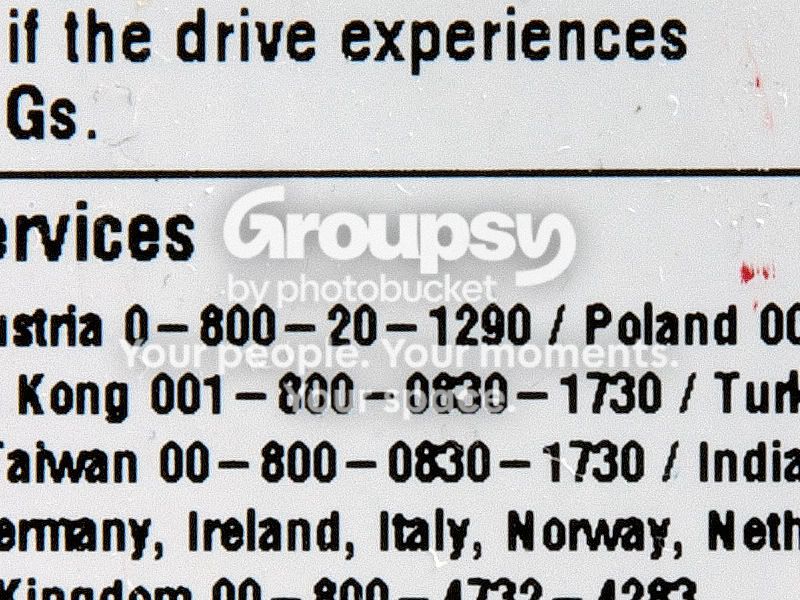
I have taken some images of a the label of Seagate 3.5” Hard Disk at both f5.6 (actual f8) and f22 (actual f32) at almost the minimum focusing distance (which again will make the actual aperture smaller as apertures are calculated for when the lens is set at infinity) and should exacerbate any issues. The images were lit by a softbox on a studio monolight above the Hard Disk, Exif intact.

All images had exactly the same Post Processing.

f5.6 marked
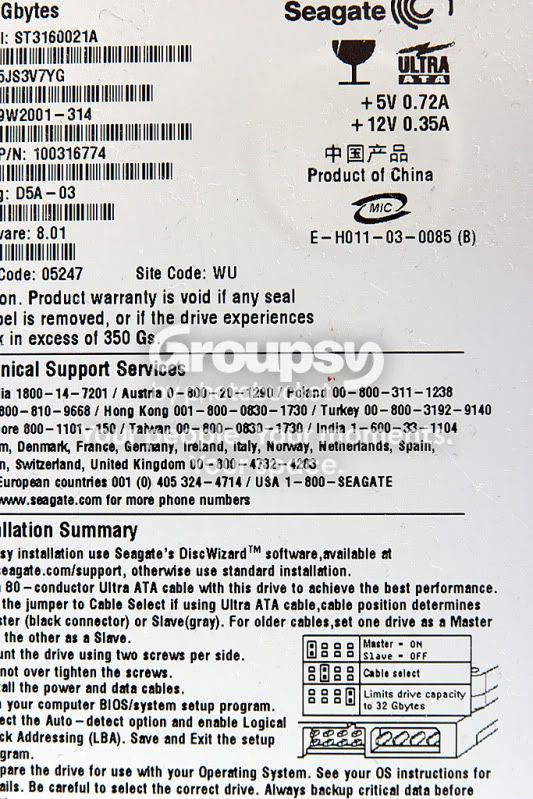
Diffractionf56.jpg


f22 marked

Diffractionf22.jpg


f5.6 marked 100% crop

Diffractionf56100.jpg


f22 marked 100% crop

Diffractionf22100.jpg


So in conclusion:

In actuality is there a difference between the images shot at f5.6 and those shot at f22? Yes, there is, but these images were taken under controlled conditions.

Would you see a difference in normal shooting with a reasonable lens on a reasonable DSLR, very doubtful, and if the difference is between you getting the shot you want or not then it's pretty much a no-brainer.
 
Thanks Ed.

Nice to see that someone takes all the trouble to do these sort of experiments for mere mortals like me.
 
I agree with your results Ed, I always tell people that using small apertures are the difference between a soft shot or no shot whatsoever and it isn't even that soft at f22!

It's the same with ISO, people say high ISO can help you capture in low light conditions but the noise is the caveat however it's the difference between a noisy but clear shot and a non noisy but blurry shot :)
 
Well said - covered well in several of Bryan Peterson's books - the effect of diffraction is minimal, the his shots down at f/32 show no difference until you zoom in beyond about 75% and even at 100% there was nothing really worth mentioning
 
I would have been interested to see the same test using a 18-55 lens without a tele converter, thus not only using the center of the lens
 
I would have been interested to see the same test using a 18-55 lens without a tele converter, thus not only using the center of the lens

I could do it with a 17-40L, I don't own any crop factor lenses as the 10D doesn't accept EFs lenses.

I still think that too much is made of something that may not have that great a bearing on the end result, especially if you are not enlarging your images that much, and in relation to the post this morning the OP (to whom the comment was directed) had a 50mm f1.8 (as well as some EFs lenses) but no caveat was given just a blanket 'don't use apertures smaller than f11 on a crop camera'.
 
I tried this myself today with a 450d and the kit lens 18-55 (heafty tripod) and I can see a difference just looking at the back of the camera (I couldn't download the image to computer as I have been out all day) I'll try and sort it tomorrow, need to eat now:)
 
Fair comment to Ed, but there is a difference, and if you want sharp, then high f/numbers are not the best way to get it. I'm not sure why anyone would actually need to go above f/11 in general picture taking, but if you do, here's what diffraction looks like, regardless of the lens.

This is f/5.6 compared to f/16 on a Canon 50D, using a 200mm L lens (which is exceedingly sharp). Toggle the arrow in the middle to switch between the two views http://www.the-digital-picture.com/...meraComp=474&SampleComp=0&FLIComp=0&APIComp=7
 
My knowledge of photography is limited but I do have a bit of knowledge about optics.
1 why use high f numbers? Dof seem to be the only reason to me
2 dof is a myth a lens is only in focus at one point regardless of f number
3 dof is only what the eye cannot perceive as oof
so although there is a small amount of diffraction who will notice it in a real world image
 
People who go on about not using small apertures read too many books and don't take enough pictures. Use what ever you need to make the picture.
 
Fair comment to Ed, but there is a difference, and if you want sharp, then high f/numbers are not the best way to get it. I'm not sure why anyone would actually need to go above f/11 in general picture taking, but if you do, here's what diffraction looks like, regardless of the lens.

This is f/5.6 compared to f/16 on a Canon 50D, using a 200mm L lens (which is exceedingly sharp). Toggle the arrow in the middle to switch between the two views http://www.the-digital-picture.com/...meraComp=474&SampleComp=0&FLIComp=0&APIComp=7

After seeing that web site I don't think theres any need to put my pics up, that shows that there is a difference and that using a very high F number is probably a bad idea if IQ is your goal.
 
Hi Ed

A few comments.

First I have seen diffraction limiting sharpness with my 40D (most notably when using my 10-22) and on my new Shureshot S95 (which I tested quite a lot to make sure it was OK when I first bought it).

Your subject is I might opinion not a very testing one, and a camea with more megapixels would most probably show a greater effect.

Would be inteseted to see anyone who has tripod mounted photos at various apertures to compare (oops didn't type fast enough).

Regards

David
 
Last edited:
But those images are not real world situations, if you are happy shooting charts then I agree don't shoot above f11. I am not nor have I ever disputed there is a loss of sharpness due to diffraction, but, in real terms how many people will notice it or even care.

There are many macro shots taken at very small apertures and that is the only way that they can be captured, are the naysayers then saying that you shouldn't use an MPE-65 on a crop sensored camera, because as soon as you get to 2:1 ratio you will be above f11, and when you select f16 on the MPE-65 and are at 5:1 you are actually at something like f64 (or more) in reality.

Still each to their own, my test images show there is some loss of sharpness, but they also show me it is not bad enough for me to consider limiting myself in using whatever aperture I want.
 
What I thought looking at the test chart results was that the small aperture images just looked paler and more washed out and there were fewer tonal steps. The ones at wider apertures the blacks were black so does the diffraction effect create that result?
 
Hi Ed

A few comments.

First I have seen diffraction limiting sharpness with my 40D (most notably when using my 10-22) and on my new Shureshot S95 (which I tested quite a lot to make sure it was OK when I first bought it).

Your subject is I might opinion not a very testing one, and a camea with more megapixels would most probably show a greater effect.

Would be inteseted to see anyone who has tripod mounted photos at various apertures to compare (oops didn't type fast enough).

Regards

David

Actually I disagree, most lenses typically perform worse at or near to their minimum focusing distance, coupled with the use of a teleconverter would make the lens react worse than it normally would. The reason for the subject black text on a white background (high contrast subject) was to show the loss of sharpness as well as show any chromatic aberations thrown up by any difraction. I am more than happy with the results.

I would suggest that many peoples idea of loss of sharpness due to diffraction is as much due to lack of shutter speed/wobbly tripods/mirror slap at the smaller aperture than it actually is due to the diffraction itself.
 
What I thought looking at the test chart results was that the small aperture images just looked paler and more washed out and there were fewer tonal steps. The ones at wider apertures the blacks were black so does the diffraction effect create that result?

Yes, you are correct. One of the effects of diffraction is a loss of contrast.

This possibly could have been rectified in PP, but I was limited to carrying out the same PP for all images (in order to show the different effects) otherwise the test would have been mute. By the same token, a bit of additional USM on the f22 shots may well have negated that effect too.
 
Ed, I do agree that you have a point, and that in practise diffraction is unlikely to be the destroyer of sharpness that some folks make it out to be - including me from time to time. I'm just saying it's there, judge for yourself, and when people ask what's the sweet spot, then the diffraction threshold is what defines it in optical terms. (The reality is that it's usually the photographer ;))

But why did you use a 10D for your comparisons? With only 6.3m pixels your super-sharp shot is not going to be as good as it would be with a more recent camera, and while I'm not a big fan of more pixels just for the sake of it, that's a long way behind the 15mp of the 50D used in the comparisons I linked to above, hence the difference seen there is greater.

Edit: BTW, it's very easy to check if you have a decent LCD on the camera. No need for a tripod or computer, just good light to ensure that even at the highest f/number there is no camera shake, then focus carefully on some small text as in Ed's test. Focus carefully with the target dead in the centre and (on a crop camera) take one frame at f/5.6 and another at f/16. Zoom in to max on the LCD and toggle between the two. You'll see a difference for sure, decide for yourself how significant it is.
 
Last edited:
Ed, I do agree that you have a point, and that in practise diffraction is unlikely to be the destroyer of sharpness that some folks make it out to be - including me from time to time. I'm just saying it's there, judge for yourself, and when people ask what's the sweet spot, then the diffraction threshold is what defines it in optical terms. (The reality is that it's usually the photographer ;))

But why did you use a 10D for your comparisons? With only 6.3m pixels your super-sharp shot is not going to be as good as it would be with a more recent camera, and while I'm not a big fan of more pixels just for the sake of it, that's a long way behind the 15mp of the 50D used in the comparisons I linked to above, hence the difference seen there is greater.

Richard, as you know, I am aware of diffraction, I just do not believe in normal practise that it plays as much a part of the loss of sharpness as the other things that go along with the use of small apertures, such as motion blur (subject or camera) for example or people believing they can hand hold at ridiculously low SS, lack of the use of tripods, crap tripods, lack of using the tripod properly, shall I go on?.

Because I only have a 10D, 5DMk2 and EOS 1n (film) and the 10D is the only cropper.

I'll have a go tomorrow with my HS10 that should throw up some interesting results.
 
Last edited:
A couple of points worth mentioning so that we don't generalise too much.

It's the effective aperture, not the marked aperture that is used in diffraction calculations.....I'm including the T/C as being part of the marked aperture

Ed's f/8 combination is actually almost f/10 in reality and the f/32 is f/39 based on the TS-E24 operating close to MFD.

The numbers start to get more interesting when the magnification increases further. At 2x life size, an f/8 combination (f/5.6 and 1 stop for the T/C) would be a realistic f/14 Take it to a marked f/22 (f/32 with T/C) and it becomes f/39

At 5x life size, we're looking at f/8 becoming f/18 and f/32 becoming f/71

So, whilst a 24mm lens shooting a flat subject at 0.34x mag looks unconvincing, a subject shot using an MP-E65 at 5x would tell a very different story.

Nice tests all the same Ed :thumbs:

Bob
 
An interesting look and as mentioned by others, would be interesting again to see the test done with some 'normal' glass. I for one have jumped on the "high f-stops are bad" bandwagon but without much actual testing.

This is f/5.6 compared to f/16 on a Canon 50D, using a 200mm L lens (which is exceedingly sharp). Toggle the arrow in the middle to switch between the two views http://www.the-digital-picture.com/...meraComp=474&SampleComp=0&FLIComp=0&APIComp=7

Looking at the above link though, if you stop the 200mm lens to f8 and f2, it is still much sharper at f2. I guess that's the quality of the lens. Changing that to a Nikon 16-85 f/3.5-5.6G the difference between f3.5 and f16 is pronounced. That said, I always thoguht that f8 was where tha majority of glass was at it's best. In this case and with the majority of lenses I looked at on that site, the smallest aperture seems to be the best!

Again though, this is great for looking at charts in pure B&W but in a real world situation, the real reason I wont go above about f/11 is because you can see all the crap all over my glass and sensor! :$
 
you quite clearly notice it in lenses - having never used a 1.6K TS-24 mk2 lens I can't comment on its optics but reviews do ", we're seeing some more diffraction effects which lower the image quality but the lens remains perfectly usable"

some lenses suffer more from diffraction than others so using a extremely high quality lens that does not suffer as much from defraction affects as others to claim diffraction makes no difference is very very very poor qualification.
 
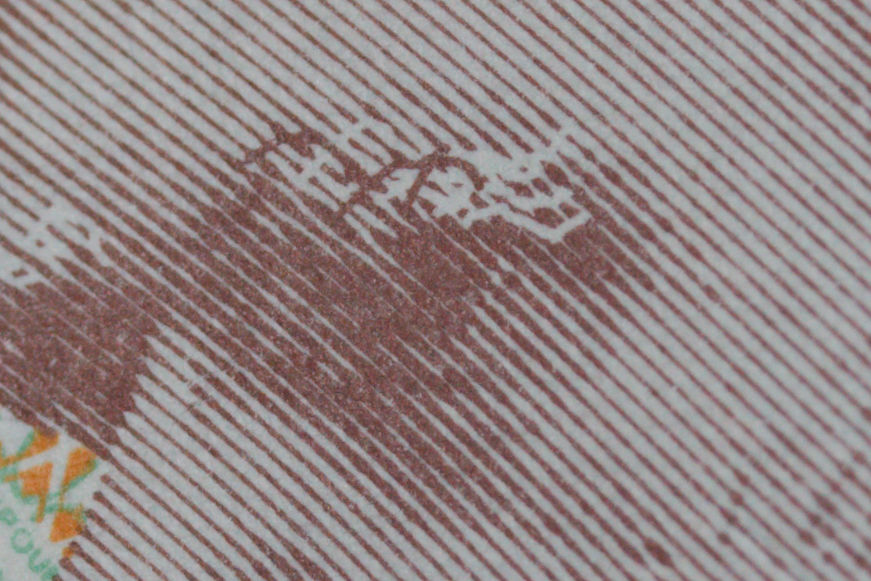
I did a similar test two years ago with a 50D and a 60mm macro lens. These are 100% crops from an image of a £10 note.

f5.6

DiffTest%20002.jpg


f32

DiffTest%20006.jpg
 
you quite clearly notice it in lenses - having never used a 1.6K TS-24 mk2 lens I can't comment on its optics but reviews do ", we're seeing some more diffraction effects which lower the image quality but the lens remains perfectly usable"

some lenses suffer more from diffraction than others so using a extremely high quality lens that does not suffer as much from defraction affects as others to claim diffraction makes no difference is very very very poor qualification.

No, diffraction is not affected by the quality of the lens. It's related to the physcical diameter of the aperture, regardless of quality. The lens comparison I linked to above at TheDigitalPicture is a £5k Canon L prime, and that suffers in the same way.

Diffraction is also related to format, and smaller formats are affected more at lower f/numbers (it's a magnification effect) than larger format DSLRs. Which is why many compacts don't go higher than f/5.6 and use a neutral density filter to control exposure at higher f/numbers, because it gets so bad.

The better the quality of the lens, the earlier diffraction becomes visible, ie at lower f/numbers. But while the effect is detectable sooner, that it from a higher sharpness peak. And the lower the quality of the lens, diffraction doesn't become visible until higher f/numbers, but from a lower peak.

Basically, if you take any lens at say f/11 or f/16, when they will all be diffraction limited, sharpness will be the same - they will all be reduced to the same level.

That's the theory, but with lower grade lenses that really only applies to the centre of the image. The edges and especially the corners sometimes never get near the diffraction limit, regardless of aperture and it's just a blurry mess whatever you do. TBH, that's the biggest difference with the best lenses - it's not that ultimate sharpness is so much better (it is, though only noticeable in extremes) but that very high quality is maintained all over the image, at all apertures, within the limits of physics set by diffraction.
 
I endorse everything you've explained Richard but I'm not sure about the following bit.

....It's related to the physcical diameter of the aperture.....

I believe that it's the effective aperture diameter, not the physical diameter. The effective aperture diameter will decrease as magnification increases for a fixed physical diameter.

Bob
 
I endorse everything you've explained Richard but I'm not sure about the following bit.


I believe that it's the effective aperture diameter, not the physical diameter. The effective aperture diameter will decrease as magnification increases for a fixed physical diameter.

Bob

Is that true Bob? I really don't know.

For sure the effective f/number changes with magnification in terms of exposure, but does that impact on diffraction in the same way?

Diffraction is affected by the ratio of the light that is skewed around the edges of the diaphragm, relative to the majority of the light which passes through unimpeded, so to speak. That ratio changes with the size of the hole, but with macro, the change in effective f/number is not related to a change in the size of the hole - it's basically an inverse square law effect.

What's making me hesitate is that with extreme macro it's quite possible to get up to effectively very high f/numbers like f/45 which would normally be horrendous in terms of diffraction, but that doesn't seem to be reflected in poor quality images with lenses like the Canon MP-E 65mm super-macro.
 
Surely the point Ed was trying to make is that small apertures may well create diffraction, but they don't necessarily make for bad pictures.

Let's face it, how many people (in the real world - i.e. not anal techno geeks) who look at photographs give a monkey's about the IQ at 100%? For most it's the content that matters, not the technique.

:clap:
 
Another thought.... if you use a polariser would it make the effect worse/better or no different?
 
Another thought.... if you use a polariser would it make the effect worse/better or no different?

No different. Doesn't have any influence on diffraction.

Or do you mean does the filter affect sharpness? Generally no, a good filter will not affect sharpness, though a dodgy one will, especially noticeable with long focal length lenses.

Main problem with filters is flare and ghosting when you have bright lights in the image - sunset, street lights, that kind of thing.
 
Back
Top