"Digital" filters?

Messages
54
Name
Derik
Edit My Images
Yes
Having shot on film for a lloonngg time I have loads of filters of all different sorts and sizes.

I put a UV filter on my 18-200 Nikon lens as soon as I got it. However, a guy on a half-day shooting course I did spotted that it was a Nikon filter and said, 'you don't want that on there. It's not a digital filter'. I thought this was some sort of joke at the time, but now I see filters advertised as 'digital' filters. Is there any difference? Surely a UV filter is a UV filter?

Something else has just struck me - if I use an orange filter on my D7000 when taking monochrome pictures, will it have the same effect as when shooting film with my F90X?

UV filters are not needed on digital, just cause the sensor has a built in UV filter anyway, so the guy on your course was correct, in that you don't need it but for the wrong reasons (protecting the end of the lens is a reason you may want it anyway).

Some filters are more appropriate on digital, for example a Circular Polariser, but thats cause of the way modern AF systems work, more then the sensor itself. Others may be easily replicated in editing, like your orange B & W filter. The majority, but not all are like this.
 
I don't think there is any big difference between them, then again I stop using UV filters on my lens because they degrade the IQ of the lens. Digital sensors are not sensitive to UV light as film does. Your orange filter will behave similarly when using d7000 in B&W mode. :thumbs:
 
IMO, the guy on your course had a verbose rectum! Digital filters are a gimmic used by marketing departments to get the gullible to buy replacements for their perfectly good analogue filters! Again, IMO, protection filters do very little - they can cause extra flare (not to be confused with flair!) and degrade image quality in other ways - search the forum for many discussions on the subject. I only use them when I'm in an environment where there's a lot of airborne debris (dust, water, clods of earth etc.)
 
The manufacturers of UV filters realised that there were a lot of gullible people spending money on their filters under the impression that they could actually do some good. The marketing droids at those companies knew that adding the word 'Digital' to camera gear could increase the price by 10%. Hence the proliferation of 'digital' 'protective' filters.
 
The manufacturers of UV filters realised that there were a lot of gullible people spending money on their filters under the impression that they could actually do some good. The marketing droids at those companies knew that adding the word 'Digital' to camera gear could increase the price by 10%. Hence the proliferation of 'digital' 'protective' filters.


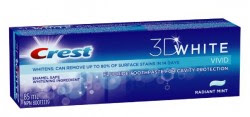
you'll also notice that over the past few years many products have been marketed as 'HD', or 3D

3d+toothpaste.jpg
 
you'll also notice that over the past few years many products have been marketed as 'HD', or 3D

3d+toothpaste.jpg

Well, my teeth are three dimensional, so it makes sense that I use a 3D toothpaste. :thinking:

Digital filters? How about digital spectacles for looking at modern things with? You'd be better off with an analogue filter anyway, as it would allow a smooth transition of brightness levels through, instead of splitting it into 256 levels. :thumbs:

As for using an orange filter, Menu > Shooting Menu > Set Picture Control > Monochrome* > Filter Effects.
There you've got a choice of red, orange, yellow or green filters to alter the contrast when shooting mono. You don't have to compensate for a loss of light either, like you would with a glass filter. It'll work in video mode too. (This bit of my post is actually serious).
 
Back
Top