Few questions

Messages
709
Name
Lee
Edit My Images
No
I'm in the process of learning basic funtions of the dslr. Am I right in thinking that a low apperture will give a small depth of field, a slow shutter speed would be used in low light conditions when shooting still objects or shooting object when looking for motion blur, and that if you increase the iso it will give you a less quality picture but allows more light in if you're working in poor light?

So what setting would you recommend to use if you were shooting motocross bikes at high speed in goog light?

I took some pics of the kids yesterday that seemed a little under exposed, to correct this should I up the iso?
 
I'm in the process of learning basic funtions of the dslr. Am I right in thinking that a low apperture will give a small depth of field

Not really, but this may just be a matter of terminology. A low aperture number will give a smaller depth of focus than a larger one. The smaller the aperture number the larger that physical aperture.

a slow shutter speed would be used in low light conditions when shooting still objects or shooting object when looking for motion blur

Correct. Achieveing the desired motion blur may require some experimentation with the shutter speed, depending on what you're trying to shoot.

and that if you increase the iso it will give you a less quality picture but allows more light in if you're working in poor light?

Correct again. As you increase the ISO setting you increase the amplification of the signal from the sensor. This amplifies both the signal and the inherent noise and make the noise more noticeable. There may be circumstances where noise is less important than getting the shot anyway. Depending on your camera you may be able to use very high ISO setting without any real noticeable degredation of image ... not all camera are made equal :D

So what setting would you recommend to use if you were shooting motocross bikes at high speed in goog light?

Can't answer that as it depends on too many variables and what effect you're trying to achieve. If you want to completely freeze the action then a higher speed will be needed than if you plan to pan the camera and get motion blur from the spokes in the wheels. Experimentation and your cameras LCD screen is your friend :)

I took some pics of the kids yesterday that seemed a little under exposed, to correct this should I up the iso?

If the image is underexposed you can try five things: 1. slower shutter speed 2. larger aperture 3. higher ISO 4. flash 5. exposure compensation

Upload an image with the exif intact and we'll have a better idea of what you were doing and how to improve the image.

Hope that helps :)
 
I agree with Steve on this.
Just a comment on terminology, it is better to talk about a small aperture (large f number i.e. f16) or a large aperture (small f number i.e. f2.8) :)
 
I'm in the process of learning basic funtions of the dslr. Am I right in thinking that a low apperture will give a small depth of field,

I think the answer, as you intend the question, is yes. To be clear, lower f/numbers reduce depth of field (sorry to be picky, but depth of focus is technically something different).

a slow shutter speed would be used in low light conditions when shooting still objects or shooting object when looking for motion blur,

Yes.

and that if you increase the iso it will give you a less quality picture but allows more light in if you're working in poor light?

Not quite. Higher ISO raises the sensitivity of the sensor, so less light is needed for correct exposure, but it doesn't allow more light in.

So what setting would you recommend to use if you were shooting motocross bikes at high speed in goog light?

I took some pics of the kids yesterday that seemed a little under exposed, to correct this should I up the iso?

There is no right answer, depends on the light, the subject, the lens, the kind of result you're after etc etc.

You need to understand the 'exposure triangle' of f/number, shutter speed and ISO - which you seem well on the way to doing - and then apply them to each situation as appropriate.

It's always a compromise, as you can't always get what you want. For example, if you want both a fast shutter speed and lots of depth of field, and also lowest ISO for best image quality, you won't get all three. So you have to prioritise one, and juggle the other two as best you can.

Not sure if you know this, but all three corners of the exposure triangle work on a halving/doubling principle and you have to trade one against the other to get correct exposure. Shutter speeds and ISO are easy, as they work on a simple linear scale, ie 1/250sec is half 1/125sec, and ISO400 is double ISO200.

The confusing one is f/numbers, because the halving/doubling relationship is confused by the square root of two, which is 1.4, and then the values are a bit upsidedown! There is a reason for it, but you just need to know that f/2 allows twice as much light to pass as f/2.8 (2 x 1.4 = 2.8), which is twice f/4, which is twice f/5.6, and so on 8, 11, 16, 22 etc.

 
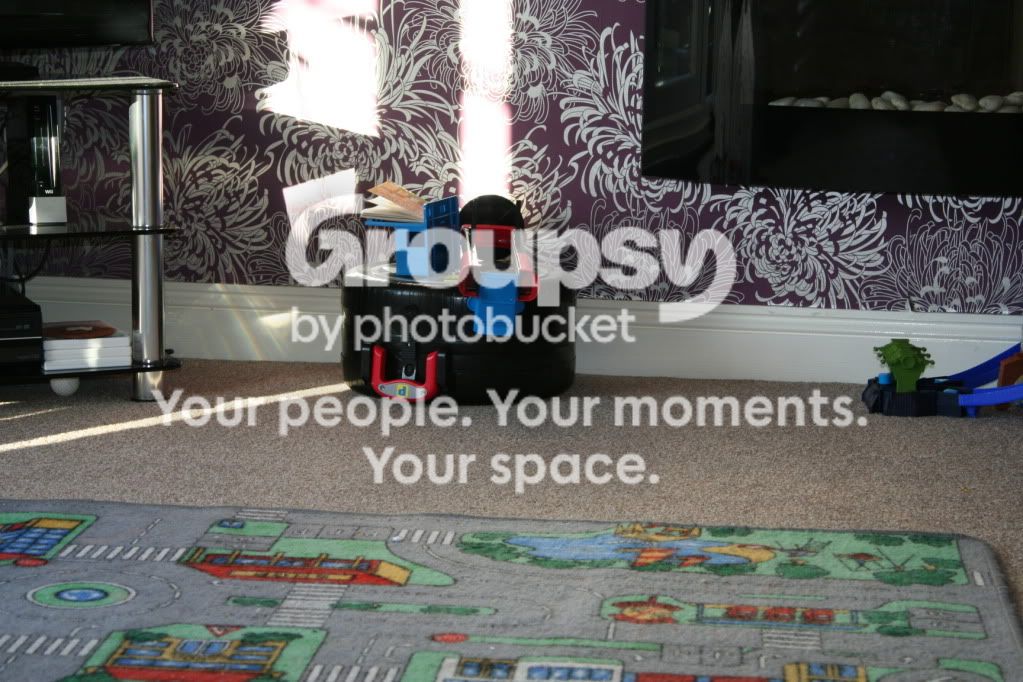
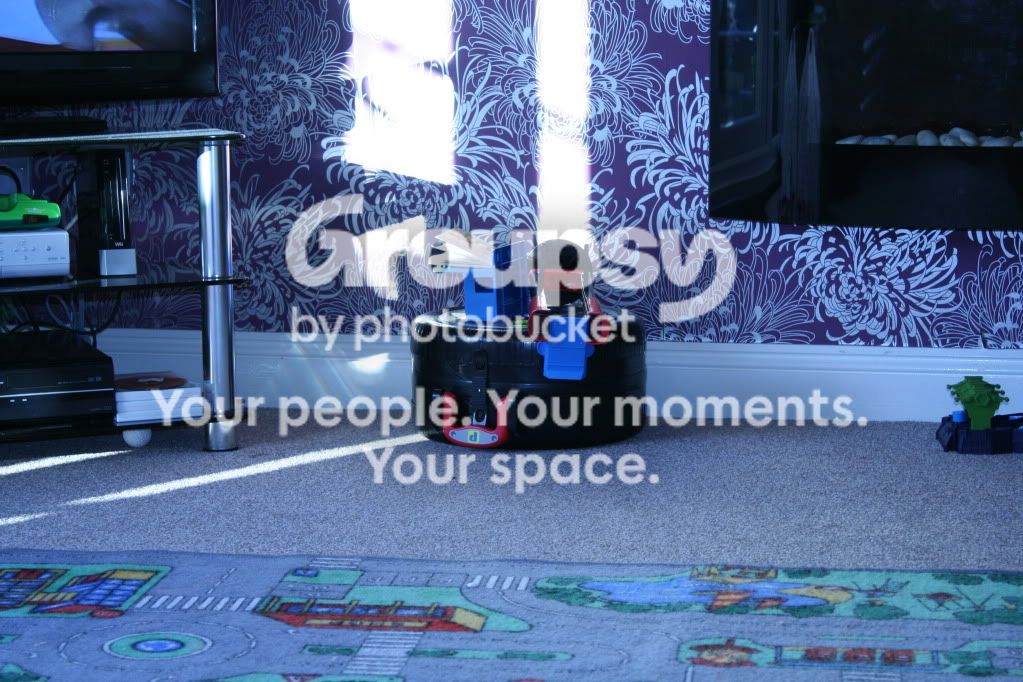
Below is a picture taken on auto, then below that it is taken again in manual mode using the same settings as in auto but the two pictures are different. Why is this.
Iso 400, aperture 5.6, shutter 1/60.
IMG_0517.jpg


IMG_0519.jpg
 
You've changed the white balance.
 
Hi Joel. As a starting point, perhaps choose Tv mode (shutter priority) and select 1/800. The camera will then select a suitable aperture and iso to give a reasonable exposure. Check the histogram, if still underexposed, try 1/640 or up the iso.

If you are shooting mx head on, you can get away with a slower ss, if trying panning, you will need a slower ss.

To my mind, the hardest thing about mx is getting the autofocus to lock on before you press the shutter fully. Try AI Servo and multi shot.

Post some examples of what you've done so far.
 
Looks like Richard is spot on.

Checking the exif, you have it on auto white balance, maybe the camera changed it.

Try the same exercise with the white balance set to daylight for example......:)
 
Thanks for the help, at the moment i'm finding it quite confusing.
Richard I didn't know about the triangle situation I need to do more research.
Carol, I havn't really done anything so far, only had the camera about four days.
 
Not really, but this may just be a matter of terminology. A low aperture number will give a smaller depth of focus than a larger one. The smaller the aperture number the larger that physical aperture.

In this context (terminology) do you mean depth of FOCUS or depth of FIELD?

The depth of focus is BEHIND the lens i.e the actual focus on the sensor, while the depth of field (DOF) is IN FRONT OF the lens - the picture you are taking.

Both are correct inasmuch as a small aperture number means a larger physical aperture and this leads to both reduced depth of focus and depth of field.

.
 
Last edited:
Hi Joel and welcome. You may find this of interest. You can play around with the settings, take a photo and see what the result is.

http://camerasim.com/
 
Thanks for the help, at the moment i'm finding it quite confusing.
Richard I didn't know about the triangle situation I need to do more research.
Carol, I havn't really done anything so far, only had the camera about four days.

My crystal ball tells me you have a steep learning curve ahead! :)
 
Try this basic tutorial Joel - it covers just the things which are bugging you right now....

CLICKY
 
Below is a picture taken on auto, then below that it is taken again in manual mode using the same settings as in auto but the two pictures are different. Why is this.
Iso 400, aperture 5.6, shutter 1/60.
IMG_0517.jpg


IMG_0519.jpg

In the shot with the blue cast the wb was set to 'Tungsten' yet the shot is illuminated by daylight. This is fairly typical of the effect you'll get making that mistake.

Try it - take a shot outside in daylight with the wb set to Tungsten and you'll get a heavy blue cast.
 
Back
Top