Film camera with sensor/histogram..?

Interesting idea, but being pedantic, surely a camera with a sensor is a digital one and not a film one? :thinking:

Given how far sensors have progressed in consumer cameras in only 10-15 years, it's probable that the dynamic range of film will be equalled or bettered within the next few years, and that'd one of the main advantages of film taken away.
 
It would be both. It would probably easiest to design it so that it used an EVF that got it's image from the mirror, which would then reflex out of the way as per curent SLR design to expose the film. Cartidge system for different film speeds ? Technically possible, of course, but dependant on reaching the physical limits of sensor technology before acheiveing the resolution of film.

It would probably have specialist applications and therefore cost a fortune :lol:

One may already exist..!
 
I suppose most things are possible, if you're willing to throw R & D money at them, but no manufacturer is going to do this unless they think it's commercially viable. There was a fair amount of talk about the feasibility of digital conversions for film SLRs years ago, but the only one I know of that got into production was for the Leica R8/9, using a replaceable back. I did read about an American engineer who converted a Nikon F2, but that was a hobby project, just to see if he could get it to work. There may have been others, but the Leica product didn't go anywhere and nor did the concept.
 
I can't see how it could possibly work.

The sensor would have to be told each time you changed the film what the iso was, and also whether the development was standard, pushed or held back.

Then of course you need to know the dynamic range of each emulsion is different, and how each film reacts to each different colour of the spectrum. All these factors, and more, affect how the histogram looks, so I see no possible way to make it work.

I may be wrong, of course, but it looks like a hugely complicated task that probably would never justify the development costs when you consider how limited the take-up is likely to be.
 
Certainly standardisation would be the key. You would have to know and have confidence in the performance characteristics of the emulsion, which is where I was going with the cartidge system. The cartridge would tell the camera the profile of the film it contained and the camera would respond accordingly to the light it receives.
 
Certainly standardisation would be the key. You would have to know and have confidence in the performance characteristics of the emulsion, which is where I was going with the cartidge system. The cartridge would tell the camera the profile of the film it contained and the camera would respond accordingly to the light it receives.

Except for B&W films it would be dependant entirely on the development. Feasible for C41 films. Things like XP2 will take ISO 50-800 without a change of film with ease and would be quite suited to a histogram display.

Would certainly be useful with Infra red films in non OTF cameras as you have absolutely no idea about the exposure until you see the results, but being B&W refer back to point 1.
 
It would be both. It would probably easiest to design it so that it used an EVF that got it's image from the mirror, which would then reflex out of the way as per curent SLR design to expose the film. Cartidge system for different film speeds ? Technically possible, of course, but dependant on reaching the physical limits of sensor technology before acheiveing the resolution of film.

It would probably have specialist applications and therefore cost a fortune :lol:

One may already exist..!

You seem to be thinking that film is better than digital. It isn't, and hasn't been for years.
 
You seem to be thinking that film is better than digital. It isn't, and hasn't been for years.

A bit of a sweeping statement!! based on what exactly?
 
A bit of a sweeping statement!! based on what exactly?

Is it?

I've been producing better quality images than anything I ever got from film, including the best emulsions like Kodachrome at ISO25 and 64, ever since I got a Canon 350D.

My present 5D2 seems to be a match for 645 medium format, at two stops higher ISO, and I am not alone in making that comparison. Medium format film is now effectively dead, just as 35mm died a few years ago.

One area where film still excels is large format, eg 5x4in film and larger, and the cameras have some operational advantages for some applications. But below that, digital wins every which way.
 
You seem to be thinking that film is better than digital. It isn't, and hasn't been for years.

I'd have to agree, I printed a 30x20 from the 7d (400iso) which is a direct comparison to one I had from the Bronica ETRS on Fuji 160 and the 7d image is sharper and clean as a whistle.

I think that for some uses the better dynamic range of (print) film is a plus, but generally my crop sensor cameras are better in every way than my 35mm film cameras were. I'm always pleasantly surprised when I get a large print done, whereas with film I was often disappointed.

The tipping point was a long time ago for crop vs 35mm and I think that there's only large format still holding it up for film. And yes I still have some film cameras, which I'll probably keep - but I can't find a reason to shoot them:shrug:.
 
That pretty much mirrors my experience Phil.

And I'd even disagree on the dynamic range thing now, since I've taken to expose-to-the-right technique and processing Raws in Lightroom. Not that that is the only way to do it, but it's so easy in Lightroom to hold bright highlights with the recovery slider and pull amazing detail from the shadows with the fill slider.

I've not done any direct comparisons or measurements, doesn't seem much point, but there's now no aspect of film - this side of 5x4in - that I miss at all.

And digital just keeps getting better. We've not yet seen what the likes of the 1DX and Nikon D4 can do (first new gen FF sensors for a few years) but I'm expecting dynamic range to be off the scale and sharpness like we've not seen before. It's getting to the point where I'm wondering where the generation after that is going to take us, unless you shoot everything by moonlight.
 
Last edited:
Yeah, the dynamic range thing is a tad untrue (and I'm mainly a film shooter), film just retains highlights better. Now if only Fuji continued developing their Super CCD sensor... however DR will eventually be addressed in the future, simple fact of technology.

Although I would argue that film produces better results when you aren't just comparing with numbers, there's just something about the tonal qualities of good film that I can't get with digital. Plus high end film compacts are just awesome. And then there's the whole process side of things. Different strokes at the end of the day.

As for the OP, if sensor limits are reached, then engineers will simply design a better sensor. It even happened with film last year when Kodak introduced the new Portra.
 
Last edited:
You have kind of admitted it was a sweeping statement. Whilst I agree that digital has surpassed most 35mm, its still a way off MF and from recent tests done (Tim Parkin) the latest Phase one 80mp back is only just reaching 4x5 film standards in resolution and colour.
Its horses for courses, I shoot both but probably more film that digital and yes it 4x5 and bigger.
Mart

A sweeping generalisation that applies to 99.999% is good enough for me ;)

After a quick search I can't find anything by Tim Parkin. Maybe it's in the paid-for content, or can you link to it? Would be interesting to see. Thanks.
 
;) No problem, here's the link

Mart
 
You have kind of admitted it was a sweeping statement. Whilst I agree that digital has surpassed most 35mm, its still a way off MF and from recent tests done (Tim Parkin) the latest Phase one 80mp back is only just reaching 4x5 film standards in resolution and colour.
Its horses for courses, I shoot both but probably more film that digital and yes it 4x5 and bigger.
Mart

So film is still better - because Medium format digital is only just getting as good as half plate film:thinking:

Which is more or less what we were saying; crop sensor cameras are already better than 35mm film, FF(35mm) sensors are better than MF film, MF sensors are getting close to film many times their size. (I can't be bothered to do the maths):cool:
 
I can't find a reason to use digital..:(, I don't use it for work any more and our lass hasn't put anything on ebay for yonks.
Digital is dead and has been since I used film, I say that with a heavy heart, an empty wallet and a foot of dust on my digital gear.

I would not though, be such a blinkered troll as to say film is better, as though it were a fact......its all about opinions.

As much as Ploppy would like the thing to turn in to a techno sharpness MTF chart micromeasure-athon, you just can't measure "like", quantify "prefer" or MTF chart ":love:"


:)
 
So film is still better - because Medium format digital is only just getting as good as half plate film:thinking:

Which is more or less what we were saying; crop sensor cameras are already better than 35mm film, FF(35mm) sensors are better than MF film, MF sensors are getting close to film many times their size. (I can't be bothered to do the maths):cool:

At the end of the day none is "better" its what you do with it that counts. Pointless arguments and opinions will be just that, pointless.
I shoot film because I like it, I get more enjoyment out of using it and I'm no longer in a must have the latest camera, sensor and megapixel race.
 
;) No problem, here's the link

Mart

Thanks Mart. Don't know why I didn't find that, and an interesting read. But at the end of it all, the author says exactly what I said.

I can't find a reason to use digital..:(, I don't use it for work any more and our lass hasn't put anything on ebay for yonks.
Digital is dead and has been since I used film, I say that with a heavy heart, an empty wallet and a foot of dust on my digital gear.

I would not though, be such a blinkered troll as to say film is better, as though it were a fact......its all about opinions.

As much as Ploppy would like the thing to turn in to a techno sharpness MTF chart micromeasure-athon, you just can't measure "like", quantify "prefer" or MTF chart ":love:"


:)

LOL Would I? No need it seems ;)
 
Marvin d martian said:
At the end of the day none is "better" its what you do with it that counts. Pointless arguments and opinions will be just that, pointless.
I shoot film because I like it, I get more enjoyment out of using it and I'm no longer in a must have the latest camera, sensor and megapixel race.

But I didn't ask for the 'better' debate.

You're free to shoot whatever makes you happy. As are we all. But I'd argue that choosing to shoot film and get involved with trying to get the best out of older technology is only replacing your desire to be in the megapixel race.

Personally it's years since I bought a new camera and I only read reviews with a passing interest because the gear I have does what I need it to. I will replace my gear when it makes sense to, but for now that's probably some way off.

I can make double page spreads shot at 800iso which is my requirement, a meaningful improvement would mean going FF which would require some new lenses too; not what I'd consider a VFM decision.
 
I suppose most things are possible, if you're willing to throw R & D money at them, but no manufacturer is going to do this unless they think it's commercially viable. There was a fair amount of talk about the feasibility of digital conversions for film SLRs years ago, but the only one I know of that got into production was for the Leica R8/9, using a replaceable back. I did read about an American engineer who converted a Nikon F2, but that was a hobby project, just to see if he could get it to work. There may have been others, but the Leica product didn't go anywhere and nor did the concept.

Kodak produced an entire range of digital slrs which were digital guts crammed into Nikon film bodies.

The Epson RD1 is a Voigtlander Bessa with digital where there should be film.
 
I was aware of the Kodak cameras, but I think these - and the RD1 - are OEM? I was thinking more along the lines of retrofit solutions. There was a lot of chat on forums some years ago when people were discussing the possibility of converting their old film SLRs to digital, by fitting a sensor and the other electronics, because they fancied the technology but didn't want to give up their systems. It was a lovely idea and I wish it had been feasible.
 
Yeah the Kodaks and the RD1 are OEM but it proves it can be done.

I don't think we will ever see kits to make the conversion a job that anybody could do being available, there just isn't the market.

If translucent mirror technology had been around when digital first came about then I could imagine someone might have produced a camera that reflected an image up to a digital sensor and also allowed it to pass through to film but even that would be (IMO) quite a compromise because of the light loss in these systems plus, would you really want both film and digital versions of the same image?
 
I agree. I think it was an idea that came and went in the early days of the digital uptake, when a lot of people were still using their film gear and thought it was an interesting possibility. Most of the classic bodies are ageing now, and film enthusiasts (I'm not a film devotee, but I do like the old SLRs) probably prefer to keep them original.
 
If translucent mirror technology had been around when digital first came about then I could imagine someone might have produced a camera that reflected an image up to a digital sensor and also allowed it to pass through to film but even that would be (IMO) quite a compromise because of the light loss in these systems plus, would you really want both film and digital versions of the same image?

1995?
 
I agree. I think it was an idea that came and went in the early days of the digital uptake, when a lot of people were still using their film gear and thought it was an interesting possibility. Most of the classic bodies are ageing now, and film enthusiasts (I'm not a film devotee, but I do like the old SLRs) probably prefer to keep them original.

Yes, transluscent mirror technology has been around since the sixties with the Canon Pellix and a couple of later models. Nothing new about Sony's SLT in that respect.

There were indeed early ideas to simply attach a digital sensor to the back of a film camera, but I'm not sure anything got further than a few prototypes.

As I understand it, the problem was that in those days the sensor was extremely expensive, coupled to the fact that the associated processing gubbins and controls couldn't be easily accommodated. The result was that it was both cheaper and better to manufacture a whole new digital camera.

Digital backs for medium format and larger cameras are around though.
 
Last edited:
Could it happen ? Sensor limits are reached and electronic companies develop cameras with both capabilities ... ?

Just use a spot meter, measure the exposure of the lightest and darkest areas of what's in frame, and go from there. Zone system it if you want, too.
 
Yes, transluscent mirror technology has been around since the sixties with the Canon Pellix and a couple of later models. Nothing new about Sony's SLT in that respect.

There were indeed early ideas to simply attach a digital sensor to the back of a film camera, but I'm not sure anything got further than a few prototypes.

As I understand it, the problem was that in those days the sensor was extremely expensive, coupled to the fact that the associated processing gubbins and controls couldn't be easily accommodated. The result was that it was both cheaper and better to manufacture a whole new digital camera.

Digital backs for medium format and larger cameras are around though.
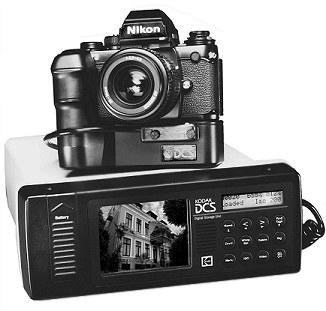
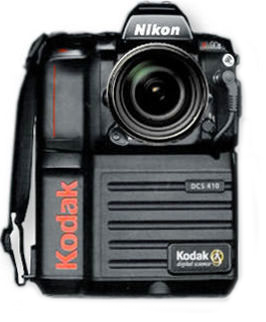
The aforementioned Kodak DCS range and the Epson RD1 are full production cameras.

The 1st Early Kodak DCS had a huge external storage unit which had to be tethered to the camera.

dcs100.jpg


And even the later models added a lot of bulk to the film camera that formed their base.

dcs410-sl.jpg


The RD1 is a lot more integrated but interestingly retains the film advance lever as this is how the shutter is cocked.

Epson_R-D1_contacto_6.jpg
 
Last edited:
Yes, but that's not what I meant. It was just a replacement digital back you could fit to any SLR. I can't find exactly what I was referring to, but similar to this from the PMA show ten years ago (scroll down a little) http://www.dpreview.com/news/2001/2/16/pma04
 
Yes, but that's not what I meant. It was just a replacement digital back you could fit to any SLR. I can't find exactly what I was referring to, but similar to this from the PMA show ten years ago (scroll down a little) http://www.dpreview.com/news/2001/2/16/pma04

Never going to happen because there is no continuity between cameras, you'd need a different back for every model of camera that ever existed.

I don't really know whether this would be possible or not but the DCS stuff, especially the early ones look to me like you could be removed the digital part and replace it with a film door. Again I know, not what you meant but just putting it out there.

Most intriguing thing about the Silicon Film thing in my opinion is that they were quoting a battery life of several hundred shots, from a tiny battery (well 2 tiny batteries really). Amazing what having no screen does for battery life.
 
Back
Top