


- Messages
- 1,756
- Name
- Chris
- Edit My Images
- Yes
Could it happen ? Sensor limits are reached and electronic companies develop cameras with both capabilities ... ?


Certainly standardisation would be the key. You would have to know and have confidence in the performance characteristics of the emulsion, which is where I was going with the cartidge system. The cartridge would tell the camera the profile of the film it contained and the camera would respond accordingly to the light it receives.

It would be both. It would probably easiest to design it so that it used an EVF that got it's image from the mirror, which would then reflex out of the way as per curent SLR design to expose the film. Cartidge system for different film speeds ? Technically possible, of course, but dependant on reaching the physical limits of sensor technology before acheiveing the resolution of film.
It would probably have specialist applications and therefore cost a fortune
One may already exist..!

You seem to be thinking that film is better than digital. It isn't, and hasn't been for years.
A bit of a sweeping statement!! based on what exactly?

You seem to be thinking that film is better than digital. It isn't, and hasn't been for years.

You have kind of admitted it was a sweeping statement. Whilst I agree that digital has surpassed most 35mm, its still a way off MF and from recent tests done (Tim Parkin) the latest Phase one 80mp back is only just reaching 4x5 film standards in resolution and colour.
Its horses for courses, I shoot both but probably more film that digital and yes it 4x5 and bigger.
Mart


 , I don't use it for work any more and our lass hasn't put anything on ebay for yonks.
 "

So film is still better - because Medium format digital is only just getting as good as half plate film
Which is more or less what we were saying; crop sensor cameras are already better than 35mm film, FF(35mm) sensors are better than MF film, MF sensors are getting close to film many times their size. (I can't be bothered to do the maths)
I can't find a reason to use digital..
Digital is dead and has been since I used film, I say that with a heavy heart, an empty wallet and a foot of dust on my digital gear.
I would not though, be such a blinkered troll as to say film is better, as though it were a fact......its all about opinions.
As much as Ploppy would like the thing to turn in to a techno sharpness MTF chart micromeasure-athon, you just can't measure "like", quantify "prefer" or MTF chart "
Marvin d martian said:At the end of the day none is "better" its what you do with it that counts. Pointless arguments and opinions will be just that, pointless.
I shoot film because I like it, I get more enjoyment out of using it and I'm no longer in a must have the latest camera, sensor and megapixel race.
You seem to be thinking that film is better than digital. It isn't, and hasn't been for years.
Which is more or less what we were saying; crop sensor cameras are already better than 35mm film.....
But I didn't ask for the 'better' debate.
I suppose most things are possible, if you're willing to throw R & D money at them, but no manufacturer is going to do this unless they think it's commercially viable. There was a fair amount of talk about the feasibility of digital conversions for film SLRs years ago, but the only one I know of that got into production was for the Leica R8/9, using a replaceable back. I did read about an American engineer who converted a Nikon F2, but that was a hobby project, just to see if he could get it to work. There may have been others, but the Leica product didn't go anywhere and nor did the concept.
If translucent mirror technology had been around when digital first came about then I could imagine someone might have produced a camera that reflected an image up to a digital sensor and also allowed it to pass through to film but even that would be (IMO) quite a compromise because of the light loss in these systems plus, would you really want both film and digital versions of the same image?
I agree. I think it was an idea that came and went in the early days of the digital uptake, when a lot of people were still using their film gear and thought it was an interesting possibility. Most of the classic bodies are ageing now, and film enthusiasts (I'm not a film devotee, but I do like the old SLRs) probably prefer to keep them original.

Could it happen ? Sensor limits are reached and electronic companies develop cameras with both capabilities ... ?
Yes, transluscent mirror technology has been around since the sixties with the Canon Pellix and a couple of later models. Nothing new about Sony's SLT in that respect.
There were indeed early ideas to simply attach a digital sensor to the back of a film camera, but I'm not sure anything got further than a few prototypes.
As I understand it, the problem was that in those days the sensor was extremely expensive, coupled to the fact that the associated processing gubbins and controls couldn't be easily accommodated. The result was that it was both cheaper and better to manufacture a whole new digital camera.
Digital backs for medium format and larger cameras are around though.
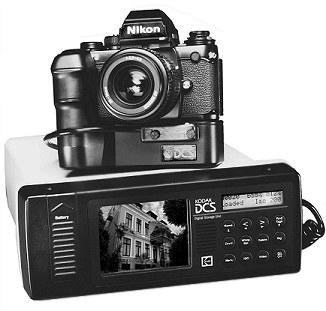
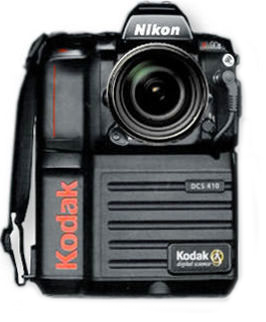

Yes, but that's not what I meant. It was just a replacement digital back you could fit to any SLR. I can't find exactly what I was referring to, but similar to this from the PMA show ten years ago (scroll down a little) http://www.dpreview.com/news/2001/2/16/pma04