When you’re out with a camera, how do you train yourself to notice stronger compositions in ordinary places?
Do you use exercises such as sticking to one focal length, looking for a particular shape or colour, or photographing the same location in different light? I’d love to hear which exercises you’ve found useful.
I would spend as much time as possible "studying" photographs, paintings and sculptures by people recognised as being at the top of their art/craft.
And for me, preferably in books, magazines, or on art gallery walls. I find books easier as they allow a more contemplative approach, but, especially for paintings and sculptures, it isn't the same as seeing the real thing.
There is also merit, especially in terms of access and lack of expense, in looking at these same things on the computer screen, but I'm not a fan of this, especially as there is a greater tendency to "skim" through pictures on a screen.
As long as you spend time studying the picture that you enjoy looking at and thinking through what makes them work for you, I think you can build a visual memory of what a "good " photograph looks like and "intuitively" apply this to your own photographs. And the more time you spend taking photographs, the quicker you will develop an eye for a photograph. Photographers like Cartier Bresson and Ralph Gibson speak about needing to take photographs every day to keep their "eye in".
The next stage is to read up about composition and develop an understanding of how studies have discovered some common patterns and characteristics in pictures that people find most pleasing to the eye and mind.
Philosophers, artists, and psychologists have been studying this for centuries; here is some recent research in this area.
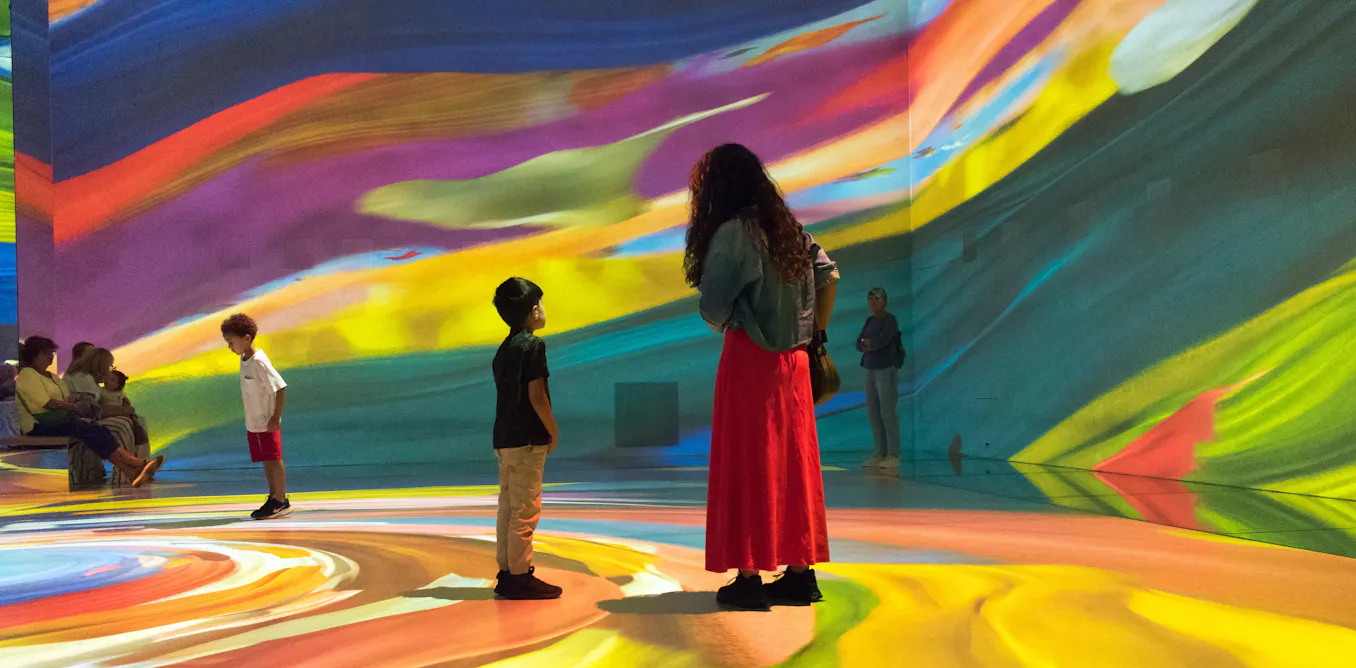
An MRI study zeroes in on the brain networks that underline collective appreciation of art.

theconversation.com
These studies are, of course, based on observations and can only ever explain a small part of why a picture might be visually successful or not.
However, taken together, I believe that an understanding of composition theory ("rules") can be useful in explaining why some pictures work and some don't.
At the time of taking pictures, I don't think you should consciously apply any "rules" of composition, as "feeling" a picture looks right at the time of taking should be more intuition-based.
Cartier Bresson has commented on analysing all his photographs after printing (using dynamic symmetry principles) but never (consciously) thinking about it when taking pictures.
This ignores the importance of the subject choice, which is a different but equally important topic.








 Magnum have just released a free 'getting started in photography course' you need to sign up on the website and there's about 10 x 10ish minute videos plus several workbooks. The videos I've watched so far are great, and cover off some the themes we've mentioned in this thread so far..

