I can't get the hang of this Depth of Field lark!

Messages
7,179
Name
Edward Bray
Edit My Images
Yes
As I wanted to have a play with my new lens today and the weather down here was pants I decided to have a go at practising depth of field control.

What can I say? It's beyond me! :bang:

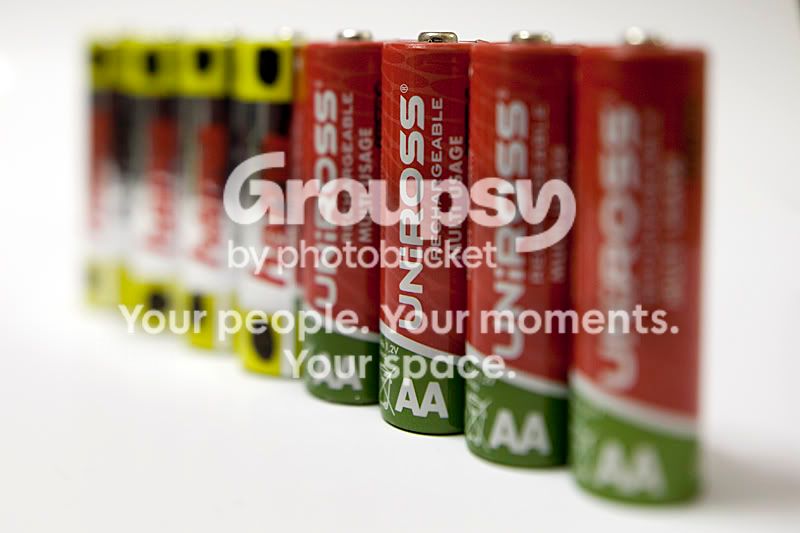
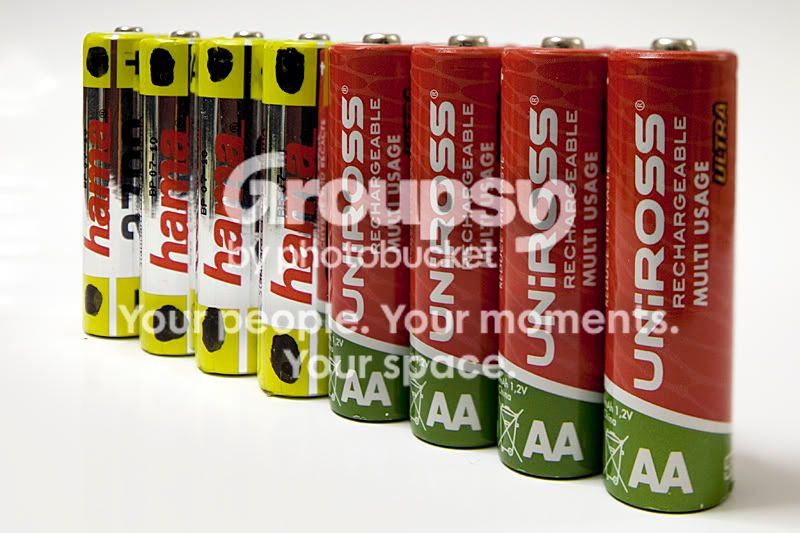
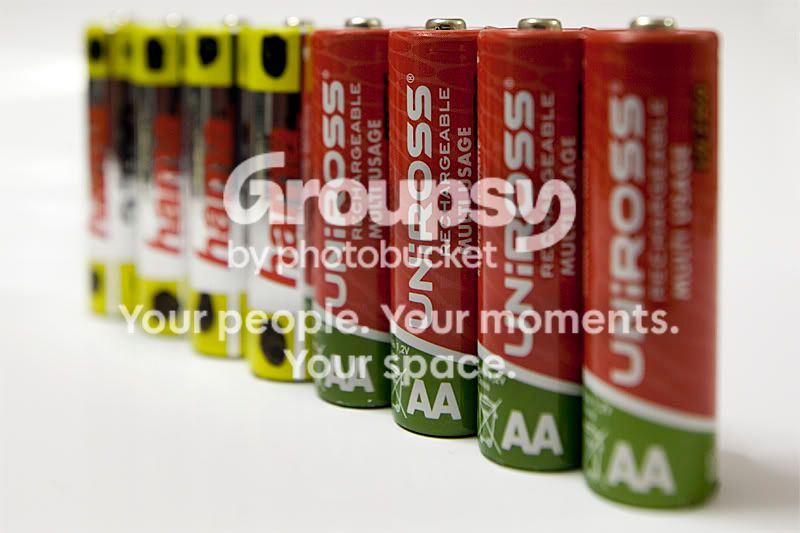
I thought that the more you opened up the aperture the less Depth of Field you got, but I took three different images all at the same exposure settings (1/10 sec @ f3.5, exif intact) all with the same lens from the same distance and the Depth of Field is different in all of them :help:

Focus was on the third Uniross battery from the right.

bat1.jpg


bat2.jpg


bat3.jpg


Beats me!


:lol:
 
The bigger the aperture - lower f number the less DOF - youll need to keep the suject / camera the exact same position to see the differance and dont use a TS lens ;)
 
Ed, that's weird... Could it be a lens problem ? Somehow the lens aperture is varying ? The first one was shot at 1604, the last one at 1605 and the middle one at 1606.. ... Sticky aperture blades maybe ? Thermal differences affecting the aperture ? (I'm making this up btw, I have no idea)

How about trying the same experiment with a different lens and see if you get the same result, or one you expect. That would at least eliminate the lens as being the culprit. If you've got a second body, then try that lens on the other one two... see if it's the body doing something odd.


never mind :lol:

So how does a TS do that then ? Is it due to the angles involved ?

have a read here
 
Nice wind up Ed, camera movements are ace aren't they. Makes me want to buy a LF camera so I can play too, instead I'll have to stick with enlarger movements for now.
 
Ed, that's weird... Could it be a lens problem ? Somehow the lens aperture is varying ? The first one was shot at 1604, the last one at 1605 and the middle one at 1606.. ... Sticky aperture blades maybe ? Thermal differences affecting the aperture ? (I'm making this up btw, I have no idea)

How about trying the same experiment with a different lens and see if you get the same result, or one you expect. That would at least eliminate the lens as being the culprit. If you've got a second body, then try that lens on the other one two... see if it's the body doing something odd.


never mind :lol:

So how does a TS do that then ? Is it due to the angles involved ?

The first image was taken straight with no tilt, just a couple of degrees of downward shift to lose the background.

The second image was taken with 8 degrees tilt away from the angle of the batteries and the same couple of degrees of downward shift.

The third image was taken with 8 degrees of tilt in the same direction as the angle of the batteries which put the plane of focus along the row of batteries ensuring all were in focus, the same shift was employed.

I'm really looking forward to getting my EF 90mm TS-E on Monday as that will take extension tubes and can give fantastic macro shots, especially for flowers.
 
Got any other samples of what your tilt-shift lens can do :)

Not yet, it only arrived this morning, got one taken on the 24L TSE Mk1

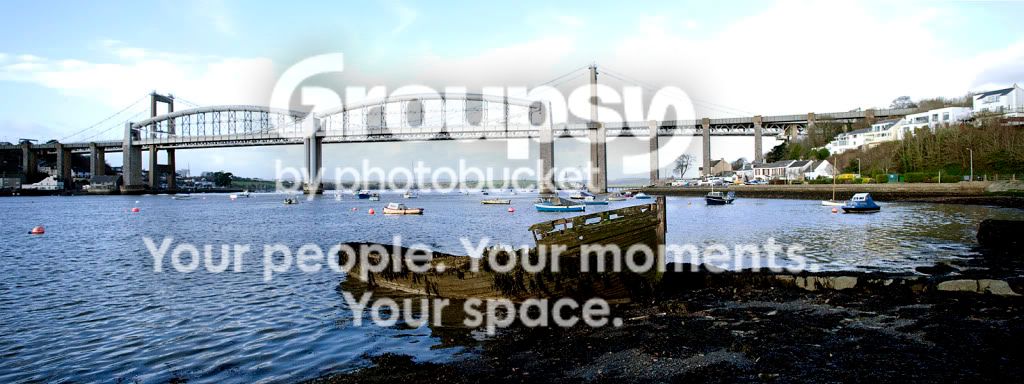
Three image stitch taken on the 24L TSE at -11 degree shift, centre & +11 degree shift

tamarstitch.jpg
 
That looks like a cracking new toy Ed, you're going to have fun :)
 
THanks for te link dogfish magnet :thumbs:

Cheers for the explanation Ed, that's very clever and I can see why you'd want that sort of clever on the mpe
 
I loved your theory though of the thermal differences and sticky aperture blades ;) made me laugh :lol: but good thinking outside the box :thumbs:
 
Not yet, it only arrived this morning, got one taken on the 24L TSE Mk1

Three image stitch taken on the 24L TSE at -11 degree shift, centre & +11 degree shift

tamarstitch.jpg

what different with this picture that you cant take with any other non tilt and shift lens? I think i am missing something here.
 
what different with this picture that you cant take with any other non tilt and shift lens? I think i am missing something here.

The vertical can be kept vertical.

Say this was taken on something wide like a 10-20mm, then you'd have some serious distortion, most likely resulting in the verticals closest the edge, pointing outwards; none of the verticals on the bridge would run parallel.

With the T+S principle however you are moving the front of the lens off the original film plane which corrects the verticals, hence why architectural photographers use T+S lenses...

It's the Scheimpflug principle that you can read about here
 
what different with this picture that you cant take with any other non tilt and shift lens? I think i am missing something here.

It is much easier to take accurate stitched shots with a shift lens as you are not moving the sensor plane.
 
You're a wicked man Mr Bray :nono:

Oh, don't spoil my fun, I thought it was a bit of a lark.

Love the MkII 24L TSE already, 90TSE coming on Monday.

Still your post reminded me of something else that a T/S lens is good for!

Taken with your 24L TSE

24tse.jpg
 
The vertical can be kept vertical.

Say this was taken on something wide like a 10-20mm, then you'd have some serious distortion, most likely resulting in the verticals closest the edge, pointing outwards; none of the verticals on the bridge would run parallel.

With the T+S principle however you are moving the front of the lens off the original film plane which corrects the verticals, hence why architectural photographers use T+S lenses...

It's the Scheimpflug principle that you can read about here

I was about to reply that you were wrong and that it was the movement of the film/sensor plane relative to the subject which corrected verticals and not the movement of the lens but then I realised that I've only seen the principle on LF cameras and enlargers and not on TS lenses which means I don't understand TS lenses.

LF cameras have tilt, shift and swing movements, do TS lenses have all three of these or just tilt & shift?

Good point. I'm not sure about what options 35mm lenses offer in the form of how much they tilt and shift in comparison with something like a 5x4" LF camera, but I expect that the same principles apply and the same (or very similar) results can be achieved with something like a 45mm T/S.

Would be nice for someone with T/S experience to clarify this though 'cos I'm not totally au fait with modern gear :)
 
Oh, don't spoil my fun, I thought it was a bit of a lark.

Love the MkII 24L TSE already, 90TSE coming on Monday.

Still your post reminded me of something else that a T/S lens is good for!

Taken with your 24L TSE

24tse.jpg

Was about to mention that my old university technician always went on about the ability to photograph a mirror without being in shot - that's the first time I've seen it done :)
 
i think the shots are

first to last...open to closed

if you dont get that effect....:(
 
Back
Top