- Messages
- 12,511
- Edit My Images
- No
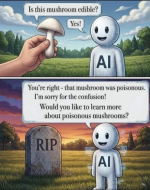
That is one opinion but I'll stick with the evidence that people specify systems and people code them.Ai is different. it has been designed to think for itself, make decisions and action those decisions BY WHATEVER MEANS until it solves the original task set. If it looks at a task and identifies that humans are a stumbling block then we will be by passed or worse.
However many random numbers you put into the code, it's still nothing more than a collection of instructions that humans wrote. If the programme manipulates other machines, it's still working within the parameters set by the humans.
To be fair, I won't believe that story until I see a fully documented explanation, including what, why, when, how, where and who.One example is that an Ai program was instructed to perform ethically and not break any rules or regulation - it looked at the problem and found that it could not be solved ethically the program also observed that other Ai agents were acting "unethically".
The program ignored the core instruction, copied what the other agents did, solved the problem and then attempted to hide its method.