Lenses for landscapes

Messages
12,584
Name
Jeremy Moore
Edit My Images
No
It seems to be generally accepted that a wide-angle (zoom) is the lens to use for landscapes.

While I use the 24-105 L myself, its just as likely to be used at the long end, and I use a telephoto zoom as well - often at the long end.

I just wonder if people are missing out on opportunities by not thinking "telephoto" .

Discuss.....
 
i agree, im not a fan of wide angled landscapes shots with 10mm lenses. i prefer a more thought out stratigically composed photo with a normal not so wide lens.

i have a 10-17mm fisheye which i use for skateboarding and try to use in moderation and after that i have a 35-135mm which is wide enough for me. similar to full frame 50mm which is just :love:
 
On a 5D, 24L and 35L are lovely lenses for this.

Im finding the 17-40L is great since it works well on both my 5D and 1D for landscaping. 24L next on my hitlist thought. :)
 
I've been pondering this as well.

I'm heading for Tuscany this year and thought that a 10-20 would suit the hills/towns well but as I'm usualy to be found shooting motorsports any ideas would be welcome :)
 
Im just about to get a Sigma 10-20mm and I think they are amazing lenses for landscape
Many times when taking photo's I feel I need a lower focal length.
 
The point of a good landscape is usually to get a lot of interest and depth in the picture. A wide angle not only gives you that additional width but the perspective also increases the apparent depth.

Use a longer focal length if the image has 'layers' to give it the depth but otherwise I would say wide lenses are best for landscape for good reason.

Thats not to say you need to go all the way to 17mm just because you have a 17-40mm.
 
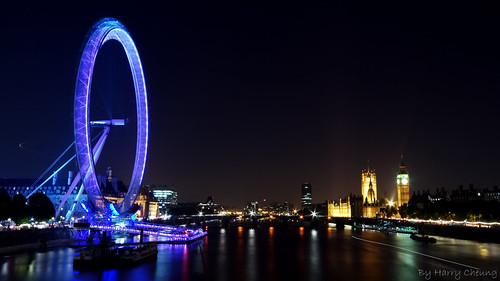
Sigma 10-20mm is a amazingly fun (great rectilinear effect) and great quality lens. I have done some amazing shots with it!


This was taken at 20mm, the longer end of the lens.


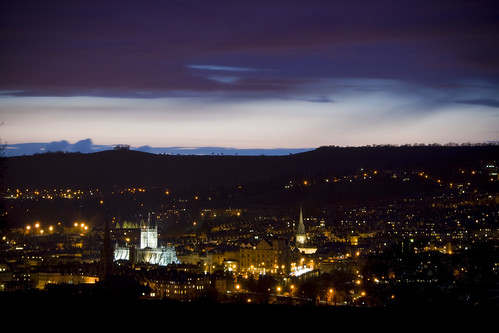
But sometimes I like to find a different perspective of the landscape view. I spotted the below view one day when I was driving down the hill. So I took this shot with my great value tele lens Sigma 70-300 at 70mm.


The only problem with tele-zoom is that, you don't get the rectilinear effect, which is means you lost the sense of space and the picture would look dull without a very interesting object/colour/lighting. So in general wide angle lens shots would be more interesting.
 
The point of a good landscape is usually to get a lot of interest and depth in the picture. A wide angle not only gives you that additional width but the perspective also increases the apparent depth.

Use a longer focal length if the image has 'layers' to give it the depth but otherwise I would say wide lenses are best for landscape for good reason.

Thats not to say you need to go all the way to 17mm just because you have a 17-40mm.

No doubt, i would aim for atleast 30mm on my 5D and about 20/24mm on the 1D. Works a charm. Need to hurry up and get me a decent tripod. :(
 
Or stand very still ;-)
 
Almost all wide-angles though ..... some just wider than others.

What about picking out details within a wider landscape? What about compressing several elements in a landscape? Avoiding all that boring foreground stuff? Telephotos are good for all of this.

I'm sure people are missing opportunities.
 
Ah but if you use a tele and go past the foreground it's not a landscape is it? :-)
 
Ah but if you use a tele and go past the foreground it's not a landscape is it? :-)

I think he's extracting the urine m8 :D

I too often use longer lenses for landscapes, often for the compression of distance; but also to use DoF as a tool (not something you have in the bag - so to speak - with a 10-20mm)

The only downside is if the shot is simply trying to pull something far away closer, either saving your legs or you can't physically move closer, as you suffer from air quality issues

That said though, I'd have to say I more often use the 12-70mm range than the 70+; but I do consider it too

:thumbs:

DD
 
Interesting question. On our recent beacons meet I used the full range of lenses I had in my kit bag. 10-22, 17-40, 50 and the 100-400, the lens doesn't dictate my shot, the shot I want dictates the lens I use.

Absolutely.

What I'm saying is "don't forget longer focal length lenses for landscapes too"
 
I think we are all in agreement then :-)

The point I was making is that there is a style of photography generally termed as landscape which is a wide angle view capturing everything from front to back. For that you need the wide lens.

But I do agree you should consider what you are wanting to capture before you pick the lens to do the job.
 
Pinhole is where it's at;)
 
I think we are all in agreement then :-)

The point I was making is that there is a style of photography generally termed as landscape which is a wide angle view capturing everything from front to back. For that you need the wide lens.

But I do agree you should consider what you are wanting to capture before you pick the lens to do the job.

I think that's an unecessaily restrictive definition of "landscape". I would suggest that the land is the subject matter of a landscape and it doesn't need to have a near foreground.
 
It seems to be generally accepted that a wide-angle (zoom) is the lens to use for landscapes.

While I use the 24-105 L myself, its just as likely to be used at the long end, and I use a telephoto zoom as well - often at the long end.

I just wonder if people are missing out on opportunities by not thinking "telephoto" .

Discuss.....

Well it depends on a goals. Thom Hogan in this thread on Dpreview
http://forums.dpreview.com/forums/read.asp?forum=1039&message=28091770

talks about the reasons why you'd want to use wide angle for landscapes.

I personally think it is extremely difficult to make use of really ultrawide angles for "casual" landscape shooting - they do cram a lot of things into frame and it is really easy to make it look really busy and overloaded without careful framing. However, seing what other people do with them, I acknowledge that there are situations where they can be invaluable - where you really want to isolate near and have clear distinction between near-middle-far planes (the wide end will give you extended perspective and possibly exaggerrated distances between those). Of course you don't need this in evry single shot...

Just my view...
 
................ a style of photography generally termed as landscape which is a wide angle view capturing everything from front to back. For that you need the wide lens...............


I think that definition is a figment of your own imagination. It's certainly not true as far as I'm concerned. A landscape is pure and simply a picture of the land and the lens you choose will if nothing else, will be dictated by what you want in the shot and where you are in relation to what you want in the shot. I know I've posted it before but the shot below wasn't taken with a wide angle lens (70-150mm) so would you say that's not a landscape?.

IMG_20080808_3225.jpg
 
I have to agree with cssharry's & Tashi comments. I use a FF sensor & shoot mainly landscapes. Checking my Stats in Lightroom it appears I use my 24-70mm L lens around 75% time. AT the end iof the day it is what you want to compose in your image. I often find to get those recession type hills in say Loche images the compressed background given by a telephoto at 100mm+ works the best. If you have a smaller sensor then you need a wider angle lens (15mm +) to get the same as my 24mm.

What is really important is to try and compose the image you want in the camera & keep the cropping etc down to the minimum. Like playing golf it's best to use the correct club for the shot.
 
Sorry but without the scape the picture should just be called a land;) It's not my definition.

Seriously though - you are missing my point. If someone says to me they have takena great landscape I generally expect to see something with foreground and background interest but thats because it has become a term we think of that way.

I am not saying something that looks into the distance is not a landscape - just that it's not what usually comes to mind.

The other point I guess is that it is much more difficult to take an interesting landscape if you don't have some foreground interest. The focal point needs to be something special
 
I think looking at the basics would give you some answers.

From wikipedia:
Landscape comprises the visible features of an area of land, including physical elements such as landforms, living elements of flora and fauna, abstract elements such as lighting and weather conditions, and human elements, for instance human activity or the built environment.

There is no limitation on how you present the above elements, so any focal length can do the job ultimately. It is all about the story behind the photo. There is always at least one good reason supporting a great shot, either's it's an interesting object within it, a wonderful light source/shadow effect, some rare shapes, very eye catching colours, an unique perspective, an attractive composition and etc.

If you can take all the boxes above, you may create a fantastic shot (or may be a total disaster!!) no matter what focal length you use ;o)

---

However, there is one thing wide-angle lenses can provide while tele lenses can't. It is the Perspective Distortion. For instance, take a shot of the a box at right angle to it with both lenses. If you fit the front of the box into the same space of the photo frame, you may see that face of the box looks very similar proportion between the shots from the lenses. But, any object behind the box looks distinctively different. The wide angle lens would try to put a lot more objects behind the box (scaling down) or fewer objects in front of the box (scaling up) into the photo, while the tele lens keep a fairly steady scale for any objects behind or in front of the box.

For me, since the wide angle lens perspective is unusual to my every day vision, I find it fascinating!! In contrast, the tele lens flatten the whole view and I find it a bit dull in general... that's why I often use wide angle lens for landscape shots. But of course, if the view I want to capture could be achieved with a tele lens, what could stop me from using it?!

 
What he said
 
Back
Top