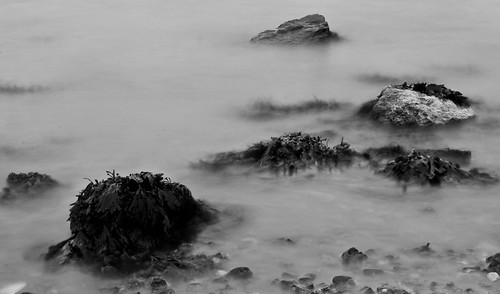
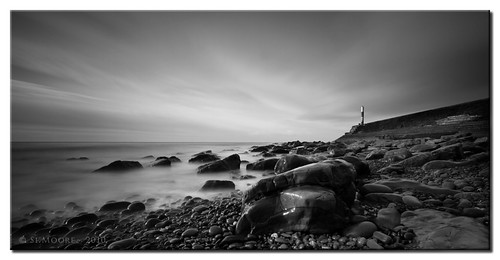
Long Exposures of water

Messages
2,524
Name
Carlo
Edit My Images
Yes
Hello i was by the coast this weekend and took the camera and thought i would try and capture a few shots of long exposures onthe tide, it was a nice day and set up but all all the exposures came out too bright and wasnt sure what i was doing wrong.

i was using shutter priority and a low iso but not sure where i was going wrong.

Any suggestions for future returns to the coast?

thanks
 
What shutter speed were you using? Perhaps it was too bright a day to drop the shutter enough to get the desired effect?
 
Hello i was by the coast this weekend and took the camera and thought i would try and capture a few shots of long exposures onthe tide, it was a nice day and set up but all all the exposures came out too bright and wasnt sure what i was doing wrong.

i was using shutter priority and a low iso but not sure where i was going wrong.

Any suggestions for future returns to the coast?

thanks

were you at southport or formby...

long exposures in daytime needs some kind of neutral density filter to make the light less so that the exposure time is longer without adding any effect

wait for 1 minute and you will get the lot!!
 
i used only about a half second, it was a bright day

you need to be in the 4-15 seconds range

and preferably with decent cloud to get them on time lapse

what is against you is the light...daylight...it has to be reduced in its strength but not quality and temperature as seen by the camera
hence the neutral density filter brigade..
 
you need to be in the 4-15 seconds range

and preferably with decent cloud to get them on time lapse

what is against you is the light...daylight...it has to be reduced in its strength but not quality and temperature as seen by the camera
hence the neutral density filter brigade..

yeah i was aware would need to be longer but through that the longer the time for the exposure the more light so tried at the shortest time first
 
yeah i was aware would need to be longer but through that the longer the time for the exposure the more light so tried at the shortest time first

better read that link for the instructions
its all to do with long exposure not short
you have to be able to control the light reaching the lens...filtration etc
 
If you are new to it, try approaching it from a different perspective.

Go to aperture priority and set your narrowest aperture. Coupled with your lowest ISO, this will give you your slowest shutter speed for that lighting condition.

If the sun goes in, and there is half as much light, you will be able to keep the shutter open twice as long. If you want the shutter open longer, you then reduce the light going into the lens with ND or Polarising filters.

Don't forget your tripod!
 
I would definitely suggest some ND filter, I got a Tiffen kit for around 67 pound from Warehouse Express, comprised for a 1, 2, and 3 stop, put together giving 6 stop. Give you a great range for stops for lot of situations from bright shots that need dulling down a bit to long exposures in the day....worth a look into!
 
Heading back out to he coast and wish to give this another go, what do i need in the way of filters, keep reading about a ten stop filter?
 
grey cloud days early in the mornings work well!

this ones 6 seconds at f22 , iso 100

4325250072_0331ffa222_d.jpg
 
A 10-stop Neutral Density filter is definitely the way to go for long exposures during the day. Be careful to sort your white balance out 'cos these filters have the effect of warming up your images quite considerably. I generally take one shot and then use the data from that image to create a custom white balance. Even with a 10-stop fitted, chances are you'll still need to put an ND grad over the top (unless it's a really murky day).

Here's one I did yesterday afternoon... 90secs at f16. ISO100. EOS 7D. Sigma 10-20mm.

4322614701_27e1581c3c.jpg
 
sorry for sounding like a fool, but all i need is aseries of nd grad filters and i can stack these in the holder until i get enough of a grad? or do i need to buy a ten stop filter?

Seconldy how would i create a custom white balance?

thanks
 
I heard someone say about getting 2 polarising filters, and using them together to make a variable ND filter. You can go to completely opaque!

Has anyone tried this? Can anyone see any problems with it?
 
sorry for sounding like a fool, but all i need is aseries of nd grad filters and i can stack these in the holder until i get enough of a grad? or do i need to buy a ten stop filter?

Seconldy how would i create a custom white balance?

thanks

Hi,
You don't sound like a fool for asking sensible questions! :D

You can stack grads but you'll come unstuck in a few ways... First of all, adding grads will degrade your image quality because of all the extra bits stuck in front of your lens... The less you stick up front, the better! Secondly, all those filters give the incoming light more surfaces to bounce off so you can end up with ghosting and reflections if you're facing the wrong way. You also run the risk of adding unwanted bits to the corners of your images. If you use a wide-angle lens, chances are you'll see the edge of the filter holder. I use a set of Cokin Z-Pro filters and the holder still shows up at the edges if I'm not careful and I'm using my Sigma 10-20mm.

A decent 10-stop (such as the one made by B+W) will set you back £80 so you have to decide if it's worth the investment.

To set a custom white balance take a shot at your normal WB settings (either AWB or Daylight) and then use the data from that image to set a custom. I didn't notice what make of camera you're using but if it's a Canon, move the WB to the one where it shows the two little wedges either side of a little square, go to the Custom WB setting in the menu and select the image you just shot. This should have the effect of making the shot look a lot more realistic. If you use grads over the top of a 10-stop, you may notice some magenta casts in the sky. You can either dial it out when you process your shots or you can leave it. I quite like the effect it gives so I don't always remove it.

Hope that helps a bit,
Si
 
thanks for the information very helpful,

cant quite afford £80 for a 10-stop so was hoping there would be cheaper alternative.

i have a Cokin P120 - Gradual Neutral Grey G1 (ND1.7), would that be of any use? if not would i search for 10-stop?

thanks
 
Have you tried cheap welders glass?:)
 
Hi
I use the Cokin P range of ND filters, I have 3 of them, each one a different density and I can stack them together using the holder. This gives far more control and options as the light will not always be the same.

Here's a picture I took when I first bought them, I must admit I don't use them very often:

cascades.jpg
 
Have you tried cheap welders glass?:)

I have and it's bloody horrible! :) It throws up the most god-awful green tinge that no end of processing can entirely eradicate.

Making sure that the glass is 'light-tight' isn't all that straightforward either (unless you've got an old knackered circular filter you can glue the it to).

n1cky said:
I use the Cokin P range of ND filters, I have 3 of them, each one a different density and I can stack them together using the holder. This gives far more control and options as the light will not always be the same.

Nothing wrong with that shot... The nice thing about shooting in woodland is that it's invariably darker than the prevailing conditions. Nice shot by the way. :)

Si
 
shutter speeds of 1/8 and below up to 30 seconds
if you can tame the light
low iso
ND filters
dusk or dawn
 
think i will try with a few more nd filters stacked for the time being to see how that goes
 
sorry for sounding like a fool, but all i need is aseries of nd grad filters and i can stack these in the holder until i get enough of a grad? or do i need to buy a ten stop filter?

thanks


It's not grads you're after. Grads are half dark, half light and are used for darkening a portion of the image, usually the sky.
 
so not grads, its nd filters i want?

looking at them on ebay they are rated as,

ND2 ND4 ND8, whats the difference?

thanks
 
ND2 is the equivalent of one stop of light less... ND4 is two stops darker... ND8 is three stops darker. etc etc.

Different companies can use different markers though. Formatt call theirs 0.3, 0.6, 0.9 and 1.2 (with others to order). Best bet would be to go for a three stop (ND8) It won't help you a lot on bright, sunny days but it's a start.

To go really dark on sunny days you'll need either a 6 stop or a 10 stop ND and the best of those are made by B+W.

Hope that helps,
Si
 
Back
Top