Macro Lens

Messages
241
Name
Richard
Edit My Images
Yes
Im new to all this and was speaking to someone the other day and he asked if i have a macro lens.

Can someone please explain to me what a Macro lens is and what it does . The pro's and con's Ive had a look at a few websites

Any help is good
 
Basically a true macro lens will allow you to capture life size images (the subject will be the same size on your sensor as it is in reality. This is usually achieved at the minimum focus distance. Most macro lenses will also double as quite tidy portrait lenses too.
 
When looking for a macro lens you need to be aware of a couple of things Minimum working distance (MWD) and magnification ratio which will always be a minimum of 1:1 on a true macro lens.

MWD is the distance from the lens front element to subject where maximum magnification is achieved - heres a few examples

•Sigma 50mm f2.8 EX DG Macro Lens working distance = 4cm / 1.6 inches
•Sigma 70mm f2.8 EX DG Macro Lens working distance = 11.2cm / 4.4 inches
•Sigma 105mm f2.8 EX DG Macro Lens working distance = 12cm / 4.7 inches
•Sigma 150mm f2.8 EX DG Macro Lens working distance = 22.7cm / 9 inches

Magnification Ratio is how big a image is projected onto your sensor , a image of a ruler shot at 1:1 (life size) will show the same size as the sensor in you camera which on your Canon would be 22.8mm.

here's one from a canon crop body @ 1:1

1-1.jpg


at 1:2 (half life size) you will see 2 x your sensor size @ 45.6mm

1:2 from a Canon Crop

1-2.jpg


Also as you will be using small apertures to maximize DOF (personally f11-16 mostly for me) you will need a diffused flash to get the most from any macro lens.
 
Last edited:
Im new to all this and was speaking to someone the other day and he asked if i have a macro lens.

Can someone please explain to me what a Macro lens is and what it does . The pro's and con's Ive had a look at a few websites

Any help is good

A macro lens is designed to take close-up photos of things. Normal lenses focus quite close but a macro lens goes much closer, thus you can see more detail, much more detail in the subject. They are used by people who like to really see the very small details in things. If you like to photograph insects and details in flowers then it could be worth considering one. There are cheaper alternatives than dedicated macro lenses if you only want to do this sort of close-up stuff every now and again.

Hope that helps.

Regards
Chris
 
Thanks guys yeah i kinda get it.

Macro lens good for close up work

Anyone used this.

http://www.jessops.com/online.store/products/66320/show.html

I assume its like 2 lens in one with the option to switch it to a macro lens. Im looking for one so any help on it would be brillant.

Beware the marketing man! Just because a lens has the word Macro on it does not mean it's a true macro. That particular lens isn't that good at all. A proper macro can get to a 1:1. I have 3 a Sony 30mm, a Minolta 100mm and a Sigma 180mm that I have bought over the last 10 years. Prices for a 1:1 macro rage form £250 upwards. You should consider the Canon 60mm or a Tamron, Tokina or Canon around the 100mm mark. But your getting to the £500+ mark for the Canon.

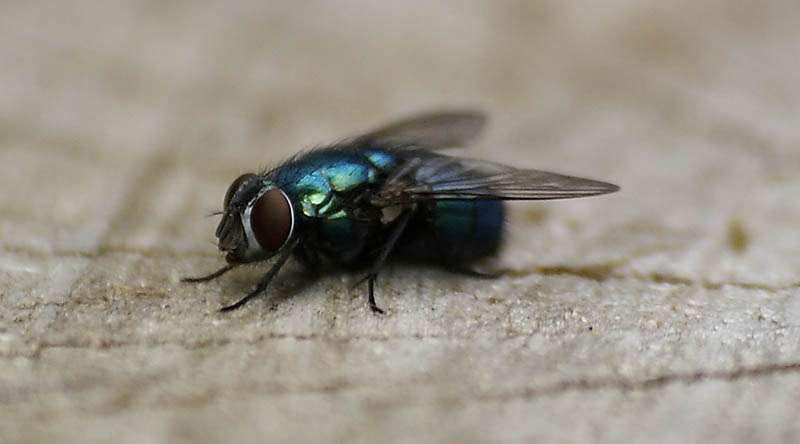
I also have this lens Sigma 70-300mm f4-5.6 APO Macro Super DG Lens - Sony/Minolta Fit http://www.warehouseexpress.com/buy...macro-super-dg-lens-sony-minolta-fit/p1011618 I used it to take this picture.

bluefly.jpg


It's a pretty good compromise as a lens at the price. it gets to 2:1 rather than a true 1:1 but it'll get 80% of the close-up shots you want and give you a decent long zoom as well. There is a cheaper non APO version, don't consider it as it's built down to a price rather than up to a spec.

The real question in do you like taking close up photos?

I would like then idea of take real up close photos as the 2 lens i have dont do the detail i want. But looking at the price of a good macro lens i may have to have a re think.
 
I would like then idea of take real up close photos as the 2 lens i have dont do the detail i want. But looking at the price of a good macro lens i may have to have a re think.

An alternative, and much cheaper approach, would be to try a close-up filter that fits on to the front of your existing lens(es) - Examples are the Raynox 250 (about £30 from Amazon UK), Raynox 150 (about £30), Canon 500d (£100-150 or so depending on filter size) and Canon 250d (£80-£100 or so). The Raynox 250 is the most powerful of these, then the Raynox 150, then the Canon 500d, then the Canon 250d.

If you search on this site for "Raynox", for example, you will find a number of relevant threads.
There are lots of examples here of what you can do with a Raynox 250.
And here are some examples from people here.
 
Last edited:
An alternative, and much cheaper approach, would be to try a close-up filter that fits on to the front of your existing lens(es) - Examples are the Raynox 250 (about £30 from Amazon UK), Raynox 150 (about £30), Canon 500d (£100-150 or so depending on filter size) and Canon 250d (£80-£100 or so). The Raynox 250 is the most powerful of these, then the Raynox 150, then the Canon 500d, then the Canon 250d.

If you search on this site for "Raynox", for example, you will find a number of relevant threads.
There are lots of examples here of what you can do with a Raynox 250.
And here are some examples from people here.


Wow u get that just from A Filter this is going to sound a real newbie question but what do they actually do and how do they work. I assume they just clip on your old lens
 
Wow u get that just from A Filter this is going to sound a real newbie question but what do they actually do and how do they work. I assume they just clip on your old lens

The two Canon lenses screw on like a filter, so you have to get the right size for the lens you are going to use them on (or use step-up/step-down rings to get to the size you need).

The Raynox lenses are more flexible - they come with an adjustable lens holder that clips on to the front of your lens.

There is some more info here.
 
Hi McLovin. Regarding your post a bit further up about the £99 Tamron lens from Jessops, I have one and I love it.

I'm fairly new to the world of DSLRs too. Although I've had my EOS450D for a while I never seem to have time to get out and use it, so at the moment can't justify spending millions of pounds on lenses, as much as I'd love to.

I had been making do with the standard lens supplied with the camera body, which is still great but didn't provide the magnification I wanted a lot of the time. I saw the Tamron lens in Jessops at that price and snapped it up.

Evolutionist is absolutely right in that if you want a true macro lens and higher quality images then you, and I, need to be spending more. With this lens you wouldn't get the clarity or detail shown in his fly photo, but for my level, experience and budget it has served me well.

If you're thinking longer term then it may be worth rethinking, saving up and making the investment in a better quality lens. But if, like me, you want greater magnification want to try your hand at some macro shots sooner rather than later then go for it. I bought mine just before I went on holiday and know I would have regretted it if I'd gone away with just the one lens.

Be aware though that this model has no image stabilisation, which has been slightly problematic on long distance shots.

Hope this helps.
 
Last edited:
If you want to try macro but aren't sure then you can get something similar to the Raynox / Canon close-up lenses much cheaper from eBay. Think i got a set of 4 close-up lenses for around £5 from some random place in China. Quality of the 4x and 10x lenses were appalling, do much so i think i may have just binned them, but the 1x and 2x are ok and gave me the chance to try macro without any (near enough) upfront extra cost. Just get the right size and screw it on the front of your existing lens.

What i think those close-up lenses taught me was that i wouldn't want to spend £30 on a Raynox lens, but would rather have a proper macro lens. They're very good for "studio" macro stuff, but harder to use when out-and-about (limited DoF and focus range). And for me, i've found that i have nothing much at home that's worth taking a mscro photo of, so really need a proper macro lens.

David
 
Can you tell me whats the difference between these 2 lens plz

http://www.warehouseexpress.com/buy-sigma-70-300mm-f4-5-6-apo-macro-super-dg-lens-canon-fit/p1008569

http://www.warehouseexpress.com/buy-sigma-70-300mm-f4-5-6-macro-dg-lens-canon-fit/p1008573

Apart from the price and the fact one says super lens. Sorry for all the questions
The more expensive version is apochromatic (APO for short), it controls chromatic aberrations where a lens acts like a prism and bends different colours at different angles which is a major problem in lenses with a large focal length (eg 300mm). As one uses these sort of lenses at their 'long end' while in 'macro mode' it's makes a noticeable difference to quality.

Don't worry about the questions, we all start in a state of ignorance, the smart ones dig their way out by asking questions!
 
An alternative, and much cheaper approach, would be to try a close-up filter that fits on to the front of your existing lens(es) - Examples are the Raynox 250 (about £30 from Amazon UK), Raynox 150 (about £30), Canon 500d (£100-150 or so depending on filter size) and Canon 250d (£80-£100 or so). The Raynox 250 is the most powerful of these, then the Raynox 150, then the Canon 500d, then the Canon 250d.

If you search on this site for "Raynox", for example, you will find a number of relevant threads.
There are lots of examples here of what you can do with a Raynox 250.
And here are some examples from people here.

These cheaper options do produce very good results but at the expense (in some cases only slight) of ease of use. I tried extension tubes, magnifying filters, reversing rings, cheap macro lenses (Cosina 100mm) etc and it was only when I got to the Minolta 100mm f2.8 that I felt comfortable. Now going all the way to a dedicated and expensive lens is a step I took because I really like macro work. If you are in the experimental stage of finding out what you like then a lens like the Sigma 70-300mm APO is a great compromise as you get a long reach zoom of adequate quality and a 2:1 macro, also of adequate quality, combined in a very good value for money package. And you have the equipment to take good shots straight out of the box, you won't spend your time worrying if it's your kit that is at fault rather than you. I spent a lot of time and wasted a lot of money descending the macro ladder by trying all the 'cheap' options first. If I had known then what I know now I would have saved my pennies and got the dedicated macro lens first. But when I started out lenses like the Sigma did not exist so there was no easy, relatively cheap and effective way to find out if one wanted to go that extra mile and get a dedicated macro lens. The Sigma (or similar spec Tamron) lets you experiment with macro AND gives you a flexible long zoom as well and the long zoom is a 'must have' much more than a dedicated macro.
 
An alternative, and much cheaper approach, would be to try a close-up filter that fits on to the front of your existing lens(es) - Examples are the Raynox 250 (about £30 from Amazon UK), Raynox 150 (about £30), Canon 500d (£100-150 or so depending on filter size) and Canon 250d (£80-£100 or so). The Raynox 250 is the most powerful of these, then the Raynox 150, then the Canon 500d, then the Canon 250d.

If you search on this site for "Raynox", for example, you will find a number of relevant threads.
There are lots of examples here of what you can do with a Raynox 250.
And here are some examples from people here.

IMO this is also good advice if you choose to dabble with alternatives from true 1:1 macro lenses but are still capable of producing 1:1 (or better) levels of reproduction.
 
These cheaper options do produce very good results but at the expense (in some cases only slight) of ease of use.

Absolutely. Over the course of a couple of years on another site I have seen that while some people get on well with the Raynox 250 right from the outset, it can present significant ease of use (or should that be "difficulty of use") barriers to others, sufficient in some cases to make them give up with it. The issue of having to be at the right distance from the subject eventually led me down the road of using a tripod (with a lateral arm) to help stabilise the camera and using a focus rail to make it easier to adjust distance to the subject. (Not using tripod or focus rail in the "classical" way, but the exact technique is a longer story than appropriate for someone else's thread.:))

That is why I regard the Raynox 150 as by and large a better (or at least, easier) place for beginners to start experimenting with, if they do want to try the close-up lens approach.
 
That is why I regard the Raynox 150 as by and large a better (or at least, easier) place for beginners to start experimenting with, if they do want to try the close-up lens approach.

I've just ordered one of these, so I know who to blame if I don't get on with it. :lol:
 
I will be keeping a close eye on the pic's as its something im def thinking of buying now.

FWIW these (like most of my insect shots) were taken with the 150.

Do bear in mind though that you are using a sensor almost 12 times the size of mine, and probably better glass, so you should be able to get better results. On the other hand, I have had quite a lot of practice, and have put quite a lot of effort into sorting out some diffused flash arrangements (which made a huge difference), and I do do quite careful PP. So don't expect it all to fall into place on day one!
 
Back
Top