

Macro photography canon 180mm with 1.4TC attached

Messages
1,176
Name
Amin
Edit My Images
Yes
With the season of bugs and insects here now and starting to enjoy for the first time my Canon 180mm macro lens I am wondering what are the advantages and/or disadvantages of using this fantastic lens with the canon 1.4TC in all general aspects including the slightly longer range, image degradation if any, etc.

I had a go with it past couple of days with the TC and only have used it this way, so today weather permitting will go out without the tc.

I have used the Canon 300mm prime until now to photograph bugs and insects while out trying to catch some birds and was reasonably happy with the images, and the convenience was great due to the fact I didn't need to keep changing lenses constantly between it and the macro, and the IS allowed me to shoot handheld. With the macro lens I find almost impossible to shoot handheld.

Images below were taken with the macro lens and TC and the other ones with the canon 300mm prime. Any tips, advice on what is more adequate or how you usually manage situations where you are on location where there are plenty of birds and insects also at the same time and what do you usually do as its impossible to keep changing lenses while out in the wild would be greatly appreciated.

Many thanks

Below images taken with the 300mm prime handheld. I wonder if tripod would have made a difference in these cases

4666834699_b9ff440497_b.jpg


4665995900_02a5f2ac56_b.jpg


4664198072_9e8d95161c.jpg


Below images with the 180mm macro and the 1.4TC. Am wondering if not using the TC here would have improved the images, or given me a better option due to magnification issues etc.
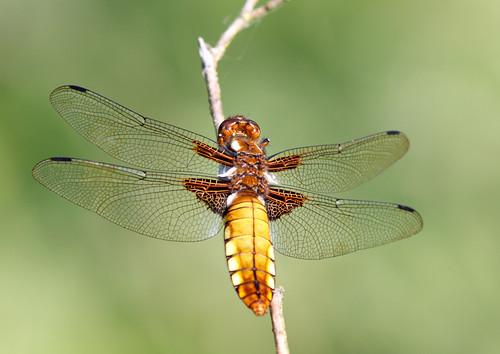
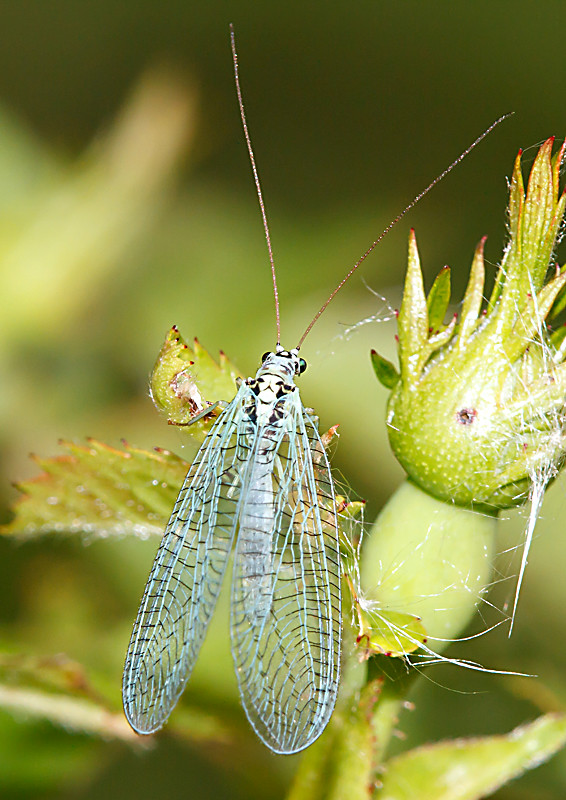
4671545803_1aa9900417.jpg


4674273393_3cc7fb82fb_b.jpg


4675064704_af755e0704.jpg
 
What's your problem exactly? What are you trying to do that you cannot currently?
 
What's your problem exactly? What are you trying to do that you cannot currently?

I am just trying to find how people who do macro and bird photography at the same time usually do. Do they carry both lenses and keep changing it, which I think its quite difficult, or they just use the prime, in this case the Canon 300mm USM to take shots of insects and butterflies too when the chance arises
 
Says 180mm in the thread title :thinking:

Yes, that's correct. I have taken these ones with the 180mm macro plus 1.4TC. But I do take some with the 300mm prime also as its quite good due to its very short focal length.

I guess I have confused readers with what I am trying to ask
 
I am just trying to find how people who do macro and bird photography at the same time usually do. Do they carry both lenses and keep changing it, which I think its quite difficult, or they just use the prime, in this case the Canon 300mm USM to take shots of insects and butterflies too when the chance arises

I think the simple answer is, they don't! Or at least not with the same lens.
 
I think the simple answer is, they don't! Or at least not with the same lens.
Thanks for that :)
I kind of had that impression.

I find it more plausible that people going out for macro shots might just go with the macro lens or vice versa.

Having said that the Canon 300mm Prime seems to do a fantastic job at close up of flowers and insects too
 
Two bodies & two lenses perhaps? One set up for birding and another for macro.

300mm is not very long for birding many would use much longer than that.
 
300mm is not very long for birding many would use much longer than that.

Yup, ideally I would love to go longer too :), but to get good IQ I would have to stash much more. I make do with the prime and a Canon 1.4TC.
Used to have, hmm actually still have the bigma and the sigma 150-500mm which I am selling by the way. They are a bit on the heavier side and truth is the convenience and the IQ of the 300mm coupled with the TC more than makes up for the 80mm shorter range compared to the 500mm
 
I am just trying to find how people who do macro and bird photography at the same time usually do.

If your 300mm is a Canon 300/4 then a 500D diopter will give you a light weight option to stick in your pocket for bugs and butterflies.

Bob
 
I often use the 300/4 with some extension tubes that I have quickly taken off if there is something in the sky or perch that I just can not let go!!
 
I am just trying to find how people who do macro and bird photography at the same time usually do. Do they carry both lenses and keep changing it, which I think its quite difficult, or they just use the prime, in this case the Canon 300mm USM to take shots of insects and butterflies too when the chance arises

are you using the 300 f4L non is??
 
If your 300mm is a Canon 300/4 then a 500D diopter will give you a light weight option to stick in your pocket for bugs and butterflies.

Bob


Oh that sounds fantastic. Didn't know there was such a thing. I will check that one.
And yes its the 300mm f/4.0 IS version. Its fantastic for birding as I attach the canon 1.4TC on it and it gives me 420mm, although still short compared to standard birding lens ranges but I still prefer it compared to the bigma or the sigma 150-500mm.

Thank you all so much for such excellent feedback and advice
 
I often use the 300/4 with some extension tubes that I have quickly taken off if there is something in the sky or perch that I just can not let go!!

Hmm, how does this work? extension tubes on the 300mm f/4? Does this mean that it gives good macro possibilities?
 
Oh that sounds fantastic. Didn't know there was such a thing. I will check that one.
And yes its the 300mm f/4.0 IS version. Its fantastic for birding as I attach the canon 1.4TC on it and it gives me 420mm, although still short compared to standard birding lens ranges but I still prefer it compared to the bigma or the sigma 150-500mm.

Thank you all so much for such excellent feedback and advice

sorry off topic i know, but wondering the IQ difference between the 300mm f4 and the 2 siggy lenses. ?
 
sorry off topic i know, but wondering the IQ difference between the 300mm f4 and the 2 siggy lenses. ?

I have a friend who swears by the bigma. And with regard to the sigma 150-500mm I was pretty happy with it too, and its a fantastic range. Price is fantastic, fraction of the cost of the Canon prime 300mm too. But for me weight became a factor. I travel a lot to Africa and other countries too and carrying all that was really becoming problematic, not knowing what to take and to leave behind. I have the Canon 70-200mm IS f/2.8 too which is quite heavy. Time came that I was literally trying to count each 100gm and calculate stuff, so when funds became available I immediately bought the Canon 300mm f/4. and the 1.4TC. The combo ends up being quite expensive compared to the siggies but IQ wise, well its a prime so no need for words there. And you do get what you pay for I must say.
Having said that, the sigmas are also fantastic and great value for money.

You are not in the market for one of the siggies by the way are you? :), I am selling them and they are almost new, used them only handful of times
 
would have been last week, but im just about to buy a 300mm prime non is, i have a siggy 135-400mm in the sale section im trying to sell so i can also get a 1.4 tc.. love your pics with the combo (although its the IS version)..

how much you after for the two siggys out of interest?
i know 'HASHCAKE' is after a 150-500mm :)
 
If you are wanting to part company with your other lenses you should place an add in the classified section, I am sure someone will buy them!
 
Oh that sounds fantastic. Didn't know there was such a thing. I will check that one.
And yes its the 300mm f/4.0 IS version. Its fantastic for birding as I attach the canon 1.4TC on it and it gives me 420mm, although still short compared to standard birding lens ranges but I still prefer it compared to the bigma or the sigma 150-500mm.

Thank you all so much for such excellent feedback and advice

If you don't want to go too close, flowers and butterflies that sort of thing, a diopter (close-up lens attachment) might do the trick. Or extension tubes.

Caon 500D is +2 diopter, but expensive because it's a nice quality doublet.
http://www.amazon.co.uk/dp/B0000C4G...ode=asn&creative=7974&creativeASIN=B0000C4G6O

Most close-up lenses are singlets like this cheaper Hoya http://www.warehouseexpress.com/buy-hoya-77mm-close-up-filter-2/p11984

Extension tubes would be my choice on an image quality basis, but there's no denying a close-up lens is very convenient - slips in a shirt pocket and you don't have to remove the lens. Kenko tubes are good http://www.warehouseexpress.com/buy-kenko-dg-canon-af-extension-tubes-set-36mm-20mm-12mm-/p1005553

Thank you so much for those links. I will definitely prioritise image quality and then obviously ease of carrying it. That would solve my problems :)

Thanks again for all the advice, going to look into that now
 
I decided to go back and look again at couple of images I took at a very close range with the Canon 300mm f/4 plus the 1.4TC. 100% crops of the images and I think the IQ really stands up well to use it around and shoot probably some insects and butterflies. The images were all taken handheld.

Now my dilemma is, would extension tubes or a diopter improve further or would it make taking shots of smaller bugs more comfortable? I am definitely inclined towards a diopter due to ease of carrying it and also how quickly I could use the lens for birds or as a macro.

I think my next experiment will be taking a monopod or tripod with me and use the 300mm plus the TC and see the difference.

_MG_1126cropped.jpg


_MG_0961cropped.jpg
 
I will have a go tomorrow, but I have a feeling that even with the 1.4x extender and a 12mm extension tube, the 300L f4 IS may still also focus to infinity.
 
I will have a go tomorrow, but I have a feeling that even with the 1.4x extender and a 12mm extension tube, the 300L f4 IS may still also focus to infinity.

Ed
You will have to excuse my ignorance but these technical aspects and jargons are still a bit beyond my grasp, for now at least as I am trying to catch up and learn stuff as quickly as I can :), so what exactly do you mean by "still focusing to infinity"? What are the implications? Is it in terms of IQ or ability to focus something closer?
 
I also have the EF180L macro and for 1:1 macro stuff (IMHO) the 180 really is the dogs dangly bits :) I also find it to be an excellent all round nature lens! ... Okay, it doesn't have the range I would like for some shots :thinking: but it does work fine with the Canon extenders for extra range :thumbs: I've even used it for Astro stuff with excellent results :cool:
 
Ed
You will have to excuse my ignorance but these technical aspects and jargons are still a bit beyond my grasp, for now at least as I am trying to catch up and learn stuff as quickly as I can :), so what exactly do you mean by "still focusing to infinity"? What are the implications? Is it in terms of IQ or ability to focus something closer?

Adding an extension tube to a lens allows it to focus closer than it normally would and with no loss of IQ, but the downside is that you usually lose the potential to focus to infinity.

As an example and depending on the lens you may change the focussing range from say 4ft - infinity to perhaps 2ft - 30ft by adding an extension tube. This gives an added degree of magnification with the benefit of no loss of IQ.

Some lenses (and the 300L f4 IS is one) have the facility for the focus control to move beyond infinity, this can allow a small extension tube to be used and still allow infinity focussing, thereby reducing the closest focussing distance and increasing the magnification for close-up shots, but still allowing the lens to be used for normal photography without removing the extension tube as would normally be the case.

The only disadvantage in this case would be a very small loss of light reaching the sensor which would be catered for by your in-built light meter!

Hope this helps!

Ed, thank you for this explanation. I get it now.
So basically the extension tube would allow me to focus closer than usual with the 300mm f/4 coupled with the 1.4TC and then still allow me to take shorts of birds.
But are you saying that I would be using extension tube along with the 1.4TC as well? Because otherway 300mm is way too short for birding, heck even 420mm (with the TC) is short :).

Please let me know what your conclusions are after experimenting today the setup you mentioned
thanks
 
Adding an extension tube to a lens allows it to focus closer than it normally would and with no loss of IQ, but the downside is that you usually lose the potential to focus to infinity.

<snip>

It's not true that using and extension tube allows closer focusing without any loss of image quality.

Obviously an empty tube has no glass in it to interfere with what the lens is doing, but lenses always perform better at one focusing distance and the further you move away from that optimised point, which is usually somewhere around middle distance to infinity, the worse it gets.

Extreme close focus is where you see the difference most, which is why we have dedicated macro lenses. They are more complex and more highly corrected to cope with the extremes of distance, compared to 'normal' lenses of similar spec. For example, Canon 180L 3.5 macro has 14 elements, 200L 2.8 has nine; 100 2.8 macro has 12 elements, 100 2 has eight.

Having said that, many lenses do perform very well with extension tubes, and better than with diopters attached, but they're not at their best.
 
Back
Top