Macro setup

Messages
331
Name
Max
Edit My Images
Yes
What macro lens do you all use and what is the best setup on a budget?

can you still get ok results on lenses which aren't dedicated macro lenses, ie: minolta 70-210 beercan, 400mm Sigma prime

Is a raynox any good, does anybody have any pictures taken with Raynox, if so what other lens was used with the Raynox?
 
Last edited:
The raynox DCR 150 and DCR 250 are superb ways of getting into macro on a budget.

They go very well on telephoto zooms, I think your 70-210 would be perfect.
Be prepared to have to get very close to the subject to get it in focus (some people are flummoxed by this when they first put the raynox on).
I'd definitely recommend starting with a raynox, you'll lose relatively little cash if you decide you can't be bothered with it, or you may end up investing in a proper macro-lens later.

The DCR-150 works well for things like small flowers or larger insects like butterflies, whereas the DCR-250 is more powerful and works well for smaller insects and the like.


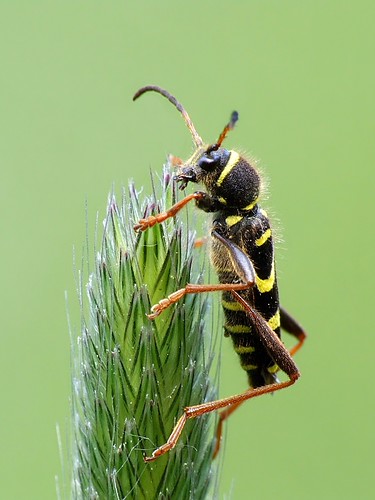
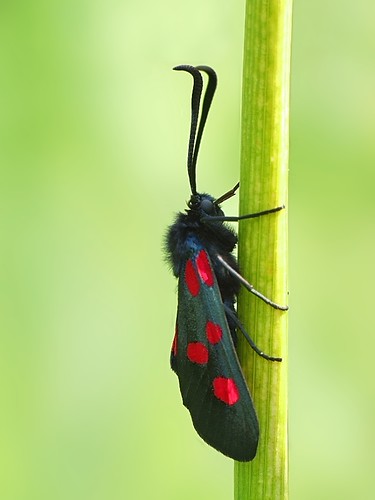
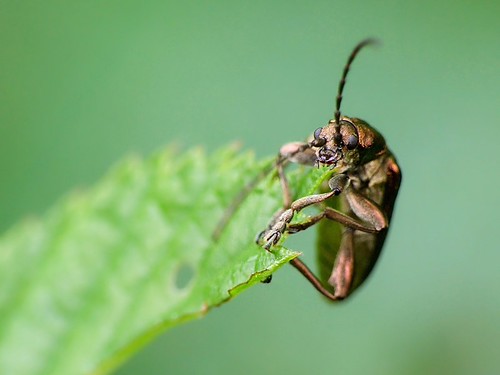
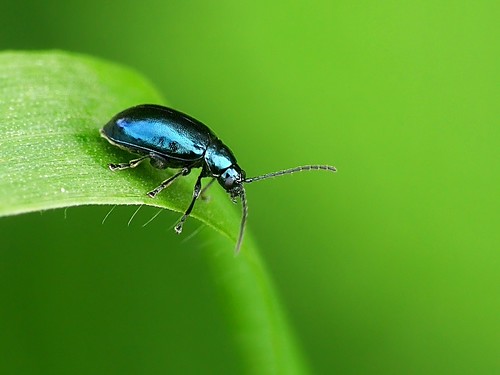
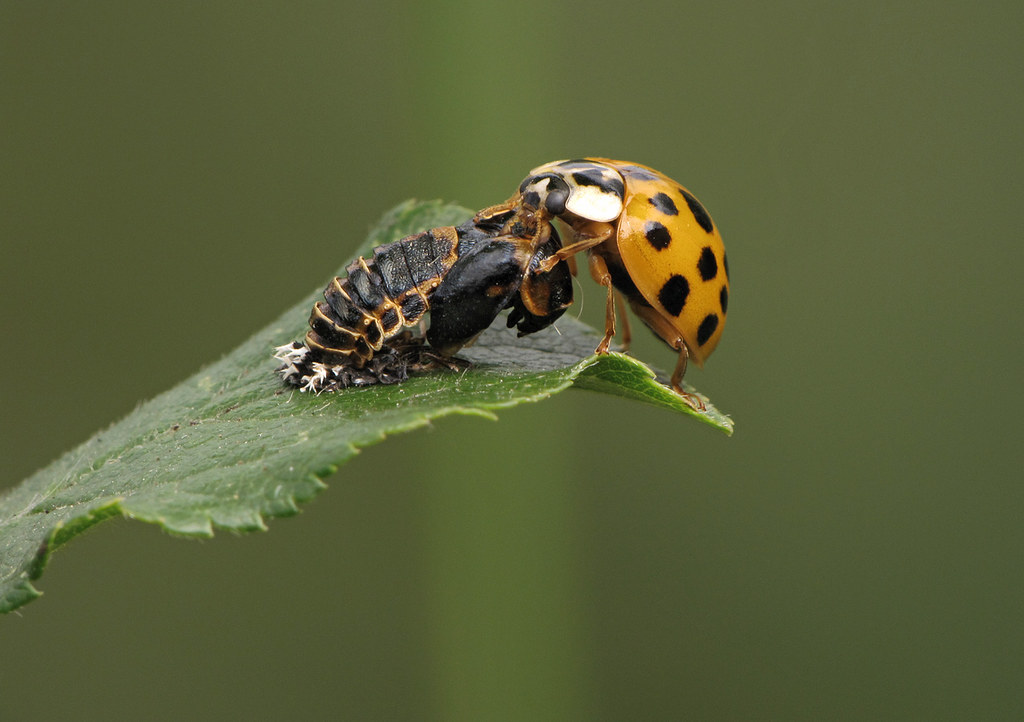
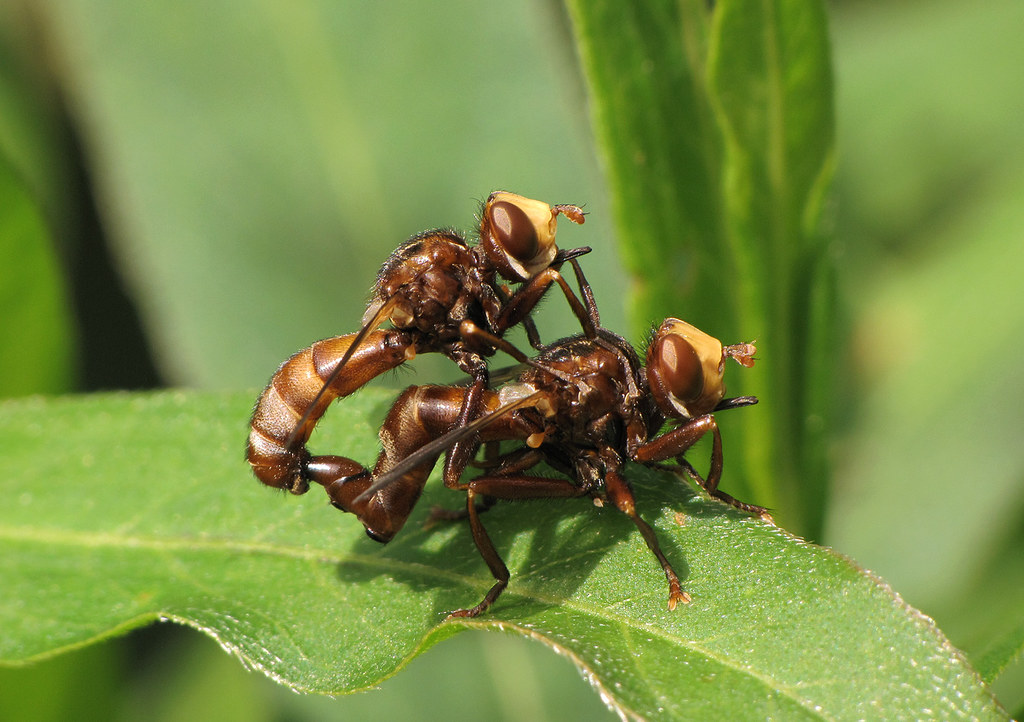
Here's a few samples, actually taken with the DCR-250 on a fuji super-zoom camera, I'd expect better quality from it mounted on a DSLR with tele.


Wasp beetle by Adamhawtin, on Flickr


5-spot Burnet by Adamhawtin, on Flickr


holding on. . . by Adamhawtin, on Flickr


British wildlife photography awards 2010 young awards winner by Adamhawtin, on Flickr


Be prepared to get very frustrated and very addicted though, such is the nature of macro ;)

Hope that helps.
 
Last edited:
The beercan is quite a nice general purpose telephoto having the benefit of being able to focus quite close without any attachments giving about 1:4 magnification. This is good enough for larger butterflies and dragonflies. I've also used a 58mm Canon 500D close up lens with it with a 55mm/58mm step-up ring. It's achromatic and well worth the extra over cheaper ebay type stuff.

I had a Raynox 250 lens for a while, a good quality lens but it was a little too powerful for what I was using it for (butterflies) and I found it difficult to work with.

If you want to go upmarket, look out for a Minolta 100mm macro. I've seen these for under £300, and if you get a clean one it'll be worth every penny.

I would avoid the Sigma 105mm macro with your Sony camera as they have a habit of mashing the AF ring gear. Not such a problem with other mounts.
 
I use the Raynox 250, Raynox 150 and Canon 500D, since August on a Panasonic G3 with 45-200mm lens, and prior to that on an SX10is bridge/superzoom. The Raynox 250 and 150 cost about £45, the 500D comes in various sizes, the 58mm version I use costs about £80.

The 250 is the most powerful, the most difficult to use and you have to be nearest to the subject with it, around 4 inches. I use this mainly for small insects and droplets.

The 150 is middling in power, easier to use, with the subject 6-8 inches or so away. I use this mainly for insects, spiders, snails and very small flowers, buds and the like.

The 500D is least powerful, very easy to use, with the subject (haven't measured this) around, I think, 14 -20 inches away. I use this mainly for flowers and larger insects such as butterflies, crane flies, dragonflies and damselflies.

Were I starting out now, knowing what I know now about them, I would start with the Raynox 150. However, if what you really want is to get as close in as possible then start with the 250, but be warned that some people (most perhaps, I don't know, but I wouldn't be surprised) find it a bit tricky for a while until they get to grips with it. If you were particularly interested in flowers, I would recommend the 500D. Otherwise, I think the 150 is a good compromise in terms of the size of scene/subject that it covers and its (relative) ease of use.

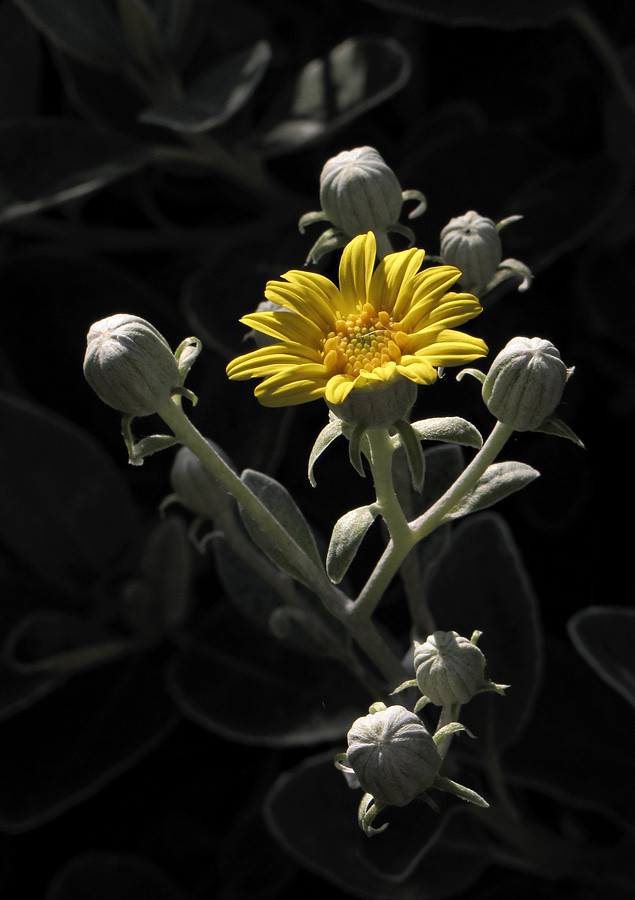
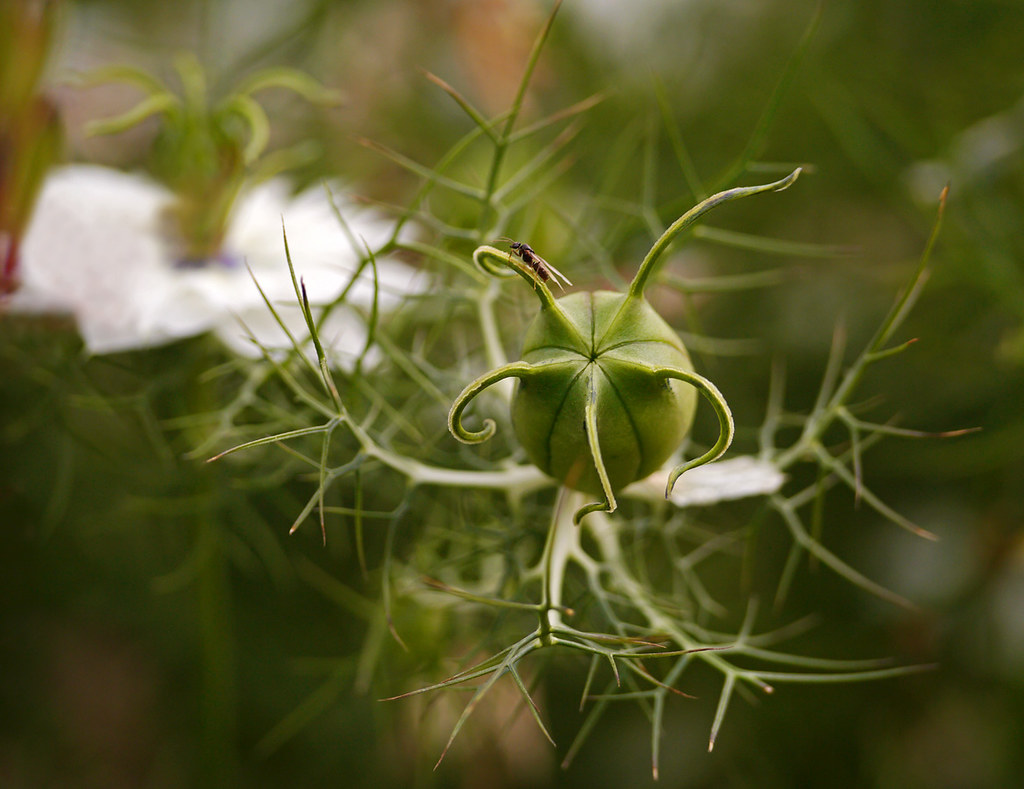
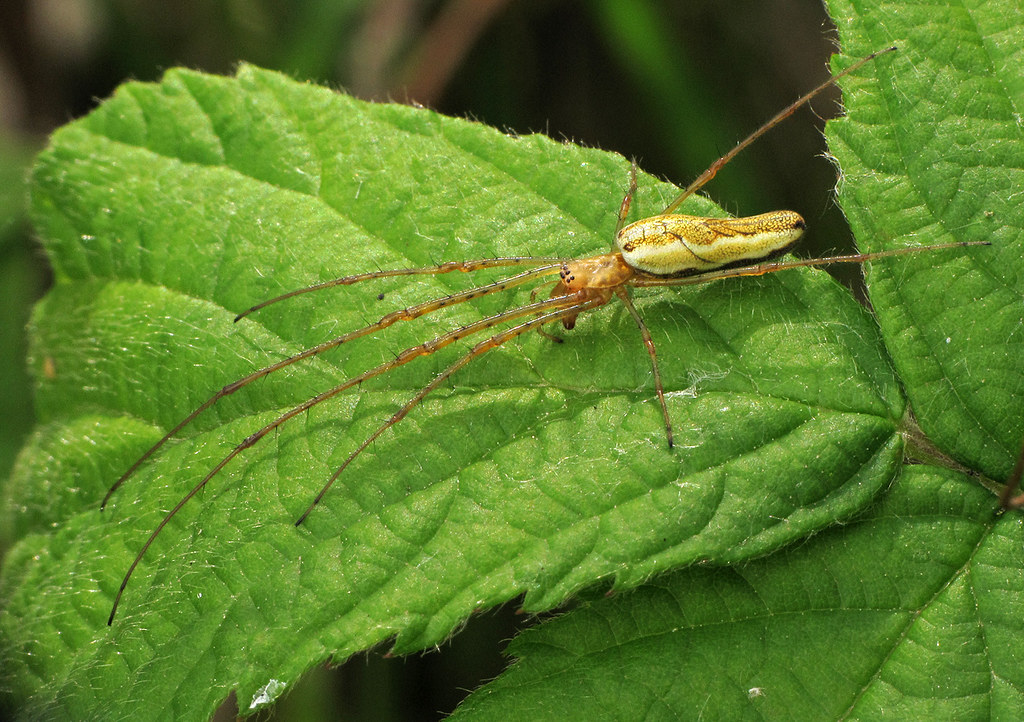
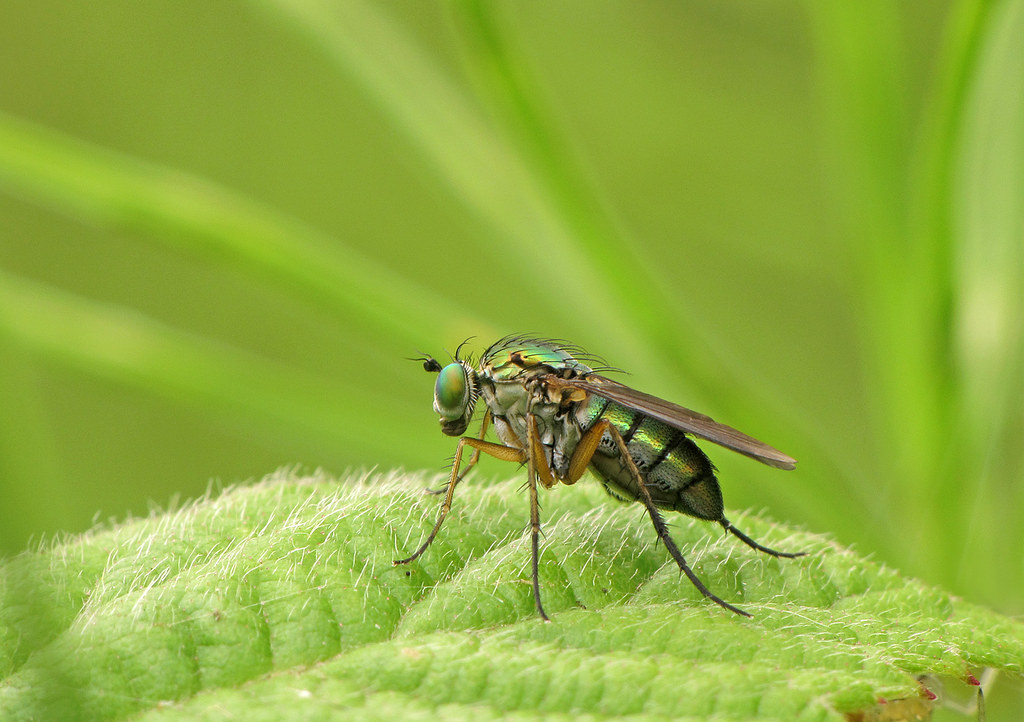
Here are some examples. All natural light. All SX10is except the second one. The first two probably used the 500D and the others probably used the 150. I got the 250 first, but since I got the 150 I haven't used the 250 much.


0361 7 2011_06_10 IMG_2830 Brachyglottis PS1 CrDf7x30LebSaCuInvSelExCu900hSS40x0.3 by gardenersassistant, on Flickr


0378 01a 2011_08_22 P1050227 PS1a ClCrLetDf7x30LebExCuSaHi900hSS52x0.3 by gardenersassistant, on Flickr


0355 35 2011_05_09 IMG_5595 PSp1 ClDoHiLeDf7x30LebSaCuSelInvExGaCu900hSS74x0.3 by gardenersassistant, on Flickr


0363 18 2011_06_06 IMG_2531 PS1 CrClLetbShadSaCuExGaCu900hSS96x0.3 by gardenersassistant, on Flickr


0366 50 2011_06_30 IMG_8252 PS1 CrDf7x30LebSaCuExShadCu900hSS44x0.3 by gardenersassistant, on Flickr


0365 069 2011_06_24 082 IMG_4812 PS1 ThrLeDf4x30LebSaCuExCuCr900hSS55x0.3 by gardenersassistant, on Flickr
 
Last edited:
I'm not much of a macro fan, but that's an outstanding image, Nick :thumbs: Great light, colour and composition.

Thanks very much Richard.

And all that's been said about the Raynox as an introduction to macro - it could be all you ever need. 40 quid bargain, and goes great on a tele-zoom :)

I agree. IMO achromats are a good place to start, and may be all that some people need. It is certainly an economical way to discover if you have the macro/close-up gene/addiction. My only caveat would be that because you have to be at a suitable distance from the subject with an achromat, it is probably a more difficult to use than a dedicated macro lens. (I am guessing, because I have never used a dedicated macro lens. I would very much like to, but haven't found the combination of kit that would work for me yet. Complicated story.)

This difficulty is especially the case for the 250 where there is rather small range between the nearest and furthest you can be from the subject and still get a sharp image. With the G3 at 200mm (to cover a scene width of about 11mm) I measured that range as between about 102 and 119 mm.

I find it quite easy to get that distance right because I use autofocus, and if the distance is unsuitable I can't gain focus, in which case I change the distance until I can. However, I believe that almost everyone else uses manual focus, or fixed focus and back and forth "rocking", in either case judging by eye when best focus is achieved. This does not give a definitive, automatic judgement as to whether the distance is suitable, and therefore allows images to be captured from outside of the optimum distance range. When the distance is outside that range, even in the best case where the photographer adjusts the focus ring or the distance to get precisely the sharpest focus, the focus and detail will nonetheless be sub-optimal compared to what can be achieved within the optimum distance range. Whatever the equipment used, macro/close-up work presents a number of challenges, but I think this is an additional challenge faced by achromat users.
 
Thanks very much Richard.


I agree. IMO achromats are a good place to start, and may be all that some people need. It is certainly an economical way to discover if you have the macro/close-up gene/addiction. My only caveat would be that because you have to be at a suitable distance from the subject with an achromat, it is probably a more difficult to use than a dedicated macro lens. (I am guessing, because I have never used a dedicated macro lens. I would very much like to, but haven't found the combination of kit that would work for me yet. Complicated story.)

This difficulty is especially the case for the 250 where there is rather small range between the nearest and furthest you can be from the subject and still get a sharp image. With the G3 at 200mm (to cover a scene width of about 11mm) I measured that range as between about 102 and 119 mm.

I find it quite easy to get that distance right because I use autofocus, and if the distance is unsuitable I can't gain focus, in which case I change the distance until I can. However, I believe that almost everyone else uses manual focus, or fixed focus and back and forth "rocking", in either case judging by eye when best focus is achieved. This does not give a definitive, automatic judgement as to whether the distance is suitable, and therefore allows images to be captured from outside of the optimum distance range. When the distance is outside that range, even in the best case where the photographer adjusts the focus ring or the distance to get precisely the sharpest focus, the focus and detail will nonetheless be sub-optimal compared to what can be achieved within the optimum distance range. Whatever the equipment used, macro/close-up work presents a number of challenges, but I think this is an additional challenge faced by achromat users.

I don't know about achromat, which is a design of lens to correct colour focus. The Raynox is a 'diopter' - a supplementary close-up lens, basically like spactacle lenses or, in higher magnifications, a magnifying glass.

One diopter has a focal length of 1000mm, and the Raynox 250 is something like +8 diopters as I recall, which means it will focus a subject at 1000mm/8 = 125mm, which tallies with your findings. Adjusting the lens focus makes very little difference at that range, but zooming it changes the field of view so there's still a bit more versatility than you get with a pukka fixed prime macro.

The Raynox is also a triplet design, which gives much better edge sharpness than the basic singlet types (eg from the bay) which are rubbish at high magnifications like this. Raynox 150 is about +5 diopters I think, and the Canon 500D is +2 (hence the 500 bit, D meaning doublet).

The reason why I believe the Raynox works so well for most people is that normal subjects like flowers and insects are three-dimensional, usually positioned around the centre of the image, and a bit of distortion goes unnoticed. Plus you have to shoot at high f/numbers anyway to get enough depth of field. Proper macros are designed to be very sharp, right to the edges, at low f/numbers and with zero distortion, which makes them good for critical flat subjects like stamps and coins etc. You just don't need that for bugs :D
 
I don't know about achromat, which is a design of lens to correct colour focus. The Raynox is a 'diopter' - a supplementary close-up lens, basically like spactacle lenses or, in higher magnifications, a magnifying glass.

My understanding is that the 150, 250 and 500D are all achromatic (one reason why they use more than one piece of glass, unlike the close-up filter sets of which each one in the set is a single piece of glass, and prone to chromatic aberration).

One diopter has a focal length of 1000mm, and the Raynox 250 is something like +8 diopters as I recall, which means it will focus a subject at 1000mm/8 = 125mm, which tallies with your findings. Adjusting the lens focus makes very little difference at that range, but zooming it changes the field of view so there's still a bit more versatility than you get with a pukka fixed prime macro.

Could you explain the nature of this extra versatility please? You've lost me here. As I understand it you use the zoom to change the field of view/magnification with a diopter, and you change the field of view/magnification with a prime macro lens by changing the distance to the subject. On the face of it, they seem equally versatile, but employ different means to get there. I suspect I have missed something here.:)

Actually, I'm a bit puzzled too about "Adjusting the lens focus makes very little difference at that range ". Is this a typo, as in "Adjusting the lens focus makes very little difference to that range", which is I believe the case, assuming "that range" is the working distance, or the range of working distances at which sharp focus can be gained. But if "at" was indeed intended, then makes little difference to what?

Incidentally, for anyone considering a diopter, there is a bit of a complication here, caused by the fact that a diopter will only work at a particular range of distances from the subject. Typically you mount the diopter on the front of a zoom lens. You change the field of view by zooming. If the lens extends when it zooms then this changes the distance to the subject. So, suppose you have the camera the right distance from the subject and get the subject in focus, but you then want to change the field of view/magnification. After zooming to change the field of view/magnification (which also changes the distance between the diopter and the subject) you may have to move the camera towards or away from the subject before you can get a sharp image with the new field of view/magnification.

The more powerful the diopter, the more pronounced this issue is. In my experience, of the 150, 250 and 500D, this is a significant issue for the 250, and little or no issue for the 500D. As with everything else, the 150 is somewhere between the other two.

There are some compact/bridge cameras which allow you to attach a tube to the camera to which an achromat [EDIT: should be diopter] (amongst other things) can be fixed. As you zoom the camera lens extends and retracts within the tube, and this does not alter the position of the diopter. This simplifies using a diopter on these cameras as changing the field of view/magnification does not alter the distance between the diopter and the subject.

The Raynox is also a triplet design, which gives much better edge sharpness than the basic singlet types (eg from the bay) which are rubbish at high magnifications like this. Raynox 150 is about +5 diopters I think, and the Canon 500D is +2 (hence the 500 bit, D meaning doublet).

The Raynox 250 is indeed 8 diopters. The 150 is 4.8 diopters.

For the sake of completeness for anyone interested in these details, I believe the "500" in the 500D refers to the distance at which focus will be gained with the camera lens set to infinity, which is 1000/diopters, which is 1000/2 = 500mm for the 500D. (I have also seen this expressed as "the 500D close-up lens changes closest focusing distance from infinity to 500mm from front of [500D] lens" - I think I know what they mean, but shouldn't this be "furthest focusing distance"?:thinking:)

Similarly, I believe the Canon 250D is 4 diopters, for which 1000/4 diopters is 250mm. For the Raynox 150, which is 4.8 diopters, 1000/4.8 diopters is 208mm.

The reason why I believe the Raynox works so well for most people is that normal subjects like flowers and insects are three-dimensional, usually positioned around the centre of the image, and a bit of distortion goes unnoticed. Plus you have to shoot at high f/numbers anyway to get enough depth of field. Proper macros are designed to be very sharp, right to the edges, at low f/numbers and with zero distortion, which makes them good for critical flat subjects like stamps and coins etc. You just don't need that for bugs :D

That is very interesting. Thanks for that.

 
Last edited:
My understanding is that the 150, 250 and 500D are all achromatic (one reason why they use more than one piece of glass, unlike the close-up filter sets of which each one in the set is a single piece of glass, and prone to chromatic aberration).

Yes, they may well be achromatic by design, as any decent lens is, but they are diopters by type.

Could you explain the nature of this extra versatility please? You've lost me here. As I understand it you use the zoom to change the field of view/magnification with a diopter, and you change the field of view/magnification with a prime macro lens by changing the distance to the subject. On the face of it, they seem equally versatile, but employ different means to get there. I suspect I have missed something here.:)

My comment was poorly expressed. Yes, both different means to the same end, more a different way of working than a necessarily better way.

Actually, I'm a bit puzzled too about "Adjusting the lens focus makes very little difference at that range ". Is this a typo, as in "Adjusting the lens focus makes very little difference to that range", which is I believe the case, assuming "that range" is the working distance, or the range of working distances at which sharp focus can be gained. But if "at" was indeed intended, then makes little difference to what?

Semantics. "to that range, at that distance" if you prefer. Simply meaning that the focusing ring will normally cover a very large range from infinity to a couple of feet, but with the Raynox attached that range is reduced to a few inches total.

Incidentally, for anyone considering a diopter, there is a bit of a complication here, caused by the fact that a diopter will only work at a particular range of distances from the subject. Typically you mount the diopter on the front of a zoom lens. You change the field of view by zooming. If the lens extends when it zooms then this changes the distance to the subject. So, suppose you have the camera the right distance from the subject and get the subject in focus, but you then want to change the field of view/magnification. After zooming to change the field of view/magnification (which also changes the distance between the diopter and the subject) you may have to move the camera towards or away from the subject before you can get a sharp image with the new field of view/magnification.

The more powerful the diopter, the more pronounced this issue is. In my experience, of the 150, 250 and 500D, this is a significant issue for the 250, and little or no issue for the 500D. As with everything else, the 150 is somewhere between the other two.

There are some compact/bridge cameras which allow you to attach a tube to the camera to which an achromat [EDIT: should be diopter] (amongst other things) can be fixed. As you zoom the camera lens extends and retracts within the tube, and this does not alter the position of the diopter. This simplifies using a diopter on these cameras as changing the field of view/magnification does not alter the distance between the diopter and the subject.

Sure, there are various operational quirks.

The Raynox 250 is indeed 8 diopters. The 150 is 4.8 diopters.

For the sake of completeness for anyone interested in these details, I believe the "500" in the 500D refers to the distance at which focus will be gained with the camera lens set to infinity, which is 1000/diopters, which is 1000/2 = 500mm for the 500D. (I have also seen this expressed as "the 500D close-up lens changes closest focusing distance from infinity to 500mm from front of [500D] lens" - I think I know what they mean, but shouldn't this be "furthest focusing distance"?:thinking:)

Similarly, I believe the Canon 250D is 4 diopters, for which 1000/4 diopters is 250mm. For the Raynox 150, which is 4.8 diopters, 1000/4.8 diopters is 208mm.


That is very interesting. Thanks for that.

Just on that last bit, I could add that with most macro subjects, three quarters of the frame is out of focus anyway, and if the subject is around the centre it doesn't matter if optimum sharpness falls away round the edges. Plus diopters deliver much better sharpness across the frame at higher f/numbers, which you would normally be using to maximise what little DoF you've got anyway. It's just a little series of win-wins that makes the cheapy Raynox work very well for the way in which many people shoot macro.
 
Last edited:
Anybody selling their Raynox? :)

Careful with innocent questions like that Max! You'll get clobbered by the mods for trading outside the classified section.

I did - for selling a Raynox! LOL
 
Simply meaning that the focusing ring will normally cover a very large range from infinity to a couple of feet, but with the Raynox attached that range is reduced to a few inches total.

Ah, I understand. I had missed the point entirely. Thanks for clarifying that.

Just on that last bit, I could add that with most macro subjects, three quarters of the frame is out of focus anyway, and if the subject is around the centre it doesn't matter if optimum sharpness falls away round the edges. Plus diopters deliver much better sharpness across the frame at higher f/numbers, which you would normally be using to maximise what little DoF you've got anyway. It's just a little series of win-wins that makes the cheapy Raynox work very well for the way in which many people shoot macro.

Even more interesting! Thanks again.
 
Back
Top