Making animal portraits/actions shots etc. 'different'?

Messages
1,583
Edit My Images
Yes
I hope I can make sense of this....
Today whilst in the garden taking pictures of my cats, and then later my african grey[not in the garden!:lol:] I realised that all my shots invariably look the same, the african grey's shots more than the cats as they're 'easier' to work with.

But I don't know what I can do to improve the composition and looks of my shots of the parrot, because at the moment it's all head shots and only rarely are they a bit 'different'

I'll link to my Flickr so you guys can get an idea. But I'd like to know what I can do to improve? I'm trying different angles etc but am limited at the moment as to what I can do because I only have the kit lens and therefore can't get too far on the ground to look up, or too far up, to look down without taking in the rest of the room to the picture.......

Oh and I do try rule of thirds as much as possible, but can never seem to make it work perfectly well :shrug: and the 'best' shots in my eyes always end up being the boring center focus shots.

Flickr

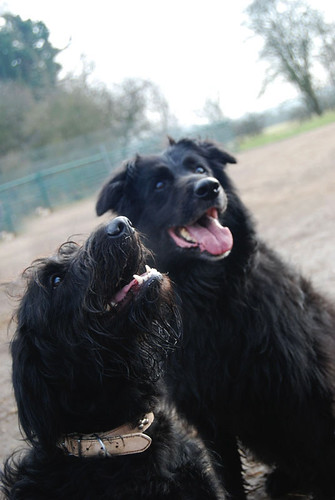
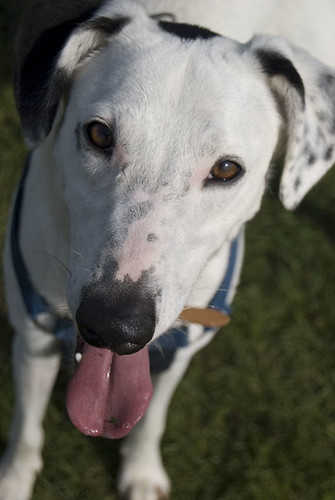
Edit: just thought of another example, whilst looking through the portrait shots I have taken for my local rescue centre, so that I could enter them into another rescue's photo competition, I realised that almost all the portraits are the same boring thing. Dog on the right of the image with a bunch of green grass filling the rest of the frame. *yawn* they look OK at the time and individually too, but seeing them altogether it made me realise my shots are really....boring :(
 
I would be inclined to try things like having the african grey in a more environmental/foliage setting - like you have in the shot with the palm, bg but also not having the chair in shot. Also more close up head shots with a narrow DOF so that the cage environment is not so dominant. Similar shots with the cat.
 
You already said yourself what is wrong with most animal pictures - they are too static. To make them different you need to get movement - get the animals doing something rather than ust sitting posing (or dozing). It's much harder to get good pictures of moving animals but the result is going to be far more interesting.

Give the parrot a peanut to eat and get it while it's holding the nut in it's foot (or whatever they do) and chomping on it.

With the cats maybe get someone else to shine a torch on the floor and shake it - cats will try to catch the light and you can get some pictures of that. You can always remove the light spot from the picture afterwards.
 
OK, thanks for that...I do try and take him onto the sofa more[that's what he's on, next to the plant] but he's scared being put on there somtimes, like today. And preferred to stay on his cage. What I'll do is, when I have him out either tomorrow or Thursday, is I'll set up the blanket nicely and try and get some shots like that! :thanks:


Andy, I do; do action shots too - it's just when I do portraits they're all samey and boring and I'd like them to have something different to them, and was wondering if there was anything I could do to achieve that. The action shots of dogs I have on the whole aren't static and do vary, and cat ones I'm starting to get more of an idea what 'works' it's just I guess mainly the portraits.


I'll be getting creative this week and weekend[I hope], and hopefully have some shots to prove that *crosses fingers*
 
Try some lighting....
 
... Oh and I do try rule of thirds as much as possible, but can never seem to make it work perfectly well :shrug: and the 'best' shots in my eyes always end up being the boring center focus shots.

Flickr
Someone with far more experience may come along & knock me right back down to size, but remember the rule of thirds isn't a rule, it's a guideline.

IMO the rule of thirds isn't really suited for this kind of work. I think with this one it's worked really well because the cage to the left of the subject does add to the composition, and he's framed by the door. But in others you've cropped off bits of his tail or whatever - it looks maybe like that's because you've been concentrating on "the rule"? "Don't cut bits off the subject" is a higher-priority rule!!

For the moment, concentrate on getting the whole of him in the frame, trying different angles. As others have said, in the case of indoor shots activity makes a huge difference, but if you don't have an assistant with plenty of time to dedicate to your hobby then it can result in loads of really lame & misfocussed shots as you miss the action, then all of a sudden you get a keeper:

Molly_Straw.jpg

(I hope my enjoyment of this photo isn't just personal bias)

I think it's kinda in the nature of the subject - you can't control them, "never work with kids or animals" as they say, so you're always going to have a bunch of duff shots. I think if you're prepared to dedicate hours & hours just to hanging out & interacting with them you'll get a lot of good keepers - both as they nose at you to ask "what're you doing?" and also as they become less self-conscious at your presence in their territory and start scratching their noses & so on. Patience is a core component of many kinds of photography!

For me, I'm never going to take anything better than "family snapshots" indoors - my flat's such a mess it'll inevitably be reflected in the photos I take there. For me, there's much better lighting and backdrop in the garden ;) so it gives me plenty more opportunity to concentrate on what I'm doing wrong and on "proper photography".

If there's crap in the background of your shot, move so it's out of the frame (or move it out of the frame). For me it's only once I've gotten home and looked at my images on a 20" monitor I can see that I focussed on the nose rather than the eye so next time I'll know to be more careful about that. I think that in the bright sunlight of last Sunday afternoon I should have used fill flash, because they're a shadow under my boy's eye when I was shooting from his best side (and unfortunately these subjects don't co-operate the way you can ask a human to move & hold still!!). A lot of this is the common rules of portraiture - I think that animals are just more difficult, but more charming subjects - and if you manage to apply portraiture rules and take a good shot of your furball then that won't be boring because it'll fully bring out an aspect of their character.

This is the portfolio of a photographer who's local to me: http://www.theartofanimals.co.uk
I'm not qualified to judge (and I'm not really into her B&W or blinding-white backdrop photographs) but some of those are the quality to which I aspire. I don't think you need any bells or whistles or activity to add to those (my opinion) because the photography is good enough that it somehow "captures" the character of the subject. I think that with good technique any of us can be as good as that, and there's no doubt at all that good technique can be learned, so do have faith in yourself.

Stroller.
 
Thanks very much for that post Stroller, really imformative and given me a lot to think about - thank you!! Really appreciate it

desantnik, can you elaborate on that for me? I do try and let as much light into the room as possible by opening blinds turning on the measily light we have in the room etc. but at the moment I have no professional or even non-professional lights to work with.


In the summer I am changing rooms in the house as my sister is moving out. What I plan on doing is keeping one of the walls free for 'working with' and hoping to get some shots of the animals there - do you think this'll work at all?
 
When im taking photos of my dog, I usuallytry to get her doing something...like when she on the agility course
Mica
 
desantnik, can you elaborate on that for me? I do try and let as much light into the room as possible by opening blinds turning on the measily light we have in the room etc. but at the moment I have no professional or even non-professional lights to work with.

You can use stuff you already have... try a desklight or a uplighter or a work flood lamp (cheap from B&Q!) to move the light around the subject - try from the sides, or below or behind - anywhere but where we expect to see the light from (ie from above!).

Or failing that, try at a window... always looks good in B&W.

Basically, creating shadows...

Have a good play around - you can get really creative and have a lot of fun without spending a big pile-o-money :D
 
The things you can take direct control of, and vary are....

- Viewpoint - high/low/level;
- Perspective - close up with a wide angle to capture the surroundings or distant with a telephoto lens to concentrate on the subject
- Composition - tight/loose/wonky;
- Lighting - harsh/soft/coloured/different for subject vs background;
- Depth of Field;
- Environment/background - Personally I like a natural environment for animals, not sofas in the background, cages and light fittings.

Then there are the things the animal can do, which you might have to coax out of it....

- Expression - dogs have expressive ears, faces, eyes, mouths/tongues. I'm not sure what you can expect from a parrot, other than head tilts, crest erections and wing positions;
- Activities - You can only get so far with a creature just sitting there. A static bird can look very nice, in the right environment, but I would say that in flight, landing, feeding (in the wild) or doing some natural activity (scratching/preening etc.) is going to give you the variety you need. With dogs and cats you have running, leaping, playing with a ball or other creature, water (for dogs) and so on.

The stuff you can directly control is all OK, but surely what makes an animal picture come alive is what the animal is doing, be that pulling a face or engaging in an interesting/exciting activity.

I do have a dog and enjoy trying to take nice pictures of him. My creative skills are very limited, so I rely on the dog to make the picture interesting. I just consider the available light, take my position, set the camera up, point it, wait for the right moment and press the shutter. Here are a few examples....

20090302_130509_1399_LR.jpg


20090306_103953_1580_LR.jpg


20090322_152811_2987_LR.jpg


20090406_125949_4495_LR.jpg


20090406_131423_4564_LR.jpg


20090306_110829_1635_LR.jpg


Then there's something like this, where the dog looks sweet enough, but the background is just bleurghhhh!

20081125_200751_2_LR.jpg


I imagine that with a parrot, if you don't have an aviary, your options are not quite as varied :(
 
Thanks very much guys, taking all this into consideration. - and lovely shots and dog tdodd

I am unplugging the desk light we use as a night light for our other bird and stealing it during the day tomorrow, and tonight before she's put to bed :banana:

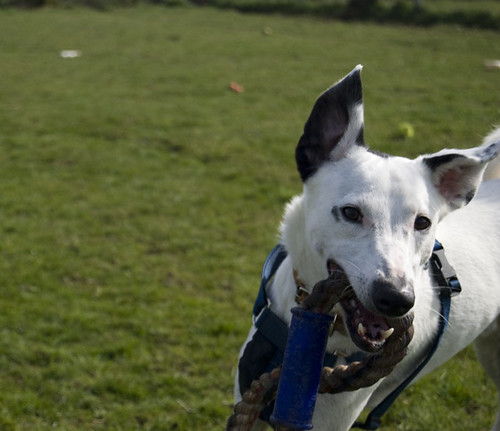
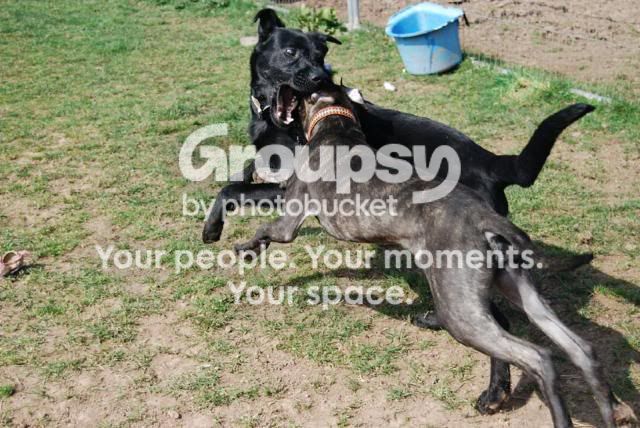
Just cos I havn't shown some of my dog shots, here's a few....

3417791428_4cdfb0d1f8.jpg


3327674507_fea4535986.jpg


3414777658_4a4cf821b2.jpg


3413960973_1a076c59c1.jpg


3389856442_a8e2743b52.jpg


[PB has compressed this, sorry]
DSC_1230.jpg
 
You've had some good tips and advice on here and I can recommend trying a wide/ultra-wide angle lens for unusual images. This one was taken using at 17mm on a FF camera and is one of my favourite shots of Biggles....

biggles.jpg
 
Back
Top