- Messages
- 832
- Edit My Images
- Yes
Got this heads-up from Spaceweather.com
Space Weather News for May 30, 2009
http://spaceweather.com
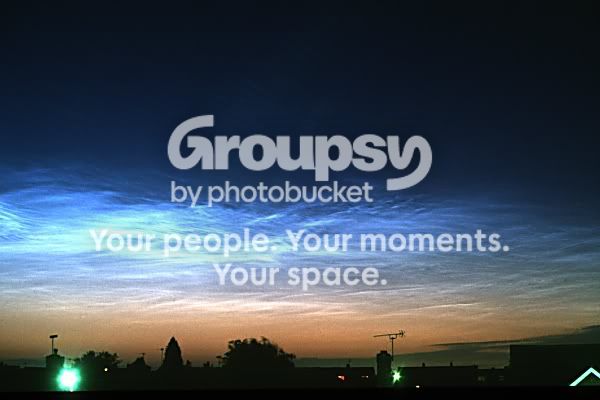
FIRST NLCs of 2009: The first noctilucent clouds (NLCs) of 2009 have been
sighted over northern Europe. Last night, May 29th, photographers recorded wispy
electric-blue tendrils spreading across the twilight skies of Denmark, Northern
Ireland and Scotland. This follows a similar display over Russia on May 27th.
These sightings signal the beginning of the 2009 NLC season, which is expected
to last until late July. Early-season NLCs are usually feeble, but these were
fairly bright and vibrant, suggesting that even better displays are in the
offing. Check today's edition of http://spaceweather.com for photos.
Noctilucent clouds are an unsolved puzzle. They float 83 km above Earth's
surface at the edge of space itself. People first noticed NLCs in the late 19th
century. In those days you had to travel to high northern latitudes to see them.
In recent years, however, the clouds have been sighted in the United States as
far south as Oregon, Washington and even Colorado. Climate change, space dust,
and rocket launches have all been cited as possible explanations for the
phenomenon. Interestingly, low solar activity seems to promote the clouds, so
the ongoing deep solar minimum could set the stage for a good season in 2009.
The best time to look for NLCs is just after sunset or just before sunrise when
the sun is between 6 and 16 degrees below the horizon. That's when the geometry
is just right for sunlight to illuminate the tiny ice crystals that make up the
clouds. Observing tips and sample photos may be found in the 2008 Noctilucent
Cloud Gallery:
http://spaceweather.com/nlcs/gallery2008_page10.htm
Readers, if you enjoy these newsletters and wish to support our efforts, please
consider signing up for Spaceweather.com's astronomy alert service:
http://spaceweatherphone.com . Thanks!
You are subscribed to the Space Weather mailing list, a free service of
Spaceweather.com.
New subscribers: To sign up for free space weather alerts, click here:
http://spaceweather.com/services/ .
To unsubscribe click here:
http://www.spaceweather2.com/u?id=466185Q&n=T&l=spaceweather or send a blank
email to leave-spaceweather-466185Q@www.spaceweather2.com