Photojournalism - Making the image VS Capturing the image

  • Thread starter Thread starter gingerweasel
  • Start date Start date
This happens at all levels - just try pointing a camera at a bunch of kids at a party, or people in a club, and note how behaviour changes. Is this the journalist creating the image, or would the event have happened anyway?

There is a difference between staging a shot: "Right, when I say `now`, throw the petrol bomb!" and the bomber deciding to wait until a journo happens to turn up before throwing it. Was the bomb going to be thrown anyway, or did the presence of the journo cause the bomb to be thrown?
 
This happens at all levels - just try pointing a camera at a bunch of kids at a party, or people in a club, and note how behaviour changes. Is this the journalist creating the image, or would the event have happened anyway?

There is a difference between staging a shot: "Right, when I say `now`, throw the petrol bomb!" and the bomber deciding to wait until a journo happens to turn up before throwing it. Was the bomb going to be thrown anyway, or did the presence of the journo cause the bomb to be thrown?

I agree.

However this goes a step further. You have photojournalists actually suggesting something that didn't happen (the riot police being a good example). The angle and range at which the photographer shoots suggests a struggle between the crowd and riot police, with the police pushing them back. The reality was that these riot police were just chatting and there was no crowd...
 
Yup. The problem often comes when a pic of some smiling cops chatting to a bunch of smiling protesters lands on the editor's desk. Small riot in the news room ends with snapper being screamed at and told to get out and not bother coming back unless he gets some proper news shots...
 
Last edited:
Staging/manipulating a subject has always and will always be a problem with photography of this type, you just have to view any photography that with a degree of scepticism, as you would anything else, printed word, painting etc. Perhaps moreso.

These problems are actually part of the reason I prefer to arrange and pose people in some of the documentary projects I've worked on. If you're upfront with the viewer about the fact what your doing is a very subjective take on an event or subject it cuts out lots of problems right at the start.

E.g I wanted to do a small project about my local high street, considered various approaches including candids, architectural shots, straight portraits, empty interiors and so on before finally settling on just asking the shopkeepers to stand in their shops and look at the camera. I don't see the point in trying to take photographs that pretend I wasn't there, because I was.


High Street by Lewis K. Bush, on Flickr

High Street by Lewis K. Bush, on Flickr

High Street by Lewis K. Bush, on Flickr
 
This happens at all levels - just try pointing a camera at a bunch of kids at a party, or people in a club, and note how behaviour changes. Is this the journalist creating the image, or would the event have happened anyway?

There is a difference between staging a shot: "Right, when I say `now`, throw the petrol bomb!" and the bomber deciding to wait until a journo happens to turn up before throwing it. Was the bomb going to be thrown anyway, or did the presence of the journo cause the bomb to be thrown?

Theres also the middle ground aswell, would tbe bomb have been thrown at all in the second situation if the protester didnt know it would end up defining a protest?

Alot of non violent protests that get hijacked likely do so for this reason I'd guess, those doing the hijacking know the violence will get the pics/video even if it was a minor part of the protest.
 
Sorry to say its been happening for years,its called the bang bang shot,the pressure on the photographer to get it is very great,if you dont get it, no one will look at your photos.

Is it wrong :shrug:
 
"The camera never lies" has never been true.

As an example of a wholly staged photographic event, the typical wedding is a good example. The album is supposed to be a record of the day, but the number of truly spontaneous images are usually very few.

A cynic might even say that the most of the pictures are conceived and set up by the photographer with the sole purpose of selling more pictures. It's now not just the wedding itself, but all the bride's prep stuff right through to Trash the Dress after the event. How many brides ever thought of wandering down to the river at sunset and going for a swim in their wedding dress?
 
Making the image v capturing the image makes it sound like there's ready made images floating about like butterflies and the camera is a net we could use to catch one.

Every photographer adds their own context and twist to an image just as every viewer does.
 
Making the image v capturing the image makes it sound like there's ready made images floating about like butterflies and the camera is a net we could use to catch one.

Every photographer adds their own context and twist to an image just as every viewer does.

I guess the the thing is,when your on the frontline,and nothing much is happening,do you just let it go,or do you tried to make the photo :suspect:
 
I guess the the thing is,when your on the frontline,and nothing much is happening,do you just let it go,or do you tried to make the photo :suspect:

I'd say of course you try and make the photo, unless you are being paid to sit there regardless how many images you produce then you'd be silly not to. And of course, there'll be the photographers who can look about and make a story out of nothing, without inflaming anything or encouraging anyone and then there's the photographers who don't know how to do that or can't be bothered.
In the example given in that vid where there's a kid throwing a block onto the ground and another trying to light a fire, I can't imagine those images were up to much, the people looked so lack lustre. I'd far rather be off shooting something else, something genuine.
 
Define `genuine` in the context of photography.

Not sure you get what I mean by genuine.
I mean that if I found myself on a frontline and it went quiet then I wouldn't be trying to get kids to light fires, I'd go and look at what they do when they aren't throwing petrol bombs, how they kill time, do they gather and make more petrol bombs or do they play football or spend time with their family? Show a bit of the back story.
 
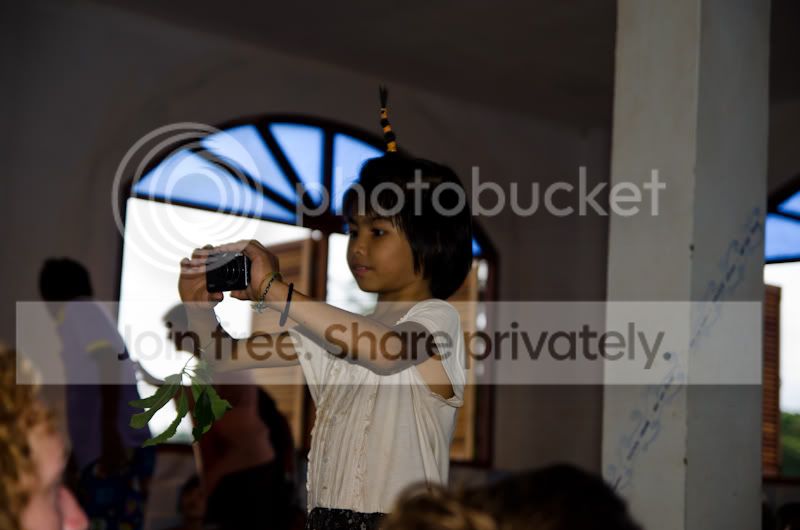
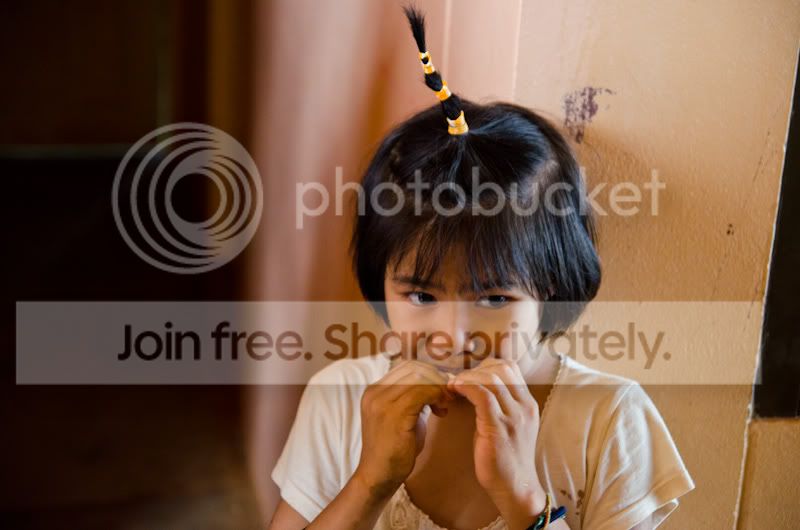
I have a similar sort of example from my own work. I was shooting in Baan Unrak orphanage in Sangkhlaburi whilst working on my e-book. The first shot shows the girl naturally playing with a camera like a normal little girl. The second image was shot 30secs later. The little girl sat down and I clicked the shutter. The facial expression is one of a young vulnerable girl which I think could be used quite powerfully. However I chose not to use the image as I never saw the facial expression portrayed in the image. It was literally split second difference causing the photo to take on a whole different meaning.
show-1946.jpg

show-1943.jpg
 
I'd say of course you try and make the photo, unless you are being paid to sit there regardless how many images you produce then you'd be silly not to. And of course, there'll be the photographers who can look about and make a story out of nothing, without inflaming anything or encouraging anyone and then there's the photographers who don't know how to do that or can't be bothered.
In the example given in that vid where there's a kid throwing a block onto the ground and another trying to light a fire, I can't imagine those images were up to much, the people looked so lack lustre. I'd far rather be off shooting something else, something genuine.

I guess the problem is do you stay with the pack,or go off on your own and find that genuine story,i am with you much perfer to find something genuine,but i guess most perfer to stick with the pack,and it much harder to sell the longer stories these day,over the bang bang shot :(
 
Back
Top