please help with bird shots!

Messages
12
Name
Naomi
Edit My Images
No
Hello, i've been trying to take pictures of a marsh harrier with my uncles 400 lens.I can't seem to get it steady to get final shot in focus! Ive got a canon 450d i put it to tv mode and have shutter speed high (around 1000) and iso 400 and below.I also try and keep it steady with my tripod but it's difficult when im tracking the bird. Can anyone help me on this please so i can find it again tommorow!
 
What Auto Focus mode are you using? Which auto focus point have you setup.

Ideally you should use Servo mode and just the centre focus point.
 
So many possibilities. Centre focus point to ensure you've got exactly the right point focused. High enough shutter speed to overcome shake (even with the IS).

Fancy posting an example pic?
 
I'm not sure how to put the picture on the post, i've managed to upload pictures to my gallery?
 
yes i'm using the is, ill try over exposing as well, thankyou, your photos are realy good.
 
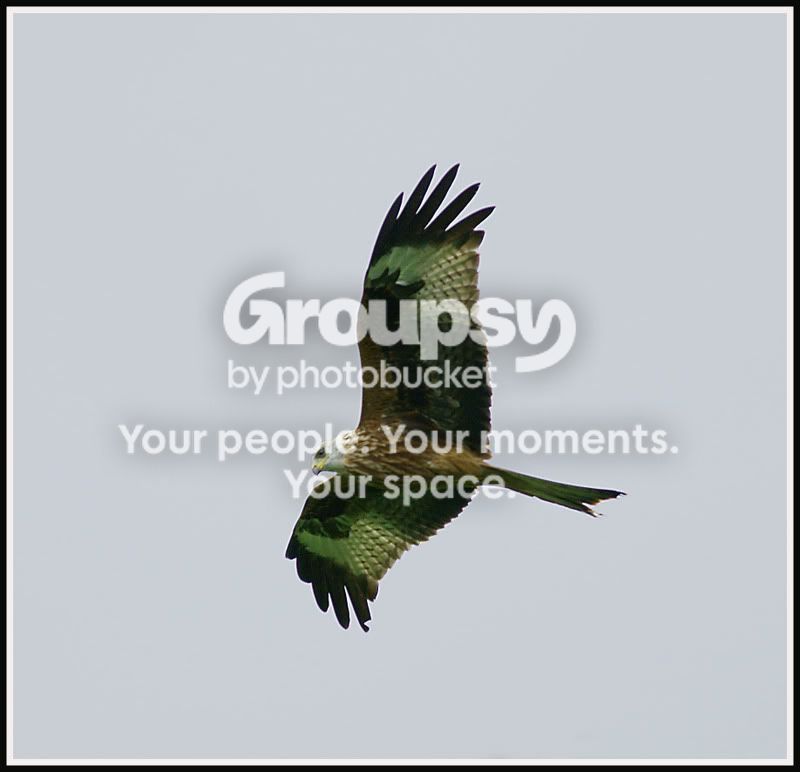
yep,over expose approx 1-1 1/3rd stop against the sky,and that should give you decent results.this is a shot i took last year against a grey sky....

DSC00879copy.jpg
 
Do BOP`s have green under wing markings?
 
Must be a Green Kite,Phil...........:shrug:
 
I'm thinking that maybe your biggest problem with both the harrier shots is that they are large crops? :shrug:

Your robin shot is much better, even at 1/80 shutter speed! But I'm guessing this was a much closer crop, if a crop at all?


Stan, that bird is very green :lol:
 
yes harrier shot are heavily cropped, as they were miles away, i had the lens fully extended, i could get closer to the robin so its only slightly cropped to neaten it up.
I like the red kite stan.
 
Those are better, but you will struggle to get decent results from large crops. Can you show an uncropped version for comparison?

Is there any way you can get closer to them? I know it's easier said than done, but you would get much better detail.
 
That is a fairly substantial crop isn't it! If you can't get closer to the birds, maybe consider a 1.4 TC or a 2.0 TC :shrug: though I'm not sure if the 2.0 is compatible with that lens. But if you are only borrowing the lens maybe it's not feasible. Hmmm, I guess the only thing you can really do other than that is just wait for them to come down, perhaps for a kill.

Gorgeous birds to watch though if nothing else, so not all is lost :).

P.S If you put [IMG*] at the front (minus the *) and [/IMG*] at the back of that code it will put the picture in the thread, saves clicking links ;).
 
There really isn't much you can do until the birds are closer to you as cropping in that much is never going to produce first class results. Also, practice your panning techniques with the long lens. Just because your on a tripod and using fast shutter speeds doesn't automatically mean your going to get sharp results if you are not smooth with manouvering the lens. Also, try an apperture around f8 to give you as much chance with getting the head within your DOF. Birds flying around can sometimes be hard to get within your DOF accurately so you want as much of it as you can get.

Where are you shooting the Harrier? they are lovely birds, not get any decent shots of them!
 
First why try to get a photo of a bird in flight with a tripod ? try doing it hand held.
Second the lens you are using is relatively slow on focus, I prefer a faster lens like the Sigma 70-200mm f2.8, it allows more light so a faster shutter speed can be used. I can't afford a more expensive lens.

http://img512.imageshack.us/img512/1955/dsc0863.jpg

AS an example using this lens handheld on a Nikon D300. ( the bird shown was giving a flying display and picture unedited)


Bazza
 
First why try to get a photo of a bird in flight with a tripod ? try doing it hand held.
With a proper head, a tripod can help you achieve much smoother panning, especially with longer focal lengths and heavier lenses.

Second the lens you are using is relatively slow on focus, I prefer a faster lens like the Sigma 70-200mm f2.8, it allows more light so a faster shutter speed can be used. I can't afford a more expensive lens.

AS an example using this lens handheld on a Nikon D300. ( the bird shown was giving a flying display and picture unedited)
Bazza
Captive birds are a different ball game. You will never get a frame filler of a bird like the Marsh Harrier in the wild using a 70-200.
 
RP

They may be a different ball game, however its a fantastic way of getting used to taking pictures of birds in flight. The technique is the same and just as difficult. .
Maybe some examples of yours posted on here together with the camera / lens setup may help the original OP.

http://img22.imageshack.us/img22/4509/dsc0961o.jpg

This bird in the downward stoop reaches up to 60mph (here it is about half way into a stoop about 30mph is my guess)
Trying to get a photo such as this is just as hard. It was so fast at top speed almost impossible to photograph


Realspeed
 
RP

They may be a different ball game, however its a fantastic way of getting used to taking pictures of birds in flight. The technique is the same and just as difficult. I have looked back on a lot of your postings and I can't seem to find any pictures of yours with a bird in flight.
Maybe some examples of yours posted on here together with the camera lens setup may help the original OP.

http://img22.imageshack.us/img22/4509/dsc0961o.jpg

This bird in the downward stoop reaches up to 60mph (here it is about half way into a stoop about 30mph is my guess)
Trying to get a photo such as this is just as hard. It was so fast at top speed almost impossible to photograph


Realspeed
That's because I rarely post BIF shots as most the time its a bird against a blue sky and that doesn't do much for me.

At work at the moment but here are some wild short eared owls I did recently. Very hard to get close too so quite challenging.

With captive birds you always know roughly where they will fly and what they are about to do as the handler will be telling you over the PA system. It's much easier, I know, I've done it a few times in the past and the mere fact you can get the shot with a small easily handholdable lens vs a heavier long lens makes it easier.

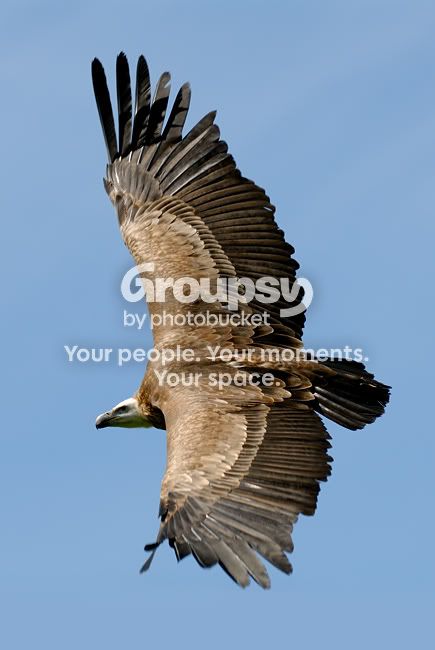
EDIT: Actually here is one from years ago at a bird of prey centre, specs escape me right now:
_D2N8362_condor.jpg


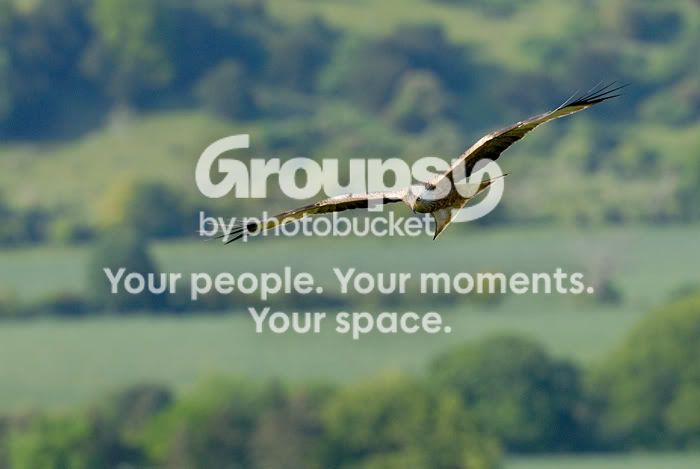
And another old one of a wild Red Kite, again at work so not sure of settings exactly:
_RP10012_kite_field3.jpg


But we shall have to agree to disagree on wild v captive bird photography I think.
 
First why try to get a photo of a bird in flight with a tripod ? try doing it hand held.
Second the lens you are using is relatively slow on focus, I prefer a faster lens like the Sigma 70-200mm f2.8, it allows more light so a faster shutter speed can be used. I can't afford a more expensive lens.

AS an example using this lens handheld on a Nikon D300. ( the bird shown was giving a flying display and picture unedited)


Bazza

I agree with Richard Peters. Tripods do help if you have the freedom to track freely. If you are using a big lens, then you have little choice.

I also don't agree about the 100-400 lens being slow to focus. I've just bought one (I presume as a Nikon user you don't have one) and have actually been very impressed and that is comparing it with some of the "top" lenses such as 70-200/2.8, 300/2.8, 500/4, 400/5.6.

For wild birds, 200mm is rarely enough. As the original post shows, the harrier is too small in the frame at 400mm so at 200 it would be much worse. You can't fix that with aperture!

I think the best advice is to sit tight, wait and hope it comes closer. Much wildlife photography involves a lot of waiting and patience for the right moment. Even the biggest of lenses can't bring something that close and there is no substitute for good field craft.

Where are the harriers? Are they on a reserve? Does the reserve have a hide?

Paul
 
I think the best advice is to sit tight, wait and hope it comes closer. Much wildlife photography involves a lot of waiting and patience for the right moment. Even the biggest of lenses can't bring something that close and there is no substitute for good field craft.
Well said :)

Oh and realspeed, I just looked at your posts and I see very little in the way of WILDlife shots. So I'm not sure how you can say it's just as hard to take shots of captive animals when you have little to compare too.
 
Simplistically mate, you need to get the subject closer to you.That can be achieved by fieldcraft(Not always possible),use of hides etc etc or by getting a longer lens.

I can`t add anymore than Richard and Grumpy have said TBH.

Cheers.
 
If you're serious about bird photography, the answer I'm afraid is that there's no substitute for long glass and even then you'll be working much closer to the birds than you might think a long focal length would imply if it's quality images you're after - filling the frame can still remain a big problem even with very long lenses.

People talk rather glibly in my opinion, about using shorter lenses and fieldcraft to get closer to the wildlife, and whilst it's certainly possible, you're going to be constantly struggling within the circle of tolerance which pretty well all wild creatured have. In short you'll have your successes, but you'll suffer a lot of frustration too. Let's face it, if it were that simple wildlife pros wouldn't hump very long heavy lenses about - but they do. ;)

My suggestions probably wont be too palatable..but here goes.

1. The most stable tripod you can afford.

2. A gimbal head.

This will probably do more for your wildlife shots than any other single item of kit. Until you've actually used one, it's difficult to appreciate the hassle it takes out of operatang a heavy lens on a tripod and how much easier it makes it to keep that all important focus point over a moving bird.

3. A long lens.

Zoom lenses like the 100-400L are excellent and probably the minimum to seriouisly tackle bird photography with reasonable returns for the time you'll put in. I woudn't part with mine, but forget any idea of using converters behind it - image quality will suffer.

A fast prime - anything between 300mm and 800mm and capable of producing quality images with converters will increase your keeper shots and the quality of them dramatically, and they come at a prohibitive price, but they're that price for a reason.

As for BIF shots, I'd choose to use a tripod and gimbal where possible, even with hand holdable lenses like to the 100-400L, but sometimes circumstances dictate you have to hand hold which should be well do-able with the 100-400L.

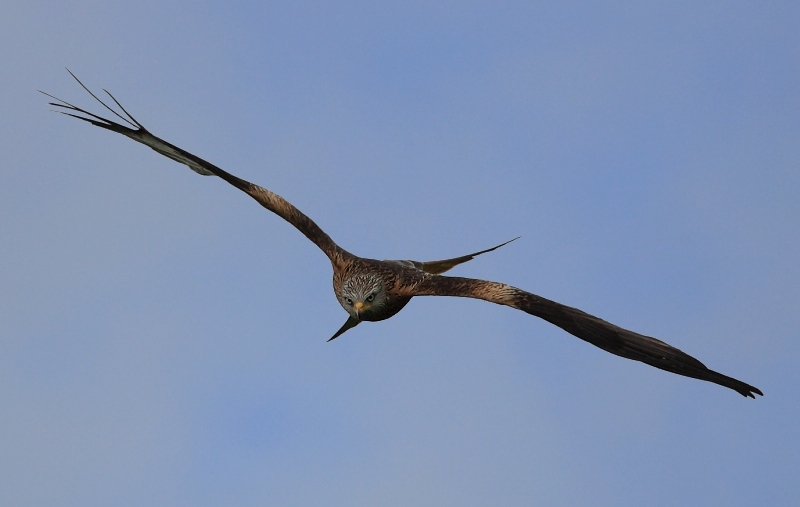
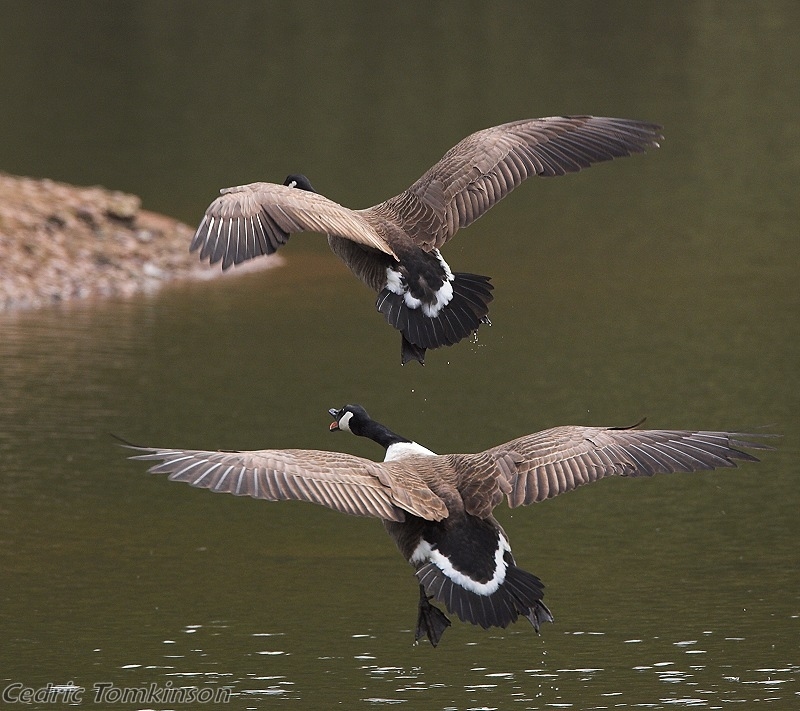
The Red Kite shots were taken hand held with the 100-400L while the Canada geese were taken with the 500mm f4L tripod mounted on a gimbal.

3443637635_c13953a691_o.jpg


3443637731_6504a6e8d5_o.jpg


3444454234_c9938ff32f_o.jpg


The thing about the Red Kite shots is that even with the 100-400L at full zoom, I took a lot of shots that day, and the few successful ones were the ones close enough to fill the frame reasonably, but these are still big crops even then. A lorra lorra shots went in the bin!

Don't get disheartened - it's not easy

 
All very good points CT, and since you produce some of the best birds shots I have come across I would be more inclined to go with this advice if I were you Bikebabe ;)

One thing though CT, did you forget to pop a couple of shots in there? :shrug:
 
I'm not sure we were at odds at all there Paul? :shrug:
 
I don't know why I bother sometimes...

:$ I'm so sorry, I didn't even see your post Paul. When I clicked the new posts arrow it took me straight passed yours and a few others.

You also have some very good points which Bikebabe will find very useful :)
 
Not at all Cedric. I'm just not keen on people devaluing what I feel is several years of experience with a throw away statement like Jo made. EDIT: Just seen Jo's response. Sorry - I got bit tetchy!

Your points about lenses are entirely valid but I am also aware that not everyone is as lucky as us in the glass department ;)

I think the key thing as that you need both. Even birds such as a marsh harrier are actually small in the big scheme of things. So, you do need a degree of field craft or luck to get close enough.

Even with Canon's magical 800mm lens (at £10,000!!!) on a cropped sensor, the field of view is around 2.2 degrees on the diagonal. This means that, to fill the frame with a bird with a 6 foot wingspan, you have to be within about 200 feet. That is really quite close!

Fully agree on the tripod comment. Really is the best way to keep a stable platform. Probably not true for birds that come really close like at a BoP centre as you may need to move further than the tripod allows but certainly for wild stuff, I genuinely believe the tripod and gimbal are what lifted my photography to the next level, far more than lens or body.

I think the bottom line is that to be successful in bird and particularly bird in flight photography you need:
  • Big lens
  • Good support (tripod)
  • Field craft
  • Time
  • Patience
  • Luck!

Paul
 
Plus a little bit of gear knowledge ;)

It's OK Paul. We can all get a bit tetchy sometimes :)
 
Well I can't argue with any of that Paul. I'll just make the point that I hadn't read the whole thread, including yoiur post, when I posted, and I certainly didn't intend any offence to anyone. :wave:
 
Back
Top