Predicting glorious sunsets...

kennysarmy

Yeah but can your army do this?
Messages
7,312
Name
Jeff
Edit My Images
No
Usually by the time I look out the window while doing the washing up the sunset is in full swing and I'd have no time to organized and get out there...so...is there a secret to predicting which days weather conditions are likely to produce better sunsets than others?
 
I only wish :shrug:

Unfortunately the BBC with all their millions spent on satellites struggle to predict what the weather will be like tomorrow :lol:

It's one of the joys of being into landscape photography, the wasted hours spent hoping to catch that perfect lighting, all made worthwhile when you actually do :thumbs:

simon

Don't the BBC use the Met Office's forecasts, simon?
 
I always find its best to have a spot in mind, then 1 hour before get ready to gamble
Best to keep hoping
No easy answer to this, but then If there was, we would all be lining the shores, looking for that shot of dreams
Good luck
 
Spider senses start to tingle .... :lol:

Dont usually bother watching when i'm in the house but when we're away in
the van (most weekends during our *cough* summer) i'm always watching
the way the light changes as the sun starts to go down...
 
Don't the BBC use the Met Office's forecasts, simon?

I'm sure they do Jerry, sorry I was just been a little "tongue in cheek" thinking about all the mornings & evenings I've spent waiting for lighting/weather that never appeared..only last week I was sat on top of a mountain getting rather wet waiting for the "clear skies" the weather forecast had promised...needless to say they didn't arrive :(
 
A small coastal village called Loutros in Greece had perfect sunsets everyday irrespective of weather forecast.My local Wiltshire village sadly lacks that consistancy and the weather forecast doesnt help a damn.Thats England for you.
Pete.
 
I'm sure they do Jerry, sorry I was just been a little "tongue in cheek" thinking about all the mornings & evenings I've spent waiting for lighting/weather that never appeared..only last week I was sat on top of a mountain getting rather wet waiting for the "clear skies" the weather forecast had promised...needless to say they didn't arrive :(

The BBC gets slagged off for all sorts of things but can't be blamed for the weather (or the weather forecast....);)
 
I'm sure they do Jerry, sorry I was just been a little "tongue in cheek" thinking about all the mornings & evenings I've spent waiting for lighting/weather that never appeared..only last week I was sat on top of a mountain getting rather wet waiting for the "clear skies" the weather forecast had promised...needless to say they didn't arrive :(

Believe me, I know what you mean.

Sometimes the brightest sunset colours appear before the sun actually disappears, whereas in the conditions I described above the brightest colours can be easily 20 minutes after it sets.

Can't say I understand why.

When the air is exceptionally clear it contains very little in the way of dust and other particles. As it's the latter that produce the colours clear air can suggest a disappointing sunset.

It's quite interesting to turn you mind around to what is actually happening at sunset. The sun isn't moving at all, of course. It's us on our tiny little planet that's revolving away from the sun.
 
Sadly there's no shortcut in predicting good sunsets. You have to be on location ready and waiting - that's it. Some times the effect only lasts a few minutes- then it's gone. No time get to a scenic loction!

How many posts do see on here every week of brilliant skies - spoilled due the fact they are shot out of the bedroom or office window.....?

There are some things though I've observed over the years:

1) Remember that Clouds Make A Sunset- a clear blue sky in won't result in a spectacular sunset.

2) Look out for layer type clouds (i.e. clouds all at the same height) as these will give the most spectacular sunsets/sunrises. The clues will be there in the late afternoon's clouds.

3) Plan your locations well in advance- as I said the ideal conditions can be the most fleeting of moments. You may only have a minute to get the shot.

4) Learn a bit of cloud and weather lore and observe the conditions. Given an hour or twos notice I can usually tell by looking at the sky if it is going to be worth a drive out (or not!).

Here's a shot from my bedroom window! If you see these cirrocumulus clouds developing- then it's time to jump in the car.

CLOUDSCAPE_010.jpg
 
Despising my amazing knowledge of all things meteorological related, sunsets and sunrises are actually hard to predict.
A colourful sunset occurs when light from the sun gets filtered out by particulates in the atmosphere, apart from the far end of the colour spectrum which is orange and reds. That reaches our eyes in the form of those "blood" red sunsets.
As the sun sinks towards the horizon, the light coming from the sun has to pass through "more" of the Earth's atmosphere as it strikes the surface at a very low angle. Thus more and more of the light spectrum gets filtered out - apart from the reds.

Perhaps it's a case of looking at a barometer and if pressure appears to be rising sharply during a rather cloudy and wet day and the thick gloomy cloud cover has that appearance of thinning out then it's safe to expect a spectacular sunrise at the end of the day as high pressure (which often traps pollutants) begins to nose in.
Oddily, colourful sunrises are actually easier to predict. If stormy weather is expected in the morning and yet the night beforehand is clear and settled then you should expect a great colourful sunrise. An approaching warm front does have the effect of "piling" up an airmass ahead of it, thus the air becomes "thick" with particulates and dust particles - and combine that with the various high cloud cover ahead of a warm front and you'll have your gorgeous early morning sunrise.
So, basically, the best thing to look out for is air pressure rising sharply (20 to 30 mb in a day) during a dull and wet day and if you can see subtle hints of brightening in the cloud cover an hour before sunset (helps when you know your sunset times and have a barometer on you) then get ready with your camera.
Likewise, if you see air pressure dropping sharply (20 to 30 mb) during a very clear and still night even though the forecast is suggesting a stormy day the next day then expect to wake up to a breathtaking sun rise early in the morning (you'd need to set the alarm clock to coincide with an hour before sun rise, which is currently 6.50 am).
So there you have it, it doesn't always guarantee a decent sunrise/sunset but it should increase your chances of being in the right place in the right time when you are armed with your camera.

But wait! It doesn't end here, for there are actually two types of sunset/sunrise colours.
Man-made pollution and natural pollution (such as forest fires and volcanic eruption) actually produces different type of sunsets. The former is much more common, but the latter is much rarer - and is absolutely stunning and I'm pleased to have witnessed such an event.
It was February last year when that happened. Two days previously there had been a massive eruption and what came out of the volcano got trapped in a layer in the upper troposphere (the very limit of weather, the bit where weather stops and space begins) and the result was that I got to see this amazing blood red sunset which showed up an hour AFTER the sun had set. It grew dark after the sun had setted below the horizon, all normal, . . . but then I noticed the sky began to brighten up again, first as golden yellow, then it has a green hue and then the whole sky turned blood red. It was a shame that conditions was clear and cloudless, this would have made what was a breaktaking sunset into something very extraordinary.
And yes, I have captured it. This occured an hour AFTER the sun had set below the horizon but light coming from it was still behind reflected from a layer of dust 50 miles up in the atmosphere and this is the result.
These photos just don't do it any justice as the camera just couldn't pick up the colours of this particular sun set. Don't forget, this was under completely clear skies with absolutely no cloud cover, which made it all the more breathtaking. The whole thing lasted an hour.

FebSunset082.jpg


Half an hour later:

FebSunset083.jpg


And ten minutes later:

Febsunset085.jpg
 
Usually by the time I look out the window while doing the washing up the sunset is in full swing and I'd have no time to organized and get out there...so...is there a secret to predicting which days weather conditions are likely to produce better sunsets than others?

Are sunsets generally better in the Southern Hemisphere, or do they just look better at sea?

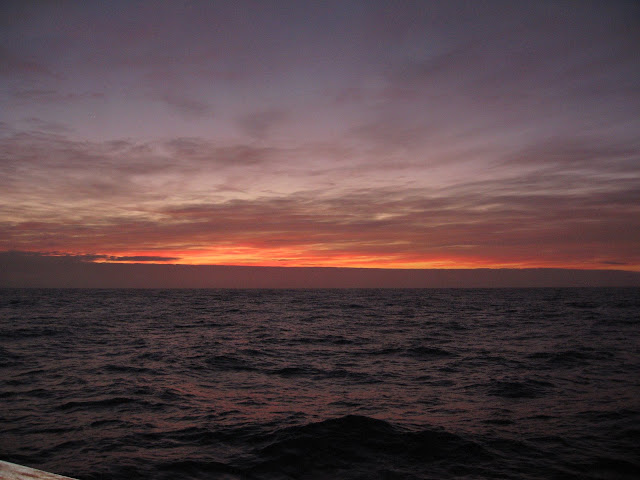
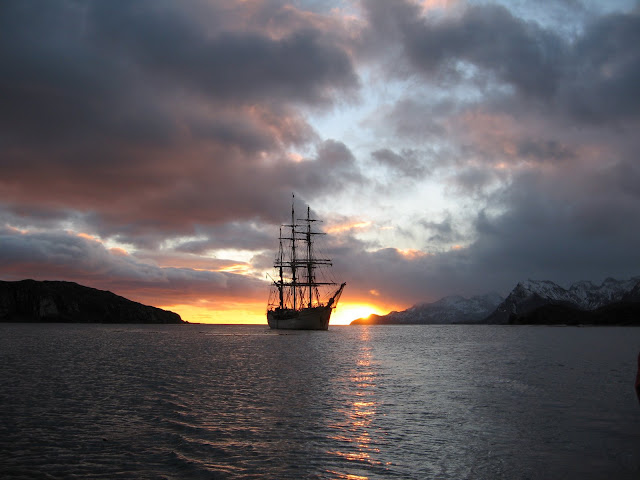
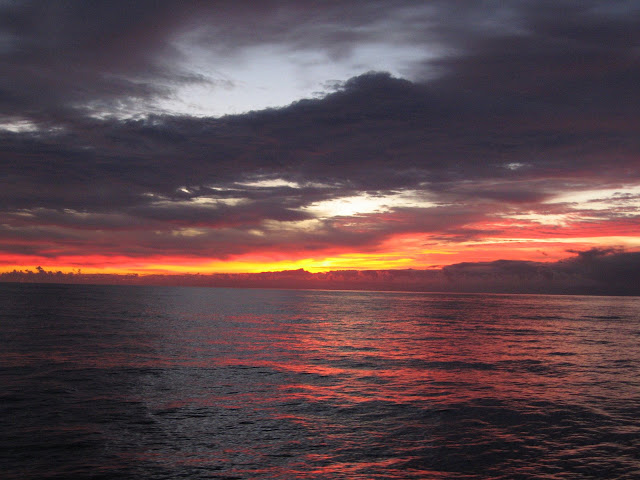
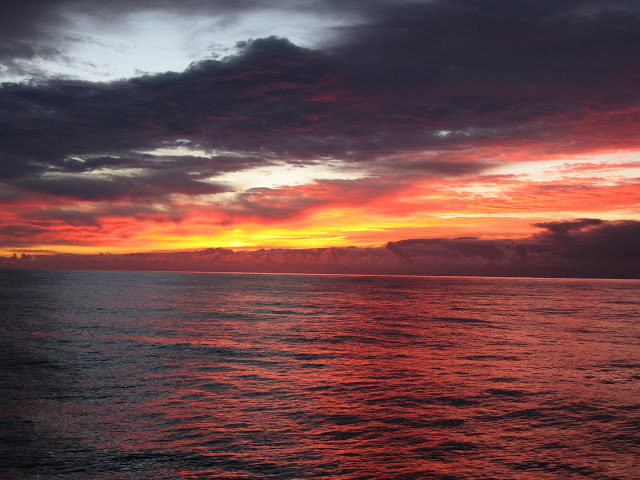
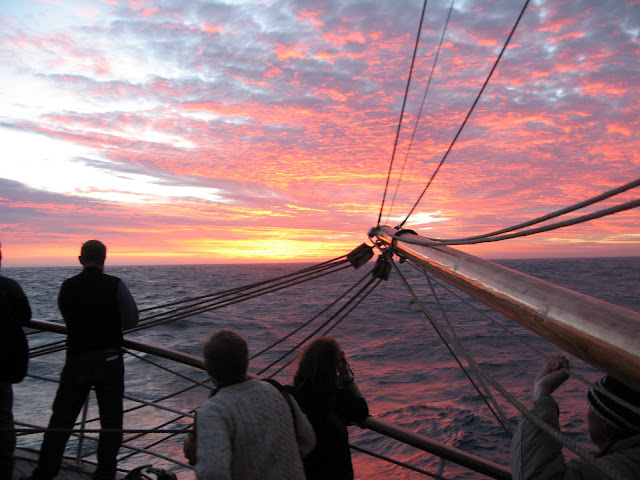
When I was sailing down there virtually every day had a cracking sunset and sunrise. You needed a bit of cloud to make a show of it, and some were better than others, but good ones were the norm

1
IMG_2115.JPG


2
IMG_2244.JPG


3
IMG_3586.JPG


4
IMG_3592.JPG


5
IMG_3708.JPG


In the end I stopped photographing them as my little compact wasn't up to it and I was given loads of shots by other people. (which, obviously, I can't publish here. Trust me, they are fantastic)

Is it just that I was usually up at dawn and sunset, that the views at sea are usually better, or are there more sunrises and sunsets like this in the Southern Hemisphere?
 
From one window here I can see the Met office and there have been times when they've been saying it's raining when I can see that there isn't a cloud in the sky over them and that the building is bathed in glorious sunshine!

Through the front windows I can see due west so can see if there is any colour in the evening sky. If there is, I can get to a spot right at the top of the hill in 5-6 minutes - including grabbing the bag and tripod. Doesn't guarantee a good sunset but it's a useful clue!
 
Are sunsets generally better in the Southern Hemisphere, or do they just look better at sea?

I dunno about that but they always look better when you're somewhere other than the UK. I remember being in Goa a few years ago and on the first night taking about 300 shots of the magnificent sunset in front of me. Little did i know at the time that i would experience another 13 equally as nice ones whilst i was there!
 
Ian D J,

That has to be one of the best explanation & rationale on colourful skies :thumbs:. Thank you for all that.

The thing is, I have to re-read all that when my mind is a bit more up to speed, no offence intended.
 
I can't imagine why they would be.......Come in, Ian DJ.....

Oh, and Ian, from what you say in your post, the higher the clouds, the later they are likely to be lit up - even an hour after sunset?

:) It doesn't matter whereabouts in the world you are, you will get decent sunsets.
However, around the equator, the sun sinks down at almost a right angle to the horizon so any sunsets there are very quick. It'll go from bright daylight to complete darkness in an hour (and same goes at sunrise, except the whole thing happens in reverse, of course!). Colourful sunrises/sets, while they do occur very easily may only last just a few minutes.
Go further towards the poles and colourful sunset/rise lasts longer as the sun moves towards the horizon in a "sloped" angle.
It is true that medium height clouds (stratocumulus and altostratus) and high height clouds (cirrus, cirrostratus and cirrocumulus) will pick out colourful sunset and sunrises very nicely. The colours will show up half-an hour before and at the point of the sun settling at the horizon. Then ten minutes later the sun had set below the horizon, the earth's shadow will make the reds disappear,
This ultra-rare sunset I've described and as shown in my photos actually showed up in the upper tropopause, that's 50 miles in the atmosphere, where volcanic dust was still being lit up by the sun even though it should be total darkness on the earth's surface. To give an idea on how high that dust was, weather only stops at 12 miles. :eek:

Ian D J,

That has to be one of the best explanation & rationale on colourful skies :thumbs:. Thank you for all that.

The thing is, I have to re-read all that when my mind is a bit more up to speed, no offence intended.

:D That's fine. :) When it comes to all things weather-related, I could talk for hours about it. That's why I pity anyone who ask me any questions regarding the weather. :suspect: I'd end up driving them :cuckoo:. :D
 
Go further towards the poles and colourful sunset/rise lasts longer as the sun moves towards the horizon in a "sloped" angle.

Ah, perhaps that's what it was then, we were down in the Southern Ocean most of the time, well below South Africa. You just get longer to appreciate it.

Isn't there something about the weather down there too? You don't usually get electrical storms because the clouds don't go high enough? Even though I'm a sailor I'm rubbish with weather.
 
By eke, The equater, is that anywhere near the pier head,
You just got to be happy when the clouds lift, to let the ferry cross.
 
Ah, perhaps that's what it was then, we were down in the Southern Ocean most of the time, well below South Africa. You just get longer to appreciate it.

Isn't there something about the weather down there too? You don't usually get electrical storms because the clouds don't go high enough? Even though I'm a sailor I'm rubbish with weather.

As far as I know and see, the Southern Ocean almost hugs Antartica at 60 degrees south of the equator (iceland sits roughly at 60 degrees north), and there, at that latitude the tropopause (the lower part of the atmosphere where all our weather takes place) is thinner where the -50 C "ceiling" is about 5 to 6 miles high. So any thunderstorm clouds that does develop in an unstable airmass only probably grow to that kind of height.
Compare that to the -50 C "ceiling" being up to 15 miles high above the surface around the equator and as a result thunderstorm clouds has a lot more room to build up, where their tops often reach 20 miles high.

Ian -oh knowledgeable one- I can understand why high clouds are lit up after the sun sets, but why is it that sometimes sunset colours happen before the sun sets and disappear with it?:thinking:

It's all to do with how much local pollution and particulates (even pollen has an effect) there is in the atmosphere that can filter out the colours apart from the reds.
Like I said earlier, sunsets are quite unpredictable things in any case. Just enjoy them when they do occur. :)
 
Back
Top