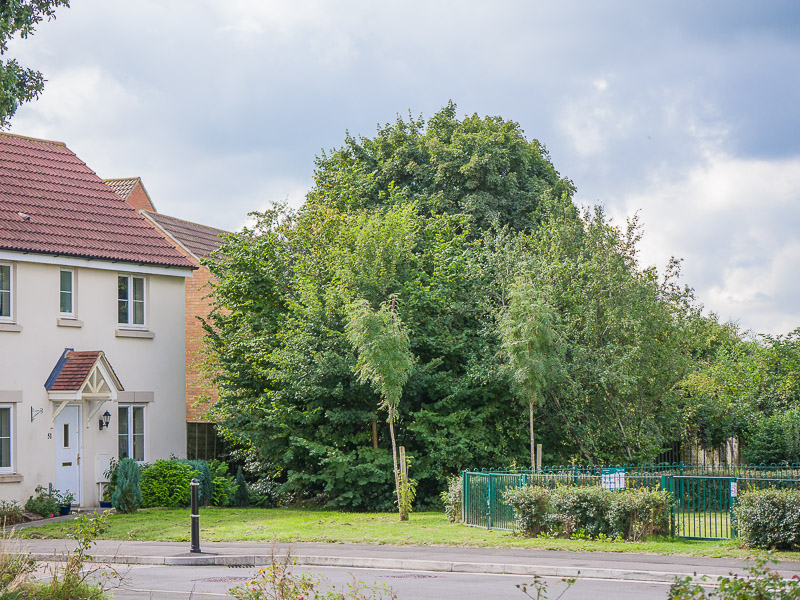
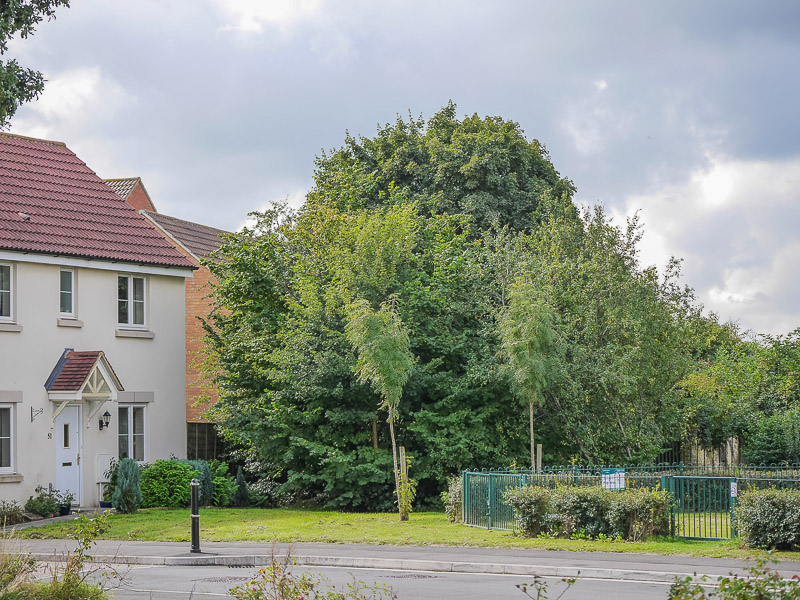
RAW vs. JPEG - Regarding image quality there is no debate!

What you can't see at those resolutions is the loss of colour range - particularly in the sky - and the slightly yellowy colour the trees are in the processed JPEG

Well all I can say about the 2 processed pics - both RAW and JPEG is WHY?

They are almost equally hideous!

What were you trying to do?

In this case I would say that the unprocessed JPEG and (possibly) the HDR are definitely better.

What you can't see at those resolutions is the loss of colour range - particularly in the sky - and the slightly yellowy colour the trees are in the processed JPEG

The trees look yellowy in both the processed instances and the colour looks equally terrible .

.
 
Last edited:
Well all I can say about the 2 processed pics - both RAW and JPEG is WHY?
Because they look better to me and that is all that matters as far as I'm concerned (but see below). You are now confusing my processing abilities with your preferences about what is better. Note I didn't comment on your processing of your image - just that you could have got more out of it ;)

What is clear here is there is far more leeway and subtlety with the raw file than there is with the processed JPEG.

The trees look yellowy in both the processed instances and the colour looks equally terrible
Yes, you're probably right about the colour balance - it was a quick 5 minute process reset that to as shot (rather than taken from a white point on the fascia board). 4/10 must do better... Same processing with w/b reset to as shot:

raw-cb-800.jpg


scenery-cb-jpg-800.jpg


You'll also note some blotchy white bits in the sky - this is where the highlights clipped on the processed JPEG but are completely fine on the raw file. I suspect this is because I used the scenery JPEG preset on the camera.
 
Because they look better to me and that is all that matters as far as I'm concerned (but see below). You are now confusing my processing abilities with your preferences about what is better. Note I didn't comment on your processing of your image - just that you could have got more out of it ;)

What is clear here is there is far more leeway and subtlety with the raw file than there is with the processed JPEG.

Yes, you're probably right about the colour balance - it was a quick 5 minute process reset that to as shot (rather than taken from a white point on the fascia board). 4/10 must do better... Same processing with w/b reset to as shot:

raw-cb-800.jpg


scenery-cb-jpg-800.jpg


You'll also note some blotchy white bits in the sky - this is where the highlights clipped on the processed JPEG but are completely fine on the raw file. I suspect this is because I used the scenery JPEG preset on the camera.

Well I certainly wasn't trying to belittle your abilities which I have no doubt are formidable but simply stating that they looked awful (on refection I should have said IMO), but if you are trying to show the superiority of RAW over JPEG (which in fact I do accept) then you need to show convincing proof.

But even though I may accept the superiority of RAW over JPEGs in some situations it still remains a fact that many excellent photographs are produce from JPEGs, and to me at least, RAW is steadily losing ground to JPEGs - indeed to most people RAW is already a niche filetype if they know of it at all.

After all we are all (at least) enthusiastic amateurs on here and can appreciate the subtle differences in a side-by-side comparison but how many of us can actually tell whether a great looking photograph is produced from a RAW file or a JPEG especially when viewed on a small or even medium size monitor.

And viewed on a mobile phone or tablet or pad the difference ceases to exist.

It's the same kind of difference between FF and Medium Frame sensors when used by first rate photographers.

Although technically there is a vast difference between the two quality wise the difference is minimal until you get to very large prints.

For me one of the most interesting things about photography is pushing the boundaries to achieve what many people believe is impossible.

And most people simply do not use JPEGs to their fullest potential because they inherently accept that they can't.

EDIT:

Forget to ask why you use presets like Scenery for your JPEGs rather than Faithful or Natural?

.
 
Last edited:
I don't normally need to recover highlights as I make sure they don't burn out by using the histogram and "blinkies"

And I can also lighten shadows quite easily.

But for me the main reason I use JPEG is that the filesize is much smaller than using RAW so I can save them in a much smaller space and upload them to Skydrive much more quickly and use less of my monthly broadband allowance (15GB/month).

.

Or you can buy one of those lil black boxes. There called hard drives I think. There pretty good for storing files. And lightening shadows introduces noise in a jpeg. (Hence why pros say bias to the right)
 
Well I certainly wasn't trying to belittle your abilities which I have no doubt are formidable but simply stating that they looked awful (on refection I should have said IMO), but if you are trying to show the superiority of RAW over JPEG (which in fact I do accept) then you need to show convincing proof.
Well... separate out whether you like or dislike the edits (I personally think the SOOC JPEG looks flat) and look at the quality of the image. Even at 800 pixels, the processed raw has better colours and gradations in the sky and is not blown anywhere on the image. Looked at 100%, the JPEG is oversharpened and less natural than the raw file - especially in the trees.

it still remains a fact that many excellent photographs are produce from JPEGs
No one is saying this is not the case. Nearly every image we view is a JPEG - it's just whether the processing was done in camera or not.

After all we are all (at least) enthusiastic amateurs on here and can appreciate the subtle differences in a side-by-side comparison but how many of us can actually tell whether a great looking photograph is produced from a RAW file or a JPEG especially when viewed on a small or even medium size monitor.
That isn't the point and is like asking what camera produced the images. What is being said is that if you produce a great looking final image, it is probably better to take it from the raw.

Although technically there is a vast difference between the two quality wise the difference is minimal until you get to very large prints.
See, I don't see it like that. The blown highlights on the images above ruin the shot for me (I know it's not a great photo, just that I am now drawn to the blown highlights). I can't do anything about them as they are in the original JPEG. The raw file that generated the JPEG doesn't have the blown highlights.

Forget to ask why you use presets like Scenery for your JPEGs rather than Faithful or Natural?
Because I was taking a picture of a scene :). My camera has a vareity of JPEG modes, scenery is described as: "An effect appropriate for sceneries with vivid blue skies and greens" - it is the cameras "best" mode for that image. You can alter Contrast, Sharpness, Saturation and Noise reduction, but I have left them on their defaults for that shot - probably 90% of people wouldn't change off Standard....

I don't take JPEGs, the mode doesn't matter to me (except for the in-raw JPEG) - I just thought it should be the best one to use for that scene.
 
Or you can buy one of those lil black boxes. There called hard drives I think. There pretty good for storing files. And lightening shadows introduces noise in a jpeg. (Hence why pros say bias to the right)

Well I have 10-12 TB of storage already so prefer to try and save space.

And ETTR is likely to cause burnt out highlights, especially on a very sunny day.

So I prefer to go another route - expose for the highlights and recover in PP:


Before
9343.JPG


After
9343b.jpg


This photo was taken on an extremely bright day and using any other technique (apart from HDR - impossible in that situation) I would have lost a great deal of detail.

As it is both highlights and shadows have been preserved and I'm very pleased with the resulting photo.

.
 
Last edited:
See, I don't see it like that. The blown highlights on the images above ruin the shot for me (I know it's not a great photo, just that I am now drawn to the blown highlights). I can't do anything about them as they are in the original JPEG. The raw file that generated the JPEG doesn't have the blown highlights.

In that instance I was talking about FF and Medium Frame sensors.

.
 
Quite an interesting thread this..... I always shoot RAW, and normally just RAW.

I used to shoot RAW + Jpeg but it ended up clogging my catalogue and hard drive up, so I ditched the Jpeg.

I wouldn't feel comfortable shooting just jpeg, because if I didnt like how it turned out, theres only so much editing that can be done to it. And it also requires me to have more in camera settings correctly selected to get the desired result.

I'd much rather just go through them in post, apply a preset on import, ditch the rubbish, and proof the keepers, adjusting from my preset as I see fit.

I can understand for those that need a rapid delivery, or for those that dont like to adopt a RAW workflow, then jpegs will probably be ok a lot of the time. But on the odd occasion its not ok, then they will have to accept some compromises in their final image.
 
But does this make us extremely lazy in the way we take pictures, heavily relying on the raw file to save images, or should we have really thought about the image before taking it and adjusted it?
 
But does this make us extremely lazy in the way we take pictures, heavily relying on the raw file to save images, or should we have really thought about the image before taking it and adjusted it?

No, of course not. You can't make a silk purse from a sows ear. Rescuing in pp reduces your latitude a lot, its to make already great photos even better, not save photos
 
But does this make us extremely lazy in the way we take pictures, heavily relying on the raw file to save images, or should we have really thought about the image before taking it and adjusted it?

No it doesn't mean we (I) am lazy. You still need to think about overall exposure, depth of field, composition, subject etc etc.

It's not often I have to 'save' an image by raw processing, it still has to be taken correctly, a dud will always be a dud at the end of the day. I just have more choice in how it's processed.

By shooting raw though, I don't have to worry about picture control settings, active d lighting, white balance etc. One shot may require completely different settings to the next, and the time required to adjust the camera accordingly could be better spent IMHO
 
But does this make us extremely lazy in the way we take pictures, heavily relying on the raw file to save images, or should we have really thought about the image before taking it and adjusted it?

In the shots of the "Bubbles" above you can see that sometime thinking about it leads you to quite a different direction than an in camera Jpeg.

First you must realise that there is no such thing as a scientifically correct exposure. It is always a choice. The camera makes a choice in producing a Jpeg... but it has no idea about the effect you are aiming at, so it uses a preset. It then throws away all the information that it did not use and make a compressed Jpeg. This may or may not be what you intended, but within fairly close limits that is what you are stuck with.

Working in raw is not only a different type of file it is also a different way of working. You can get back to basics. if you want to get technical you can measure the darkest and lightest tones you want to capture, and make sure that they are covered by the exposure you set and the brightness range your camera is capable of. You need not bother to set the white balance as all the entire colour range will be captured.

So when you start to process the picture you know that all the data that could be captured has been captured.

As you process the picture You usually find that your raw software has read the camera settings( that would have produced a Jpeg) and has set the various sliders accordingly. From that starting point you can change all the parameters that are available, you can change the exposure the overall contrast, the local tone contrasts of highlight or shadow, the lightness or darkness of the highlight, mid tone, and shadow regions. The white balance overall, in the highlight and in the shadows. you can change the sharpness and the noise structure.
As in the days of film you have complete control of how you envisioned the photograph to look.

You can save the processed file in any file format or size you fancy. Your raw file remains unchanged.

If you save the result as a Jpeg you have simply saved a different choice than was preset in the camera, neither is more true than the other. both used the same methods to make the chosen settings... one was made by the firmware writer in the factory the other by yourself.
Different camera firmware writers/cameras and sensors produce different results.
Every shot starts life as a raw file
You can chose to use either, or save in other formats that give you even more later options. The choice is always yours.
Raw is not about saving images it is about making choices.

 
Last edited:
To me a great photo is still a great photo whether shot in raw or j-peg,again it depend on what sort of photo you shoot.

Take some of the great stuff from the 30/40/50 etc they still great,if thought the film & the lens were not as good as today.

Tec has come on a long way,but it can't replace an eye for a photo thats just something thats in built.

Don't get me wrong they great photos still being shot today,but as alway with digital as with film,some photographer prefer to get it right in the camera,some prefer to have a good play in the darkroom digital/film.

There is no right or wrong just what work for you and the photos you take.

:)
 
OK. A lot has been written about advantages of RAW workflow. Now let's try to list some advantages of JPEG workflow for a change:

- much smaller space requirements (typically factor 3x or better) with benefits everywhere starting from buffer space, memory cards,RAM/disk requirements on processing machine, backups, archives, vaults, online storages, etc.
- much lower requirements for processing speed (also factor 3). I can edit JPEGs on my iPad or even on my raspberry pie hobby board, while I need at least quad-core computer to get acceptable speed for processing 24megapixel RAWs
- you can choose to store smaller size JPEGs, while you normally only get full-res RAW on cameras without sRAW (other than Canon)
- depending on the camera you have virtually unlimited buffer capacity and unlimited duration of shooting burst (with raw you only have a few pictures before camera locks up)
- depending on camera faster framerate
- depending on camera significantly increased battery life
- instantly ready images for social sharing, printing, publishing, RAWs always have to be processed which is sometimes hard to do when on let's say adventure expedition in pacific
- significantly better tethering performance, especially over wireless network (things like Eye-Fi are not usable with RAWs and there is long latency even over USB/ethernet)
- ability to effectively correct lens defects in camera by using built-in manufacturers supplied lens correction data. This includes vignetting correction, CA, distortion. These only works on JPEGs.
- much wider selection of editing and workflow tools. Specially when taking mobile devices into the account. There is no way how to easily process RAW outside of desktop computers
- JPEG output is consistent when using small amount of tailored in-camera presets. Processing RAWs individually could lead to inconsistent outputs. Especially when using 3rd party converters
- ability to use features like in-camera single-shot HDR, multiple exposures that often works on JPEGs only
- consistent colour and setting management when using 3d party workflow software like Lightroom. With RAWs, settings applied in camera are not understood and you always start from scratch. JPEGs always look the same no matter where you open them - in camera, on mobile device, in software, on the web.
- advantages of industry standard format. RAW's are proprietary. There is no way I can use D800 RAWs in Lightroom 3 for instance. On the other hand all released versions of lightroom starting from 1 can read JPEGs from D800 (and any future cameras).
 
As in the days of film you have complete control of how you envisioned the photograph to look.

Quite wrong.

Compared to digital photography film really was in the dark ages!

There was a limited choice of film and once you had that film in your camera you were stuck with it - no way to change the speed rating, WB, colour balance, saturation etc.

If you wanted to take pictures in artificial light you had to load a film for tungsten light - usually set for a colour temp of about 3200K (I think) - and then discard the unused frames if you wanted to take pictures in daylight - for which you needed a film set for daylight use.

most colour films had speed ratings from about 32ASA to about 160ASA.

No noise reduction in those days - the fastest B/W film available was Kodak Royal-X Pan rated at 1600ASA which could be stretched to 3200ASA with extra development times - and a subsequent increase in grain - actually looked quite good in pics of jazz clubs etc - where the ciggy smoke added to the overall "atmosphere".

The only way to increase contrast on a dull day was to underexpose a bit and extend the developing times - or print on "hard" paper, which referred not to the solidity of the printing paper but to the contrast available with it - and there were 5 grades of paper available - from "extra soft" for printing pics taken on a really bright contrasty day, to "extra hard" for those really really dull days.

In fact when I was doing wedding photography I used to use Kodak Tri-X pan rated at 400 ASA and over expose it by 2 stops and then cut the developing time by half which gave me excellently exposed images when printed on "normal" paper - avoiding the "soot and whitewash" effects so common at weddings and giving me photographs where I had full details in both the Bride's white dress and the Groom's black suit.

And most of our lenses were primes - 50mm for 35 mm and 75mm for 2 1/4 sq.

I could go on a lot more but to get good pictures we had to really know about films, exposures etc and also what effects we could achieve in the darkroom.

And of course that doesn't even begin to take in the cost of film, paper, chemicals etc.

So, no you really can't compare films to RAW or even JPEG images.

And why I say "Thank God for digital photography!"

.
 
Quite wrong.

Compared to digital photography film really was in the dark ages!

There was a limited choice of film and once you had that film in your camera you were stuck with it - no way to change the speed rating, WB, colour balance, saturation etc.

If you wanted to take pictures in artificial light you had to load a film for tungsten light - usually set for a colour temp of about 3200K (I think) - and then discard the unused frames if you wanted to take pictures in daylight - for which you needed a film set for daylight use.

most colour films had speed ratings from about 32ASA to about 160ASA.

No noise reduction in those days - the fastest B/W film available was Kodak Royal-X Pan rated at 1600ASA which could be stretched to 3200ASA with extra development times - and a subsequent increase in grain - actually looked quite good in pics of jazz clubs etc - where the ciggy smoke added to the overall "atmosphere".

The only way to increase contrast on a dull day was to underexpose a bit and extend the developing times - or print on "hard" paper, which referred not to the solidity of the printing paper but to the contrast available with it - and there were 5 grades of paper available - from "extra soft" for printing pics taken on a really bright contrasty day, to "extra hard" for those really really dull days.

In fact when I was doing wedding photography I used to use Kodak Tri-X pan rated at 400 ASA and over expose it by 2 stops and then cut the developing time by half which gave me excellently exposed images when printed on "normal" paper - avoiding the "soot and whitewash" effects so common at weddings and giving me photographs where I had full details in both the Bride's white dress and the Groom's black suit.

And most of our lenses were primes - 50mm for 35 mm and 75mm for 2 1/4 sq.

I could go on a lot more but to get good pictures we had to really know about films, exposures etc and also what effects we could achieve in the darkroom.

And of course that doesn't even begin to take in the cost of film, paper, chemicals etc.

So, no you really can't compare films to RAW or even JPEG images.

And why I say "Thank God for digital photography!"

.

I never shot film personally .. not old enought to have had to thank god. But from what many people say it was bloody awful! And yet still today people shoot film. It really must be the 'film effect' that you got
 
I shot loads of 1600 film in dingy venues using an f4 lens and my shots looked pretty good, the saving grace being that the prints were relatively small and viewed in dingy venues and even if you looked at them in good light no one could do better :D

These days people pixel peep on screen at 200% and nit pick every fault.

You don't know ya born :D
 
I never shot film personally .. not old enough to have had to thank god. But from what many people say it was bloody awful! And yet still today people shoot film. It really must be the 'film effect' that you got

Film can be bloody awful... it can also be excellent - just like digital.

Your comment implies that no great photographs were taken until digital was invented which is clearly not the case. Medium and large format film blows digital away. It might be more difficult to use and process but it still has qualities which digital does not.

People abandoned film in favour of digital for one reason only - convenience.

These days people pixel peep on screen at 200% and nit pick every fault.

That's no different than making making a big print or projecting on a screen and being able to nit pick every fault.

And why I say "Thank God for digital photography!"

Absolutely. Thanks to people rushing to digital, I have managed to buy some great film cameras which I would never have been able to afford otherwise.


Steve.
 
Last edited:
Quite wrong.

Compared to digital photography film really was in the dark ages!

There was a limited choice of film and once you had that film in your camera you were stuck with it - no way to change the speed rating, WB, colour balance, saturation etc.

If you wanted to take pictures in artificial light you had to load a film for tungsten light - usually set for a colour temp of about 3200K (I think) - and then discard the unused frames if you wanted to take pictures in daylight - for which you needed a film set for daylight use.

most colour films had speed ratings from about 32ASA to about 160ASA.

No noise reduction in those days - the fastest B/W film available was Kodak Royal-X Pan rated at 1600ASA which could be stretched to 3200ASA with extra development times - and a subsequent increase in grain - actually looked quite good in pics of jazz clubs etc - where the ciggy smoke added to the overall "atmosphere".

The only way to increase contrast on a dull day was to underexpose a bit and extend the developing times - or print on "hard" paper, which referred not to the solidity of the printing paper but to the contrast available with it - and there were 5 grades of paper available - from "extra soft" for printing pics taken on a really bright contrasty day, to "extra hard" for those really really dull days.

In fact when I was doing wedding photography I used to use Kodak Tri-X pan rated at 400 ASA and over expose it by 2 stops and then cut the developing time by half which gave me excellently exposed images when printed on "normal" paper - avoiding the "soot and whitewash" effects so common at weddings and giving me photographs where I had full details in both the Bride's white dress and the Groom's black suit.

And most of our lenses were primes - 50mm for 35 mm and 75mm for 2 1/4 sq.

I could go on a lot more but to get good pictures we had to really know about films, exposures etc and also what effects we could achieve in the darkroom.

And of course that doesn't even begin to take in the cost of film, paper, chemicals etc.

So, no you really can't compare films to RAW or even JPEG images.

And why I say "Thank God for digital photography!"

.

Many professional and Amateur photographers were sufficiently trained and skilled to use film to its full potential.

It is true Digital makes some techniques very easy, However with Unsharp masking and by selecting your developer You could alter Sharpness, contrast, density, grain, brightness range and most other parameters including exposure index. Programs like Photoshop still use the old film terms for their adjustments like curves, gamma, colour temperature, burning, dodging, duplicating, layers, reversal, cloning and retouching.

It is true that many people with cameras never progressed beyond the basics...
But that is true in the digital age too.

There is very little a trained photographer could not do with film. And there was no limit to the sizes we could print using the appropriate equipment and materials.

Today I use Digital. It is convenient and easy though not particularly cheap.
 
These days people pixel peep on screen at 200% and nit pick every fault.

That's no different than making making a big print or projecting on a screen and being able to nit pick every fault.

True but what I actually wrote was...

I shot loads of 1600 film in dingy venues using an f4 lens and my shots looked pretty good, the saving grace being that the prints were relatively small and viewed in dingy venues and even if you looked at them in good light no one could do better :D

These days people pixel peep on screen at 200% and nit pick every fault.

You don't know ya born :D

We may have moved in different circles in the days of film but in my little circle prints were generally smaller or rather large prints were quite a bit rarer than they are today. I'd go so far as to say that large prints and projections onto walls were very very few and very very far between. Possibly for cost reasons. Most people I knew generally had small prints, perhaps even very small by todays standards.
 
Last edited:
We may have moved in different circles in the days of film but in my little circle prints were generally smaller or rather large prints were quite a bit rarer than they are today.

Large prints are more common today because it's easier to make them now that good quality inkjet printers are common.

However, today's equivalent of getting 6x4 prints made to show your friends is sharing them by e-maill, phone message or facebook.

Photography enthusiasts using film or digital are the main users of larger prints, not Mr and Mrs Average.


Steve.
 
Large prints are more common today because it's easier to make them now that good quality inkjet printers are common.

However, today's equivalent of getting 6x4 prints made to show your friends is sharing them by e-maill, phone message or facebook.

Photography enthusiasts using film or digital are the main users of larger prints, not Mr and Mrs Average.

Steve.

Nupe, I don't agree :D but maybe we still move in differnt circles :D

Back in the days of film most people (in my world) had small prints even for wedding shots and albums, as I said possibly for cost reasons but maybe partly also because that's all they were used to.

These days personally I find that people still do print and ask for prints and distribute prints to friends and family that are generally and often much larger than 6x4. Also, personally I see far more photographs framed and on the wall than I did decades ago and they're not 6x4's, they're bigger, same for albums which I still find to be quite common and possibly more common and certainly containing a larger percentage of larger pictures because they're easier and cheaper to get.

I agree that in the film days it was enthusiasts (and those with more money) who made or ordered bigger prints but these days I think that Mr and Mrs average are far more likely to have bigger prints than for exemple 6x4 even if the majority of their images are digital and not printed.

I find that images shared by digital media are also viewed big, either full screen on the pc or pad or digital photo frame or even on TV and I also find that once an image is shared it's quite common to be asked for a BIGGER picture. This must also tell us that some people understand the difference between a file that's emailed to them or viewed on screen and a bigger file that they can print and frame and expect to be better.

And back to my original point.

Personally when shooting film I found that even in challenging shooting situations like shooting bands and events in dark venues with mixed and changing and usually coloured lighting with an f4 lens and ISO 1600 film I never got complaints partly at least because the printed images were quite small by todays standards.

These days both printed and electroinically viewed images are often much bigger and therefore more likely to show any technical faults.

Actually I'm also staggered by the number of people who fail to see faults even when they're pointed out to them :lol:

Overall though, I'm in no doubt that it's easier to take a technically better image these days and possibly more so in challenging conditions and that even despite the ease with which we can see faults these days by looking closely at bigger prints or pixel peeping on screen we're still better off.

YMMV and probably will :D
 
Most of my working life was in commercial and industrial photography using film.
Proofs were made at 10x8" and I rarely made smaller ones, the largest were 3 metres square.
However for my family snaps I usually printed them to 5x4" as you could cut a 10x8 into four.
Like every one else I made use of the usual 5x3 colour processing services for much of my family pictures.

If a picture looks good in the hand at 10x8, you can print it to any size you want as the viewing distance becomes larger you see less detail. Pixel peeping gives you no Idea at all what a picture looks like or how "good" it is. If it fills your screen at a normal viewing distance and looks good, it is good, and will make an equally good print for display.

These days I never need to make prints at 100% but it is still an option.
 
Back
Top