

You are using an out of date browser. It may not display this or other websites correctly.
You should upgrade or use an alternative browser.
You should upgrade or use an alternative browser.
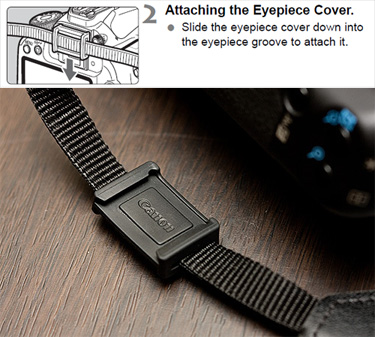
Repacement eye piece cover for 50D
- Thread starter RJL2005
- Start date


- Messages
- 1,120
- Name
- Steffan
- Edit My Images
- No
Just a guess but try 7dayshop? :shrug:

- Messages
- 2,562
- Name
- Andy
- Edit My Images
- No


- Messages
- 11,116
- Name
- And
- Edit My Images
- No
I wack a Marigold on top of mine. Might make my 50D look like Feathers McGraw, but fharquar it.
 love the image
I just cover it up with whatevers to hand if I don't use the rubber cover
OP

- Messages
- 3,222
- Name
- Rhod
- Edit My Images
- Yes
Just shoot in Manual mode in which case exposure isn't affected by light entering the viewfinder anyway.
Thanks CT. I thought that light entering the viewfinder may affect the image and not just the metering when taking long exposures.

CT
TPer Emeritus
- Messages
- 26,617
- Edit My Images
- Yes
There's no danger of that - the mirror is up -totally sealing off the viewfinder from the path of the light from the lens to the sensor. Viewfinder blinds were totally unecessary in film SLRs before the introduction of the first aperture priority cameras.Thanks CT. I thought that light entering the viewfinder may affect the image and not just the metering when taking long exposures.
OP
- Messages
- 3,222
- Name
- Rhod
- Edit My Images
- Yes
There's no danger of that - the mirror is up -totally sealing off the viewfinder from the path of the light from the lens to the sensor. Viewfinder blinds were totally unecessary in film SLRs before the introduction of the first aperture priority cameras.
Thanks again! Goes off to put away gaffer tape..........

Canon Bob
Loves the Enemy
- Messages
- 9,754
- Name
- Bob
- Edit My Images
- Yes
There's no danger of that - the mirror is up -totally sealing off the viewfinder from the path of the light from the lens to the sensor.
But the mirror's not totally reflective, it has a transmission/reflection ratio of around 40:60 Given this fact, I would assume that around 40% of the light reaching it through the viewfinder will get beyond it into the mirror chamber.
Bob
CT
TPer Emeritus
- Messages
- 26,617
- Edit My Images
- Yes
But the mirror's not totally reflective, it has a transmission/reflection ratio of around 40:60 Given this fact, I would assume that around 40% of the light reaching it through the viewfinder will get beyond it into the mirror chamber.
Bob
Well it's a thought Bob, but 40% of the light entering the viewfinder really isn't going to be very much, and the OP is talking about long night exposures. Interesting nonethless, but as I said earlier, viewfinder blinds were never deemed necessary on SLRs prior to the first auto modes appearing, when obviously light through the exposed vierwfinder could influence (in fact change) the actual exposure settings.
Has the nature of mirrors changed signmificantly since then?
Canon Bob
Loves the Enemy
- Messages
- 9,754
- Name
- Bob
- Edit My Images
- Yes
Has the nature of mirrors changed signmificantly since then?
Mirrors changed when AF sensors started to appear behind them.
Bob
CT
TPer Emeritus
- Messages
- 26,617
- Edit My Images
- Yes
Page 108 of the 7D manual is the only reference I can find to the eyepiece cover Bob where it says' During Live View shooting and movie shooting attaching the eyepiece cover is unecessary'.
Obviously because the mirror is up in both those situations. Not mentioning that Manual mode is the same is I think an error of omission rather than suggesting that the cover is required.
Obviously because the mirror is up in both those situations. Not mentioning that Manual mode is the same is I think an error of omission rather than suggesting that the cover is required.
CT
TPer Emeritus
- Messages
- 26,617
- Edit My Images
- Yes
Mirrors changed when AF sensors started to appear behind them.
Bob
Fair point - but pellicle mirrors were being used in some SLRs as far back as the 60s.
Canon Bob
Loves the Enemy
- Messages
- 9,754
- Name
- Bob
- Edit My Images
- Yes
LOL. I was expecting a fast return ball there, but anyway try removing the lens, locking the mirror up, and pointing the viewfinder at a powerful light -see if you can seen any light entering the mirror box.
I'll give that a try. Maybe I'm being a little too logical here but I'm assuming that 40% passes through the mirror when it's down therefore 40% must pass through it when it's up too. It may be that reversing the direction through the pentaprism scatters the light too much for it to be an issue.
Bob
CT
TPer Emeritus
- Messages
- 26,617
- Edit My Images
- Yes
I did try it Bob. With a powerful torch right up against the viewfinder, you see light around the edges of the mirror rather than through it. Move the torch back an inch or two and there's no visible light at all, so I can't see a 'real life' shooting situation likely to duplicate those conditions?

- Messages
- 2,052
- Edit My Images
- No
LOL. What did we do before gaffa tape?
Got stuff fixed properly, now its the car bumper hangs off gaffer tape it back on. :shake:
Canon Bob
Loves the Enemy
- Messages
- 9,754
- Name
- Bob
- Edit My Images
- Yes
Fair point - but pellicle mirrors were being used in some SLRs as far back as the 60s.
....Maybe I'm being a little too logical here but I'm assuming that 40% passes through the mirror when it's down therefore 40% must pass through it when it's up too.
Mission accomplished

The pellicle substrate can be formed such that it is partially transmissive at one angle of incidence whilst fully relective at another. I can't find specific details of the substrate for SLR mirrors but it seems likely that the substrate is formed such that it is transmissive (40% for Canon) at 45 degrees but totally reflective at 90 degrees....hence it reflects all light back into the pentaprism when is up.
I guess that the 40:60 ratio is a balance between providing enough light to the AF sensors without darkening the viewfinder too much
Bob
