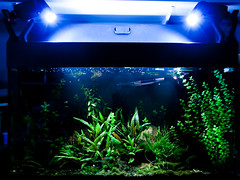
Shooting Fish?!

Messages
840
Name
Mark
Edit My Images
Yes
Hi all,

I've tried taking photo's of my fish previously and it's not worked out well. I just tried again with my 35mm f1.8 and I'm getting closer but still not quite there yet.

Below are a couple of my better shots, as you can see the focus is really an issue, I'm thinking that if I try again I may shoot at around f2.5 to f4 to keep a larger area in focus but then it won't let in so much light.

If any of you have been successful in the past please can you share your camera settings.

Regards
Mark.
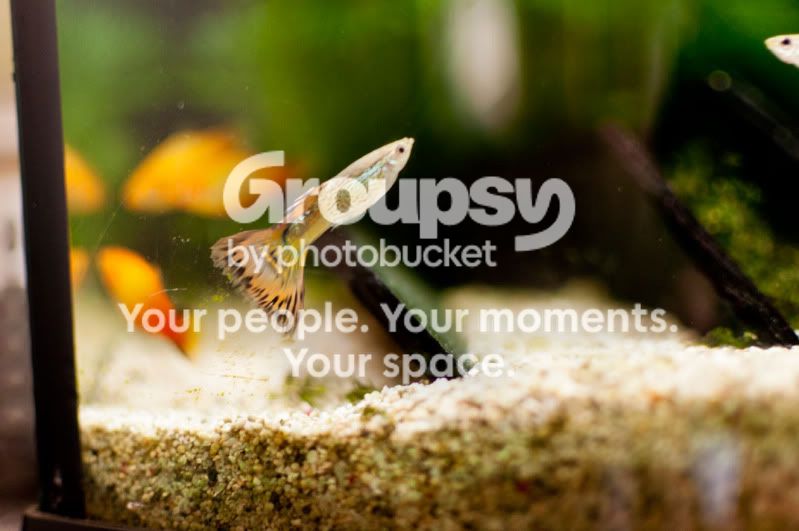
DSC_0025.jpg

f/1.8 - 1/80 sec - ISO-1000

DSC_0043.jpg

f/1.8 - 1/100 sec - ISO-640 - +1.0 Exp Comp

DSC_0046.jpg


f/1.8 - 1/100 sec - ISO-640 - +1.0 Exp Comp

(I was shooting manual and needed a quick adjustment to try and catch my plec when he came out so added +1.0 Exp, forgot to change it back after which is why I had Exp Comp on in 2 + 3).
 
Oh, I'd recognise a guppy anywhere... How many do you have?

I once read an aquarium book that, quite strangely, had a chapter about photographing fish. Trying to remember which one it was, get back to you soon hopefully.
 
Hiya mark, i photograph my fish (Oscars) i tend to wait till it's dark out and shut the curtains, i then use the largest lens i have (70-300mm) i sit on my sofa which is around 4 metres from the tank and with flash shoot from an angle to bounce the flash off the glass, this seems to work fine for me.

164331_489717333156_571068156_6265425_6093705_n.jpg


only one i can find of mine online but with a few adjustments to the camera settings, well you get the idea
 
Hi Mark,

There was a thread on this very subject a little while back.
(With a very similar thread title too :lol:)

Excuse my laziness, but this is the reply that I posted there . . .

I don't think that there's much I can add to it, but if you have any specific questions I'm happy to help the best that I can.


I think it's going to be a case of trial and error until you find the method that works for you.
It's something that I've done quite a bit of, but my method is very different to Russ's.

I tend to avoid using a high ISO, as with the dark backgrounds noise becomes an issue with the 450D. Aquarium lighting combined with the need for a high enough SS to freeze the movement is a problem though, so I tend to use the 50mm wide open and rely on my technique and reactions to get the shot.
Of course, nailing the focus at F1.8 isn't easy especially with small fast moving objects. (not to mention being hampered by shooting through glass and water), but it is completely doable with practice. These days I usually get around a 75% keeper rate.

My other tip is to have the tank lights on, but draw the curtains and darken the room as much as possible to minimise reflections. Get up as close to the glass as possible, and position yourself at a slight angle to it rather than straight on to avoid getting a reflection of the camera in the shot.

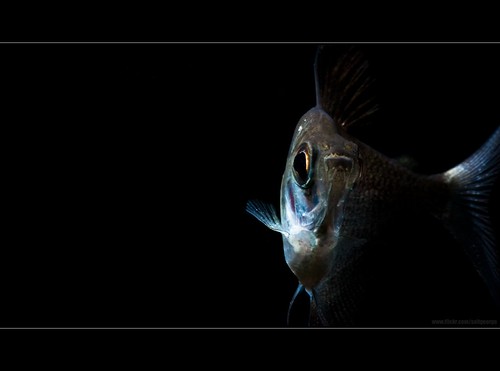
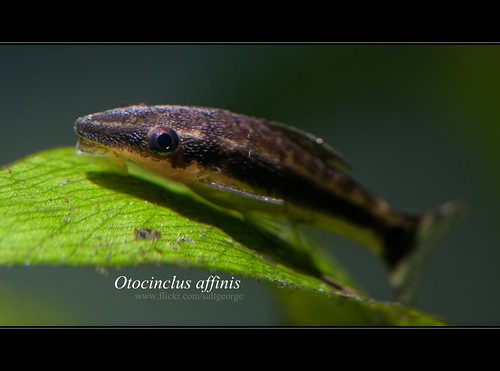
A couple of my favourite shots below. These were from my 6' tank so I was shooting through 8mm glass. Some more here if you want to have a look. (EXIF data intact on Flickr)


IMG_0086 by SarahLee1001, on Flickr


Shoal of Tiger Barbs by SarahLee1001, on Flickr:lol:
 
I was going to suggest that thread, If I remember my comment was something on long the lines of

"Good film, I like Kate Beckinsale, she's a hottie!"
 
Thanks Danny, Its interesting to hear that you use a long lens from far away. I may give that a go tomorrow night. My 70-300 isn't great at 300, Maybe I'll try around 200mm and see what I can get from it.

Great shots there Sarah, Looks like I was along the right lines with what I was doing then. I get my 17-55 f2.8 tomorrow so I might give it another go with that in the evening.

Regards.
 
I favour using over-tank flash with remotes, but always start with a very low power flash and a diffuser, watch the response of the fish. Some species are better with flash than others. The only species I've personally found responds badly to flash are guppies, they just spook and the startle reaction kicks in. If you get any response to a very low power flash, pack your flashes away and consider another approach (maybe a higher intensity constant light source placed temporarily over the tank).

The basics are the same whichever lighting route you go. Get the room dark to minimise reflections and make sure the glass is spotlessly clean. I recommend running a canister filter loaded with fine floss for a while before the shoot to give the water a good polish. It's easier than cloning out particles suspended in the water.

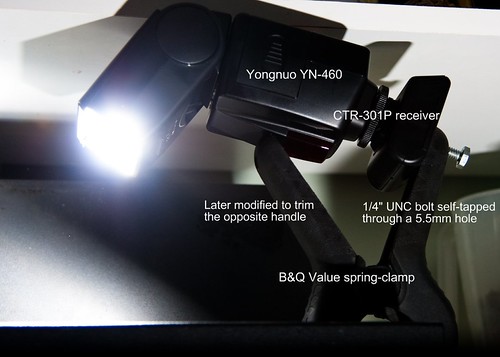
I'll usually mount two flashes with radio triggers above the tank using clamps shining into the tank from opposite ends at about 30 degrees to the water surface. I don't think the angle's too critical, that's just how the clamps fit to my tank. I experiment a bit with aperture and the flash power (shutter speed fixed to a reliable synch speed) depending whether or not I want to see the background or if I want it to fade to black.


Setting available by clicking through to the photopage,

I've changed the flashgun, clamp and triggers that I use since I shot this set-up.. but the principle is the same..

 
Surprised no-one has mentioned putting the fish in a barrel yet. I've heard it's supposed to be the easiest method ;)
 
I think everyone has a different technique. I recently shot my brothers marine tank.

The shots are here

I shot at ISO1600 and either used the 24-70 very close to the glass or the 300 f4 from a distance. The key I found was keeping the lens parallel to the glass. If I shot at an angle there was too much distortion

Neil
 
I've shot my fish as close to the glass and waiting for the right time - though the movement sometimes scares them. going to have to try the sit back with a long lens technique!
 
An extra piece of glass lowered into the tank to reduce the front to back movement of the fish is handy too. You can reduce their movement quite substantially which allows for a shallower depth of field.
 
Back
Top