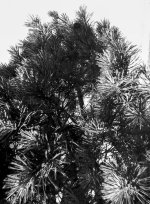
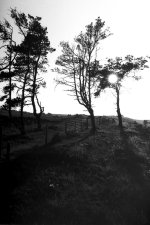
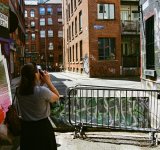
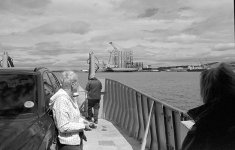
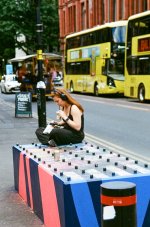
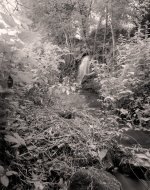
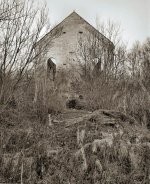
Show us yer film shots then!

Back in the fifties we got even greater actuance and compensation using Adox R14 or R17 single coated film with tetenal neofin blue. (The modern version of this has been reformulated and gives as slight film speed enhancement)But like the original has a shelf life, once mixed in minutes rather than days or years like pyro.

I was able to shoot and print 3 meter square, enlargements, from that combination, for store window backgrounds, from Rollei negatives,, that looked little different, from the pavement, to those I took on a 5x7 monorail

A compensating developer in this situation closes the gap between the shadows and extreme highlight. The shadows continue to develop long after the developer is exhausted in the highlights. This only works with dilute but active developers of the beutler type. The same mechanism accounts for the strong actuance in the edges.
Morning Terry,
I have seen Tetanal Neofin Blue mentioned in a couple of developing books but had thought, probably incorrectly, that it was for use with old fashioned thick emulsions but your comments have made me re think that, I might mix a batch up have a look. Similar with the beutler type. I like that certain developers add their own individual character to a film and have been fairly impressed with "the look of Pyro", it adds something. A 3m print from a 2 1/4 negative is impressive so something must be going right with that combination.
After my outing the other night I have, for the first time observed the difference between 35mm and large Format images and it makes me never want to shoot 35mm ever again !
If only a similar selection of films were available for large format. :(
Thanks for your comments.
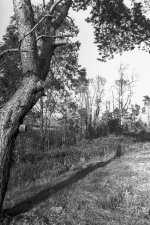
 
I have been visiting Rivi since I was a boy, at age seven or eight a couple of us used to go up there on Sundays getting the 10 past eight 512 to Horwich. As we got a bit older and stronger we traveled the 13 or so miles on our bikes to play in the pools and find birds nests at the "Chinese Gardens" (Do kids still do things like that ?)

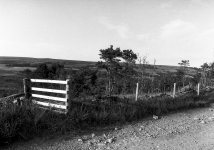
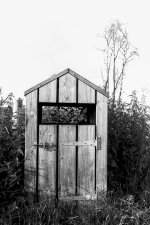
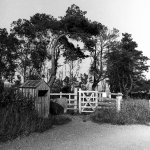
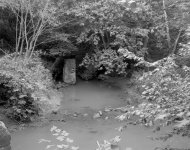
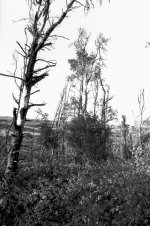
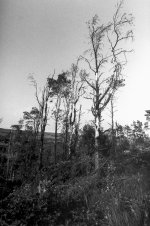
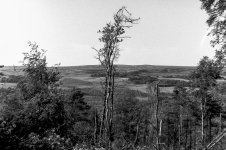
Getting older I explored more particularly the areas either side of St Georges Lane Up and around the back of the quarry but generally steered towards Two Lads and The Pike. A couple of weeks ago I spotted a small hidden single track road up the side of the quarry which we had not used before and that unexpectedly dropped over onto the road at Smithills, I had a couple of photography explorations there and saw a farm track shooting off so explored it. I was surprised to find a couple of rough parking bays over the side of the road and was greeted by some of the most beautiful views over a small valley I had seen up there in that area. Of course we are used to the fires on the moor's over the years and generally a couple of years later the scars heal. Here however, the fires had gotten at the trees and the wounds remained visible, shaded woodland exposed to the light for the first time in years, an image of the landscape in development.

Dynax 7 with 28 -135
APX 100 @box speed developed in 510 pyro

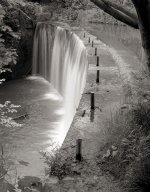
I liked the contrast of barriers bathed in light. and yet being an opening built there.

Burnt Edge.JPG


Burnt Edge-2.JPG

Inviting.JPG
 
Morning Terry,
I have seen Tetanal Neofin Blue mentioned in a couple of developing books but had thought, probably incorrectly, that it was for use with old fashioned thick emulsions but your comments have made me re think that, I might mix a batch up have a look. Similar with the beutler type. I like that certain developers add their own individual character to a film and have been fairly impressed with "the look of Pyro", it adds something. A 3m print from a 2 1/4 negative is impressive so something must be going right with that combination.
After my outing the other night I have, for the first time observed the difference between 35mm and large Format images and it makes me never want to shoot 35mm ever again !
If only a similar selection of films were available for large format. :(
Thanks for your comments.
Yes neofin blue was conceived for use with single coated film with inherently fine grain. Unlike conventional fine grain developers it does not reduce grain by solvent action or by softening the outlines of the grain.. but simply maintains their inherent fine grain structure. This is why only slow fine grain films work with it. It was no use at all with the faster Adox R21 films for which Neofin Red was recommended.
Unlike your pyro developers shots Neofin blue would give more detail in both the highlights and shadows.
If you make it up yourself it has an extremely short life before it oxidises so mut be used as soon as it is mixed. It always came in sealed small glass vials like some injections used to do, with a neck that you broke off. Later it came in small glass bottles that were very well sealed.

Adox CMS 20 II developed in Neofin blue would be an interesting trial if you can find them, Adox is having trouble sourcing the clear film base for it.
It actually gives better tonality than Adoxe's own developer but sharper grain and actuance , agitation is recommended as continuous for the first 30 seconda then one gentle inversion every minute there after. After each agitation tap the bottom of the bottom of the tank lightly to release any bubbles.
Also found the following.....

20 minutes@Temperature a strict 20 degrees for the best compensating results.
Recommended film speed suggested at iso 100 as film speed is boosted in new Neofin blue

Specific Considerations for Neofin Blue

When using Neofin Blue (a high-acutance, low-solvent developer similar to the Beutler formula):

"Sensitivity: Neofin Blue is highly sensitive to agitation. Over-agitation can quickly increase contrast and negate its compensating properties.
Recommendation: Use gentle, intermittent agitation. A common protocol is 30 seconds initial agitation, followed by 1 or 2 gentle inversions every 60 seconds. Avoid continuous or vigorous shaking.
Effect: Proper gentle agitation with Neofin Blue helps maintain its characteristic low contrast and high acutance (edge sharpness) while preventing Mackie lines (halos) that can occur with uneven development. "
 
Last edited:
Back in the fifties we got even greater actuance and compensation using Adox R14 or R17 single coated film with tetenal neofin blue. (The modern version of this has been reformulated and gives as slight film speed enhancement)But like the original has a shelf life, once mixed in minutes rather than days or years like pyro.

I was able to shoot and print 3 meter square, enlargements, from that combination, for store window backgrounds, from Rollei negatives,, that looked little different, from the pavement, to those I took on a 5x7 monorail

A compensating developer in this situation closes the gap between the shadows and extreme highlight. The shadows continue to develop long after the developer is exhausted in the highlights. This only works with dilute but active developers of the beutler type. The same mechanism accounts for the strong actuance in the edges.

I still have 3 10x8 50 sheet boxes of EFKE Pl25, and some sheets of 5x4 as well, it's a lovely 50 ISO (daylight) film.

Dr Schleussner Fotowerke introduced Adox 14, 17, & 21 DIN emulsions in 1953, Kb. R, & Pl, designated the type, 35mm, Roll film, and sheet film. Unusually Schleussner used the Tungsten light DIN speed in the names. The slower films were Orthopanchromatic, so had reduced red sensitivity, Kb. R, & Pl, 14 was a stop slower in Tungsten light compared to Daylight.

DuPont took over the Dr Schleussner Fotowerke, in 1972 they sold some or the coating machinery to EFKE in Zagreb, along with licensing rights to manufacture Adox films & paper.

Originally Luminos was the UK distributor of Adox materials including cameras, in the big shake up of the British photo industry between 1961-3 during a recession many companies ceased trading, or scaled down. The owners of Luminos moved to the US, where they imported and distributed British & European producs, selling Kenmere papers under their own Luminos name.

Here in the UK after the early 1960s, the distributors kept changing for Adox & later EFKE, it was the same with Tetenal,

I first used EFKE Kb14 around 1976, based on the claim you could get LF quality from a 35mm negative, I can't remember the developer possibly Acutol, the results were very impressive, with some buts. Later EFKE changed the names to the Tungsten ASA. To get best the results ideally you needed a tripod and an SLR with mirror lock, or better still a rangefinder camera.

Slow films like Adox/EFKE 14/25, Agfa SAP/APX25, and Pan F are ideally suited to German lens designs which have a better balance of definition over the high micro contrast favoured by Japanese designers.

So yes I'd expect an R14 image from a Polleiflex to look quite similar to one from a 7x5 negative on FP3 or similar in the 1950s.

the bridge000-1024.jpg

EFKE Pl25 @ 50EI. Rodinal or replenished Xtol. I might have used a Green filter
Wista 45DX, 150mm Sironar N.

temp11.jpg

Ian
 
Two superb posts there guys, and they have encouraged me to do a bit of research in the fine grain high contrast films and the use of low contrast developers and very low contrast developers neofin blue is easy to mix and would be very cost effective. One thing I have a problem with is metering for these films, I read that we must not use the zone system as development shadow detail is only 0.03 above base plus fog rather than zone 1 at 0.1 above base plus fog. (have I got that right and how do i do it?)

My initial idea is make a black in the scene zone five or average incident plus three compensation
 
Last edited:
Another from Manchester walk,

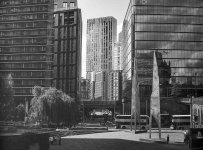
equipment same as before an interesting observation, to me, is the difference in the pyro between full sun and shadow scenes.

Shady

City shot.JPG
 
Two superb posts there guys, and they have encouraged me to do a bit of research in the fine grain high contrast films and the use of low contrast developers and very low contrast developers neofin blue is easy to mix and would be very cost effective. One thing I have a problem with is metering for these films, I read that we must not use the zone system as development shadow detail is only 0.03 above base plus fog rather than zone 1 at 0.1 above base plus fog. (have I got that right and how do i do it?)

My initial idea is make a black in the scene zone five or average incident plus three compensation
I used incident light readings. Never had a problem
Neofin blue is not a low contrast developer it a compensating one that is a big difference. There are very few films it works properly with, all are very slow films if you can get them. Where did you get the formulae for Neofin blue?
 
I used incident light readings. Never had a problem
Neofin blue is not a low contrast developer it a compensating one that is a big difference. There are very few films it works properly with, all are very slow films if you can get them. Where did you get the formulae for Neofin blue?
photography formula or something


It looks a bit like POTA but swap metol for the phenidone
 
Last edited:
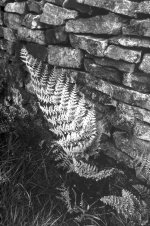
Dynax 7, apx 100 in 510 pyro


The sunlight picked out this fern leaf in magnificent isolation against the shaded wall

More Light

More Light.JPG
 
Last edited:
Dynax 7, apx 100 in 510 pyro

The low sun through the tree trunks created awesome shafts of light through to the ground

Shaft of light

Shaft of light.JPG
 
Dynax 7, apx 100 in 510 pyro

I became captivated by the angles and highlights created by the low sun

Sparkling Fir

Sparkling Fir.JPG
 
Dynax 7, apx 100 in 510 pyro

It was magical half hour

Magic

Magic.JPG
 
I used incident light readings. Never had a problem
Neofin blue is not a low contrast developer it a compensating one that is a big difference. There are very few films it works properly with, all are very slow films if you can get them. Where did you get the formulae for Neofin blue?

Willi Beutler published his High Definition developer in the late 1930s, it was later sold as Neofyn Blau. He was part of the movement driven by the introduction of the Leica, and later other 35mm cameras. The key publication of that era was "DIE NEUE FOTO-SCHULE, Die Tecknik " Hans Windisch 1937, also published in English as The New Photo-school, The Technique. Essentially it was the techniques needed to get the highest possible quality from 35mm & roll film.

Ilford's first modern series of films were introduced in 1934 Fine Grain Panchromatic, and Hypersensitive Panchromatic, followed by FP2 & HP2 plates in 1937, and film 1939. HP3 followed in 1941. While not as thin as Adox films these Ilford films were thin emulsions, the last of the thick emulsions were Ilford Selochrome, and Kodak Verichrome Pan

The three key factors for the change to a far modern approach needed for 35mm were improvements in films, newer fine grain and high acutance developers, and also the introduction of light meters, particularly small and portable. It's no coincidence that the 1937 Windisch book contains a number of adverts for Gossen meters.

Ian
 
MInolta dynax 7 28 - 135
APC 100 shot at box developed in 510 Pyro


Shadow Climbing Burnt out Dead Tree


Shadows - Climbing Trees-2.JPG
 
Last edited:
photography formula or something


It looks a bit like POTA but swap metol for the phenidone

Interesting however I have only used the original commercial offering from tetenal. In the sealed glass vials. Which only had three ingredients.

Did a bit more searching and the current version is very different in make up.
Neofin Blau (or Neofin Blue) is a high-acutance black-and-white film developer produced by Tetenal. It is renowned for its ability to produce exceptional sharpness, high resolution, and fine grain, particularly with slow- and medium-speed films (ASA 200 or lower).
"
"Current Ingredients
Based on recent Material Safety Data Sheets (MSDS), the modern proprietary formulation includes:

Metol (4-Methylaminophenol sulphate)
Hydroquinone
Phenidone
Potassium Carbonate
DTPA Na5 (Pentasodium DTPA, a metal sequestering agent)

Historical Ingredients

Original Formula: The earliest versions contained only Metol as the developing agent.
Intermediate Formulas: Subsequent iterations added Hydroquinone and later Phenidone.
Related Formulations: While often confused with the Beutler Formula, the Beutler developer uses Metol, Sodium Sulfite, and Sodium Carbonate, whereas commercial Neofin Blau does not rely on Sodium Sulfite in its current MSDS listing.
The developer is designed for films rated at ASA-200 or lower and is typically used as a one-shot developer diluted 1:9.."

From this it is difficult to tell what effect these change have had on the resulting image qualities.
 
Last edited:
Interesting however I have only used the original commercial offering from tetenal. In the sealed glass vials. Which only had three ingredients.

Did a bit more searching and the current version is very different in make up.
Neofin Blau (or Neofin Blue) is a high-acutance black-and-white film developer produced by Tetenal. It is renowned for its ability to produce exceptional sharpness, high resolution, and fine grain, particularly with slow- and medium-speed films (ASA 200 or lower).
"
"Current Ingredients
Based on recent Material Safety Data Sheets (MSDS), the modern proprietary formulation includes:

Metol (4-Methylaminophenol sulphate)
Hydroquinone
Phenidone
Potassium Carbonate
DTPA Na5 (Pentasodium DTPA, a metal sequestering agent)

Historical Ingredients

Original Formula: The earliest versions contained only Metol as the developing agent.
Intermediate Formulas: Subsequent iterations added Hydroquinone and later Phenidone.
Related Formulations: While often confused with the Beutler Formula, the Beutler developer uses Metol, Sodium Sulfite, and Sodium Carbonate, whereas commercial Neofin Blau does not rely on Sodium Sulfite in its current MSDS listing.
The developer is designed for films rated at ASA-200 or lower and is typically used as a one-shot developer diluted 1:9.."

From this it is difficult to tell what effect these change have had on the resulting image qualities.

Thanks for that Terry,

I also discovered that the recipe changed, one source claimed that it was after meeting with Crawley,

Your mention of the capabilities of the developer gave me the opportunity to have a re-think on a Chinese film I bought SHD 50 which had very high contrast but also very fine grain and detail. I just cannot make it work so had an idea to try the Beutler recipe on it. So I made up a batch of the original, three ingredient, to test it out, I did think to replace the sodium carbonate with the potassium carbonate but then thought "No stick to the plan"

In previous testing I had to go down to Ei 3 to pull out any detail on the shadows, but I started again at EI 50 with it. This shot was +1 compensation.

Test Scene.JPG

The image was 1/8 th at F4 hand held so not the best, but even then when I looked at the mat I saw detailed patterns that I have not seen before and was pleased with the shadow detail. I think the Beutler is a nice starting point for a fine grain developer but I can't see any acutance due to the camera movement. I am left thinking That if I could just control the highlights a bit better I may be able to use the film after all. A conundrum, if I drop the exposure I lose the shadows, but then again I did start in the middle of the recommended range so there is latitude for flexibility there.

In places of this blow up you can actually see that the lines are in fact 1mm squares with no visible grain, shot from about 8 feet away, so it is doing something right.

Test Scene-2.JPG
 
Last edited:
Thanks for that Terry,

I also discovered that the recipe changed, one source claimed that it was after meeting with Crawley,

Your mention of the capabilities of the developer gave me the opportunity to have a re-think on a Chinese film I bought SHD 50 which had very high contrast but also very fine grain and detail. I just cannot make it work so had an idea to try the Beutler recipe on it. So I made up a batch of the original, three ingredient, to test it out, I did think to replace the sodium carbonate with the potassium carbonate but then thought "No stick to the plan"

In previous testing I had to go down to Ei 3 to pull out any detail on the shadows, but I started again at EI 50 with it. This shot was +1 compensation.

View attachment 486397

The image was 1/8 th at F4 hand held so not the best, but even then when I looked at the mat I saw detailed patterns that I have not seen before and was pleased with the shadow detail. I think the Beutler is a nice starting point for a fine grain developer but I can't see any acutance due to the camera movement. I am left thinking That if I could just control the highlights a bit better I may be able to use the film after all. A conundrum, if I drop the exposure I lose the shadows, but then again I did start in the middle of the recommended range so there is latitude for flexibility there.

In places of this blow up you can actually see that the lines are in fact 1mm squares with no visible grain, shot from about 8 feet away, so it is doing something right.

View attachment 486399

Excellent detail for hand held

As this is a compensating developer you should not see highlight blow out, in fact the highlights should never fill in. It would suggest two things, too much agitation and/ or not enough dilution. For compensation to work the developer in the highlights should become exhausted before development is stopped and not replaced in the emulsion by excessive agitation.. this gives time for the shadows to further develop.. this also increases the actuance effect which I can not see in your images.
However that film is intended to document work and is formulated for maximum contrast so might well be counter productive.

The look of a properly exposed Adox 14 or 17 film was very much on the thin sides with un blocked highlights but giving detail well into the shadows.
If you layed one on to a printed page you would be able to read type through most of it. However it would still print on to grade 2 bromide paper. Adox had an unusually clear transparent base with virtually no measurable density.
 
Excellent detail for hand held

As this is a compensating developer you should not see highlight blow out, in fact the highlights should never fill in. It would suggest two things, too much agitation and/ or not enough dilution. For compensation to work the developer in the highlights should become exhausted before development is stopped and not replaced in the emulsion by excessive agitation.. this gives time for the shadows to further develop.. this also increases the actuance effect which I can not see in your images.
However that film is intended to document work and is formulated for maximum contrast so might well be counter productive.

The look of a properly exposed Adox 14 or 17 film was very much on the thin sides with un blocked highlights but giving detail well into the shadows.
If you layed one on to a printed page you would be able to read type through most of it. However it would still print on to grade 2 bromide paper. Adox had an unusually clear transparent base with virtually no measurable density.
Agitation was 1 min then 3 inversion/min

I have a Pan f on the go so will try it on that I think.

I need a hammer to flatten that film out it must have the shortest straight line section created, I will try a POTA variation next I think.

PS. What lens did you use for the enlargements ?
 
Last edited:
Thanks for that Terry,

I also discovered that the recipe changed, one source claimed that it was after meeting with Crawley,

Your mention of the capabilities of the developer gave me the opportunity to have a re-think on a Chinese film I bought SHD 50 which had very high contrast but also very fine grain and detail. I just cannot make it work so had an idea to try the Beutler recipe on it. So I made up a batch of the original, three ingredient, to test it out, I did think to replace the sodium carbonate with the potassium carbonate but then thought "No stick to the plan"

In previous testing I had to go down to Ei 3 to pull out any detail on the shadows, but I started again at EI 50 with it. This shot was +1 compensation.

View attachment 486397

The image was 1/8 th at F4 hand held so not the best, but even then when I looked at the mat I saw detailed patterns that I have not seen before and was pleased with the shadow detail. I think the Beutler is a nice starting point for a fine grain developer but I can't see any acutance due to the camera movement. I am left thinking That if I could just control the highlights a bit better I may be able to use the film after all. A conundrum, if I drop the exposure I lose the shadows, but then again I did start in the middle of the recommended range so there is latitude for flexibility there.

In places of this blow up you can actually see that the lines are in fact 1mm squares with no visible grain, shot from about 8 feet away, so it is doing something right.

View attachment 486399


Neofin blau is not really a fine grain developer, though it is usually called such. As it has no effect on the grain at all, if you look at the grain of the developed film under a microscope you will find that the grain is Sharp and well defined. But as the recommended films are inherently extremely fine-grained no grain is apparent. This is also a reason why it is not suitable for faster films.
When we talk about grain we're really talking about graininess, the difference is that graininess is what we see in the print or the scan, it is the spaces between the grains, not the grain itself. Adox slow films had not only very thin single coated emulsions but actually had a very high concentrations of silver salts, far more so than usual. This means that the grains were not only extremely fine but also very closely packed. One down side was that the films were rather prone to marking from physical stress, if poorly handled. As was the case with all single coated films of the time. While they were single coated they had two antihalation coatings one on the back of the film and one between the emulsion and the film. The first was washed off, the second was neutralised during processing
 
Agitation was 1 min then 3 inversion/min

I have a Pan f on the go so will try it on that I think.

I need a hammer to flatten that film out it must have the shortest straight line section created, I will try a POTA variation next I think.

PS. What lens did you use for the enlargements ?


PanF and Neofin blau is highly recommended as a combination.

One slow inversion per minute, (two at most) is better. Followed by a light tap on the bench to dislodge bubbles...Also strictly 20 degrees
Neofin blue is exceedingly sensitive to agitation.

Mostly I used componons, Though we had a reprographic lens intended for use in horizontal repro cameras intended for printing plate making, it had a exceedingly flat field for giant enlargements. For printing you mounted it in reverse.
I also used condenser enlargers for 35mm a medium format, but preferred cold cathode for large format black and white. I preferred graded bromide paper as against multigrade.
Condenser enlarger give sharper results and if properly set up shorter print exposures. But show up dust rather more. (There should be no dust) But we all became excellent spotters in those days, I used photo dye and a touch of a blackcurrant wine gum. And a hand picked series 7 best quality squirrel hair Windsor and newton brush. For colour prints I used their professional water colour squares in red blue yellow white and black and a touch of wine gum. I rarely used the white all, far better to just use less colour.
 
Last edited:
A few from the Analogue Wonderland photowalk in Manchester

Dynax 7 and ultramax 400
AW Lab processed and scanned

Some not so subtle shots

I am Next

I am Next.JPG


Not the red light district


Not the red light district.JPG


The writing is on the wall

The writing is on the wall.JPG


Two please


Two Please.JPG


Take them Down

Take them Down.JPG
 
A few from yesterday afternoon. Testing the last tlr from my found box.
Headed out after work but didn't enjoy it. I ran out of drink at 2pm and walked 8 miles dying of thirst. The sky was overcast but it was hot & really bright when I was out of the tree canopy.
I was up at 3am(ish) and started work at 5am so was already knackered.

The biggest issue. Every time I stopped something bit me. Hands, face, neck, arms, head.
A clegg fly actually bit my knee through my trousers. The swelling is just going down but theres a hole that looks like Phil Taylor has thrown a dart at me.

Cocked up a bit. Film was already loaded in the tlr from the other day. I thought it was foma 400, it was 200. It was really dark under the trees.
Most of these were f3.5, I had to go down to 30th on some shots. Theres a wee bit of shake being handheld, surprised anything turned out really.
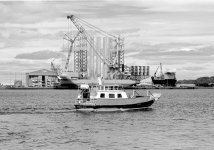
This lens really flares, I did have a hood from the rollei but truthfully couldn't be bothered to get it out the bag.

Foma 200/bellini monobath for 9 mins


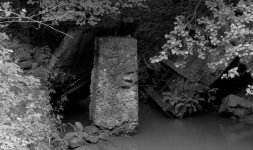
ghosts of the past 1024.jpg

Kinlet Deep Mine
Wista 45DX, 150mm Sironar N f22, Agfa AP100, Rodinal.

Ghosts of the Past . . . . . . . . . . my next major exhibition/publication, encompassing nearly 40 years of photography.

This is why you learn to shoot film, and large format, in my case the decaying face of industry.

Ian
 
Last edited:
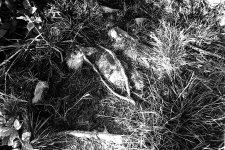
Exploring the long term damage caused by moorland grass fires.

MInolta dynax 7 28 - 135
APC 100 shot at box developed in 510 Pyro


Edit to add:

"this the price for me and you
that poorly discarded barbecue
a sizzling burger
I love the taste too.

but spoil not that lovely view
many others enjoy it too
ruined for years
for both me and you"


Burnt Edge

Moorland Fires-2.JPG


Moorland Fires.JPG


Moorland Fires-3.JPG
 
Last edited:
While selenium toning is very effective and gives good archival qualities it is a very nasty poison indeed.
 
While selenium toning is very effective and gives good archival qualities it is a very nasty poison indeed.

Lack of Selenium in the diet is a far more serious problem, Selenium tablets are readily available over the counter.in all health stores, & pharmacists.

There are far more dangerous photographic chemicals, that's speaking from experience of writing COSHH and other safety data for a laboratory, both for chemicals and any equipment used.

All chemistry should be used as manufacturers advise, and they provide MSDS which should be read.

Ian
 
Someone gave me some advice a little while ago about shooting Ilford XP2 at 200 but processing it as normal.

Got some film back from my newly acquired Minolta XG-M and I think it was a good call. I must go back through my posts to try and thank them.

Working at heights

Minolta XG-M + Minolta 50/1.2 + Ilford XP2


Working at heights by Kell, on Flickr


Soft serve
by Kell, on Flickr


Shard
by Kell, on Flickr


Corners
by Kell, on Flickr
 
Back
Top