


- Messages
- 2,134
- Name
- Matty
- Edit My Images
- Yes
Hi, If i do 3 exposures and bracket only a third of a stop compared to a full stop does that give me a more minimal hdr effect. Like HDR but not too full on.
Cheers
Cheers


Bad processing and inability to effectively use Photomatix's various settings gives those extreme results.Bracketing gives those extreme results

for my money I'd increase the contrast and reduce the saturation a bit

<snip>
One of my favourite HDR tonemapped shots was 7 exposures at 2 stop intervals, and it doesn't have that crappy overprocessed look that most HDR images get.
 Gotta be a first!
Car to share? Would love to see that!

Shot at 4am. 7 exposures in 2 stop increments from 1/250th to 15 second.
<snip>

Shot at 4am. 7 exposures in 2 stop increments from 1/250th to 15 second.
Yup, 7 RAW images in total (processed in ACR, then saved out as JPG) to cover the full tonal range from the brightest lights (although even at 1/250, the light bulb was very slightly blown out still) to the darkest shadows.
I wrote a bit more about this image and the process I used, as it was the first time I'd had a proper go at HDR, on my blog.
Was this 7 seperate shots or did you create 7 different exposured shots in PS or whatever?
I actually meant to do that the other day, but completely forgot about it. I'll have to see if I can get that sorted out for you.Be really interesting to see the seven different images on your blog


It is and it isn't. It does take a little more work (often requiring shooting of the sequence twice, and plenty of photoshop work after it). There was a video over on DTownTV I saw the other day about this...This is not possible with moving subjects however!
sometimes a subtle little HDR brings details out you would miss.

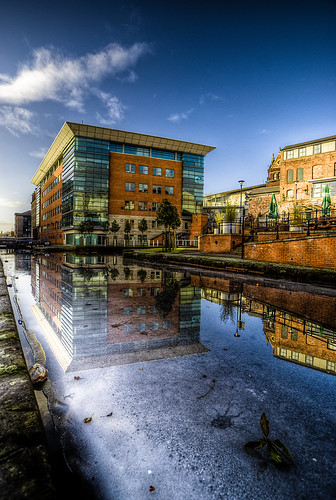
Bad processing and inability to effectively use Photomatix's various settings gives those extreme results.
Exactly. HDR processing isn't a final visual effect, it's a tool, part of the process just like a curves adjustment or a hue/saturation layer. The most effective uses of HDR are those where you can't even tell it's been used.
But because so many people don't know how to adjust sliders and just go with automatic settings we see a lot of what has now been dubbed "the HDR look".
I personally do not like HDR.
It depends on what sort of look you want.
I personally do not like HDR. I have dabbled with it, we don't get along. I hate looking at new photographers who pick up Photomatix, pump all the sliders to full and give you a nice image of halo's and bizarre looking objects.
This was from one single RAW file. I think this is probably the last time I try to come to terms with HDR too.
Again, that's like saying "I personally do not like curves adjustment layers", when what you mean is "I personally do not like badly processed images by people who don't know what they're doing".
No, I don't like HDR. That's what I said.
Most of what you achieve in Photomatix can be done in Photoshop with selective shadow/highlight and the dodge/burn tool. A classic example (which isn't my work, but I admire it):
http://www.flickr.com/photos/mrdayglo/3860839917/sizes/l/
It's a panoramic, so you're best to view the full size.
No, I don't like HDR. That's what I said.

Of course it's possible to produce subtle effects with several bracketed shots. It's by far the best way to do it.
This one is 5 exposures. (Yes, Andy, five seperate shots)
So was this...
I tend to give myself the option with any shot I'm not sure about by bracketing. Why? sometimes a subtle little HDR brings details out you would miss.

