The Amazing Sony A1/A7/A9/APS-C & Anything else welcome Mega Thread!

Using something like Gold200 (which in 120 is surprising close to Portra 400 in colours) at typically £9 a roll then development at £5-6, means that MF can be down to just over a £1 a shot if you scan yourself (the economies of a £300 scanner become apparent and it soon pays for itself, I shot 32 rolls of 120 last year, and it averaged out colour+B/W at about £1.20 a shot)

I’ve given up with 35mm film as IMO I need expensive film stock and expensive glass to get the results that I need and a s/h M6 plus 35mm Summicron at £4-5K just isn’t going to happen!!!!

I did look into a decent scanner for negatives, but I don't shoot nowhere as much 120 as you. So it would take me many years to get my cost back (then there's the converting them and software etc - I pay £23 for dev and tiff scans on 120. I think it's £22 for the same on 35mm.
 
I wouldn't like to go back to using an AF 35mm SLR again as they just too limiting for me now but using an MF RF for a day or taking some pictures with my old Kodak Instamatic again would be fun but not something I want do long term.

I've started to get into panoramas in the last couple of years and the other day when we went to Roseberry Topping I took 16 single shot pictures and over 100 to do panoramas. I think doing a film panorama is beyond me so that's another reason not to go back to film.
 
Using something like Gold200 (which in 120 is surprising close to Portra 400 in colours) at typically £9 a roll then development at £5-6, means that MF can be down to just over a £1 a shot if you scan yourself (the economies of a £300 scanner become apparent and it soon pays for itself, I shot 32 rolls of 120 last year, and it averaged out colour+B/W at about £1.20 a shot)

I’ve given up with 35mm film as IMO I need expensive film stock and expensive glass to get the results that I need and a s/h M6 plus 35mm Summicron at £4-5K just isn’t going to happen!!!!
Cheapest I found Gold 200 was £35 for 3 rolls, which I did buy the other day. I’ve thought about buying a scanner for all of my parents (and mine) family and holiday photos as the prints are stuck in the loft doing nothing, in fact because they’re stacked on top of each other some have stuck together. It’s just the thought of it, it must be extremely tedious feeding the negatives in one by one.
I personally don't understand why people still bother with film even if it was free.
Have shot plenty of film back when it was the only option and I'm glad we have digital now.
I really enjoy the manual aspect of it, manually focussing on digital cameras with peaking, zoom etc is just not the same. I even like the clunky shutter and winding the film on, it’s far more of an ‘experience’ than shooting digital.
 
Cheapest I found Gold 200 was £35 for 3 rolls, which I did buy the other day. I’ve thought about buying a scanner for all of my parents (and mine) family and holiday photos as the prints are stuck in the loft doing nothing, in fact because they’re stacked on top of each other some have stuck together. It’s just the thought of it, it must be extremely tedious feeding the negatives in one by one.

I really enjoy the manual aspect of it, manually focussing on digital cameras with peaking, zoom etc is just not the same. I even like the clunky shutter and winding the film on, it’s far more of an ‘experience’ than shooting digital.
Gold in 35mm is more grainy than Gold in MF (IMO) - and it’s more expensive in 35mm 36exp than a roll of 120 (but you do get more shots!!)
 
Cheapest I found Gold 200 was £35 for 3 rolls, which I did buy the other day. I’ve thought about buying a scanner for all of my parents (and mine) family and holiday photos as the prints are stuck in the loft doing nothing, in fact because they’re stacked on top of each other some have stuck together. It’s just the thought of it, it must be extremely tedious feeding the negatives in one by one.

I really enjoy the manual aspect of it, manually focussing on digital cameras with peaking, zoom etc is just not the same. I even like the clunky shutter and winding the film on, it’s far more of an ‘experience’ than shooting digital.

I just photograph mine. The results are good enough for screen viewing and I've printed some out much larger than the original prints and they still look ok.

The original is soft too... and tiny.

1-Inside-2.jpg
 
Last edited:
I just photograph mine. The results are good enough for screen viewing and I've printed some out much larger than the original prints and they still look ok.

The original is soft too... and tiny.

View attachment 481037
TBH I'm not sure how much quicker it would be taking photos of them, might be even slower by the time you've lined them up etc. Plus a lot are glossy finish so there's reflections to worry about.
 
TBH I'm not sure how much quicker it would be taking photos of them, might be even slower by the time you've lined them up etc. Plus a lot are glossy finish so there's reflections to worry about.

Yes, it's a faff but I haven't got a scanner. Doing a few treasured ones now and again when the light suits and I have time is ok for me and actually maybe quite therapeutic :D

P1100765.jpg

I'll be doing more of these this year as Mrs WW is off to look after her mam so I'll have plenty of free time.
 
Last edited:
I agree, it's technically far superior and gaurentees better hit rate.
I don’t think peaking does, it’s hard to see where the critical focus is, especially with large DOF. Magnify is probably more accurate but the fly by wire focus rings just feel a bit vague and disconnected for me. YMMV (y)
 
The fondle factor and the involvement is one reason why I've used MF lenses. I use the magnified view, zone or hyperfocal. I find peaking only really works at wide apertures like f1.x. I'd rather use MF lenses than film again. One thing about the Sony 40mm f2.5 is that I find MF with it quite nice. It hasn't got the metal build of an old Rokkor or a new Voigtlander, it's not as good looking and it doesn't have the optical character but it's better for MF than some others.
 
The fondle factor and the involvement is one reason why I've used MF lenses. I use the magnified view, zone or hyperfocal. I find peaking only really works at wide apertures like f1.x. I'd rather use MF lenses than film again. One thing about the Sony 40mm f2.5 is that I find MF with it quite nice. It hasn't got the metal build of an old Rokkor or a new Voigtlander, it's not as good looking and it doesn't have the optical character but it's better for MF than some others.
Yeah it's probably the process of taking the shot rather than the format the image is captured on that I prefer, although being brutally honest I do still prefer the aesthetics of film. That being said you can get 95% there with editing these days.

Going back to me desire for an M camera (digital), I'd get the analogue feel without the cost and drawbacks of film. I'd have to get through quite a few rolls of film to match the price of a Leica though :lol:
 
Yeah it's probably the process of taking the shot rather than the format the image is captured on that I prefer, although being brutally honest I do still prefer the aesthetics of film. That being said you can get 95% there with editing these days.

Going back to me desire for an M camera (digital), I'd get the analogue feel without the cost and drawbacks of film. I'd have to get through quite a few rolls of film to match the price of a Leica though :lol:

One thing that I notice now is with film the colours are often not natural. We see examples of this with digital pictures in the threads here when people are (presumably) using film modes and the colours again are sometimes way off. For me that's ok now and again for the odd picture but I don't want that all the time. I love the look of old photos but some of that look is created by time and I don't really want my digital photographs to look like that now and all the time.
 
One thing that I notice now is with film the colours are often not natural. We see examples of this with digital pictures in the threads here when people are (presumably) using film modes and the colours again are sometimes way off. For me that's ok now and again for the odd picture but I don't want that all the time. I love the look of old photos but some of that look is created by time and I don't really want my digital photographs to look like that now and all the time.
I can’t think of a film where the colours are truly natural, there’s always some sort of cross processing. I quite like that, but it’s not right for every occasion.

The ‘issue’ I have with modern digital is you can sometimes see the digitisation with certain scenes/subjects. I think architecture in particularly can almost look computer generated (which I guess technically it is). I think this looks more unnatural than the false colours of film. YMMV (y)
 
I can’t think of a film where the colours are truly natural, there’s always some sort of cross processing. I quite like that, but it’s not right for every occasion.

The ‘issue’ I have with modern digital is you can sometimes see the digitisation with certain scenes/subjects. I think architecture in particularly can almost look computer generated (which I guess technically it is). I think this looks more unnatural than the false colours of film. YMMV (y)

I can't say I see that. With my MFT Panasonic G1 I sometimes got an unreal looking effect especially in difficult or poor light but not so much with my A7 series cameras unless when the light is very poor. I think overall I like a more natural look as a starting point.
 
I personally don't understand why people still bother with film even if it was free.
Have shot plenty of film back when it was the only option and I'm glad we have digital now.

There is something to be said for the physical aspect. I took a bunch of fantastic digital images on my trip of a lifetime to Japan, but they are just lights on a screen, a representation.

The negatives on the other hand... They're not a reproduction, they haven't been copied from one media to another to another and been worked on, tweaked, uploaded etc.
That tiny image was made by the actual light hitting it. It's like bringing home a seashell or a little bottle of sand or something - a little captured slice of the essence of that place.

Purely emotional, I know, but that's what it is for me - a tiny physical connection to that place.
 
There is something to be said for the physical aspect. I took a bunch of fantastic digital images on my trip of a lifetime to Japan, but they are just lights on a screen, a representation.

The negatives on the other hand... They're not a reproduction, they haven't been copied from one media to another to another and been worked on, tweaked, uploaded etc.
That tiny image was made by the actual light hitting it. It's like bringing home a seashell or a little bottle of sand or something - a little captured slice of the essence of that place.

Purely emotional, I know, but that's what it is for me - a tiny physical connection to that place.
Each to their own.

Sounds like pure waffle to me to be honest.

If you enjoy film nothing wrong with that though. The people that jump on every trend because it’s a trend are deadly annoying though.

Truth is film is a bit crap compared to digital now and has been for a while.
 
There is something to be said for the physical aspect. I took a bunch of fantastic digital images on my trip of a lifetime to Japan, but they are just lights on a screen, a representation.

The negatives on the other hand... They're not a reproduction, they haven't been copied from one media to another to another and been worked on, tweaked, uploaded etc.
That tiny image was made by the actual light hitting it. It's like bringing home a seashell or a little bottle of sand or something - a little captured slice of the essence of that place.

Purely emotional, I know, but that's what it is for me - a tiny physical connection to that place.
Your digital image is also made my actual light hitting your sensor.
Your film is nothing but another form of sensor and technically an inferior one at that.

the fact that its less malleable and non-portable also makes it technically inferior too, I don't understand why that's a positive point.

For long time I didn't have access to digital cameras when rest of the world had moved on to digital, I had to continue using films.
Now I am glad to never have to use them again and deal with all the inadequacies and limitations.
as @f/1.2 puts it, riding a horse-cart is also a experience, and I have seen may people pay silly amount of money to get on one in tourist destinations for "the experience".
But I have lived in a world where I had to take a horse-cart because there was no other option, I ain't trading my car for it or see it an experience to be cherished.
 
With film I suppose much of the look is decided by the chemist at Kodak or Fuji and there's little you can do if the sky or your Mrs face is a funny colour or at least there was nothing I could do. With digital the designers at Sony have a say over these things but I think I have a lot of input once the picture is in my processing package. They all go through a process but of the two digital gives the most natural look for me and we don't have to stick with that but I'd rather have it as a starting point.

In all this I'm less interested in the camera and more interested in the lens and it's ashame we have these fly by wire plastic feeling tube things with no end stops that just don't look as nice and aren't as nice to use as old lenses but on balance I'm glad it happened.
 
Each to their own.

Sounds like pure waffle to me to be honest.

If you enjoy film nothing wrong with that though. The people that jump on every trend because it’s a trend are deadly annoying though.

Truth is film is a bit crap compared to digital now and has been for a while.

My first digital was a Fuji S602 pro zoom and I thought even that was better than film.
 
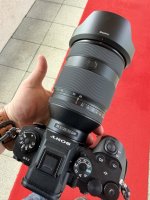
Now that I have had a chance to use this lens extensively, I can safely say it doesn’t get talked about enough. It really is absolutely outstanding and I would be quite happy to work a wedding and have nothing else.

IMG_5459.jpeg

It's only real weakness is shooting into the sun (bit of flare) which most lenses struggle with. It is also expensive and it's heavy but not anywhere as heavy as I feared it might be.

Colours, autofocus performance and rendering is top tier. I can't post any examples unfortunately as only have client work shot with it but honestly it is absolutely magical.

While I will still reach for some primes at various parts of a wedding day, I now always have this with me. I have also shot some smaller weddings using just this lens alone. Having the zoom option available at all times has really made a difference to how I shoot a wedding. I use it for everything I would have previously used a 35mm for which is about 70-80% of everything I would shoot at a wedding. Has made my 35mm lenses completely redundant. So much, so I am probably going to buy another one for my missus as well. At 70mm for portraits it isn't just good it is excellent and at that moment it is only just habit and redundancy that has me bring along another camera with another lens.

I haven't had any issues at all with it being f/2 which I was concerned about. Throw your primes in the bin they are obsolete.
 
Last edited:
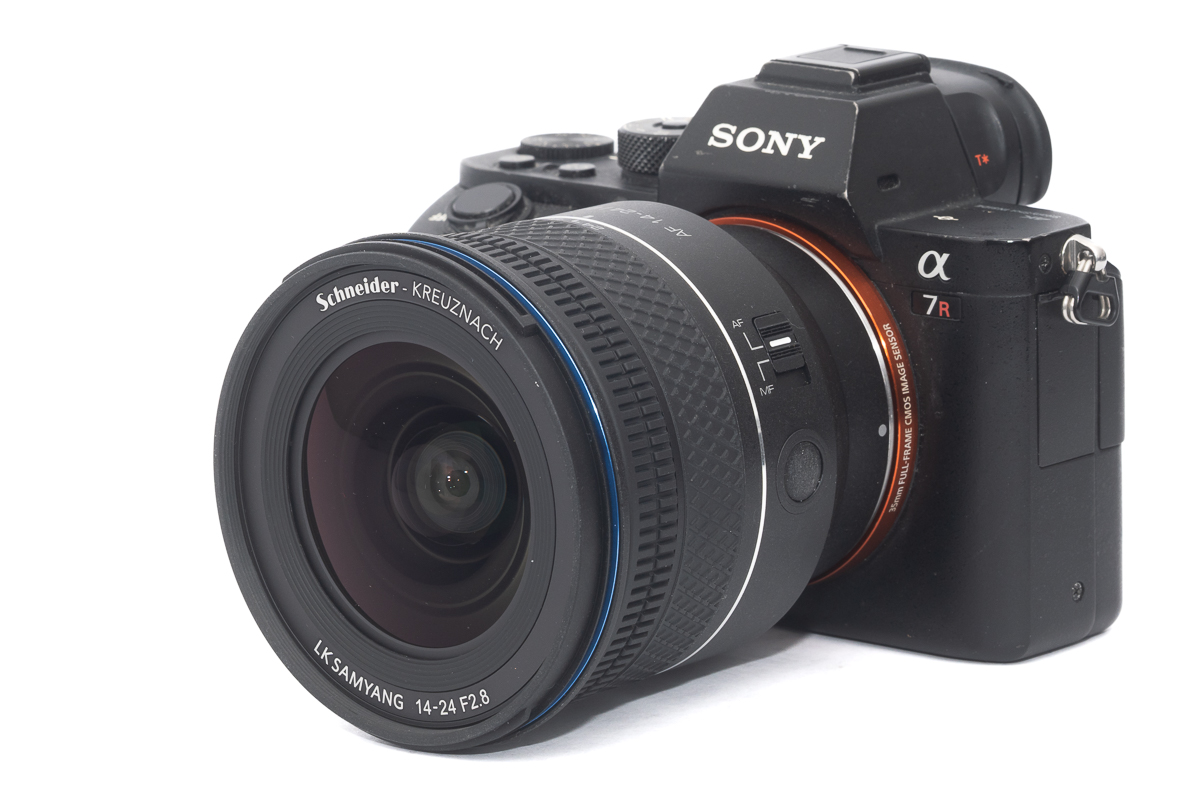
Samyang 14-24mm f2.8 review.


I used to miss my Sigma 12-24mm but maybe not too often now so I doubt I'll ever be looking for a lens like this again.
 
With film I suppose much of the look is decided by the chemist at Kodak or Fuji and there's little you can do if the sky or your Mrs face is a funny colour or at least there was nothing I could do. With digital the designers at Sony have a say over these things but I think I have a lot of input once the picture is in my processing package. They all go through a process but of the two digital gives the most natural look for me and we don't have to stick with that but I'd rather have it as a starting point.

In all this I'm less interested in the camera and more interested in the lens and it's ashame we have these fly by wire plastic feeling tube things with no end stops that just don't look as nice and aren't as nice to use as old lenses but on balance I'm glad it happened.
Digital certainly gives us more flexibility. I don't know why we don't get OEM lenses with proper manual zooms and range scales with digital cameras, that would be the best of both worlds.
My first digital was a Fuji S602 pro zoom and I thought even that was better than film.
My first digital camea was a Sony, a DSC-P7 I think, and I remember how incredible I thought it was being able to see the photo instantly and being able to zoom into the image.

There's no doubt there's far more advantages of digital over film, and I would never want to go back to film for most things, but there is still something I like about the rendering of film, and the analogue aspect of taking the photo.

As f1.2 said it's a bit like vinyl over CD/Mp3, there's something nicer about placing the vinyl on the turntable and lifting the needle onto it rather than just pressing the play button.
 
As I might have said about 100x I only went digital out of frustration at the quality of prints I was getting back. The last batch went back twice because of hairs and spots on prints and of course after I send them back twice along came a condescending letter about care of negatives... which I'd never opened. Only they had. I assumed at the time that they were cutting back on costs and this was the result but whatever the reason I'd had enough and put up with the 3rd batch of rejects and bought the Fuji. I liked the IQ but the camera was incredibly slow to meter, focus and take the shot and useless for anything moving. Taking metering away from the camera and leaving it to just AF improved things a bit but not enough so it was replaced with a Canon 300D and that really started me on digital.

I still have about a zillion vinyl records and I play them. One of the problems years ago was that HiFi auxiliary inputs weren't great at handling the output from CD's but these days that shouldn't be a problem unless you're using something that really should be handed in at the nearest police station. Sound quality isn't the whole experience though and with 12" vinyl you at least had room for a decent picture or artwork on the front and a poster within whereas with CD's you'll need a magnifier to appreciate any front cover and military grade origami skills to get a poster in the case and it'll be creased to uselessness.

I've been thinking of giving my TTA 50mm f2 and Voigtlander 35mm f1.4 another decent run and I don't know if I can part with my f1.2 lenses as I might want to shoot wider than f1.8 one day. The film era lenses might go though and so might one or two or all Voigtlanders. The Sony 40mm f2.5 can't match the the fondle factor or user experience of those MF lenses but as an everyday lens with some MF fun available it does pretty well.

Sorry about the long rant.

This one from our walk to Roseberry Topping is growing on me. I suppose having been there and had the experience adds to it and it is just a simple shot but as a memory of the day and as a picture I like it. Walking on Newton Moor.

DSC01953-2.jpg

Cruise next week :D I hope I don't fall out of the shower again.
 
Last edited:
I haven't had any issues at all with it being f/2 which I was concerned about. Throw your primes in the bin they are obsolete.

Impressive.

For me there are still sometimes advantages for primes... aperture (sometimes) and size and weight (sometimes).

No matter how good that zoom lens is and even accepting that f2 is enough it's still a honker compared to some primes. I know that size and weight aren't important to some and in your example of a wedding the lens probably actually offers a size and weight saving it's not an answer for me. That + a compact prime could be a very good answer for a lot of people though.
 
Impressive.

For me there are still sometimes advantages for primes... aperture (sometimes) and size and weight (sometimes).

No matter how good that zoom lens is and even accepting that f2 is enough it's still a honker compared to some primes. I know that size and weight aren't important to some and in your example of a wedding the lens probably actually offers a size and weight saving it's not an answer for me. That + a compact prime could be a very good answer for a lot of people though.

But to get like for like you would need 28, 35, 50 and something longer then you have the hassle of changing lenses. Even if they are only f/1.8 lenses that’s a lot to carry around.

This lens is a bag full of primes in one lens.
 
Last edited:
But to get like for like you would need 28, 35, 50 and something longer then you have the hassle of changing lenses. Even if they are only f/1.8 lenses that’s a lot to carry around.

Absolutely. I agree 100%.

A lot of people could do 99+% of their thing with a standard range f2 zoom and it'd save bulk, weight and cost over a bag full of primes. I agree 100%.

I read about "nesting"... having a zoom and a prime within the range of the zoom... and I like the idea. A standard range zoom, something like 28-70mm, and a prime to cover the shots f2 isn't enough for exposure wise and for bokeh sounds great but I'm probably never going to do it because I'm just a happy snapper and I put size and weight over most other things, hence at the moment my obsession with the 40mm f2.5.

There's a place I want to go to when we get back from holiday and I'm thinking of taking my 28mm f2 for wider shots and the 40mm or my little used 28-70mm and a wide aperture prime just for shallower DoF shots as my zoom is f3.5-5.6. That zoom of yours could pretty much do it all but I'd still want a prime for the rare shallower DoF shots and for when I want a compact camera and lens combination which being honest is most of the time.
 
Last edited:
there's something nicer about placing the vinyl on the turntable and lifting the needle onto it rather than just pressing the play button.

CDs changed a lot of things, including how audio was mastered to use the wider frequency range available. For me, music from an LP can sound more pleasing because it delivers a midrange warmth while diminishing the top and bottom of the audio spectrum - a frown on a graphic EQ. Music is about the mids, the human range, rather than the unhuman parts.

Also one might argue that audio is an analogue experience while vision is digital. In audio a continuous and complex set of wave forms induce a membrane to move in sympathy. Vision happens through individual photons striking receptors in the retina to register as a signal. We aggregate the data to make it appear analogue.
 
In the early days analogue and digital were possibly different things but I don't think that's been true for a long time, unless the equipment in question is crappy. Years ago when I fixed stuff for a living I spent my days sat in front of amongst other things a scope and even then there were were devices which gave what is in all respects let alone human ear wise indistinguishable from an analogue sine wave. Digital doesn't have to mean you get an on/off zero or 5v square wave output.
 
In the early days analogue and digital were possibly different things but I don't think that's been true for a long time, unless the equipment in question is crappy. Years ago when I fixed stuff for a living I spent my days sat in front of amongst other things a scope and even then there were were devices which gave what is in all respects let alone human ear wise indistinguishable from an analogue sine wave. Digital doesn't have to mean you get an on/off zero or 5v square wave output.

I largely agree, but in the context it's useful to make the digital analogue comparison. But the effect of digital was also to change the way music was made in a way that was creative but not necessarily pleasing.
 
CDs changed a lot of things, including how audio was mastered to use the wider frequency range available. For me, music from an LP can sound more pleasing because it delivers a midrange warmth while diminishing the top and bottom of the audio spectrum - a frown on a graphic EQ. Music is about the mids, the human range, rather than the unhuman parts.

Also one might argue that audio is an analogue experience while vision is digital. In audio a continuous and complex set of wave forms induce a membrane to move in sympathy. Vision happens through individual photons striking receptors in the retina to register as a signal. We aggregate the data to make it appear analogue.
I agree mostly, but if being pedantic sound is still electrical impulses/signals being sent to the brain so no different to vision. The source is different but the ‘receptors’ both convert a physical thing into electrical impulses (y)

With regards to your reference to a graphic EQ, giving something the analogue ‘warmth’ when mastering is still something that eludes me when mastering but you do normally remove the top frequencies to prevent ear fatigue, and remove the lows to remove muddiness and let the other frequencies breath. The rest is some sort of voodoo magic :lol:
 
I agree mostly, but if being pedantic sound is still electrical impulses/signals being sent to the brain so no different to vision. The source is different but the ‘receptors’ both convert a physical thing into electrical impulses (y)

With regards to your reference to a graphic EQ, giving something the analogue ‘warmth’ when mastering is still something that eludes me when mastering but you do normally remove the top frequencies to prevent ear fatigue, and remove the lows to remove muddiness and let the other frequencies breath. The rest is some sort of voodoo magic :lol:

Nerve signals aren't exactly digital, but have analogue qualities.

I'm away from home right now, but have a useful chart somewhere that helps explain where different things sit in a mix. Mixing a band requires identifying the different frequency range for each instrument and voice and giving them space in the mix. Warmth is, to a degree, a gift of the equipment as well as the mix, and although one might create a warm mix with careful EQ, it can be hard to get the same response without very pro-active adjustment of sounds.

As a guitar player, you'll know certain speaker/cab combinations work better than others in a way you can't emulate with EQ and compression. Kemper and others 'fix' this with modelling but it's not exactly the same.
 
13th of may is going to be interesting.

now saying full pre capture and 30fps, with new menus, body and battery.. so I guess a proper new generation for Sony.

I kind of wonder why they would release the a7v as is only 6 months before though?
The wait was already longer than expected so why not release both together and have both using a new body and battery.
 
13th of may is going to be interesting.

now saying full pre capture and 30fps, with new menus, body and battery.. so I guess a proper new generation for Sony.

I kind of wonder why they would release the a7v as is only 6 months before though?
The wait was already longer than expected so why not release both together and have both using a new body and battery.
It sounds like the A7RVI is going to be a very different price point intended for different users?
 
Oooof that camera in APS-C mode for wildlife is gonna be :clap:
 
Idk, if you add on inflation to the A7RV release price it isn't much more....
He was asking about the recent release of the A7V not RV (y)
 
Back
Top