What is your interpretation of the term "HDR" - MUST it involve layering?

Messages
3,278
Name
Andy
Edit My Images
Yes
I was trying to explain what I thought was the generally accepted definition of High Dynamic Range photos to a friend the other day, when a question arose in my mind :thinking::

Are all HDR images, by definition, made up of layered images :shrug:?

From everything that I've seen and read on TP, it would seem that everyone is agreed that those '2 or 3 different exposure layered together images' are referred to as HDR. But I suppose that my real question is;

"What about single layer images, which have been selectively lightened/darkened to produce an image with a higher dynamic range than they would have straight from the camera - are these also "HDR" images" :thinking:?

As an example of what I'm talking about, here's an single exposure that I processed using Nikon Capture NX2, some time ago. First off is the straight .jpeg and after that is a rather extreme version of the final image, in which I masked off the highlights (i.e. the window) and then selectively increased the brightness and contrast on other parts of the image by varying degrees, to bring out the detail :|.
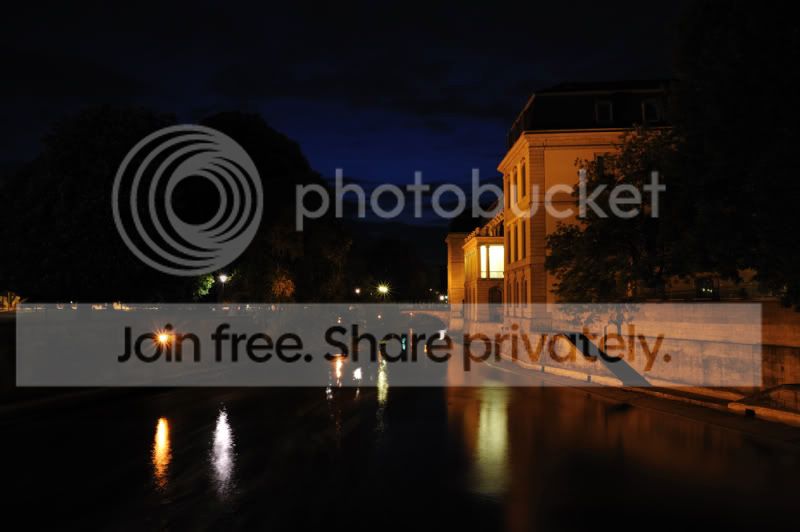
AJH_3418csmall.jpg


River_Leine_at_Night_02.jpg


At the time of discussing this particular image in the photo sharing part of the forum, a couple of people asked me if it was an HDR image and I replied, "No". Was I wrong about that? Does this kind of processing constitute HDR :shrug:?

Would love to hear your views, folks :).
 
The best person to 'splain this little chestnut would be Petemc, he knows a little on the subject :lol: Only published two books and offers detailed tutorials and explanations of the guts and tech behind it all. :thumbs:
www.vanilladays.com

Anyway, my understanding is limited but HDR isn't to be interpreted as such, it's to be understood.

High Dynamic Range.

The blending or combining of multiple and varying exposure is to create a higher dynamic range from the scene your shooting.

More detail in the shadows and highlights basically.

From my understandings, you can't make a HDR image from a single exposure. It would be a pseudo HDR or rendered approximation and far from the same result that one would get from combining multiple exposures.
 
I am probably wrong , but here goes.
I use Photomatix for my HDR, and use RAW files,(3,5 etc) it does however let you process a single Jpeg, but it mimics the effect, so I would say the answer to your question is No.
unless its Layered images its not HDR

( waits for correction)
 
Yes it is HDR because it does have high dynamic range - it's just a different method to achieve the same end result.

You see, I agree with what you've written there Rick, in as much as the image does have an extended dynamic range. But I just wonder if the generic term, "HDR", is really meant to describe layering images to create an HDR image, when it's used by everyday folks such as here on TP :shrug:!?

This is going to be an education for me, as I really don't have a clue right now :D.
 
You're not creating a high dynamic range image. An image with a 'true' high dynamic range would be 64 bit image and there are few, if any, monitors in existance that can display that.

So, when using the term 'hdr', it is only very loose. You're creating an image with the 'effect' of a high dynamic range image - you're mapping the tones (highlights, midtones and shadows) to give the effect. When editing an image, you're not 'increasing the dynamic range' because that's impossible. You're simply altering the image to give the effect of that.

HDR is simply slang, and tone mapping is a more appropriate name.

In this case, HDR as the slang term can be used to categorize any image that gives the effect of a high dynamic range image.

Disclaimer: I don't know how much of this, if any, is true. It is all recalled from my memory of reading something Pete said on a thread on HDR.
 
Not HDR as you have not increased the dynamic range of the original capture, just brightened some parts.
If you were to use a NEF file and alter the exposure of particular selections in NX2 then the dynamic range would increase, whether it would be High is up for discussion :)
 
It's not HDR because there is no more detail in the edited version than there is in the original. All you've done is brightened what was there in the darker areas so that it is clearer to see, you haven't brought out any more detail. I think it is a very valid way of editing for some images but it's not HDR. HDR brings out details in the shadows and highlights that otherwise would not be there and doesn't just brighten or darken what is already there.
 
:thinking: So, if you took a single exposure that had a very centralised histogram curve (i.e. mostly 'grey' with no black or white) and then you boosted the constrast until the histogram became compressed at both ends, would you be increasing the dynamic range of that image, or not :shrug:?

My understanding was that "dynamic range" simply referred to the 'distance' between the darkest and the lightest parts of any image. But then by that definition, every picture that has had a contrast tweak could be considered HDR, so I'm definitley barking up the wrong tree here :p.
I'd say nope, you wouldn't.

The dynamic range of the total image hasn't changed at all, it's what the sensor was able to capture from the darkest to the brightest. Maybe the main component of the image is in the mid-tonal area, but the rest of the scene captured by the sensor is still there, so brightening or darkening certain areas doesn't increase the dynamic range at all.

Taking a series of bracketed shots of the same scene, then merging them using whatever app, on the other hand, certainly does.
 
It's not HDR because there is no more detail in the edited version than there is in the original. All you've done is brightened what was there in the darker areas so that it is clearer to see, you haven't brought out any more detail. I think it is a very valid way of editing for some images but it's not HDR. HDR brings out details in the shadows and highlights that otherwise would not be there and doesn't just brighten or darken what is already there.
Perfectly explained :thumbs:
 
Call it what you like. We called greyscale black and white for years without any harm. As far as I'm concerned HDR is any image with extended range, whether thats 9 images stacked or 1 image tonemapped, it's still got an increased range on what it had.
Quite frankly I really can't se the point of this thread.
 
Quite frankly I really can't se the point of this thread.

That'll be because you don't understand the differences Wayne.

Not meaning this harsh in anyway but there are clear differences in using multiple exposures as opposed to one and that is the basis of the discussion.
 
That'll be because you don't understand the differences Wayne.

This thread is just going to cause an argument, people the world over will still call anything they like HDR, as will I so this thread is going to change nothing and just cause a row.
 
Not HDR as you have not increased the dynamic range of the original capture, just brightened some parts.
If you were to use a NEF file and alter the exposure of particular selections in NX2 then the dynamic range would increase, whether it would be High is up for discussion :)


I could explain my reasoning behind this but as you cannot selectively alter the exposure in NX2 anyway I think that I will just gracefully fade away.

(Soft music now playing) :$
 
This thread is just going to cause an argument, people the world over will still call anything they like HDR, as will I so this thread is going to change nothing and just cause a row.

Again, you don't understand the discussion itself and appear to not be interested in the details.

It's not going to cause an argument and I can't see why you've arrived at this assumption.

I suggest (and I mean this in the politest manner possible) that if you don't want to be involved or contribute then leave the thread alone. :thumbs:
 
I could explain my reasoning behind this but as you cannot selectively alter the exposure in NX2 anyway I think that I will just gracefully fade away.

Actually you can, I was piddlin aboot with NX2 yesterday and there is a lasso tool and an option to add a control point, it was a bit fiddly but it is possible :lol:
 
Are all HDR images, by definition, made up of layered images :shrug:?

Nop is the short answer ;)

HDR is a way of capturing a scene with large DR. However it does not automatically mean that you cannot capture it with a single shot or have to combine it with two images.

Fuji SuperCCDs are a good example of an attempt to capture large DR scenes with a single shot where smaller sensor cells will atempt to capture highlight details which would be blown in larger cells. So it's like having two sensors in one - one for capturing scene as conventional CCD and the other just to get the highlights. As a result those can ususlly capture a wider DR than any ordinary CMOS/CCD based cameras.

Another is using a specialised HDR cameras which will get an HDR scene in a single shot. Those are not a conventional cameras though and I believe at the moment use something like a scanning back.

From everything that I've seen and read on TP, it would seem that everyone is agreed that those '2 or 3 different exposure layered together images' are referred to as HDR.

Not necessarily. You may capture multiple shots of the same scene for the other purpouses. For example: to extend DOF (focus stacking), to remove noise (capturing multiple shots in high ISO and blending them in PS can virtually eliminate all the noise - median stacking), to remove people moving across your frame (same as above blending in PS with median stacking) and at last to create water blur.
 
As far as I'm concerned HDR is any image with extended range, whether thats 9 images stacked or 1 image tonemapped, it's still got an increased range on what it had.
The image this thread is about does not have any 'extended' range though. It simply has its dark areas brightened, no tonemapping or anything like that. It has the exact same range that was in the original image, it's just the darker tones have been brightened. To get an image with 'extended' range you need to combine images with different exposures, whether you just use tonemapping or full HDR.
 
HDR is a way of capturing a scene with large DR. However it does not automatically mean that you cannot capture it with a single shot or have to combine it with two images.
That's not quite right. Yes, you can capture an image with a large dynamic range without using HDR but that image is not HDR, it's just an image that has a large dynamic range. The high end Fuji D-SLR's are renowned for their large dynamic range in their images but the images are not HDR.

HDR is a described method of creating images with an extended dynamic range by combining images with different exposures in order to capture more detail than you would otherwise. So by its very definition HDR has to involve combining images of different exposure.
 
The image this thread is about does not have any 'extended' range though. It simply has its dark areas brightened, no tonemapping or anything like that. It has the exact same range that was in the original image, it's just the darker tones have been brightened. To get an image with 'extended' range you need to combine images with different exposures, whether you just use tonemapping or full HDR.

Exactly, some detail has been brought out in the sky and trees.
To extend the dynamic range you need to go deeper into the shadows and/or further into the highlights.
Everything in the photo is still between the original black and white areas.
 
Exactly, some detail has been brought out in the sky and trees.
Not quite. It appears that there is more detail to our eyes because the detail has been made much brighter but there isn't really any more detail. The detail was all there in the original image it's just been made much brighter so that you can see it much more clearly.
 
..
Quite frankly I really can't se the point of this thread.

:) Simple! I've Googled HDR and seen stacks of "HDR" images posted on here, but I still can't understand whether or not it can be produced from a single exposure, or not :shrug:. Given the level of varied discussion that the question has generated so far, I'd say that it was a pretty valid question :|.

This thread is just going to cause an argument, people the world over will still call anything they like HDR, as will I so this thread is going to change nothing and just cause a row.

;) Well, let's try and keep it civil then please folks! I really didn't want to start a row with this thread, just trying to educate myself with the help of those who understand these matters.


:thinking: So, if you took a single exposure that had a very centralised histogram curve (i.e. mostly 'grey' with no black or white) and then you boosted the constrast until the histogram became compressed at both ends, would you be increasing the dynamic range of that image, or not :shrug:?

My understanding was that "dynamic range" simply referred to the 'distance' between the darkest and the lightest parts of any image. But then by that definition, every picture that has had a contrast tweak could be considered HDR, so I'm definitley barking up the wrong tree here :p.

So sorry to quote myself :(, but could somebody be kind enough to have a go at explaining why I am wrong about the above (assuming that I am ;))!?
Thanks!
 
So sorry to quote myself :(, but could somebody be kind enough to have a go at explaining why I am wrong about the above (assuming that I am ;))!?[/B]

Thanks!

I'm certain that if you conduct a test and then compare the differences between 3 or 5 exposure HDR for example with that of a single exposure, you'll see clearly that they are not the same.

Alternatively read this:

http://www.vanilladays.com/hdr-guide/
:thumbs::thumbs:
 
I'm certain that if you conduct a test and then compare the differences between 3 or 5 exposure HDR for example with that of a single exposure, you'll see clearly that they are not the same.

Alternatively read this:

http://www.vanilladays.com/hdr-guide/
:thumbs::thumbs:

:) Thanks Tomas! I've read that before, although not recently.

Pete hints at the fact that some people don't even consider an image produced in Photomatix from a single raw file, that has been layered with different exposure values, to be "true HDR" :(.

In conclusion, even though I don't fully understand why, I'm going to continue to answer, "No", to anyone who asks me if I have ever produced any HDR images. Clearly (now), all that I have done with images like the example in the OP is just "rescue some detail from the shadows" and not increased the dynamic range.

From my point of view, I've got my answer and would just like to thank everyone for contributing so much, so quickly :thumbs:. There's no need for this to run on into a full-scale row on my account, but feel free to carry on posting if you want, folks ;).

Cheers :D!
 
I didn't say added...
...and I didn't say you said added. :shrug:

You said 'some detail has been brought out in the sky and trees' which implies that detail has been brought out that wasn't there before. I was just pointing out that there wasn't actually any more detail brought out. :thumbs:

I still can't understand whether or not it can be produced from a single exposure, or not
A tone mapped HDR image can be created from a single RAW exposure. Because the image is in RAW the full dynamic range is captured in the RAW file. You can then create the under and over exposed images manually from that one RAW file. This then gives you three images with differing exposures which is what you need to create a HDR image. You can't create a HDR image by adjusting the brightness/levels/contrast of a single image in post processing though.

So, if you took a single exposure that had a very centralised histogram curve (i.e. mostly 'grey' with no black or white) and then you boosted the constrast until the histogram became compressed at both ends, would you be increasing the dynamic range of that image, or not ?

My understanding was that "dynamic range" simply referred to the 'distance' between the darkest and the lightest parts of any image. But then by that definition, every picture that has had a contrast tweak could be considered HDR, so I'm definitley barking up the wrong tree here .
The reason this doesn't create an HDR image is because you are only spreading out the range that you captured across the histogram which will leave gaps with no detail across the image. It will also produce or enhance noise. With HDR you capture detail in all the levels across the image.

The best way to demonstrate the difference between what you have done and true HDR is by seeing it for yourself. Try taking a shot where there is a lot of range and doing what you have done here and then also produce a tonemapped HDR of the image and see the difference for yourself.
 
Pete hints at the fact that some people don't even consider an image produced in Photomatix from a single raw file, that has been layered with different exposure values, to be "true HDR" :(.

In conclusion, even though I don't fully understand why, ....

Its because of the way a sensor collects information. It does better at the bright end rather than the dark end, so simply moving the histogram into the bright side doesn’t actually increase the dynamic range as much as shooting with the correct exposure would. :thumbs:

See linky here. Sensor Linearity

.
 
...The reason this doesn't create an HDR image is because you are only spreading out the range that you captured across the histogram which will leave gaps with no detail across the image. It will also produce or enhance noise. With HDR you capture detail in all the levels across the image.

The best way to demonstrate the difference between what you have done and true HDR is by seeing it for yourself. Try taking a shot where there is a lot of range and doing what you have done here and then also produce a tonemapped HDR of the image and see the difference for yourself.

Its because of the way a sensor collects information. It does better at the bright end rather than the dark end, so simply moving the histogram into the bright side doesn’t actually increase the dynamic range as much as shooting with the correct exposure would. :thumbs:

See linky here. Sensor Linearity

.

Thanks a lot for your answers guys, I really appreciate it :thumbs:.


..... But :D, it seems to me that the dynamic range of an image and not the dynamic range of a camera sensor are two different things :shrug:.

Otherwise, if I've understood everyone correctly (very unlikely ;)), what your are saying is that the dynamic range of the two images below (which are both the same exposure, but with varying levels of contrast), are indentical !!??

A.jpg


B.jpg


Sorry to go on about this, but the more I read, the less I understand :shrug:.
 
Yes, the dynamic range of those two images is the same. It's just the contrast that is different.
 
The difference between HDR and high contrast is that in a high contrast image the light and dark areas are clearly seperated but with HDR you have a full tonal range from the highest light tone to the deepest dark tone.
 
The blending or combining of multiple and varying exposure is to create a higher dynamic range from the scene your shooting.

I think it's the other way round. It's taking an image with a high dynamic range and compressing it into the lower dynamic range available to view it (print or screen).


Steve.
 
Yes, the dynamic range of those two images is the same. It's just the contrast that is different.

The difference between HDR and high contrast is that in a high contrast image the light and dark areas are clearly seperated but with HDR you have a full tonal range from the highest light tone to the deepest dark tone.


:) Great, then I have my answer!

Thanks.
 
:) Great, then I have my answer!

Thanks.

LOL Yes it's really LDR ;)

But seriously, there can't be a conclusion to this as there is no accepted definition of HDR, it's just jargon, although I will say that my 'understanding' is that multiple images have to be used to create a 'true' HDR picture.

If this is not the case, then I have been producing HDR images for ever, and so have most people. It's the same as dodging and burning in the darkroom, it's what happens when you press the 'enhance' button on the photo booth in Boots, and it's what I do with most of my digital images to get the most out of them. They usually look better, with a certain appearance that makes the colours pop a bit more, which I usually like. Sometimes people comment on it and say stuff like the light was nice, but it never looks completely artificial. The penalty is sometimes noisy shadows if I shoot at high ISO.

I would call it Enhanced Dynamic Range (EDR?) or faux HDR, if only to add to the debate :D
 
I think it's the other way round. It's taking an image with a high dynamic range and compressing it into the lower dynamic range available to view it (print or screen).


Steve.

My head has started to hurt a little reading more views and explanations :lol:

All I know is that the result from one exposure is not as good as three or more :D
 
...and I didn't say you said added. :shrug:

You said 'some detail has been brought out in the sky and trees' which implies that detail has been brought out that wasn't there before. I was just pointing out that there wasn't actually any more detail brought out. :thumbs:

I didn't say you said I said added, this could go on.
I don't want to get into a semantics debate.
I said brought out, maybe I should have said enhanced, I'll probably get told I should have said something else. I'm tired of having to watch every single bloody word I type for fear of somebody picking fault with it. I think I'm done with this thread.
 
Back
Top