Zone System

OK, Barney/Wayne, OP just means the thread starter :D It's not a derogatory term :)

Unfortunately John Blakemore's Workshop book is now rather expensive.

View attachment 484601

It's a superb book but it was extremely poorly marketed by the publisher, I bought 2 copies when it was remaindered, £5 a copy.

The other book

View attachment 484602

Can still be bought new, £395 from Dewi Lewis, £95 secondhand is a bargain. The paperback listed is an entirely different book.

Ian
I have the Arts Council book, but would like both these books as well :-(
 
I visited the library yesterday, they do not get in book requests anymore as it costs a tenner to get them in and only charge out three fifty. I should have known when the book categories were not in alphabetical order, I had a good moan but ended up thinking I was "out of touch". The library was 50% of what I remember, now its half full of computers and bored people trying to be helpful with a good sprinkling of people watching other people to make sure they are doing it right.
 
OK, Barney/Wayne, OP just means the thread starter :D It's not a derogatory term :)

Unfortunately John Blakemore's Workshop book is now rather expensive.

View attachment 484601

It's a superb book but it was extremely poorly marketed by the publisher, I bought 2 copies when it was remaindered, £5 a copy.

The other book

View attachment 484602

Can still be bought new, £395 from Dewi Lewis, £95 secondhand is a bargain. The paperback listed is an entirely different book.

Ian
OK Ian, it just struck me as odd and rude when only last week I spent a whole day at your house and were on first name terms. :)
 
If you want to peg tones to reality, just use an incident light meter. Works every time.
If you want to favour shadows or highlights you can just move exposure by one stop increments.
Any exposure system is only about sliding the exposure up and down the characteristic curve.
Development is mostly about changing the angle of the straight line portion of the curve to match the required contrast.
The full zone system assumes that you are processing individual sheets of film not complete rolls at once.
 
If you want to peg tones to reality, just use an incident light meter. Works every time.
If you want to favour shadows or highlights you can just move exposure by one stop increments.
Any exposure system is only about sliding the exposure up and down the characteristic curve.
Development is mostly about changing the angle of the straight line portion of the curve to match the required contrast.
The full zone system assumes that you are processing individual sheets of film not complete rolls at once.
HEllo Terry,

If I practice on MF but select a certain part of each scene to "zone seven" for instance, will all the roll be developed the same for that point and the other zones fall where they will ?
 
If you want to peg tones to reality, just use an incident light meter. Works every time.
If you want to favour shadows or highlights you can just move exposure by one stop increments.
Any exposure system is only about sliding the exposure up and down the characteristic curve.
Development is mostly about changing the angle of the straight line portion of the curve to match the required contrast.
The full zone system assumes that you are processing individual sheets of film not complete rolls at once.
And as discussed before, using medium format cameras with magazines where the film from different magazines are given different development times..
 
HEllo Terry,
_
If I practice on MF but select a certain part of each scene to "zone seven" for instance, will all the roll be developed the same for that point and the other zones fall where they will ?
to the
Personally I would not use the zone system at all. The human eye is too flexible in the way iit sees light. For it to be able to judge light levels at all consistently.
I have always used an incident light meter with film to peg exposures. Most of my working life was using large format, development was set to produce contrast matching grade 2 printing paper. This differed when using either a condenser enlarger or a cold cathode one.

Zones fall where they will around a chosen grey any way. To make a good print all you need to know is that the shadows do not lose detail and the highlights will also .have detail. F that is so then prints can be made to match any tone
 
to the
Personally I would not use the zone system at all. The human eye is too flexible in the way iit sees light. For it to be able to judge light levels at all consistently.
I have always used an incident light meter with film to peg exposures. Most of my working life was using large format, development was set to produce contrast matching grade 2 printing paper. This differed when using either a condenser enlarger or a cold cathode one.

Zones fall where they will around a chosen grey any way. To make a good print all you need to know is that the shadows do not lose detail and the highlights will also .have detail. F that is so then prints can be made to match any tone
Thanks Terry,

How do adjust the incident reading when there is a scene with bright light and deep shadow or the subject is different light than camera position and cant be reached ?
 
And as discussed before, using medium format cameras with magazines where the film from different magazines are given different development times..
That would seem to be expensive, impractical. And over complicating things. But doable , why bother?
 
Thanks Terry,

How do adjust the incident reading when there is a scene with bright light and deep shadow or the subject is different light than camera position and cant be reached ?

Distance is used as a weak argument against incident light meters.. the reality is that in daylight, the light falling on a subject is the same pretty much any where you can imagine..
Just take he reading on the line between the subject and the lens pointing the dome towards the lens. If you want to make an adjustment to subject brightness. Use a stop or two to compensate. But 99 out of a hundred the reading as given will prove correct.
This is why movie photographers have always used incident meters so as to maintain brightness levels between shots.
Even in bright sunlit scenes an incident meter will never burn out highlights. All medium speed films made since the 1950s have had sufficient latitude to maintain detail in the shadows when this is done.
That was not necessarily true in the 30s when the zone system was in vogue. Incident light meters were not generally available till the 40s and in the UK till the 50S
I had to get an import for my first one in 1956. Direct from the USA.
 
Distance is used as a weak argument against incident light meters.. the reality is that in daylight, the light falling on a subject is the same pretty much any where you can imagine..
Just take he reading on the line between the subject and the lens pointing the dome towards the lens. If you want to make an adjustment to subject brightness. Use a stop or two to compensate. But 99 out of a hundred the reading as given will prove correct.
This is why movie photographers have always used incident meters so as to maintain brightness levels between shots.
Even in bright sunlit scenes an incident meter will never burn out highlights. All medium speed films made since the 1950s have had sufficient latitude to maintain detail in the shadows when this is done.
That was not necessarily true in the 30s when the zone system was in vogue. Incident light meters were not generally available till the 40s and in the UK till the 50S
I had to get an import for my first one in 1956. Direct from the USA.
Nice one Terry !

Thank you,
 
I will run a test two shots of each scene one incident one reflected with my efforts at Zone.
 
That would seem to be expensive, impractical. And over complicating things. But doable , why bother?
You bother for the same reason that you bother with controlling development with sheet film, but with the convenience of roll film. Although I routinely used 5x4, there were occasions it wasn't practical.

Having used the zone system with sheet film cameras, as well as roll film (using different magazines for different development times), I'm not convinced that one approach is any more or less complicated than the other. Especially for someone with the mental commitment to using the "full" Zone System, i.e. incorporating development times into their practice.

You certainly need to buy extra magazines, but not that unusual to own and carry additional magazines so you could switch between film types (maybe more than one colour film stock, as well as between colour and black and white)

On some jobs, where you were only using one film stock, it was common to preload as many magazines you had in advance, so you didn't need to load film, in sometimes bad weather, working in a precarious position, or when you just needed to save time.

Buying at least one extra magazine was one of the first things most people I know did after buying a roll film camera. It added to the camera's flexibility, and certainly with Hasselblads, as we always had one or more magazines away for repair, at least one spare back/magazine was essential.

Finally, it's how Ansel Adams worked, so I imagine it was a common approach by "zone system" practitioners using roll film, after seeing how Ansel Adams labeled his Hasselblad magazines with N+1, N+2, etc.
 
You bother for the same reason that you bother with controlling development with sheet film, but with the convenience of roll film. Although I routinely used 5x4, there were occasions it wasn't practical.

Having used the zone system with sheet film cameras, as well as roll film (using different magazines for different development times), I'm not convinced that one approach is any more or less complicated than the other. Especially for someone with the mental commitment to using the "full" Zone System, i.e. incorporating development times into their practice.

You certainly need to buy extra magazines, but not that unusual to own and carry additional magazines so you could switch between film types (maybe more than one colour film stock, as well as between colour and black and white)

On some jobs, where you were only using one film stock, it was common to preload as many magazines you had in advance, so you didn't need to load film, in sometimes bad weather, working in a precarious position, or when you just needed to save time.

Buying at least one extra magazine was one of the first things most people I know did after buying a roll film camera. It added to the camera's flexibility, and certainly with Hasselblads, as we always had one or more magazines away for repair, at least one spare back/magazine was essential.

Finally, it's how Ansel Adams worked, so I imagine it was a common approach by "zone system" practitioners using roll film, after seeing how Ansel Adams labeled his Hasselblad magazines with N+1, N+2, etc.
Why Ansel Adams used the zone system as long as he did is anyone's guess, as his printing notes from his negatives show levels of burning in and dodging to an extreme extent.
He became a master printer largely because his negatives were so difficult to print, his negatives gave him no other option.
There is no doubt that his early landscapes were well seen and iconic. And very moody. But they could have been more easily achieved with better exposed negatives than his zone system provided, and in a way, that few other photographers found necessary..
It is interesting that no other of the greats settled on using the zone system. But there is no doubt it became something many photographers of the period tried and soon discarded. Especially those with any knowledge of photo science.
It is of course no use at all in colour photography.
It was never taught, as a practical system, in any photographic college in the UK, except, in passing, as part of photographic history. (Though he taught it him self at various American institutions)
Even when I was a student in the mid 50s it had been passed over for more scientifically appropriate exposure methods.
We were in fact taught to use the phenomenally accurate SEI photometer, of fond memory. Which could have provided scientific rigour to the zone system as it could measure tones and contrast ranges with extreme accuracy. But as far as I know, was never used for the purpose.

The zone system is now an interesting historical process that has proved to have little practical relevance.
 
Why Ansel Adams used the zone system as long as he did is anyone's guess, as his printing notes from his negatives show levels of burning in and dodging to an extreme extent.
He became a master printer largely because his negatives were so difficult to print, his negatives gave him no other option.
There is no doubt that his early landscapes were well seen and iconic. And very moody. But they could have been more easily achieved with better exposed negatives than his zone system provided, and in a way, that few other photographers found necessary..
It is interesting that no other of the greats settled on using the zone system. But there is no doubt it became something many photographers of the period tried and soon discarded. Especially those with any knowledge of photo science.
It is of course no use at all in colour photography.
It was never taught, as a practical system, in any photographic college in the UK, except, in passing, as part of photographic history. (Though he taught it him self at various American institutions)
Even when I was a student in the mid 50s it had been passed over for more scientifically appropriate exposure methods.
We were in fact taught to use the phenomenally accurate SEI photometer, of fond memory. Which could have provided scientific rigour to the zone system as it could measure tones and contrast ranges with extreme accuracy. But as far as I know, was never used for the purpose.

The zone system is now an interesting historical process that has proved to have little practical relevance.

Many of Ansel Adams images were made before the Zone System, and in its early days the contemporary light meters were not ideal. Post WWII there were improvements in light meters, and the first Spotmeters.

I was telling Barney last week about a touring exhibition of Ansel Adams work I saw twice in Oxford & Edinburg. The print quality was awful compared to images off the same negatives I'd seen at the Barbican's "Classic Images" exhibition in 1987. Others thought the same, the prints were contemporary (to the time the images were first), and part of his daughter's collection.

He only became a master printer after he retired.

The first book about the Zone System came after Adams and Minor White were living in the same house in San Francisco in the late 1940s, early 50s, and Adams taught it to Minor White. The first edition of The Zone System, Minor White, appears to be 1956.

I don't think the Zone System was really introduced into the UK until the 1970s, the first fine art photography courses at Trent & Derby, Thomas Joshua Cooper, and his contacts from the US.

In the 1983 "Rural Myths" copy of Ten.8 magazine, there's a Paul Lewis article "Where the Wild Things Went". It lists various British landscape photographers as being disciples of Minor White. The Zone System was soon being taught in colleges/universities (as one approach), as well as workshops.

Here in the UK though the Zone System tends to be taught & used as a more practical approach, rather than the use of a densitometer, and the more obsessive BTZS (Beyond the Zones System) way of working. Just a simple way of exposing for the shadows and developing for the highlights.

On a workshop Fay Godwin described how her print greatly improved1987/8 after she went on a John Blakemore workshop a few years earlier, and began using the Zone System. It just becomes second nature.

Ian
 
Why Ansel Adams used the zone system as long as he did is anyone's guess, as his printing notes from his negatives show levels of burning in and dodging to an extreme extent.
He became a master printer largely because his negatives were so difficult to print, his negatives gave him no other option.
There is no doubt that his early landscapes were well seen and iconic. And very moody. But they could have been more easily achieved with better exposed negatives than his zone system provided, and in a way, that few other photographers found necessary..
It is interesting that no other of the greats settled on using the zone system. But there is no doubt it became something many photographers of the period tried and soon discarded. Especially those with any knowledge of photo science.
It is of course no use at all in colour photography.
It was never taught, as a practical system, in any photographic college in the UK, except, in passing, as part of photographic history. (Though he taught it him self at various American institutions)
Even when I was a student in the mid 50s it had been passed over for more scientifically appropriate exposure methods.
We were in fact taught to use the phenomenally accurate SEI photometer, of fond memory. Which could have provided scientific rigour to the zone system as it could measure tones and contrast ranges with extreme accuracy. But as far as I know, was never used for the purpose.

The zone system is now an interesting historical process that has proved to have little practical relevance.
The relevance of the Zone system is a different discussion from the one about using camera magazines/backs to implement it.

I've discussed the zone system across several posts, including how valuable I found it as an industrial photographer in the 1970s-1980s, and I have also discussed the merits of incident light metering. I chose my approach depending on the subject, and I believe my understanding of the zone system helped me understand how best to apply incident meter readings. I felt that using the zone system was the practical application of the Photo Science I had been taught.

I've never tried to print an Ansel Adams negative, but I found that printing became easier after I applied my understanding of the zone system to decide exposure and development. My personal landscape picture still took a lot of effort, but these were "expressive" prints, and I still felt I got a better starting point than I used to get without the zone system.

I'm not sure how you define the "greats" but my experience of landscape photographers was that many of them made use of the zone system, many of them didn't of course, probably more than did: there is nothing "essential" about using the zone system. In an interview last year (2025) Michael Kenna described how he still used the Zone system.

I don't know what you mean by scientifically appropriate, but I know I used an SEI photometer as part of learning the zone system. I can only remember that involved matching brightnesses, and that I hated it. I persevered because it was available, and Adams has instructions on using it with the zone system. He calls it an "excellent device".

I don't agree with your last sentence, as I think an understanding of the zone system, is still a simple way of getting a handle on how exposure works and is still useful today.
 
The relevance of the Zone system is a different discussion from the one about using camera magazines/backs to implement it.

I've discussed the zone system across several posts, including how valuable I found it as an industrial photographer in the 1970s-1980s, and I have also discussed the merits of incident light metering. I chose my approach depending on the subject, and I believe my understanding of the zone system helped me understand how best to apply incident meter readings. I felt that using the zone system was the practical application of the Photo Science I had been taught.

I've never tried to print an Ansel Adams negative, but I found that printing became easier after I applied my understanding of the zone system to decide exposure and development. My personal landscape picture still took a lot of effort, but these were "expressive" prints, and I still felt I got a better starting point than I used to get without the zone system.

I'm not sure how you define the "greats" but my experience of landscape photographers was that many of them made use of the zone system, many of them didn't of course, probably more than did: there is nothing "essential" about using the zone system. In an interview last year (2025) Michael Kenna described how he still used the Zone system.

I don't know what you mean by scientifically appropriate, but I know I used an SEI photometer as part of learning the zone system. I can only remember that involved matching brightnesses, and that I hated it. I persevered because it was available, and Adams has instructions on using it with the zone system. He calls it an "excellent device".

I don't agree with your last sentence, as I think an understanding of the zone system, is still a simple way of getting a handle on how exposure works and is still useful today.

From my point of view I had been using incident metering for months, point at the camera and use that setting. Within days of reading the zone system in Ansels book I felt like I understood why I was doing things regarding exposure. which has been beneficial for me with no formal photography training.
 
From my point of view I had been using incident metering for months, point at the camera and use that setting. Within days of reading the zone system in Ansels book I felt like I understood why I was doing things regarding exposure. which has been beneficial for me with no formal photography training.
Incident light meter reading are a great general purpose approach, but once you add an understanding of the zone system, it brings new understanding into what the meter is actually doing.

I have found that people with formal training in photography sometimes struggle with the zone system, because the concept seems too simple.
 
Many of Ansel Adams images were made before the Zone System, and in its early days the contemporary light meters were not ideal. Post WWII there were improvements in light meters, and the first Spotmeters.

I was telling Barney last week about a touring exhibition of Ansel Adams work I saw twice in Oxford & Edinburg. The print quality was awful compared to images off the same negatives I'd seen at the Barbican's "Classic Images" exhibition in 1987. Others thought the same, the prints were contemporary (to the time the images were first), and part of his daughter's collection.

He only became a master printer after he retired.

The first book about the Zone System came after Adams and Minor White were living in the same house in San Francisco in the late 1940s, early 50s, and Adams taught it to Minor White. The first edition of The Zone System, Minor White, appears to be 1956.

I don't think the Zone System was really introduced into the UK until the 1970s, the first fine art photography courses at Trent & Derby, Thomas Joshua Cooper, and his contacts from the US.

In the 1983 "Rural Myths" copy of Ten.8 magazine, there's a Paul Lewis article "Where the Wild Things Went". It lists various British landscape photographers as being disciples of Minor White. The Zone System was soon being taught in colleges/universities (as one approach), as well as workshops.

Here in the UK though the Zone System tends to be taught & used as a more practical approach, rather than the use of a densitometer, and the more obsessive BTZS (Beyond the Zones System) way of working. Just a simple way of exposing for the shadows and developing for the highlights.

On a workshop Fay Godwin described how her print greatly improved1987/8 after she went on a John Blakemore workshop a few years earlier, and began using the Zone System. It just becomes second nature.

Ian
Where do get all the info regarding Exhibitions and courses Ian ?
 
The relevance of the Zone system is a different discussion from the one about using camera magazines/backs to implement it.

I've discussed the zone system across several posts, including how valuable I found it as an industrial photographer in the 1970s-1980s, and I have also discussed the merits of incident light metering. I chose my approach depending on the subject, and I believe my understanding of the zone system helped me understand how best to apply incident meter readings. I felt that using the zone system was the practical application of the Photo Science I had been taught.

I've never tried to print an Ansel Adams negative, but I found that printing became easier after I applied my understanding of the zone system to decide exposure and development. My personal landscape picture still took a lot of effort, but these were "expressive" prints, and I still felt I got a better starting point than I used to get without the zone system.

I'm not sure how you define the "greats" but my experience of landscape photographers was that many of them made use of the zone system, many of them didn't of course, probably more than did: there is nothing "essential" about using the zone system. In an interview last year (2025) Michael Kenna described how he still used the Zone system.

I don't know what you mean by scientifically appropriate, but I know I used an SEI photometer as part of learning the zone system. I can only remember that involved matching brightnesses, and that I hated it. I persevered because it was available, and Adams has instructions on using it with the zone system. He calls it an "excellent device".

I don't agree with your last sentence, as I think an understanding of the zone system, is still a simple way of getting a handle on how exposure works and is still useful today.

I guess we are singing off the same hymn sheet :D

A few years ago a group off another Forum met up for a long weekend in Cornwall. We were at the Crowns, Botalack, three of us had finished shooting and were sitting in the sun, discussing metering, and decided to make comparisons. I had my Pentax spotmeter, and also a Gossen Luna Pro, I can't remember the other's meters, but we were all within 1/3 of a stop, using the ZS I had the same exposure as my Gossen used in Incident mode, but this was a typical N situation.

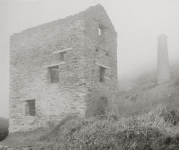
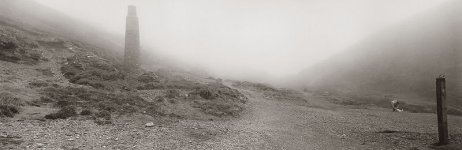
There are occasions when strict adherence to the Zone System could kill all the atmosphere of a shot, the main example is shooting in quite dense fog or sea mist.

1781188053003.png
This is in the Blue Hills, near St Agnes, a 10x8 shot (a low resolution image).

1781187946024.png

Using my 6x17 camera, 75mm SA. I couldn't see the woman & her dog, at the foot of the same valley. It's not the first time I've shot in heavy fog, it's interesting.

Ian

 
Incident light meter reading are a great general purpose approach, but once you add an understanding of the zone system, it brings new understanding into what the meter is actually doing.

I have found that people with formal training in photography sometimes struggle with the zone system, because the concept seems too simple.
That's the advantage Graham, it is a simple concept and simple to apply in most scenes.
 
Where do get all the info regarding Exhibitions and courses Ian ?

Exhibitions, usually photographic magazines, online searches. Courses, I'm sort of out of the loop, I used to run workshops in the 1990'ss and early 2000s.

There are Monochrome groups, I've given talks at 4 (twice at two of them) but they are virtually all shooting digital. I'll ask some contacts in Manchester.

Ian
 
I guess we are singing off the same hymn sheet :D

A few years ago a group off another Forum met up for a long weekend in Cornwall. We were at the Crowns, Botalack, three of us had finished shooting and were sitting in the sun, discussing metering, and decided to make comparisons. I had my Pentax spotmeter, and also a Gossen Luna Pro, I can't remember the other's meters, but we were all within 1/3 of a stop, using the ZS I had the same exposure as my Gossen used in Incident mode, but this was a typical N situation.

There are occasions when strict adherence to the Zone System could kill all the atmosphere of a shot, the main example is shooting in quite dense fog or sea mist.

View attachment 484771
This is in the Blue Hills, near St Agnes, a 10x8 shot (a low resolution image).

View attachment 484770

Using my 6x17 camera, 75mm SA. I couldn't see the woman & her dog, at the foot of the same valley. It's not the first time I've shot in heavy fog, it's interesting.

Ian

Very interesting, but...

I'm not sure what you mean by the "strict adherence to the zone system" comment.

In the picture you show, I would have used the zone system to help decide the range of zones in the scene and decided how I wanted them in the print, then. expose/developed/chosen paper grade to make sure I avoided the extreme shadow or highlight zones, which would have destroyed the atmosphere.

But as it looks pretty flat, I suspect any exposure around the mid-tones and normal development would have given something that would make a successful print.

I do wish I could resist joining these threads, as it just makes me nostalgic for film, and I know it's never going to happen :-(
 
Very interesting, but...

I'm not sure what you mean by the "strict adherence to the zone system" comment.

I really meant not resorting to N+1 or 2 development to increase the negative contrast. I've found that B&W film sees through the fog slightly better than our eyes.

In the picture you show, I would have used the zone system to help decide the range of zones in the scene and decided how I wanted them in the print, then. expose/developed/chosen paper grade to make sure I avoided the extreme shadow or highlight zones, which would have destroyed the atmosphere.

But as it looks pretty flat, I suspect any exposure around the mid-tones and normal development would have given something that would make a successful print.

I do wish I could resist joining these threads, as it just makes me nostalgic for film, and I know it's never going to happen :-(

I would have used my spotmeter to measure the zones, but I also had prior experience of a long mornings shoot in fag in the early 1990s. It's getting the balance right.

Ian
 
I really meant not resorting to N+1 or 2 development to increase the negative contrast. I've found that B&W film sees through the fog slightly better than our eyes.
Ah, I see what you mean, it was the strict adherence that fooled me.

I see strict adherence to the zone system, as using your expertise with the zone system to expose and develop in the way that best expresses your visualisation of the scene.
I would have used my spotmeter to measure the zones, but I also had prior experience of a long mornings shoot in fag in the early 1990s. It's getting the balance right.

So would I, I just meant that with a low-contrast scene like this, you have a bit more latitude with the exposure than if it were a high-contrast scene.
 
A friend of mine, who was a wizard at photographing objects for auctioneers, had a saying about monochrome photography: "Keep the whites white, the blacks black and make sure the tones in between are as clearly separated as possible".

For a bottom feeding, local press photographer, such as myself, this turned out to be a magical formula, which I'm sure led to more sales than I'd otherwise have made. I think it's much the same as the Zone System, just expressed more simply. When I went into programming, I found that much the same applied, as summed up in that very true saying "Remember to KISS - keep it simple, stupid".
 
Well something is happening for me, I took a couple of shots last week and when developed I thought to myself "i didnt put the zone there" it was a bit bright and lost the detail where I had placed it to fall. I had only used the lens a couple of times and thought that it may be a good time to check the shutter, only a 15th second was correct, 400 was 150 almost a stop and a half out all the other were about a stop slow give or take a few tenths.

A month ago I would not have a clue what had gone wrong, but I knew straight away that the areas I had focused on were over exposed and that led me to check !

That's real progress for me, Been out and shot another test roll this evening so this time exposure should be where I placed it.
 
Last edited:
A friend of mine, who was a wizard at photographing objects for auctioneers, had a saying about monochrome photography: "Keep the whites white, the blacks black and make sure the tones in between are as clearly separated as possible".

For a bottom feeding, local press photographer, such as myself, this turned out to be a magical formula, which I'm sure led to more sales than I'd otherwise have made. I think it's much the same as the Zone System, just expressed more simply. When I went into programming, I found that much the same applied, as summed up in that very true saying "Remember to KISS - keep it simple, stupid".
I would argue that this completely misses the point of the zone system.

The aim of the zone system is to creatively control the tones in a print to match how you visualised them at the time of taking the photograph. This could well be to deliberately avoid including any proper whites or black, and compressing the mid tones as shown in the tin mine picture that Ian posted earlier.

The "Keep the whites white, the blacks black and make sure the tones in between are as clearly separated as possible" is a good aphorism for someone making good quality "commercial " prints, and indeed the skills developed learning the zone system can help with this. This was the reason I first became interested in it, but you soon learn this was never the underpinning aim of the zone system.

The zones system is about creative and expressive manipulation of tones within a picture, not a "single" magic formula that can be applied in the same way to every print.
 
Just so you're aware, marked apertures can also be in error, even assuming the lens stops down correctly. Ansel Adams (since we're going full fat zone) calibrated the apertures on his lenses.

And you should also keep in mind that shutter efficiency with leaf shutters depends on the aperture set; for example, assuming the shutter speeds are accurate at the aperture for which they are calibrated, f/16 at 1/15 sec will give more exposure than f/2.8 at 1/500. I assume I counted the interval correctly.
 
I would argue that this completely misses the point of the zone system.

The aim of the zone system is to creatively control the tones in a print to match how you visualised them at the time of taking the photograph. This could well be to deliberately avoid including any proper whites or black, and compressing the mid tones as shown in the tin mine picture that Ian posted earlier.

The "Keep the whites white, the blacks black and make sure the tones in between are as clearly separated as possible" is a good aphorism for someone making good quality "commercial " prints, and indeed the skills developed learning the zone system can help with this. This was the reason I first became interested in it, but you soon learn this was never the underpinning aim of the zone system.

The zones system is about creative and expressive manipulation of tones within a picture, not a "single" magic formula that can be applied in the same way to every print.
Exactly, cannot wait to see how my black and white sunset turns out. :)
 
I would argue that this completely misses the point of the zone system.
I understand what the zone system is attempting to do.

My friend's aphorism, though, is what I think the majority of photographers are trying to do: produce images that others want to see. I also think that it's all personal choice in the end - and we're all equally correct, at least for ourselves.
 
I understand what the zone system is attempting to do.

My friend's aphorism, though, is what I think the majority of photographers are trying to do: produce images that others want to see. I also think that it's all personal choice in the end - and we're all equally correct, at least for ourselves.
I agree, and I wasn't discussing right or wrong in what a person was aspiring to produce, just that the aphorism wasn't the "zone system expressed more simply".
 
Just so you're aware, marked apertures can also be in error, even assuming the lens stops down correctly. Ansel Adams (since we're going full fat zone) calibrated the apertures on his lenses.

And you should also keep in mind that shutter efficiency with leaf shutters depends on the aperture set; for example, assuming the shutter speeds are accurate at the aperture for which they are calibrated, f/16 at 1/15 sec will give more exposure than f/2.8 at 1/500. I assume I counted the interval correctly.

Some of this comes from a lens might have a nominal marked Focal Length, which differs slightly to the actual Focal Length, which can itself vary by + or - 1º> I am talking about LF lenses here.

I have a mint 300mm f4.5 Xenar, according to Schneider's 1970 Professional Lenses review the actual Focal Length is 303mm +/- 1º, so that's anything between approx 300mm & 306mm. However, you need a difference of around 10% to get a 1/3 stop shift. When lenses were offered in a choice of shutters aperture scales were often blank and engraved in the dealer's workshop, so more room for error, I have quite a few Deckel & Gauthier shutters with blank scales.

Ansel Adams was actually factoring in another issue as well, light transmission, for some years he was using Cooke & Ross lenses, both distributed in the US by Eastman Kodak, and uncoated.

With the post WWII coated LF lenses I use I've never noticed any of my lenses showing any exposure variation, and shutter speeds have also been reasonably accurate.

Ian
 
I would argue that this completely misses the point of the zone system.

The aim of the zone system is to creatively control the tones in a print to match how you visualised them at the time of taking the photograph. This could well be to deliberately avoid including any proper whites or black, and compressing the mid tones as shown in the tin mine picture that Ian posted earlier.

The "Keep the whites white, the blacks black and make sure the tones in between are as clearly separated as possible" is a good aphorism for someone making good quality "commercial " prints, and indeed the skills developed learning the zone system can help with this. This was the reason I first became interested in it, but you soon learn this was never the underpinning aim of the zone system.

The zones system is about creative and expressive manipulation of tones within a picture, not a "single" magic formula that can be applied in the same way to every print.

I remember Paul Hill commenting years ago that the European style of printing was slightly different to the US, and that was because initially people were emulating the image qualities they had only seen in US monographs, of Weston, Adams, Minor White, etc.

Once you understand the Zone System it's simple, it gives you creative freedom, negatives that can be interpreted in many different ways when printing. It also gives you the confidence to know at the time of shooting you've made an excellent image, which should print easily.

Ian
 
Many of Ansel Adams images were made before the Zone System, and in its early days the contemporary light meters were not ideal. Post WWII there were improvements in light meters, and the first Spotmeters.

I was telling Barney last week about a touring exhibition of Ansel Adams work I saw twice in Oxford & Edinburg. The print quality was awful compared to images off the same negatives I'd seen at the Barbican's "Classic Images" exhibition in 1987. Others thought the same, the prints were contemporary (to the time the images were first), and part of his daughter's collection.

He only became a master printer after he retired.

The first book about the Zone System came after Adams and Minor White were living in the same house in San Francisco in the late 1940s, early 50s, and Adams taught it to Minor White. The first edition of The Zone System, Minor White, appears to be 1956.

I don't think the Zone System was really introduced into the UK until the 1970s, the first fine art photography courses at Trent & Derby, Thomas Joshua Cooper, and his contacts from the US.

In the 1983 "Rural Myths" copy of Ten.8 magazine, there's a Paul Lewis article "Where the Wild Things Went". It lists various British landscape photographers as being disciples of Minor White. The Zone System was soon being taught in colleges/universities (as one approach), as well as workshops.

Here in the UK though the Zone System tends to be taught & used as a more practical approach, rather than the use of a densitometer, and the more obsessive BTZS (Beyond the Zones System) way of working. Just a simple way of exposing for the shadows and developing for the highlights.

On a workshop Fay Godwin described how her print greatly improved1987/8 after she went on a John Blakemore workshop a few years earlier, and began using the Zone System. It just becomes second nature.

Ian
I had Read about the zone system as a school boy between 1948 and 1952 probably in AP or BJP both of which were in the school library. So by that time we're well known in the UK. But like the craze of developing to infinity, were seen mostly as something of a side show. Which remained the case when in college in 56.
Developing to infinity actually worked and gave a four and a half stop boost , but with an equivalent boost to grain and contrast. Worked best with basic developers like D76, but it also worked with the fineer grain microdol. I never tried it with promicrol or any other staining developers.

I have a somewhat rare first edition book of his national park service photographs reproduced from prints held by the national archive and not authorized but the Adams publishing trust.
The images are of beautiful quality though rather small as it is a tiny folio edition with most images around 5xr4 inches 186 of his best park images from 1941 onwards all after his description of the zone system. I did no start taking photographs till 1945. And became aware of the zone system some three years later.
By that time Adams was an extremely well known and frequently published photographer. Having started his own photographic journey in earnest in 1919. Having started with a brownie in 1916 on family holiday. At that time his interests had been monopolised by his expectations of a musical career.
 
I remember Paul Hill commenting years ago that the European style of printing was slightly different to the US, and that was because initially people were emulating the image qualities they had only seen in US monographs, of Weston, Adams, Minor White, etc.

Once you understand the Zone System it's simple, it gives you creative freedom, negatives that can be interpreted in many different ways when printing. It also gives you the confidence to know at the time of shooting you've made an excellent image, which should print easily.

Ian

The key to easily printable image with a full choice of tonalities, is to capture the entire image on the straight line portion of the films characteristic curve.
The zone system is only a subset of this. Any well calibrated exposure meter allows for this in a more direct way. Especially an incident light meter which pegs all tones to their natural tonality.
It can also be done using the histogram on a digital camera which shows the distribution of tones in graphic form, and which shifts in step with changes to exposure settings.
Which in turn can be used as an accurate tonal guide when shooting film.
Either will give better results than the zone system which is based on visual estimation.

A full tone capture allows any artistic interpretation at the printing stage, which was of course a major strength of Adam's photography..
 
Last edited:
There was an article in, I think, "Photography" magazine, published during the mid 1960s.

This claimed that, the least bad test for any lens was to glue a feather to a brick wall and put the camera on a tripod, about 20 times the focal length from the wall. If you could enlarge the resulting negative and see clear detail in the edges of the bricks, the camera and lens were sufficient for any practical need. If you could see detail in the feather, that meant there was no wind, so the brick wall wasn't moving!

That was the point at which I gave up worrying about lenses and shutters and concentrated on just getting pictures I and other people liked. ;)
 
There was an article in, I think, "Photography" magazine, published during the mid 1960s.

This claimed that, the least bad test for any lens was to glue a feather to a brick wall and put the camera on a tripod, about 20 times the focal length from the wall. If you could enlarge the resulting negative and see clear detail in the edges of the bricks, the camera and lens were sufficient for any practical need. If you could see detail in the feather, that meant there was no wind, so the brick wall wasn't moving!

That was the point at which I gave up worrying about lenses and shutters and concentrated on just getting pictures I and other people liked. ;)
When shooting for myself I never cared what anyone else thought.
When shooting professionally I only though about the customers needs.
Lenses and cameras were either good enough for the task or they were not.
From that point on, it was all down to me.
 
The key to easily printable image with a full choice of tonalities, is to capture the entire image on the straight line portion of the films characteristic curve.
The zone system is only a subset of this. Any well calibrated exposure meter allows for this in a more direct way. Especially an incident light meter which pegs all tones to their natural tonality.
It can also be done using the histogram on a digital camera which shows the distribution of tones in graphic form, and which shifts in step with changes to exposure settings.
Which in turn can be used as an accurate tonal guide when shooting film.
Either will give better results than the zone system which is based on visual estimation.

A full tone capture allows any artistic interpretation at the printing stage, which was of course a major strength of Adam's photography..
Given that different films convert different subject luminances and hues differently, and the eyes/brain perceive tonality differently again, I'm not sure there is any such thing as "natural" tonality.

The rationale behind learning the zone system is to understand how different films, exposure, and development techniques (processing and printing) affect how tones reproduce with different combinations of subjects, materials, and processes.

This understanding is used to develop techniques that allow you to manipulate these processes so that the tones on the print match the tones your eyes/brain visualised at the time of taking the picture.

I consider understanding the curve and the straight line sections for different films, to be a subset of understanding the zone system, and it's this need for an understanding of basic photographic science, along with the time needed to measure and calibrate every aspect of the photographic process, that puts most people off using the zone system.

But as I've said in several other posts, you don't "need" the zone system to make "good" prints, nor do you need to spend weeks/months of testing and measuring your equipment and materials to make good prints.

I ended up only fully applying the zone system for difficult/important subjects, and for everyday photography relied on a Weston + invercone, albeit using the things I learned in setting up the zone system to tweak what the meter told me, when I thought it necessary.
 
Last edited:
I ended up only fully applying the zone system for difficult/important subjects, and for everyday photography relied on a Weston + invercone, albeit using the things I learned in setting up the zone system to tweak what the meter told me, when I thought it necessary.

That's an excellent short summary.

Ian
 
Back
Top