Bird photography - metering

Which in reality brings us around to why so many people have had enough of the forums. I for one am not going to keep posting Nice shot Comments Nicki. This is a Photography forum in my eyes and the photography aspect of it comes first. If somebody`s picture is way of of the mark in a lot of aspects, do you honestly think saying aww lovely shot is going to help them improve? I think not, but then there are probably a few who do not wish to learn and are quite happy with those sort of replies. I can assure you that I did not have to do a Mass of PP to get my Kite shots looking half decent against a Grey sky " As this is what you seem to be applying " But if you are happy to carry on with your settings then that is your choice. You seem to slag off the editing side of things as well, yet. http://www.talkphotography.co.uk/forums/showthread.php?t=214429 :thinking:[/QUOTE

Did I say that you have to say or even comment on shots people put piccys here to be viewed and possibly commented on. Comments are to direct like "oversharpened, not sat enough etc but as I said it is in the eyes of the person who took the shot surely:shrug:

Take Brian's Kite for instance that you did the edit on, we all agreed that it was way to much colour of the Kites legs they are never that yellow, but as you have not had the experience (or you may have ) having seen them close up like we have you will see that they are not this yellow :shrug:

As for the Overprocessed shots did I say that was aimed at you:shrug: NO :nono:

As for "slagging off" so to speak and for the thread that you posted - taking into consideration that was a year ago and I like to think I have improved since then, as I said to you last Thursday, my pictures are mostly as they come out the camera.

I have taken on board things which people have suggested re the Nuthatches and even I can see they are improving, so have others, and will continue to adjust things as to what suits me and the conditions, till I get it right,after all, nobody is perfect, are they?

I am happy with my Kite in flight shots and will continue to use the setting I have (Thank you, again, Nigpd for helping me with those) and will use when the conditions are right. After all I am fortunate enought to be choosy when I shoot them and only pick the bright sunny days.

I think we will have to agree to disagree on this.

This forum was and hopefully will still be a friendly forum, so lets keep it that way.:shrug:
 
I think 'wrong attitude' would have to be the understatement of the year judging by your last couple of posts and your response to Rich in particular.

What I meant with that is that I am happy with my settings for in flight kites, this is not where the issue is, the issue was with my Nuthatch shots and shooting in the woods.
 
OK that's fair enough. I dunno how you photograph birds, but for me it's a waiting game punctuated sometimes by periods of intense activity. Also most of the places I shoot at I might be shooting in quite a wide arc with birds landing in several places within range - some in shade, some in sunlight and accompanied by periods of changing light anwyay. The last thing I want to do is miss a fleeting opportunity messing about with the mode dial or balancing the exposure.

My advice until you know a lot more about what you're doing is to shoot in AV Mode and use Evaluative metering. It's going to get you usable results in most situations anyway and even when it's not quite right editing will save the day in a lot of cases.

It depends what you'r e interested in. I'm sure there are a lot of photographers reading this thread who know little more about basic exposure than you do Briony and who get excellent results using AV Mode.. If that's the case ... who cares? :shrug:

That's what these modes are for - to make life a lot easier for you. If you really want to understand how and why these modes work and in what circumstances, then you need to dig a little deeper, but if you don't then it wont stop you enjoying your bird photography or taking many excellent pictures of them.

Probably the most sensible answer of the whole thread :thumbs:
 
Which in reality brings us around to why so many people have had enough of the forums. I for one am not going to keep posting Nice shot Comments Nicki. This is a Photography forum in my eyes and the photography aspect of it comes first. If somebody`s picture is way of of the mark in a lot of aspects, do you honestly think saying aww lovely shot is going to help them improve? I think not, but then there are probably a few who do not wish to learn and are quite happy with those sort of replies. I can assure you that I did not have to do a Mass of PP to get my Kite shots looking half decent against a Grey sky " As this is what you seem to be applying " But if you are happy to carry on with your settings then that is your choice. You seem to slag off the editing side of things as well, yet. http://www.talkphotography.co.uk/forums/showthread.php?t=214429 :thinking:[/QUOTE

Did I say that you have to say or even comment on shots people put piccys here to be viewed and possibly commented on. Comments are to direct like "oversharpened, not sat enough etc but as I said it is in the eyes of the person who took the shot surely:shrug:

Take Brian's Kite for instance that you did the edit on, we all agreed that it was way to much colour of the Kites legs they are never that yellow, but as you have not had the experience (or you may have ) having seen them close up like we have you will see that they are not this yellow :shrug:

As for the Overprocessed shots did I say that was aimed at you:shrug: NO :nono:

As for "slagging off" so to speak and for the thread that you posted - taking into consideration that was a year ago and I like to think I have improved since then, as I said to you last Thursday, my pictures are mostly as they come out the camera.

I have taken on board things which people have suggested re the Nuthatches and even I can see they are improving, so have others, and will continue to adjust things as to what suits me and the conditions, till I get it right,after all, nobody is perfect, are they?

I am happy with my Kite in flight shots and will continue to use the setting I have (Thank you, again, Nigpd for helping me with those) and will use when the conditions are right. After all I am fortunate enought to be choosy when I shoot them and only pick the bright sunny days.

I think we will have to agree to disagree on this.

This forum was and hopefully will still be a friendly forum, so lets keep it that way.:shrug:

I agree with you on all counts Nicki. I shall not attempt to reply anymore as I think it will only fuel the situation.
 
God, I am now sorry I asked a BASIC question :bang: thought that this was the was the basic thread. Just proves what I said in another post that one is frightened to ask a question when I get answers like yours.

We are not all "knowledgeable scientists" when it comes to photography and I for one find it difficlut to understand and get the grasp (hence my stupid title below my name thanks to the mods who seem to like to have a laugh at our expense :nono:)

Perhaps I should give up after all :shrug: but am wanting to learn and that is why I asked the question :cuckoo: I have read all this and "yes" it has gone over my head (hence the joke re about the snorkel and sat nav, but obviously you have not got a sense of humour)

"Once you have that understanding things will become a lot clearer but it's something you're going to have to apply yourself to understanding"

If I understood it I woud not have asked the question in the first place. :shrug:


I will read and re- read what is written in the hope it makes some sense to me but then Hey! who knows.

Everyone has their own opinions on this and not everyone is going to offer the same advice so I will just have to figure out what works the best for me :shrug:

After all I am only trying to learn what is relatively new hobby for me and it is not for the want of trying to learn, that is why I ask questions

I won't ask any questions again.:shake: as I do not wish for another onslaught.

Well Nicki,

I'm glad you asked the question, good to get different opinions whether you've read the books or not.

I'm enjoying trawling through the text, thanks to everyones input.

If you can't ask it in basics then you can't ask it. :wave:
 
Well Nicki,

I'm glad you asked the question, good to get different opinions whether you've read the books or not.

I'm enjoying trawling through the text, thanks to everyones input.

If you can't ask it in basics then you can't ask it. :wave:

:lol: Thank you
 
What I meant with that is that I am happy with my settings for in flight kites, this is not where the issue is, the issue was with my Nuthatch shots and shooting in the woods.

Why didn't you disclose that at the beginning? It's a pretty specific case and the answers could have been targeted at that. Furthermore, since your latest nuthatch thread does not appear to show a problem, why on earth did you send us on this wild goose chase without at least referencing your efforts to date?

Quite honestly I feel I've wasted my time providing such exhaustive replies to what turns out to be such a minor topic and not the entire gamut of bird metering scenarios. Thank God that CT's last reply is all you needed and this thread can close. I want no further part in it.

:bang:
 
What we want is a workshop! What say you Nicky? Someone who will show us hands on, explain in MFI (Made for idiots) :) I love to read but my brain goes into meltdown when I read some of this, and I bet Nicky is in the same boat.

I was the same when I started using LR, it looks...(as Nicky put it) like something from outer space, and now I'm understanding it more and more.

The same goes for when i've been at meets with Tim, and he explains something face to face, it's alot easier to understand. Saying that, I still get strange looks from people who want to ask why i'm photographing my own hand.....;-)
I really enjoy reading the feedback on these threads, but I don't understand why people have to get so shirty!

Mr Youatemywhatever it is, some of your posts last week were offensive and I'm glad you apologized. That's all you can do. You then post in this thread, that the situation was 'nothing to get upset about' therefore retracting your apology? No? I'm not surprised she's shirty with you if I'm honest. And it's turned a really helpful thread into a mess. (That I shouldn't really be involved in, but Nicky is my friend and I don't like to see her being jumped on in her own thread)

So...who shall we vote to do the workshop? :lol:

PS, what we need is cake. That is the solution...:lol:

Nicky, this is my mantra...

We don't always get it right. When we do get it right, half will think it's wrong, but sometimes the right way is not always the best way. What matters is do we like it? Critique is all well and good, but as long as you enjoy it (I personally love it) that is all that matters. When it all goes wrong, there is always someone here to help. (And after this weekend, boy can it go wrong! :lol:)
 
Last edited:
What we want is a workshop! What say you Nicky? Someone who will show us hands on, explain in MFI (Made for idiots) :) I love to read but my brain goes into meltdown when I read some of this, and I bet Nicky is in the same boat.

I was the same when I started using LR, it looks...(as Nicky put it) like something from outer space, and now I'm understanding it more and more.

The same goes for when i've been at meets with Tim, and he explains something face to face, it's alot easier to understand. Saying that, I still get strange looks from people who want to ask why i'm photographing my own hand.....;-)
I really enjoy reading the feedback on these threads, but I don't understand why people have to get so shirty!

Mr Youatemywhatever it is, some of your posts last week were offensive and I'm glad you apologized. That's all you can do. You then post in this thread, that the situation was 'nothing to get upset about' therefore retracting your apology? No? I'm not surprised she's shirty with you if I'm honest. And it's turned a really helpful thread into a mess. (That I shouldn't really be involved in, but Nicky is my friend and I don't like to see her being jumped on in her own thread)

So...who shall we vote to do the workshop? :lol:

PS, what we need is cake. That is the solution...:lol:

Nicky, this is my mantra...

We don't always get it right. When we do get it right, half will think it's wrong, but sometimes the right way is not always the best way. What matters is do we like it? Critique is all well and good, but as long as you enjoy it (I personally love it) that is all that matters. When it all goes wrong, there is always someone here to help. (And after this weekend, boy can it go wrong! :lol:)

Dear Tori thank you for your reply. If you could take time to read this thread http://www.talkphotography.co.uk/forums/showthread.php?t=266307 and look at at Nicki`s replies, you will notice how she is joining in the fun. I therefore found it somewhat of a surprise when things turned sour on the other threads, trying to explain to someone that any comments I made this time around were in jest is not easy, despite as explained the smilies at the end of my comments. Other than having the odd confrontation with people on here obout there pictures, Ct in particular :suspect: I feel that I have done nothing other than try to help others with what limited knowledge I have. I have never gone out to attack or insult anybody as far as memory serves, and see no reason why I should have done this to Nicky.
 
Why didn't you disclose that at the beginning? It's a pretty specific case and the answers could have been targeted at that. Furthermore, since your latest nuthatch thread does not appear to show a problem, why on earth did you send us on this wild goose chase without at least referencing your efforts to date?

Quite honestly I feel I've wasted my time providing such exhaustive replies to what turns out to be such a minor topic and not the entire gamut of bird metering scenarios. Thank God that CT's last reply is all you needed and this thread can close. I want no further part in it.

:bang:

Sorry Tdodd, I should have said this from the outset :bang: but this is where the debate came from.

Have found it informative, picked up a few pointers, although a bit "over my head"

After all, this is a TALK BASIC thread :shrug:
 
What we want is a workshop! What say you Nicky? Someone who will show us hands on, explain in MFI (Made for idiots) :) I love to read but my brain goes into meltdown when I read some of this, and I bet Nicky is in the same boat.

I was the same when I started using LR, it looks...(as Nicky put it) like something from outer space, and now I'm understanding it more and more.

The same goes for when i've been at meets with Tim, and he explains something face to face, it's alot easier to understand. Saying that, I still get strange looks from people who want to ask why i'm photographing my own hand.....;-)
I really enjoy reading the feedback on these threads, but I don't understand why people have to get so shirty!

Mr Youatemywhatever it is, some of your posts last week were offensive and I'm glad you apologized. That's all you can do. You then post in this thread, that the situation was 'nothing to get upset about' therefore retracting your apology? No? I'm not surprised she's shirty with you if I'm honest. And it's turned a really helpful thread into a mess. (That I shouldn't really be involved in, but Nicky is my friend and I don't like to see her being jumped on in her own thread)

So...who shall we vote to do the workshop? :lol:

PS, what we need is cake. That is the solution...:lol:

Nicky, this is my mantra...

We don't always get it right. When we do get it right, half will think it's wrong, but sometimes the right way is not always the best way. What matters is do we like it? Critique is all well and good, but as long as you enjoy it (I personally love it) that is all that matters. When it all goes wrong, there is always someone here to help. (And after this weekend, boy can it go wrong! :lol:)

Thanks Tori,

Workshop - great idea, as I said we are not all "Einstein's" and it does not come natural to some of us.

There are a few that SHOULD NOT do the workshop.:nono:

"Jumped on on my own thread" oh well used to it because I suppose when it comes to photography "I am thick" (as the mods seem to think due to the title under my user name !) nothing I can do about that, :shrug: only the mods have the "POWER"to put that right.

It has just made me realise that you just don't fit in in some places, and I am afraid that this is one of them. :shrug:

I, for one, won't be asking any other questions in the fear, yet again, so consequently will not be going forward in my photography. The only thing I can, and will do, is to read all the other posts in the hope that someone asks the question for which I want to find an answer for.

Tori, You are welcome to come and visit on the 22nd, as for others I am not sure:shrug:

I would like to say "Thank you" to all those that have P.M. and e mailed me with support messages, and their feelings on this also.

Thank you.
 
Last edited:
Other than having the odd confrontation with people on here obout there pictures, Ct in particular :suspect:

Has everyone on here gone completely mad? Rich - seriously, I've no idea what you're talking about - care to enlighten me? :thinking:
 
Has everyone on here gone completely mad? Rich - seriously, I've no idea what you're talking about - care to enlighten me? :thinking:

Over to PM. ;)
 
I'm pleased to say that Nicki and I have smoothed things over.

At the risk of opening a can of worms once more I think the following link would be a useful addition to the topic under discussion. It goes some way towards describing and illustrating the challenge of metering (for birds, as it happens) and echos pretty well my own thoughts on the matter (although I take issue with a couple of comments). Hopefully it is presented more clearly than my own ramblings earlier. It might also go some way towards explaining why there is no one right answer...

http://www.digitalbirdphotography.com/6.4.html

I have barely scratched the surface of the online book referenced above, but I have the feeling there is a wealth of valuable information contained therein. Check out the contents....

http://www.digitalbirdphotography.com/contents.html
 
Last edited:
Well this thread leaves a bad taste in my mouth, so I'll try to explain where I'm coming from….

The original question needed two things explaining - basic exposure metering and how it relates to the various metering patterns in modern DSLR cameras. Basic exposure metering is the bedrock of understanding anything to do with photography. With modern metering systems in cameras you'll get by in a lot of situations, but there are many others where the metering will let you down and you'll never truly understand why, or how to avoid it happening until you apply yourself to grasping the basic principles.

I ran photographic classes back in the 70s with a fully equipped classroom and darkroom. Exposure metering and exposure obviously came very early on the agenda and I had the benefit of overhead projectors and pre-prepared handouts to aid me. Of all things photographic this is probably the most difficult principle for people to get their heads round despite being really pretty simple. Some people grasped it very quickly, some grasped it after a struggle and some people never really grasped it - having a slightly glazed expression whenever the subject came up. The simple truth is they just weren't applying themselves to understanding it and probably never would.

Exposure meters in cameras in those days were either non-existent or usually of the fairly simple centre/bottom weighted type, so explaining how the camera metering might get it wrong was fairly simple. Modern cameras have several different metering patterns and are far more complex, especial evaluative and matrix type systems, You really need a good understanding of how these various patterns work, and as far as spot metering is concerned you might as well forget it if you don't understand the basic principles of exposure.- it's no magic bullet and will cause you more problems than it solves in many circumstances.

The digital era with all it's electronic camera enhancements hasn't changed the basic exposure principles one bit - it's still there and still needs to be grasped and understood. People bleating in this thread about this being the Basic section after all please note - it doesn't get any more basic than the explanations people have tried to give you. This is something you need to do on your own - sorry!

Do attend classes in your area by all means, but you're going to have to exercise the grey matter a little to get any benefit. The idea that you can all have a 'workshop' somewhere where you all gather around some TP guru and suddenly it all goes 'Ping - really? Is that all there is to it? is frankly laughable..

It's a situation we've largely created here ourselves with people asking for instant gratification and throwing hissy fits when they don't get it or it doesn't turn out to be as simple as they'd like. I for one will be doing a lot less of pandering to that mindset in future..

What's particularly annoying is that I can say in all honesty I've probably given more positive help and encouragement to people on this board than anyone else here and there are plenty of others that do too. It's something I've always enjoyed doing and I get a positive kick out of seeing people improve but I don't think feeding this inherent bone idle lazy trend is doing anyone any favours.

Metering and exposure Get a book, attend a course, Google around - the answers are out there, or even have a look in the Tutorials section here on TP there's a pretty good explanation which Ed Bray took the trouble to write and that's only a couple of clicks away.

That's all.
 
Well this thread leaves a bad taste in my mouth, so I'll try to explain where I'm coming from….

The original question needed two things explaining - basic exposure metering and how it relates to the various metering patterns in modern DSLR cameras. Basic exposure metering is the bedrock of understanding anything to do with photography. With modern metering systems in cameras you'll get by in a lot of situations, but there are many others where the metering will let you down and you'll never truly understand why, or how to avoid it happening until you apply yourself to grasping the basic principles.

I ran photographic classes back in the 70s with a fully equipped classroom and darkroom. Exposure metering and exposure obviously came very early on the agenda and I had the benefit of overhead projectors and pre-prepared handouts to aid me. Of all things photographic this is probably the most difficult principle for people to get their heads round despite being really pretty simple. Some people grasped it very quickly, some grasped it after a struggle and some people never really grasped it - having a slightly glazed expression whenever the subject came up. The simple truth is they just weren't applying themselves to understanding it and probably never would.

Exposure meters in cameras in those days were either non-existent or usually of the fairly simple centre/bottom weighted type, so explaining how the camera metering might get it wrong was fairly simple. Modern cameras have several different metering patterns and are far more complex, especial evaluative and matrix type systems, You really need a good understanding of how these various patterns work, and as far as spot metering is concerned you might as well forget it if you don't understand the basic principles of exposure.- it's no magic bullet and will cause you more problems than it solves in many circumstances.

The digital era with all it's electronic camera enhancements hasn't changed the basic exposure principles one bit - it's still there and still needs to be grasped and understood. People bleating in this thread about this being the Basic section after all please note - it doesn't get any more basic than the explanations people have tried to give you. This is something you need to do on your own - sorry!

Do attend classes in your area by all means, but you're going to have to exercise the grey matter a little to get any benefit. The idea that you can all have a 'workshop' somewhere where you all gather around some TP guru and suddenly it all goes 'Ping - really? Is that all there is to it? is frankly laughable..It's a situation we've largely created here ourselves with people asking for instant gratification and throwing hissy fits when they don't get it or it doesn't turn out to be as simple as they'd like. I for one will be doing a lot less of pandering to that mindset in future..

What's particularly annoying is that I can say in all honesty I've probably given more positive help and encouragement to people on this board than anyone else here and there are plenty of others that do too. It's something I've always enjoyed doing and I get a positive kick out of seeing people improve but I don't think feeding this inherent bone idle lazy trend is doing anyone any favours.

Metering and exposure Get a book, attend a course, Google around - the answers are out there, or even have a look in the Tutorials section here on TP there's a pretty good explanation which Ed Bray took the trouble to write and that's only a couple of clicks away.

That's all.

Workshop :thinking: laughable :nono: not such a bad idea Tori, see what I can arrange:thumbs:
 
Cedric,CT, is one of the most helpful blokes who frequents the bird forums. His photographs speak for themselves as to his knowledge on the subject. He explains things in a clear and easy fashion Nicki, you could do a lot worse than peruse some of his threads that offer advice on everything relating to bird photography, from setup to processing.


Disclaimer.......there are many other helpful and knowledgeable people on here, I kinda picked Cedders as an example.


People are trying to help you Nicki, but sometimes you have a knack of throwing thier advice back at them.


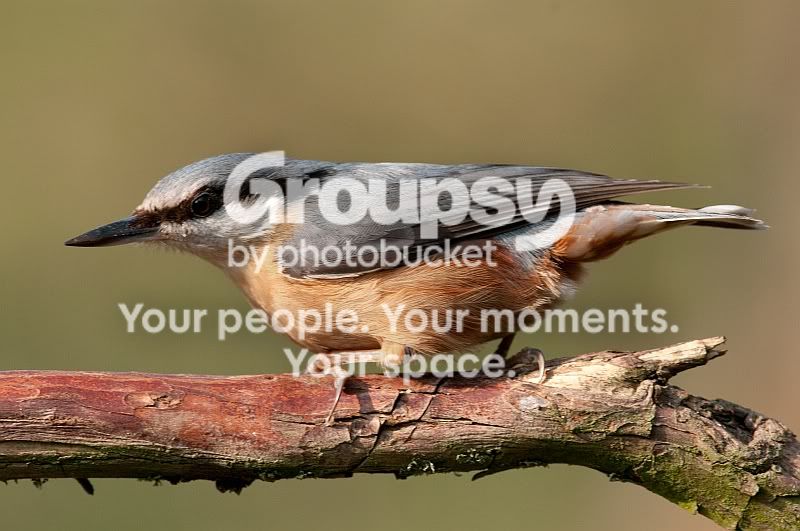
PS....for the record, nuthatch taken in the middle of a wood where my hide is, shows it can be done. I think the main problem your having is the position of the hide, the time you are in there and the light. If you can, put the hide in a clearing and position it so that the sun is generally behind the hide lighting up your subject budgie...............:thumbs:


Nuthatch.jpg


I know it is too tight in the frame, 300 prime was too much at the time.Exif below with highlighted important bits that you could try next time Nicki.


# Camera Make = NIKON CORPORATION
# Camera Model = NIKON D300
# Picture Orientation = normal (1)
# X-Resolution = 240/1 ===> 240
# Y-Resolution = 240/1 ===> 240
# X/Y-Resolution Unit = inch (2)
# Software / Firmware Version = Adobe Photoshop Elements 7.0 Windows
# Last Modified Date/Time = 2011:03:24 18:49:15
# Artist = Adrian Lee
# Y/Cb/Cr Positioning (Subsampling) = centered / center of pixel array (1)
# Copyright Owner = www.wildlifenorthwest.co.uk
# Exposure Time (1 / Shutter Speed) = 1/400 second ===> 0.0025 second
# Lens F-Number / F-Stop = 8/1 ===> ƒ/8

# Exposure Program = aperture priority (3)
# ISO Speed Ratings = 450

# EXIF Version = 0221
# Original Date/Time = 2011:03:23 16:07:00
# Digitization Date/Time = 2011:03:23 16:07:00
# Components Configuration = 0x01,0x02,0x03,0x00 / YCbCr
# Shutter Speed Value (APEX) = 17305/2002

# Exposure Bias (EV) = -1/3 ===> -0.33
# Max Aperture Value (APEX) = 4/1 ===> 4
Max Aperture = ƒ/4
# Metering Mode = center weighted average (2)
# Light Source / White Balance = fine weather (9)
# Flash = Flash did not fire
# Focal Length = 300/1 mm ===> 300 mm
# Original Subsecond Time = 83
# Digitized Subsecond Time = 83
# FlashPix Version = 0100
# Colour Space = sRGB (1)
# Image Width = 800 pixels
# Image Height = 531 pixels
# Image Sensing Method = one-chip color area sensor (2)
# Image Source = digital still camera (DSC)
# Scene Type = directly photographed image
# Colour Filter Array (CFA) Geometric Pattern = 0x02,0x00,0x02,0x00,0x00,0x01,0x01,0x02
# Custom Rendered = normal process (0)
# Exposure Mode = auto exposure (0)
# White Balance = manual (1)
# Digital Zoom Ratio = 1/1 ===> 1
# Focal Length in 35mm Film = 450
 
Bloody hell - support from Frac - dunno if that's a good or bad thing? :D
;)
 
Bloody hell - support from Frac - dunno if that's a good or bad thing? :D
;)

It is the truth, wether you like it or not bud..............:D

Nicki, for close up birds you really need F8 or more most of the time. Try these settings on your 7D:

Aperture priority at F8
White balance on daylight
- 2/3 exposure compensation
Set your auto ISO to rise if your shutter drops under 1/500th of a sec. I don`t know the 7D at all, if it has this function use it.Likewise I don`t know what the high ISO noise is like on the 7D, with my D300 I max it at 1600 on the D700 6400. Maybe a Canaon use can clarify that bit.
Use a tripod.
Set a twig up above where the food is, the birds will land on it and hop down onto the food,that will give you a nicer clearer image.

Advice done, over and out..............:|
 
Last edited:
If I could butt in.

Why dont you try all the metering settings. And find the one that is best for you.

After all asking what is the best metering to use, is a bit like going into a pub full of blokes. And asking what is the best beer in the house.

I also agree with Fracster. CT has always gone out of his way to help me, ever since I joined this forum.

THANK YOU CT:thumbs::thumbs:
 
PMSL. seriously - appreciate the sentiments Ade. :thumbs:

You helped me enormously Cedric, that is a simple fact, for that I am grateful to you.


Nicki, as an experiment grab a pair of your other halves black socks,take them out a stick them on a fence post, move away and set the camera up so that the socks fill the middle third of the frame. Take three shots in spot,evaluative and matrix mode, look at the differences. Move nearer,then further away and do the same.Again look at the photos and see the difference.Now take a series of shots adjusting the exposure compensation negatively then and positively. Look at the results, that may give you a better understanding of how the camera reads the light.

Thank you will do this and have a go.

I am out in the open shooting these, not from the hide and now also have got them coming to the other hide in the house field so better light now which should help.

I have realised that is is all trial and error but when you want to get the shot right first time, or not have the opportunity to get another one I feel that it is a missed opportunity but now they are visiting regularly I can play around with settings (and the socks, will make sure they are clean!!) :thumbs:
 
It is the truth, wether you like it or not bud..............:D

Nicki, for close up birds you really need F8 or more most of the time. Try these settings on your 7D:

Aperture priority at F8
White balance on daylight Have that- 2/3 exposure compensation :thumbs:
Set your auto ISO to rise if your shutter drops under 1/500th of a sec. I don`t know the 7D at all, if it has this function use it.Likewise I don`t know what the high ISO noise is like on the 7D, with my D300 I max it at 1600 on the D700 6400. Maybe a Canaon use can clarify that bit.
Use a tripod. I do always when trying to shoot birds as not confident hand held.Set a twig up above where the food is, the birds will land on it and hop down onto the food,that will give you a nicer clearer image. They are so dam quick :lol:

Advice done, over and out..............:|

Thank you.
 
As early as post #2 in this thread the term "middle grey" was introduced by Ken. I used the term in post #12. It really is an essential term to understand when it comes to metering and exposure. It might therefore be helpful to illustrate what "middle grey" looks like, and to set it beside other tones both darker and lighter so that you can see the relative differences at 1 stop intervals.

To create that illustration I took a single sheet of white paper and using the spot meter in my 7D I metered the paper at 0, which is the camera's idea of what middle grey should be. Instead of getting a "white" image of the paper the result was a grey sheet, as expected. Here's what that image looks like....

20110412_173530_000.jpg


That's middle grey. Look at the histogram. The peak is close to the middle. This is your classic "mid tone" that people so often refer to.

Seen on its own it can be hard to judge just how bright that photo really is. Different monitors, brightness settings and room lighting don't help. What we need is some context, to see how "middle grey" sits in relation to other tones stretching from black through to white.

Here is a series of shots of the same piece of white paper, shot with exposures increasing in 1 stop intervals from -4 stops to +4 stops. Including the "0" example, which sits in the middle, there are nine examples in all....

20110412_171648_000.jpg


Now you can see, relatively speaking, what a -1 stop exposure looks like compared to middle grey, what a +1 stop exposure looks like and so on. The -4 stop exposure is not completely black. It is close, but still has the ability to record detail. You may not be able to see much though. Here is the -4 stop image in more detail, with its histogram. I've deliberately chosen a pure black background in Lightroom so you can see that the -4 exposure is a little brighter than pure black. The histogram peak is a little way away from the left hand edge, safe from clipping....

20110412_173436_000.jpg


At the other end of the scale I can tell you now that the exposure at +4 is a complete white out. There is no detail to be teased out. Everything is blown. However, at +3 we have a bright white image. It actually looks a lot like the image at +4, but is just a fraction darker and contains full detail. Here's what the +3 stop image and histogram looks like....

20110412_173743_000.jpg


Nothing in the image is clipped. The histogram is close to the right hand side, but not quite touching. This is pretty much the maximum exposure we can safely aim for if we don't want to start losing highlight data, which for the white sheet of paper would be the whole picture.


What we've learned here is that you can take a single sheet of white paper and simply through adjustments to exposure you can make it appear grey, almost black (you could actually make it appear completely black by increasing the underexposure further), or dazzling white. The choice is in your hands. If you want to keep the paper looking like a white sheet of paper then, referring back to the nine examples, you would probably want to meter the paper at +2 stops or maybe a bit more, but probably not quite +3. You can do this for anything. You can turn brown dogs beige, or grey horses black, or white. The rest of the scene might look a bit odd if you try, but you get the idea - you can adjust the exposure to suit your creative vision or technical requirements. Is there a right exposure? Arguably not. There is the exposure you want. If the camera doesn't give it to you on its own then make adjustments so that it does.

Now, back in the real world of birds in bushes when I want to set an exposure I assess the subject, the scene and the lighting, determine what's important and what's not, and decide how brightly I want the interesting bits to be represented in my photograph. I select a part of the scene, possibly my subject, possibly not, and spot meter that area and set an exposure to make that part match, in my mind's eye, with one of the tones in the nine patch example, or maybe something between two of them. As an example I find that metering rich green grass at -2/3 to be perfect if I have important highlight details to be preserved in the scene. If my interest lies more in the darker tones, such as when shooting my dark brown dog, then I'll increase the exposure by a stop, or maybe a little more, in order to record much more shadow detail in my subject.

If I choose to meter a swan I want the feathers to look bright white, not grey. I spot meter the brightest part of the swan at +3 or very close to it. On a grey day I might not go that far. On a sunny day I would. If I meter a black bird I want the feathers to look dark, but not so black that there is barely any visible detail. I might meter the "black" at -2 to capture lots of detail. If my subject is a nuthatch then I would make a judgement about how bright its plumage is and how bright I would want it to look relative to the rest of the scene. I reckon a mid tone is a good starting point, so I would meter it at 0, to begin with at least. I might even go a little higher, because as a raw shooter I am more interested in capturing lots of image data and reducing noise, rather than capturing a perfectly exposed image ready to use straight from the camera. The thing to really avoid is underexposing and needing to brighten the image later in software.

Now, as I said, I use spot metering to give me that degree of selective control. If it suits your preference to pick a different metering pattern then that's fine. You just need to imagine what the camera's meter will make of the area you aim it at so that you can adjust the exposure to suit. With the meter or exposure compensation at zero the camera will try to average out your metered area to middle grey, just like it did for my sheet of white paper in the beginning. If that's not the result you want then you have to adjust the camera for a different outcome.

So, back to nuthatches in the woods, decide how bright you want your nuthatch to appear, relative to the nine stop crib sheet above, and dial in an exposure to make it so. You could make a pretty fair stab at it first go, I think, and fine tune with further adjustments if you feel the need. Just try to avoid underexposing whenever possible.

 
Very interesting. I shall be reading this a few times though I think :lol: I understand the logic of it, now it's just putting it into practice!
 
Very very interesting, another page to print out ;) at this rate I will make my own book :thumbs:
 
Good post there by Tim. As I said, some things which really trouble newcomers can be easily explained gathered round a camera as a point of reference, but this isn't one of them. You need visual keys such as those provided by Tim here and a little time to study the implications and digest it.

Anyway - Nutties. I'm fortunate to be able to shoot 'em any time I like and in dense woodland - some of the biggest oldest oaks in the country actually. The clearing where I shoot them is either in shadow or bright sunshine and the latter can be a nightmare. I'd avoid shooting birds in really bright contrasty sunshine given the choice - it rarely produces good shots with plenty of detail. A bright overcast day is ideal for me and at a push I'd rather shoot them in the shade and up the ISO than shoot in contrasty light.

However as I said I have quite a bit of faith in the Canon evaluative system and here's a shot which you should be able to see is in bright sunshine, partly backlit and shot in AV with no compensation whatsoever applied by me.


IMG_1527 1 web by tonky8203, on Flickr

Not the greatest shot in the world or the worst, but not much wrong with the exposure. Now if that bird had been a little more strongly backlit or even if he'd turned his head slightly towards the camera that eye would have been lost against the dark stripe. Of course you need to compensate sometimes, but it's a question of judgement as to when you need to and you pick that up with experience.

Anyway here's the full raw data - it's just as shot - all the kudos goes to Canon.


Screen shot 2011-04-12 at 21.55 by tonky8203, on Flickr


Grab2 by tonky8203, on Flickr
 
Last edited:
How about a sharp one Cedric.............;)


Bit of a joke before anyone gets a thromby.
 
Last edited:
This thread has been one of the most interesting threads i have read in a long while.........thank you to all who have contributed, there has been an extremely large amount of effort put in.
Some of it i knew some i did not, even the bits I knew has been refreshed :thumbs:
 
This video should really help understand the different metering modes and goes on to explain some of the scenarios which can fool the camera's own meter. It also describes the camera's preference to try to set an exposure to average the metered area to be equivalent to a middle grey tone....

http://www.youtube.com/watch?v=Axt9zLxdE8s

Exposure compensation described here....

http://www.youtube.com/watch?v=UrsF0Xba2KY

They are both well worth watching if metering and exposure setting is a challenge you haven't yet got to grips with.
 
This thread has been one of the most interesting threads i have read in a long while.........thank you to all who have contributed, there has been an extremely large amount of effort put in.
Some of it i knew some i did not, even the bits I knew has been refreshed :thumbs:

What I find really interesting is that two excellent photographers (Cedric & Tim) have two different methods in achieving the same goal - a well exposed image. Many of us prefer to use what we know and what we're comfortable with.

Like Tim, I tend to use spot metering most of the time as I know it gives me the information about the part of the image that I'm aiming at. However, CT has enough experience in using another metering method and still gets the same results.

Personally I find getting the exposure correct first time difficult, I often under expose images when I think the camera is telling me they're fine. But now I know that, I'm now tending to add an extra bit of +EV onto where I think it should be...

One thing is for sure, the metering system on the 7D is more complex than on my 50D.

Steve
 
Last edited:
What I find really interesting is that two excellent photographers (Cedric & Tim) have two different methods in achieving the same goal - a well exposed image. Many of us prefer to use what we know and what we're comfortable with.

You have conflicting answers because people have different approaches to the problem. There is rarely a definitive solution that renders all other options redundant. Personal preference is undoubtedly one part of the equation....

Exactly. :)

Not that I would regard myself as excellent, by any stretch, but putting that to one side that's precisely it. You can get (good) results with any metering pattern and any exposure mode if you know what you are doing and if you know what the camera is planning to do.


To explain my preference further, if you watched the second video above, where the model is dressed in black against black and the white against white, that's exactly the sort of variation in subject/scene that I try to eliminate as a factor which might upset my plans for the exposure. I would spot meter her face at +1 (that's my best guess as a starting point, but probably pretty bang on) and using manual exposure I'd lock the exposure so it did not alter again. She could wear anything she liked against any background at all and my exposure would remain correct for her throughout. She could turn her head, put hair up or down, move about and the exposure would remain fixed and correct.

Now, as Mark demonstrated in the video, by using autoexposure (and I suspect evaluative metering) the exposure was all over the place as the reflectivity of the scene changed. He had to estimate how wrong the camera was and dial in some adjustments. That's not a problem when you have time to chimp and adjust. It is a problem when you don't have the time to keep doing that. With the scene against black I actually thought the -1 version looked too bright. -2 was perhaps closer, but maybe a fraction too dark. I think -1.7 would have been really nice. But that's the problem. You have to keep making adjustments as the reflectivity of the scene changes and you have to make a judgement (guess) at how much compensation to dial in.

I think autoexposure and evaluative metering can work really well when you have "easy" scenes which do not contain extremes of tonal range. For something like a nuthatch or a squirrel in the woods I expect you'd get great results that way. For a sunlit swan (or similar) against water that appeared almost black....

20110404_081411_000.jpg
20110404_081152_000.jpg


.... I think you'd find yourself frustrated by the same technique, moreso if you were adjusting composition and trying different things. Sure, you have tools like exposure lock, but I prefer to lock my exposure by shooting in manual mode almost all the time. Then I can get on with framing, focusing and timing my shots and not have to keep worrying about what surprises autoexposure will serve up next.
 
Tim, if you'd seen the pm's exchanged between Nicky and I last night you would of laughed. We both read your posts and pm'd each other asking if we 'got it'. My poor brain was overloaded but after re reading it numerous times, I'm now with you. We did it in 'idiot terms' between us and I think we're reading from the sane hymn sheet now :lol:
Now this?! There's more?! :lol: This will have to be digested later today...

The information in this thread is much appreciated (and by many I'm sure)
As a noob having only had a dslr since just before Xmas some of this stuff is hard core and those of you who find it easy need to appreciate that too.
CT has offered me some valuable advice which is always appreciated, but his suggestion that my idea of a workshop for this kind of stuff was 'laughable' was myopic at the least. I currently have five books from my local library on exposure etc and I'm an avid reader. After a few pages my head is trying to implode with all the information. I think I've learnt more by attending TP meets and having hands on advice than reading and confusing myself.
I just found this a little 'go away and read a book'. I'm sure that is not what was meant.
I read books, I read TP, but the hands on stuff is what is making me improve the most, and to those people who have donated, I thank you very much x
 
I think I will stop adding further to the thread. There is ample information here - more than enough for a "Talk Basics" thread. I do recommend the videos though. They're almost as good as having a face to face chat about these things, much more effective than pages and pages of words.

In some ways exposure is a complicated topic. In other ways it really is quite simple. Understanding what "middle grey" is all about is the key to unlocking the mystery.
 
The Swan and the Pelican are good examples of when evaluative metering isn't going to hack it and will be fooled pretty well every time. In that situation I'd probably spot meter on the brightest part of the bird and give at least two stops extra exposure , perhaps a little more. I agree manual mode would be best to allow for movement of the bird against the bg etc.

Trying to shoot Nutties at the site I refer too in manual mode would drive you crackers - they're constantly dashing and flitting about along a fallen old rotting tree and going from shadow into dappled sunlight /shadow or into full on sunlight and back again. Just trying to keep them in the viewfinder or find them again once you've lost them is a challenge and evaluative metering is the better choice in those constantly changing conditions and gives you best chance of getting the exposure right for the bird.

But there you go - we've come full circle - no method is right or wrong and none is perfect - often it's a question of choosing the right method for the subject, but a basic understanding of exposure is vital to understand the advantages and disadvantages of each method - if this thread has gone some way to helping people understand that, then it's been a worthwhile excercise.
 
Tim, if you'd seen the pm's exchanged between Nicky and I last night you would of laughed. We both read your posts and pm'd each other asking if we 'got it'. My poor brain was overloaded but after re reading it numerous times, I'm now with you. We did it in 'idiot terms' between us and I think we're reading from the sane hymn sheet now :lol:
Now this?! There's more?! :lol: This will have to be digested later today...

The information in this thread is much appreciated (and by many I'm sure)
As a noob having only had a dslr since just before Xmas some of this stuff is hard core and those of you who find it easy need to appreciate that too.
CT has offered me some valuable advice which is always appreciated, but his suggestion that my idea of a workshop for this kind of stuff was 'laughable' was myopic at the least. I currently have five books from my local library on exposure etc and I'm an avid reader. After a few pages my head is trying to implode with all the information. I think I've learnt more by attending TP meets and having hands on advice than reading and confusing myself.
I just found this a little 'go away and read a book'. I'm sure that is not what was meant.
I read books, I read TP, but the hands on stuff is what is making me improve the most, and to those people who have donated, I thank you very much x

I find it surprising that someone who describes themselves as a pianist and presumably reads two staves which is a massive achievement following a huge commitment, should have so much trouble with a relatively simple principle. There again, it's not so surprising as the whole thing can appear more complicated than it really is and it's easy to lose sight of the wood for the trees. My basic problem with Mr Peterson's book on the subject is that I really don't understand how someone can pad out a whole book on something which is actually relatively simple.

Anyway if the penny is dropping that's great - I'll pass over the myopic bit. ;)
 
This thread really is fully of concentrated knowledge based goodness. I really think that Cedric's advice of gaining a basic understanding of exposure first would help. It would let you understand why your Kite settings work and why your nutty ones don't. From there you can then (with the advice above!) get to grips with it. It does show that exposure is only really ever a funtion of aperture, shutter speed and iso in the camera and that there are lots of different ways of ending up with exactly the same settings for all 3!
 
I guess we can't all be as clever as you CT! :lol:
Maybe I have an artistically set up brain now, and not so much technically.
I think you just have to accept what some people find simple, others will have difficulties. Being a teacher I understand this and deal with it every day.

Maybe I could send you some notes on learning the basics of accordion tuition (my first instrument) and see how you get on?
Then come and spend an hour in my studio with the instrument on your lap and see how that goes? You would be most welcome. I'd even do it for free! ;-)

Having digested the information I see the logic, so yes the penny has dropped, hopefully you won't be so surprised at that, however laughable it may be! :lol:
 
Last edited:
Back
Top