

You are using an out of date browser. It may not display this or other websites correctly.
You should upgrade or use an alternative browser.
You should upgrade or use an alternative browser.
light trails
- Thread starter michae222
- Start date

- Messages
- 3,093
- Name
- Russ
- Edit My Images
- Yes
Very basically, he's roughly what I would do:
ISO100/200
f8.0 (to start with)
Bulb mode
Try and get focus somewhere towards the middle of the shot and preferably with a remote shutter release, leave open the shutter for say 10 seconds and see what the shot looks like. Adjust as necessary.
If you haven't got a remote shutter release, you could go to full manual and set the shutter speed to 5/10 seconds.
If it's really dark you may struggle to set the focus. If there's a street light you might be able to focus on that using AF then switch AF off to effectively lock the focus.
It's something I never thought I would ask but here goes
"what are light trails and how do you get them"
Light trails are when light travelling past your cameras view leave a trail behind them. This is achieved by using a long shutter speed.
If you set up the camera in your house and set it to say a 3 second exposure and then take a photo move the camera past a light source, then you will have a trail of light, its the same as having a camera on a tripod but the light moving, be it a car or stars using a longer shutter speed.

Asha
Blithering Idiot
- Messages
- 11,274
- Name
- Asha
- Edit My Images
- Yes
"what are light trails and how do you get them"
here's an example of vehicle ( cars etc ) light trails:

Shot at 2012-01-16
Taken with the following camera settings:
Aperture: F/18
ISO: 100
Shutter: 30 seconds
Not the best of examples but it gies you some idea of what can be achieved.

- Messages
- 1,033
- Name
- Matthew
- Edit My Images
- Yes
Finding that picture really interesting, I'm guessing police/fire/ambulance going up the motorway? Excellent.
Asha
Blithering Idiot
- Messages
- 11,274
- Name
- Asha
- Edit My Images
- Yes
Finding that picture really interesting, I'm guessing police/fire/ambulance going up the motorway? Excellent.
Thank you,
Yes it was fire brigade on the inner ring road which is effectively a motorway but only 2 laned.

Just Dave
In Memoriam
- Messages
- 29,876
- Name
- Dave
- Edit My Images
- Yes
Hi Michael
have a look at Matts Light Trail Guide http://www.talkphotography.co.uk/forums/showthread.php?t=281545
have a look at Matts Light Trail Guide http://www.talkphotography.co.uk/forums/showthread.php?t=281545

- Messages
- 11,116
- Name
- And
- Edit My Images
- No
Hi Michael
have a look at Matts Light Trail Guide http://www.talkphotography.co.uk/forums/showthread.php?t=281545

This is one my daughter took on our first outing doing some light trails


MWHCVT
In Memoriam
- Messages
- 28,464
- Name
- Matthew
- Edit My Images
- Yes
Hi Matt..
Here's my first couple..
The normal type of photo and one I've change the negative colours which I think make it a bit different.

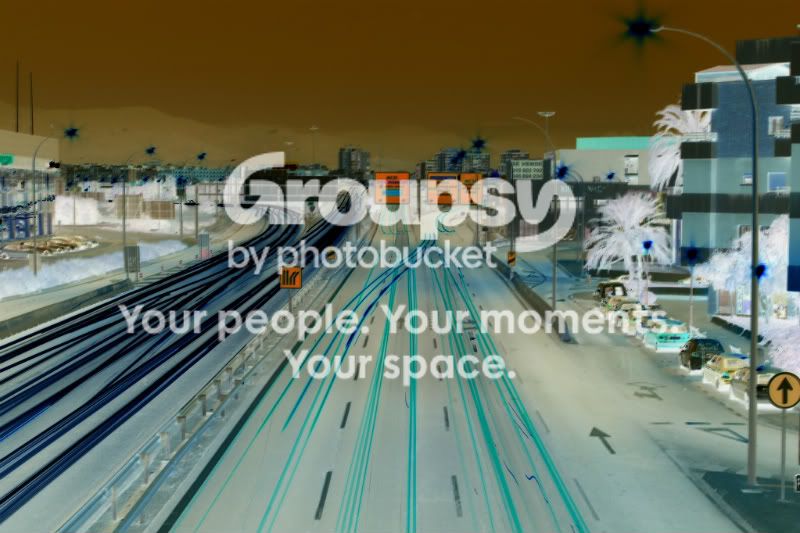
Good fun I think.
Thanks Matt.
Hi Paul, both look like good first efforts
it would help if you also post the settings that you've used on these both have a noticeable issue with vibration, in that they both look a little on the soft side, this is most noticeable in the inverted negative image, I suspect that it's possibly a little bit of vibration coming from your tripod, or did you have image stabilization on or off  if it was very windy when doing these the best advise I can give it to take your camera strap off your camera as this acts like a sail on your camera :shrug:
The first one is in need of some CW rotation as it's leaning to the left

Matt

- Messages
- 527
- Name
- Paul
- Edit My Images
- Yes
Matt got a question.
I am sure that the trains that run over here have lights on the front and I can get near enough to the track to shoot, so what sort of settings might I try to capture the white light on the front of the train..
A tad harder question sorry but got any ideas mate.
I am sure that the trains that run over here have lights on the front and I can get near enough to the track to shoot, so what sort of settings might I try to capture the white light on the front of the train..
A tad harder question sorry but got any ideas mate.
You can do light trails yourself to, not just shooting roads, use some source of light like a torch and 'write' or 'draw' in front of the camera on long exposure. I haven't got an example to hand to post, but sure another member can help? Also, you can use bits of colored cellophane etc over the torch lens to change the colors, or experiment with things like glow sticks, sparklers etc... great fun!
I dont see the need in using bulb doing these as its more trial and error, and unless theres little traffic about or theres zero light i find myself not needing to go higher than the 30 second max exposure time before bulb.
I've done this a couple of times but never very seriously, ive been meaning to get out and do a few more lately, might try and get out tonight as the weather looks good.
My inital setup will probably be around...
F9, 15 seconds, ISO200 (base ISO) then i'll play round with the exposure time, small amount on the apperture and hyperfocal distance.
2 second timer so i can set and let go and a steady tripod i think are a must.
MWHCVT
In Memoriam
- Messages
- 28,464
- Name
- Matthew
- Edit My Images
- Yes
Here's the settings Matt taken from the info..
Normal..
BULB for 10 secs.
TV 27
AV 22
ISO 400.
Reverse image.
Manual..
TV 10
AV 16
ISO 100
Cheers Paul.
On the first one I would always avoid ISO400 for this type of light trail :shrug: also what do you mean by "TV 27" is the first a 10 second or 27 second exposure or am I reading that wrong
Matt got a question.
I am sure that the trains that run over here have lights on the front and I can get near enough to the track to shoot, so what sort of settings might I try to capture the white light on the front of the train..
A tad harder question sorry but got any ideas mate.
It's not a too hard, it depends on your position and how long it will take for the trail to pass through frame, personally I would look at (Bulb - ISO100 - f/16) and then run the exposure for the required time, however depending on the time of evening you also have to consider the exposure time and the effect on the exposure, you don't want to do a 90 second exposure if more than 30 will blow out areas
You can do light trails yourself to, not just shooting roads, use some source of light like a torch and 'write' or 'draw' in front of the camera on long exposure. I haven't got an example to hand to post, but sure another member can help? Also, you can use bits of colored cellophane etc over the torch lens to change the colors, or experiment with things like glow sticks, sparklers etc... great fun!
Indeed you don't have to use cars
it can be trains/aircraft or as one moderator recently proved canal barges but IMO what your referring to primarily is considered a form of or derivative of light painting such as This is with wire wool

27/366 (392) by mwhcvt, on Flickr
This is with sparklers

317/365 by mwhcvt, on Flickr
This is glow sticks, flash gels and sparklers
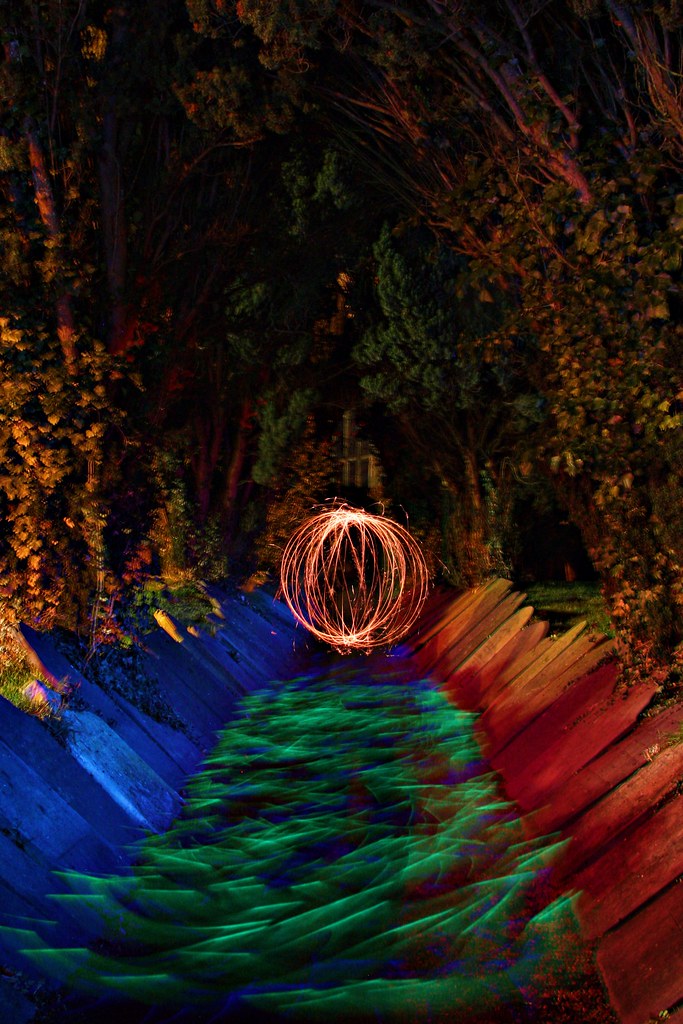
350/365 by mwhcvt, on Flickr
Flash Gels

212/365 by mwhcvt, on Flickr
Torches (Light Painting/Graffiti)
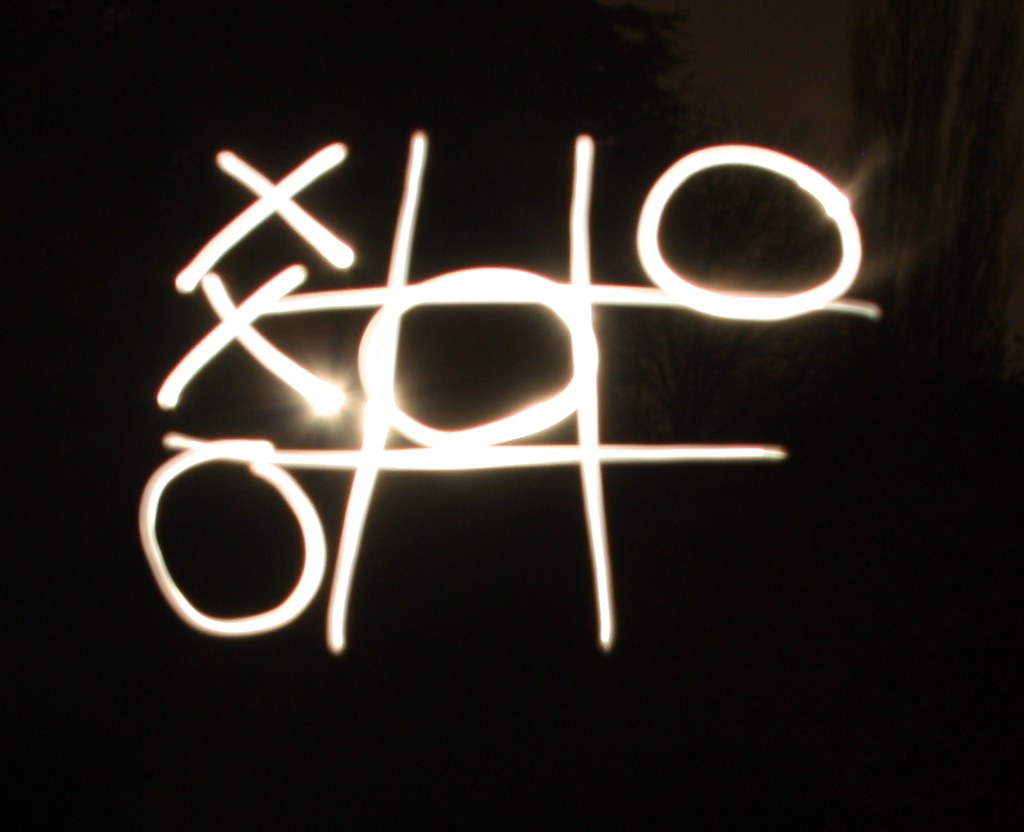
O's 1 X's 0 by mwhcvt, on Flickr
This are all forms of light painting
I dont see the need in using bulb doing these as its more trial and error, and unless theres little traffic about or theres zero light i find myself not needing to go higher than the 30 second max exposure time before bulb.
I've done this a couple of times but never very seriously, ive been meaning to get out and do a few more lately, might try and get out tonight as the weather looks good.
My inital setup will probably be around...
F9, 15 seconds, ISO200 (base ISO) then i'll play round with the exposure time, small amount on the apperture and hyperfocal distance.
2 second timer so i can set and let go and a steady tripod i think are a must.
There are some very good reasons for using bulb, and a trigger/cable release, but for me the biggest reason is control, there is no other way to get a fine control over what your camera is doing when capturing light trails, it's not just a case of fire and forget, I keep a close eye on what is happening around me on the road, what is coming, for interesting vehicles etc, such as blue light vehicles, IMO it's important to have these fully in frame, I have the odd one where it's only taken up part of the trail length and these have never made it only as I think they look awful, where as if I'm shooting bulb and I see a blue light trail opportunity I can stop my exposure amicably in preparation for the trail or I can run an exposure for the additional time needed to get the trail I want, you cannot do this if your on a fixed exposure time..
Also you can get really dramatic effects from movement of clouds over a longer exposure
Matt
MWHCVT

Forbiddenbiker
The Enforcer
- Messages
- 11,048
- Name
- Adam
- Edit My Images
- Yes
Really like that first shot Matt, not seen that before.
MWHCVT
In Memoriam
- Messages
- 28,464
- Name
- Matthew
- Edit My Images
- Yes
Really like that first shot Matt, not seen that before.
Thanks Adam
there's a reason for you to keep up with my POTD challenge this year 

Forbiddenbiker
The Enforcer
- Messages
- 11,048
- Name
- Adam
- Edit My Images
- Yes
Nah its not that good.
Joking!!
I might have a look I suppose.
Joking!!
I might have a look I suppose.