Taking photos of moving objects in the dark

Messages
60
Name
Matthew
Edit My Images
Yes
I have an issue - I am due to be photographing at a party in a couple of weeks time, the light levels are going to be very low and there are going to be people dancing - I don't really want to use the flash on my camera (Canon 1000D) as it will leave harsh light on the photos and I will lose the ambience the room will create.

My question is how do I take photos of these people, in a very dim room, without losing clarity, using a flash, or having blurred people in the photo because the shutter speed it very slow?

Any help is greatly appreciated!
 
Aperture wide open, set the shutter speed to what is suitable and throw on auto ISO.

Other than that, point your flash up at the ceiling, a wall to the side or behind you, and let it bounce. Then it's not so harsh.
 
Alternatively you could use the nightclub photographers trick and use a longer shutter speed to soak up the atmosphere with a blast of first curtain sync flash to hold the people still.
Best of both worlds.

Hope it works out for you which ever option you choose.

Good luck,
 
Wouldn't it be rear curtain sync? rather than first?
 
It's a matter of preference (and great debate).
I use first curtain. With rear curtain when you hit the shutter the flash pre-fires when the shutter opens and you end up with loads of shots of people either turning away or lurching at you to see the picture as they see the pre fire and assume you've finished taking the shot.
 
Looks to me like the OP doesnt have a flash other than the onboard flash which they dont want to use.
 
Looks to me like the OP doesnt have a flash other than the onboard flash which they dont want to use.

Good point. Although for best results flash would be recommended to some extent. Wasn't sure if OP had considered the option or not so thought I'd put it forward.:)
 
Good point about the preflashes Kev.

Last time I needed to shoot in similar conditions was before iTTL, back with Nikon's little science experiment DTTL. So, obviously I always had the flashes in manual mode. :D

Just did some testing now with the D300s + SB-900, and if you've got a flash in manual mode, it would eliminate the preflashes for rear-curtain. Although, it's going to be fairly hitt & miss going that way I suppose if you're trying to bounce it off walls, ceilings, etc.

@OP : If you haven't got a separate flash, have a look at Flash in the Pan's thread. He's got some pretty inexpensive iTTL flashes on there. They don't work CLS so you can't use them wirelessly, but they will work on the hotshoe... or on a TTL cable parked in a softbox. :)

+1 an external flash is basically the only way to do this without an f1.4 lens at silly iso's :D
 
okay - I perhaps should have pointed out to start with that I am an amateur photographer and am learning, hence I am asking for help

Could someone please explain the difference between 1st and 2nd curtain flashes (which i have worked out to change)?
and what is iTLL and DTLL?

Final question (for the time being) - if I am using the techniques such as the 1st/2nd curtain flashes, will it give me a decent looking photo at the end of the night if I am still using the built in flash to do that?

Thanks again!

I have also had a play around with slower shutter speeds (around a second) and 1st curtain flash which I do quite like the effect of!
Although - when referring to a slow shutter speed - how slow is slow??!?
 
As an alternative you could invest in a video light and use that to light your subjects......
 
+1 an external flash is basically the only way to do this without an f1.4 lens at silly iso's :D

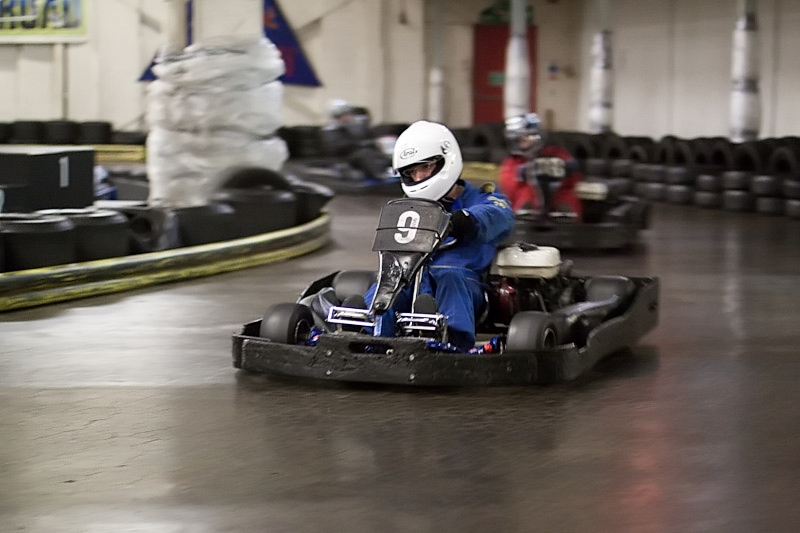
Canon 50mm F1.4 isn't too expensive. I managed to get karting photos at ISO1600, 1/100th f1.4

119554446.jpg


depth of field was a struggle though.

A flashgun would help
 
You could get yourself one or more of those YongNuo YN462 basic flash guns, and a matching CTR-301 basic wireless trigger, and put the flash gun (or guns...) somewhere up a height on full power with the diffuser on.

Would probably let you shoot (within range of the flash), maybe with the odd strange shadow.

The flashes are about £26 and the wireless trigger about £20 off the top of my head.
 
Could someone please explain the difference between 1st and 2nd curtain flashes (which i have worked out to change)?

Have a read of this. Scroll down to the bit about the "Shutter Curtain". Basically, with front curtain sync, the flash fires at the start of the exposure. In rear curtain sync, the flash fires at the end of the exposure.

Here is an example from Nikon with sample images showing the practical differences to each and how they would affect your photo.

and what is iTLL and DTLL?

iTTL is the current Nikon flash standard. D-TTL is the previous Nikon flash standard that was used in the D100/D1/D1x cameras. It wasn't anywhere near as accurate or versatile as the new iTTL system, and so it got replaced rather quickly. The D70, D2h, D2x and any bodies produced since then all use the iTTL flash system.

As a Canon user, I'm not exactly sure how your system works, so others would probably be able to enlighten you a bit better. :)

Final question (for the time being) - if I am using the techniques such as the 1st/2nd curtain flashes, will it give me a decent looking photo at the end of the night if I am still using the built in flash to do that?

Using the built in popup flash, you're never really going to get that decent an image, and you'll probably end up with red-eye issues for people looking directly at the camera, but it's something you're just going to have to experiment with to see if you can get the effect you're looking for. Getting the flash off the camera, or even if you can get a hot-shoe flash and point it straight up to bounce off the ceiling, or off to a side to bounce off a wall, will improve your images multiple times over.
 
Of course you also stand to run into that good old problem of low light focus accuracy... which you will then go on to exagerate by trying to use very wide apertures (which have a narrow DOF and so need the focus accuracy) and added to the mix will be people jigging around like they have ants in their pants.

Great for portraits and static stuff, fatally unpredicatably rubbish for moving things - if you get a hit its pure luck!

So, blast them with a touch of bounced and difused flash will be your only option, but you will need a proper flash if you aren't going to loose all the ambience of the low light.
 
Front curtain sync rather than rear curtain sync flash is more appropriate. Rear curtain flash is only useful when something is heading in a recognisable direction, like a car, to make sure the blurry streak marks are behind it rather than in front. When people are dancing at a party, you don't know which direction they're moving their limbs, so there's no advantage to rear curtain sync.

The advantage of front curtain sync is that the flash goes off at the moment you press the shutter, which is presumably the peak of the action you're trying to catch. With rear curtain sync and a 2 second exposure for example, you would be trying to guess that something interesting was going to happen two seconds in advance.

Bouncing flash off the ceiling etc. is going to kill any atmosphere - it's the visual equivalent of switching all the lights in the room on. It's better IMHO to use harsh direct flash, like Weegee or Wolfgang Tilmans. A more creative option is to use off camera flash, with colour filters on it, this way you can recreate some of the effects of something like disco lights.
 
For focusing, a Canon flash should help greatly, with its AF assist beam. The alternatives are the AF assist from the pop-up flash (the strobing alerting people, or making them blink), or using the wide end of your lens and setting a sensible manual focus range.

You can get very natural looking results by using a high ISO and wide lens aperture with a manually set slowish shutterspeed to underexpose the ambient light by one to three stops, adding bounced flash to taste. The flash should be gelled with an orange sweet cellophane or filter, and camera WB set to tungsten/incandescent.

Beware though, that these camera settings can be way out of the metering capabilities of the camera/flash combination, so using direct flash would overexpose. The losses from bouncing bring things back in line, but you may still need to use negative flash exposure compensation.

Drop back to say 400ISO with ƒ/5.6 and 1/125 sec for "normal" direct harsh flash, with a dark background. Drop the shutterspeed down to two or three seconds and you can compose your shot and capture it with the flash and then wiggle the camera to add light trails, or leave it up to the dancers to do the wiggling, as described earlier.
 
Front curtain sync rather than rear curtain sync flash is more appropriate. Rear curtain flash is only useful when something is heading in a recognisable direction, like a car, to make sure the blurry streak marks are behind it rather than in front. When people are dancing at a party, you don't know which direction they're moving their limbs, so there's no advantage to rear curtain sync.

The advantage of front curtain sync is that the flash goes off at the moment you press the shutter, which is presumably the peak of the action you're trying to catch. With rear curtain sync and a 2 second exposure for example, you would be trying to guess that something interesting was going to happen two seconds in advance.

Bouncing flash off the ceiling etc. is going to kill any atmosphere - it's the visual equivalent of switching all the lights in the room on. It's better IMHO to use harsh direct flash, like Weegee or Wolfgang Tilmans. A more creative option is to use off camera flash, with colour filters on it, this way you can recreate some of the effects of something like disco lights.


Thanks for this, handy advice.
 
Take a look at this rather old (so some photos have gone missing), although still going strong, thread on nightclub photography. See what you like, and what you don't like, and hopefully the thread will include information on how the shots were accomplished.

http://photography-on-the.net/forum/showthread.php?t=415099&highlight=nightclub

FWIW, I don' t shoot nightclub stuff, but when shooting indoors at a wedding reception I will typically be shooting at 1/60-1/100, f/2.8, 1600 ISO and with a bounced 580EX flash. If you are going to attempt to do something similar with a 1000D and no flash, or even a popup flash, I don't envy your chances of delivering appealing results. If you do, then kudos to you. Good luck.

BTW, I tried a shot without flash in my living room the other night. I needed 1/8, f/2.8 and 3200 ISO for a good exposure. At 1/8 you will have a major risk of camera shake and a very real problem with subject blur. If there is not enough light you will have to add some. See here - http://photography-on-the.net/forum/showpost.php?p=9582582&postcount=12

Here's an example with on camera flash at 1/60, f/3.5, 3200 ISO. No edits except WB....
20090418_203716_6832_LR.jpg
 
I think everyone has covered most things but thought I would give my 2p worth

I tried to shoot a 40th Birthday in a dark hall with disco lights etc and it didnt turn out well.

Although I got a few good shots, even at ISO1600 the shutter speed wasnt quite enough.
Had to do most at ISO 3200 and put up with massivley grainy images (although my A200 gets grainy after ISO400 anyway)

My advice would be a decent flash gun and try to bounce of walls and ceilings etc.
 
do you have a flash gun , or is it on camera flash

this is my job to take images at clubs.

depends what style of image you want

if you want clear crisp images of people with no real atmosphere
with a flash gun and bounce

f5 iso 400 1/30 flash up with bounce difusser

this is really nice for close up of people

if you want some more atmosphere and the light to show through , it all depends what the lighting is like

I usually play around flash gun faceing toward with power turned right down
iso 800 . between f2.8 and f3.5 depending on the direction of the light anything from 1/5 to 1/125 if there is massive amount of light from behind then 1/125 if there isn't normal would be around 1/60

triangle of exposure kinda goes out the window a bit... club stuff is trial and error and every camera I use and every lens is different

currently using an EOS 50D with a 16-35mm f2.8 L flash is a 430 ex II
 
Thanks for all the advice - it is now making sense to me!

It looks like the general consensus is that if I am taking photos of people moving in a dark room, I will need to use a flash if I want to see anything in the photo, because the only other way to do it would be to set a very large ISO which would result in grainy images, not to mention my camera is only capable of up to 1600.

So I will need to use a flash, first curtain will 'freeze' what I see in the viewfinder when I press the button, and leave light trails of movement after that point which is most desirable. To achieve this whilst keeping the atmosphere of disco lights, I will need to use the flash, but to turn it down and point it away from the subject, so that it bounces of the wall/ceiling, but only enough to illuminate the subject, rather than drown them in light.

But the other way to achieve 'not drowning them in light', other than pointing flash at a wall/ceiling, would be to turn down the flash compensation on the built in light, so that it will illuminate the subject, and not drown them. The amount it gets compensated, depending on how much light there is in the room at the time.

Please correct me if I am misunderstanding!

The general feeling I am getting is that if I am using a flash, which I will have to as explained above, I will get a better quality of photo, from using a flashgun mounted on the hot shoe (as that is what my budget would allow), and to point it at a wall/ceiling?!
 
I think you're getting the hang of it, but you need to be cautious about the results if you bounce the flash. I like to bounce the flash for my stuff because it gives soft, shadow free light on my subject and also helps light up the room a bit, which is perfect for my needs. With your situation you may not want the room to be lit up too much, so you need to really think about where you are aiming the flash and where the bounced light will end up.

You also need to consider that the disco lights are (obviously) a light source themselves, so if they are in the frame you will perhaps not want them completely blown out (overexposed), but if they are not in the frame then you will need an exposure to pick up the reflected light from them. Basically you'll need to find the right settings for an ambient exposure that gets your background looking the way you want it, leaving your main subject(s) a bit underexposed, which is where the flash will be needed.

If you are going to leave the flash hotshoe mounted, I think you might be best off with some sort of medium-large bounce diffuser, which will soften the light, but aim a good portion of it forwards onto your subject(s) without having too much hit the ceiling and overilluminate the room. You can make one yourself out of some white card and a rubber band. This is the sort of thing I'm thinking of - http://www.abetterbouncecard.com/big-light-bounce-card/.

Without knowing the exact conditions of the room - size, ceiling height, ceiling colour, ambient lillumination levels, and the exact effect you are aiming for, I think it is going to be tough to offer concrete advice. Probably the best thing will be to set a manual exposure on the camera that gets the background looking the way you want it, and then use ETTL flash, with FEC, to fine tune how the flash illuminates your subject.

Maybe others who have more experience of the exact effect you are after will chip in with better advice. Good luck. Practice/experiment if you can. :)
 
My only other tip I can give you is to practice lots before you need to do something critical. Whilst you won't get the exact conditons (because of the variables Tim describes above), if you have an idea of at least the end result you want and what making various adjustments does to the shot, I think you'll be more confident on the real shoot.

Darken a room to a gloomy level and have a go taking pics of some willing subject for a while. Mess with some (room) lighting and see how that effects it. If you can get a cheap angle poise lamp with a dimmer on it, you'll find it a useful modelling tool for little money - try Ikea :D

For cheapy off camera flash, why not look at a TTL chord - this basically is the wired version of an expensive radio trigger and you keep all the automatic functions of the flash too (a radio version of a fully TTL enabled trigger is bleedin' expensive!). Plug one end into the hotshoe on the camera, the other on the hotshoe of the flash and off you go. Hold the flash out at arm's length and booosh - instant better lighting!

Old school but none the less just as valid as it used to be. You'll need to develop a firm one handed grip though!
 
Bear in mind the focus assist problem if the flash is taken off-camera: http://photography-on-the.net/forum/showthread.php?t=683060 (the last two posts mention a cheap and an expensive solution. For Nikon, the SC-29 cable is somewhere inbetween).

If you have "wallflowers" you're going to photograph, standing around the outside of the venue, move them away from the wall, so you can bounce off it or the ceiling (assuming they're white), or use your bounce card, and avoid having your subjects close to a background.
 
Never seen the SC-29 before - thats an interesting item!

Quite pricey though :(
 
And the Chinese copies don't have the AF assist :shake:
 
All advice given so far has been great and I don't really have much to add except that with a 1000D, this is going to be a very steep uphill struggle. My camera, the 450D is very similar and tbh I don't think I'd even attempt this and expect to get anything usable. I try to use mine as if ISO 1600 doesn't exist, except for very rare circumstances - as grain is quite noticeable.

The only thing I can suggest is a combination of settings in preparation for the conditions (high ISO 800 or 1600, aperture wide open, slow shutter speed, IS turned on if applicable) and fire the flash as well to light up the subjects. The settings if done correctly will allow the backgrounds to expose naturally while the foreground subjects are lit by the flash, I do this trick all the time and it's quite a good use of the flash.
 
Just to let you all know - last night was the moment of truth and armed with a new flashgun I braved the party. Over the course of the evening I determined that rear-curtain flash worked better than first curtain which appeared to be draining the background light and ambience from the photo - the rear curtain kept more of the background light in the photo and so seemed to work better - if this is unusual then there we go - but it worked for me!
I have lots of photos which are quite vibrant with the disc lights and interesting patterns of people moving after the flash which has left me with a folder full of moving, colourful photos which are great for getting the atmosphere. what didn't work so well was when people grab your attention and demand a photo in a group - I sped the shutter speed up to between 1/8 and 1/125 or there, there abouts to get a crisper images - these pictures have come out looking slightly grainy in the darker areas - especially when I try to edit them so it turned out they have had to be left untouched so that they don't look too grainy.
So that was the result - thank you all for all the tips, I had them all written down on a scrap of paper in my pocket to refer to - the only issue with that was the one tip which said to use f/2.8 and my camera only goes down to f/3.5!
Thanks again, Matt.
 
Here is about the best range of what I took just to try and show the variety (or lack of) that I managed!
By the way - these are the originals, most I have edited slightly to make colours more vibrant or a bit crisper/more balanced etc.

If you want to see some of the edited ones (which I hope are slightly more impressive than the below!) please visit the Party Photos album in my gallery.


Feel free to criticise - I am all for trying to improve and refine my technique for next time!

Untitled-3.jpg


Untitled-24.jpg


Untitled-12.jpg
 
Hi, Matt, Thanks for posting. I took a look at your gallery pics as well. It looks like a pretty tough gig to achieve what I think you wanted to do. It's a shame there is no EXIF in your image files, but if I was to guess at a way to improve the results in future I think you need a faster shutter speed and more lighting from your flash. But without knowing what shutter speed, aperture and ISO you used it is hard to really know how much wiggle room you had to adjust things. Like I said, this kind of shooting isn't where my experience lies. Hopefully some club photographers can chip in and advise on how they would have approached this venue. I hope you get some good tips, as I'd like to know too. If you can provide some EXIF data for the shots you've posted - shutter, aperture, ISO and FEC setting, it might help people give you a better steer. Which flashgun did you get?
 
I got the Jessops 360AFD from Flash in the Pan and was using it rear curtain, bouncing it off the ceiling as that seemed to be giving the best results

As for the photos above - in the same order as seen (what is the FEC setting?!)
1. ISO 400 - f/4.5 - 1/6
2. ISO 400 - f/4.5 - 1 second
3. ISO 400 - f/3.5 - 1/10

Thanks to photon - FEC was -1 (I presume that is the figure I am looking at - there is no data for that particular setting on the photos) for all but the last on of these three which had no flash at all.
 
Back
Top