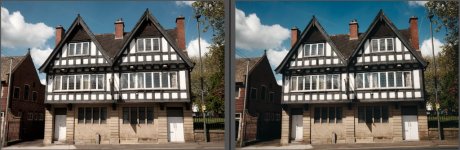
The Fabulous Fuji X owners thread

Bah, it turns out getting the official Fuji hood from B&H from New York with DHL shipping (£47) cost LESS than getting Squarehood from Square Hood (£63).

The only thing is the Fuji one doesn't come with a lens hood cover but I already have a spare one of that as it's the same size as the 35/1.4.
 
I've been looking into Fuji's X Raw Studio and am compiling a load of sims that I'll have a play about with at times but it got me thinking about the DR setting and whether converting the raw after the event would be exactly the same as doing it in camera at the time. What I mean is that changing the DR setting changes the exposure by bumping up the ISO and then doing some voodoo magic to give the final picture and so if this was not applied to the raw file at the time of shooting how can it be applied retrospectively? For example, I used a recipe yesterday with DR400, it was shot at ISO 500. Without DR (or should I say DR100) the shot would have been at ISO 125, converting this retrospectively in X Raw Studio wouldn't give the same result would it?

Am I missing something obvious
You are missing something, but its far from bloody obvious. It's not documented anywhere; but various Youtubers have basically figured it out.

Essentially it works like this:

DR100 - No Change
DR200 - The camera under exposes by 1 stop; and then raises the shadows by 1 stop
DR400 - The camera under exposes by 2 stops, and then raises the shadows by 2 stops

The DR setting exists to protect (prevent blown) highlights; and as its essentially applying a two-phase process to your images it affects the RAW files permanently. How it chooses to under-expose the photo will likely depend on which setting you are shooting in - if you're in Aperture Priority it will (probably) use ISO; if you're in Shutter Priority it might use Aperture; but this is just a guess. Logic would dictate it uses ISO every time.

Basically, if you're shooting RAW I'd recommend keeping DR on Auto or 100. Auto never uses DR400.

EDIT: Sorry; didn't see a Youtube vid had already been posted! Oh well, now you have it in writing too ;)
 
Last edited:
wOw - superb set of quality images !

Regards;
Peter
Thanks, very kind.
You are missing something, but it’s far from bloody obvious. It's not documented anywhere; but various Youtubers have basically figured it out.

Essentially it works like this:

DR100 - No Change
DR200 - The camera under exposes by 1 stop; and then raises the shadows by 1 stop
DR400 - The camera under exposes by 2 stops, and then raises the shadows by 2 stops

The DR setting exists to protect (prevent blown) highlights; and as its essentially applying a two-phase process to your images it affects the RAW files permanently. How it chooses to under-expose the photo will likely depend on which setting you are shooting in - if you're in Aperture Priority it will (probably) use ISO; if you're in Shutter Priority it might use Aperture; but this is just a guess. Logic would dictate it uses ISO every time.

Basically, if you're shooting RAW I'd recommend keeping DR on Auto or 100. Auto never uses DR400.

EDIT: Sorry; didn't see a Youtube vid had already been posted! Oh well, now you have it in writing too ;)
Thanks, I’ve not had time to watch the video yet. Do you mean over exposed as it’s raising the ISO?
 
Do you mean over exposed as it’s raising the ISO?

No - Its not changing the ISO to over-expose the image; its changing the ISO to give it range to under-expose the image :)

Dynamic Range settings above 100 don't kick in until ISO400. So, if you set it at Auto then you either set your ISO below 400, or the camera assesses that the ISO is best below 400, essentially nothing happens (the DR setting will be 100).

If you set both DR and ISO to auto and the camera assesses that the scene will have blown highlights, it will set the minimum ISO possible to initiate DR200, under-expose the image by 1 stop and raise the shadows by 1 stop. Depending on the mode you're in (Aperture or Shutter Priority) it will adjust those settings to maintain its ideal exposure.

If you force the DR setting to either 200 or 400, and your camera is set to automatic for ISO, then it changes the ISO to the lowest setting that the DR setting will allow, to give it the range to under-expose the photo and then bump up the shadows by 1 or 2 stops.

Now - if you force DR to 200 or 400, and then configure your ISO - the camera will always respect the exposure triangle before it applies other processing, so if you set your camera manually to DR400 and ISO 125; you're actually getting DR100. The camera will illustrate this by turning the DR icon yellow.

Simples :ROFLMAO:

PS: The minimum ISO could well be different depending on the camera. I think for DR to kick in on my X100F, the ISO has to be above 400. On my X-T5, I think its 500. Which would make sense, as the newer, 40MP sensor probably inherently has more dynamic range before it needs to start applying processing.
 
Last edited:
No - Its not changing the ISO to over-expose the image; its changing the ISO to give it range to under-expose the image :)

Dynamic Range settings above 100 don't kick in until ISO400. So, if you set it at Auto then you either set your ISO below 400, or the camera assesses that the ISO is best below 400, essentially nothing happens (the DR setting will be 100).

If you set both DR and ISO to auto and the camera assesses that the scene will have blown highlights, it will set the minimum ISO possible to initiate DR200, under-expose the image by 1 stop and raise the shadows by 1 stop. Depending on the mode you're in (Aperture or Shutter Priority) it will adjust those settings to maintain its ideal exposure.

If you force the DR setting to either 200 or 400, and your camera is set to automatic for ISO, then it changes the ISO to the lowest setting that the DR setting will allow, to give it the range to under-expose the photo and then bump up the shadows by 1 or 2 stops.

Now - if you force DR to 200 or 400, and then configure your ISO - the camera will always respect the exposure triangle before it applies other processing, so if you set your camera manually to DR400 and ISO 125; you're actually getting DR100. The camera will illustrate this by turning the DR icon yellow.

Simples :ROFLMAO:

PS: The minimum ISO could well be different depending on the camera. I think for DR to kick in on my X100F, the ISO has to be above 400. On my X-T5, I think its 500. Which would make sense, as the newer, 40MP sensor probably inherently has more dynamic range before it needs to start applying processing.
I think I need to read that a few times for it to sink in :lol:

What I’m struggling to understand is that I set the camera to Aperture priority with DR400, aperture was set at f8, and the camera chose ISO 500 and a shutter speed of 1/1500.

Normally in aperture priority it would have chosen ISO 125 and a shutter of 1/375 (or whatever the closest shutter speed is to that), this means that choosing DR400 made the camera use a 2 stop higher ISO than it needed to, if it’s deliberately under exposing why use a higher ISO :thinking:

I’ll hopefully watch that video at some point this weekend and it’ll all make sense :lol:
 
Those are wierd looking bycicles Lewis, presumably sport specific?
Yes, no gears or brakes. Sadly not made any more either. It is a fun sport to photograph though as it is lots of fast action 1 minute races.
 
Yes, no gears or brakes. Sadly not made any more either. It is a fun sport to photograph though as it is lots of fast action 1 minute races.
We used to make our own in the 70’s. Straightened the forks and built our own wheels. It was when there were a few independent bike shops where you could buy everything you needed at cheap prices.
 
if it’s deliberately under exposing why use a higher ISO :thinking:

Because it can’t under-expose at low ISOs. You can’t under-expose ISO125; there’s nowhere to go. In order for the camera to capture a wide dynamic range, it needs some leeway.

So on DR400, the minimum ISO will always be 500; and the shutter speed will increase to account for that.

I like to think of the dynamic range setting as a less aggressive HDR. DR takes one photo and essentially does a quick and dirty edit; HDR takes 3 photos at 3 different exposures and combines them.

For what it’s worth, I wouldn’t worry about it. Stick to DR100 if you’re shooting RAW. I had a quick look at your website and your images are really rather good, I don’t think DR is something you should worry about! :)
 
Last edited:
Because it can’t under-expose at low ISOs. You can’t under-expose ISO125; there’s nowhere to go. In order for the camera to capture a wide dynamic range, it needs some leeway.

So on DR400, the minimum ISO will always be 500; and the shutter speed will increase to account for that.

I like to think of the dynamic range setting as a less aggressive HDR. DR takes one photo and essentially does a quick and dirty edit; HDR takes 3 photos at 3 different exposures and combines them.

For what it’s worth, I wouldn’t worry about it. Stick to DR100 if you’re shooting RAW. I had a quick look at your website and your images are really rather good, I don’t think DR is something you should worry about! :)
Ahh that makes sense. And thank you for the kind words.
 
A couple from the weekend at Shelsley Walsh with the usual X-Pro1 & 35mm f2.
I really like using the X-Pro1 and 35mm wandering around the pits. Tempting to try out an X-T5 with a 16-55/50-140 combo. Thinking it could replace my Nikon gear, although not sure I’d gain much in weight savings if I did!

IMG_8178.jpeg

IMG_8179.jpegIMG_8181.jpegIMG_8180.jpeg
 
Hi everyone, I'm wanting to get a (hopefully cheap) lens for my X-T30 to make it more pocketable so that I actually bother to take it out with me. On those lines has anyone got any experience of the TTartisans 27mm F2.7 or the TTartisans 35mm F1.8 please?
I have a suspicion that the 35mm won't be that much smaller than the XF18-55 kit lens, so probably won't give that benefit; whereas the 27mm looks pretty tiny and light weight.
 
Hi everyone, I'm wanting to get a (hopefully cheap) lens for my X-T30 to make it more pocketable so that I actually bother to take it out with me. On those lines has anyone got any experience of the TTartisans 27mm F2.7 or the TTartisans 35mm F1.8 please?
I have a suspicion that the 35mm won't be that much smaller than the XF18-55 kit lens, so probably won't give that benefit; whereas the 27mm looks pretty tiny and light weight.
If you mean the TTArtisans 27mm F/2.8 then I had one of those. I sold it and replaced with the Viltrox 28mm chip lens, which in hindsight was quite a downgrade. The TTArtisans lens is very good: it's light, sharp and the autofocus is good. Only thing to be aware of is it vignettes really heavily up to about F/8, although that's correctable (or just leave it, it didn't really bother me).
 
Hi everyone, I'm wanting to get a (hopefully cheap) lens for my X-T30 to make it more pocketable so that I actually bother to take it out with me. On those lines has anyone got any experience of the TTartisans 27mm F2.7 or the TTartisans 35mm F1.8 please?
I have a suspicion that the 35mm won't be that much smaller than the XF18-55 kit lens, so probably won't give that benefit; whereas the 27mm looks pretty tiny and light weight.
I know it probably won’t help you because of cost.
The pictures above your post are from the Fuji 27mm. It only leaves my xe-1 if I need to use the 18mm for a wider shot
 
If you mean the TTArtisans 27mm F/2.8 then I had one of those. I sold it and replaced with the Viltrox 28mm chip lens, which in hindsight was quite a downgrade. The TTArtisans lens is very good: it's light, sharp and the autofocus is good. Only thing to be aware of is it vignettes really heavily up to about F/8, although that's correctable (or just leave it, it didn't really bother me).
ooh, yes you're right I did mean F2.8 (y)
Good to hear you thought it was good. I've read about the vignetting and don't think it will bother me as I quite like the effect tbh!
 
I know it probably won’t help you because of cost.
The pictures above your post are from the Fuji 27mm. It only leaves my xe-1 if I need to use the 18mm for a wider shot
I can't afford the Fuji lens at the moment but that's definitely helpful feedback about the focal length, thanks :)
 
ooh, yes you're right I did mean F2.8 (y)
Good to hear you thought it was good. I've read about the vignetting and don't think it will bother me as I quite like the effect tbh!
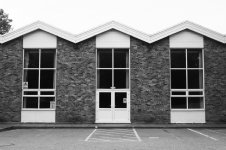
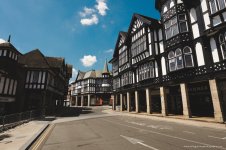
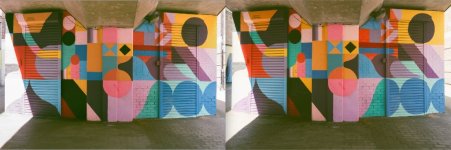
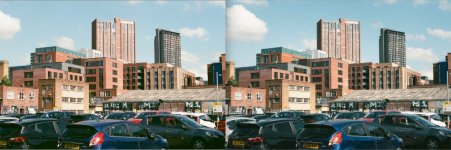
If you want me to send you some uncorrected shots that I took with it drop me a message, I'll dig some out. These were taken with it, I can't remember how much I did to them now...


Leake Street graffiti tunnel by Kerry M, on Flickr


Coventry Cathedral by Kerry M, on Flickr

217F84BB-66C8-4EB0-9BFF-6CEDD378D3DE_1_105_c.jpeg

9F5F0B8C-381A-4809-A087-E4CEB98C50C0_1_105_c.jpeg
 
Hi everyone, I'm wanting to get a (hopefully cheap) lens for my X-T30 to make it more pocketable so that I actually bother to take it out with me. On those lines has anyone got any experience of the TTartisans 27mm F2.7 or the TTartisans 35mm F1.8 please?
I have a suspicion that the 35mm won't be that much smaller than the XF18-55 kit lens, so probably won't give that benefit; whereas the 27mm looks pretty tiny and light weight.
This post I did on Reddit may be of some assistance:
View: https://www.reddit.com/r/fujifilm/comments/1knwi02/ttartisan_27mm_28_vs_viltrox_28mm_45_a_dull_and/
 
Last edited:
9.

X1000756 by Toby Gunnee, on Flickr

10.

X1000792 by Toby Gunnee, on Flickr

11.

X1000822 by Toby Gunnee, on Flickr
Hi, can I ask have these had much in the way of processing? I’m really liking the colours in the Fuji section compared to my Sony kit, to me it’s more film like to some extent and I keep resisting the urge to buy a film camera and enter that rabbit hole but if Fuji can get me 90% of the way there I really could be tempted to go down the xt route.
Many thanks
 
Hi, can I ask have these had much in the way of processing? I’m really liking the colours in the Fuji section compared to my Sony kit, to me it’s more film like to some extent and I keep resisting the urge to buy a film camera and enter that rabbit hole but if Fuji can get me 90% of the way there I really could be tempted to go down the xt route.
Many thanks
Ahh the search for the Holy Grail ;) I've been searching for a processing style for years that looks more film like, works across the board and one that has longevity (I try ones, think they look good and then 6 months later don't like them).

My take on it is that if you shoot raw it doesn't really matter which camera you shoot with, you can get them to look like each other within 95-99% accuracy. For example, this is just a quick edit and won't be exact as it's a different scene taken on a different day (3 years ago) with different light but it looks pretty close and it was shot on Sony.

52980597838_0e7b503475_o.jpg


I've spent ages trying to replicate film and thought I'd cracked it a few weeks ago when I did these, one shot on film (Olympus OM1 wiht Fujifilm Superior) and one with the X-E5 I borrowed.
Screenshot 2026-04-28 at 07.49.04.jpg

Screenshot 2026-04-28 at 07.12.52.jpg


I was very happy with myslef until I applied the preset to different shots and they looked horrendous. I started taking a closer look at the shots I'd taken with film and of course with different scenes it looks completely different. Here's two photos of my dog, both taken with the same film, and the same film as the shots above. Look how different the 'processing looks'
Screenshot 2026-05-07 at 13.35.22.jpg


It's made me realise that after all this time I've been chasing an impossible 'dream', there's no one preset that works for everything,.... unless it's true to life which film and film presets aren't.


Back to your original question, I don't do a lot of processing but yes the photos have had colour and curve tweaks. I was hoping that I could shoot SOOC jpeg but unfortunately I can't get the Fuji Jpegs to look exactly how I want, mainly due to not being able to change the individual colours. To be fair they're not far off, and a lot closer than I can get out of Sony SOOC jpegs, but I've resigned myself to the fact I'm still going to have to shoot raw. Here's the comparison of the SOOC Jpeg on the left and tweaked JPEG (not raw) in lightroom On the right
Edit: the differences look more apparent on the original files on my computer

Screenshot 2026-05-07 at 13.42.16.jpg
 
Last edited:
Ahh the search for the Holy Grail ;) I've been searching for a processing style for years that looks more film like, works across the board and one that has longevity (I try ones, think they look good and then 6 months later don't like them).

My take on it is that if you shoot raw it doesn't really matter which camera you shoot with, you can get them to look like each other within 95-99% accuracy. For example, this is just a quick edit and won't be exact as it's a different scene taken on a different day (3 years ago) with different light but it looks pretty close and it was shot on Sony.

View attachment 481540


I've spent ages trying to replicate film and thought I'd cracked it a few weeks ago when I did these, one shot on film (Olympus OM1 wiht Fujifilm Superior) and one with the X-E5 I borrowed.
View attachment 481541

View attachment 481542


I was very happy with myslef until I applied the preset to different shots and they looked horrendous. I started taking a closer look at the shots I'd taken with film and of course with different scenes it looks completely different. Here's two photos of my dog, both taken with the same film, and the same film as the shots above. Look how different the 'processing looks'
View attachment 481543


It's made me realise that after all this time I've been chasing an impossible 'dream', there's no one preset that works for everything,.... unless it's true to life which film and film presets aren't.


Back to your original question, I don't do a lot of processing but yes the photos have had colour and curve tweaks. I was hoping that I could shoot SOOC jpeg but unfortunately I can't get the Fuji Jpegs to look exactly how I want, mainly due to not being able to change the individual colours. To be fair they're not far off, and a lot closer than I can get out of Sony SOOC jpegs, but I've resigned myself to the fact I'm still going to have to shoot raw. Here's the comparison of the SOOC Jpeg on the left and tweaked JPEG (not raw) in lightroom On the right
Edit: the differences look more apparent on the original files on my computer

View attachment 481547

Thank you very much for the detailed reply and the examples, I’m glad I’m not alone in looking for the holy grail and it’s encouraging to see what can be done with the editing software it’s the one area of photography I tend to skip on as much as possible unfortunately but I think it’s something I’ll start trying to learn more and put more effort into. You’ve definitely saved me going down another rabbit hole.
 
Thank you very much for the detailed reply and the examples, I’m glad I’m not alone in looking for the holy grail and it’s encouraging to see what can be done with the editing software it’s the one area of photography I tend to skip on as much as possible unfortunately but I think it’s something I’ll start trying to learn more and put more effort into. You’ve definitely saved me going down another rabbit hole.
My pleasure. IF, and it's a big IF, you can find a processing style that you're happy with and works for most things you can save it as a preset and just apply that on import, this way it cuts editing time down and it's not a lot different to shooting with SOOC Jpegs.

My workflow is import the file (adding a preset for raw) > crop and adjust exposure as necessary > export. If I'm doing more 'serious' stuff then I may dodge and burn too, and in the case of portraits add some skin smoothing but that's about it.

I can't remember which Sony camera you have, but Sony have come on along way with their colour science and for me they're now one of the best for me, I probably prefer the raw file colours from Sony over Fuji, but of course with Fuji they have their film profiles that can be added. Don't forget though in Lightroom it's just Adobe's interpretation and they're not exactly the same as the camera and so you should be able to come up with something similarly close with Sony files.

I'll not get rid of my Sony gear as I like the look and detail that full frame offers, but at the same time I'm not going to get rid of my X100VI as it's great fun to use and for day to day stuff the image quality is more than good enough. I do also fancy the X-T5 (or X-T6 when it's announced) paired with the 16-50mm f2.8-4.8 as a relatively lightweight travel option but then wonder if I should just use the X100VI, I've never gone away with just one focal length before :runaway:
 
but then wonder if I should just use the X100VI, I've never gone away with just one focal length before :runaway:

It’s not really one focal length with 40MP and cropping, and you can always (usually) shoot a 2 or 3 shot pano for something wider.

Personally I find it quite liberating just working with a single focal length, as you get into the zone of knowing the field of view before you even raise the camera, and if you can get any FOMO out of the way, you’ll come home with an interesting array of shots - you may even surprise yourself.

I used the X100F (with no converters) for several travel trips and never regretted it. Nowadays I’d take either of my Q3s (but not both) and still enjoy the experience
 
Likewise, I have just taken the X100v on a few trips when travelling light.

I'm doing a photo walk at the weekend, and even though it is a dedicated photography thing, I'll probably still just take the X100v.
 
It’s not really one focal length with 40MP and cropping, and you can always (usually) shoot a 2 or 3 shot pano for something wider.

Personally I find it quite liberating just working with a single focal length, as you get into the zone of knowing the field of view before you even raise the camera, and if you can get any FOMO out of the way, you’ll come home with an interesting array of shots - you may even surprise yourself.

I used the X100F (with no converters) for several travel trips and never regretted it. Nowadays I’d take either of my Q3s (but not both) and still enjoy the experience
I’ve been enjoying just having the one focal length, but it is FOMO when I go away as I think to myself that I need flexibility to get the best shots I can as it’s unlikely we’ll go back to the same place.

I guess until I try I’ll never know.
 
Back
Top