Is photography as a hobby dying?

I'm not sure how to judge whether photography is dying as a hobby, but over the twenty years or so since I've been visiting the RSPB reserve at Ham Wall in Somerset, there has been a steady increase in the number of people visiting it with good quality cameras and long lenses.

When I say increase, I just mean I have "noticed more".

This increase hasn't just been men, it's also been children and teenagers, women on their own (across a spectrum of ages) and couples where both are carrying a good camera with a long lens.

Occasionally, on some days you feel that almost everyone is a "photographer", and I get a surprise when I realise it's actually a telescope attached to a tripod and not a camera.

The National Trust property at Stourhead in Wiltshire, is another place where I feel I am seeing more "good" cameras than I used to. Last week there were even a few people with DSLRs: one was Nikon D780, one was a Nikon I couldn't identify, and a third was a "gripped" Canon.

The week before at National Trust Montacute, there was someone with a Nikon D850 and another with a Leica Q (no idea which model).
 
Perhaps the irony is that cell phone photography hasn't killed traditional photography; it's becoming "traditional" photography...

I'm not convinced the underlying desire to go somewhere, see something and make a photograph has declined at all. If anything, the ease of doing so with the phone in your pocket has increased the take-up of the hobby. Look at how many famous photographic locations are now mobbed with people wanting to make the same image.
 
It has nearly died for me. Since going digital the 'magic' of film is gone.
Taking pictures is undeniabley on the up.
"Photography " died with film.

I've said it before, happy to be shot down again.
 
Someone alluded to this vaguely earlier: that it is the process of photography that enthusiasts and increasing numbers of people enjoy, more than the end result. Even with a phone camera, people enjoy taking the image and looking at the results in the moment, but they rarely if ever go back to it. If they do, it's to recap the moment when they took it.

Even with digital, the process is there to be enjoyed, but it is different to the film process. I really enjoy doing film, all the different sorts, then processing it in some cases myself. But then it merges with the digital process because I then might edit the scans, or make new ones to edit from the negs if it;s film, and I have a further new process which I do enjoy too. I'm not very good at any of it but that actually doesn't matter much to me because I enjoy the "doing". Some people work for a better quality image, and that's important to them. It's nice for me too. But it's always the journey more than the arrival that floats my boat.

As to a comment earlier about groups on FB and the like: they don;t work so well. another popular forum closed and went to FB, then people started complaining about how the algorithm was decided what they were able to look at and in what order. Not a problem in a proper forum.
 
As to a comment earlier about groups on FB and the like: they don;t work so well. another popular forum closed and went to FB, then people started complaining about how the algorithm was decided what they were able to look at and in what order. Not a problem in a proper forum.
There was a popular American forum, but for the life of me I can’t remember what it was called, let alone find out. Could it be this one you are referring to?
 
I suppose we need to try to distinguish "photography as a hobby" from the ubiquitous snapshot. I imagine we all have some sense the distinction but its quite a slippery thing to pin down.
A camera shop owner once told me that he owed his nice house to Michelangelo Antonioni and David Hemmings. When the film "Blowup" came out in the mid 1960s, he claimed, his turnover doubled. People saw the film and decided they all wanted to be a photographer.

 
I believe in my lifetime there’s been 3 ‘booms’ in photography as a hobby. In the 70’s, the 80’s and the 2000’s. In the 90’s and since the early 2010’s there were (and are) fewer visible ‘people with cameras’.

What is different now though, is that casual photography is bigger than ever, but it’s with phones not cameras.

I believe in one of the early years of smartphones, there were more ‘photographs’ taken than in all the years up to that point. Everywhere you go you’ll see people taking pictures, it’s just not with cameras.

SLR’s became DSLR’s and are now mirrorless. The technology of the R5 though? Like magic compared to an old DSLR.

Yeah, when my children were young in the late 00s-early 2010, you saw so many people, other new parents out with “proper” cameras, but as phones got better, you see it less and less, to the point that I just don’t see many people at all, snapping with a big R5/6 equivalent camera any more. Even in touristy places, the big mirrorless / dslr is quite a rarity.

My own observation, looking at Flickr and various other social sites, is that more photos than ever are being taken, but because of that, it’s actually quite hard to find genuinely really interesting and artistic photos. Not just photos of beautiful things, but something actually created or crafted. Ones that make you go, wow, and save it to your phone for inspiration.

There is a lot of stuff that’s very trite, not very challenging, and I think that’s what you see, imo.
 
My own observation, looking at Flickr and various other social sites, is that more photos than ever are being taken, but because of that, it’s actually quite hard to find genuinely really interesting and artistic photos. Not just photos of beautiful things, but something actually created or crafted. Ones that make you go, wow, and save it to your phone for inspiration.

There is a lot of stuff that’s very trite, not very challenging, and I think that’s what you see, imo.
There always were a lot of photos taken, but they never got seen in public. The internet now means they can all be seen by the public! :D
 
There was probably a middle ground that has collapsed, someone with a vague interest needing to buy a camera, learn how to use the thing by attending evening lessons or joining groups, might buy magazines for tips etc, they're the photographer on family days out, events etc.. and then print for the album. So for this, an element of craft needed to be learned, but now the phone has replaced all this. There's no need for as many magazines, evening classes, clubs/groups - so the visual signifiers of a hobby are reduced.
 
There always were a lot of photos taken, but they never got seen in public. The internet now means they can all be seen by the public! :D
It was also expensive, and proportionally probably a lot more technical failures, so even though a lot of people were taking photographs, there were in smaller numbers, and as you say, no easy way to inflict them on others.

I have less than fond memories of sitting with family looking through dozens (sometimes hundreds) of unedited holiday pictures, either as prints or as a slideshow.
 
There was probably a middle ground that has collapsed, someone with a vague interest needing to buy a camera, learn how to use the thing by attending evening lessons or joining groups, might buy magazines for tips etc, they're the photographer on family days out, events etc.. and then print for the album. So for this, an element of craft needed to be learned, but now the phone has replaced all this. There's no need for as many magazines, evening classes, clubs/groups - so the visual signifiers of a hobby are reduced.
Then again Youtube is swamped by photography channels.
 
There was probably a middle ground that has collapsed, someone with a vague interest needing to buy a camera, learn how to use the thing by attending evening lessons or joining groups, might buy magazines for tips etc, they're the photographer on family days out, events etc.. and then print for the album. So for this, an element of craft needed to be learned, but now the phone has replaced all this. There's no need for as many magazines, evening classes, clubs/groups - so the visual signifiers of a hobby are reduced.
Then again Youtube is swamped by photography channels.

Big problem with other media is the repetivity - many magazines and you tube channels trot out the same stuff on repeat over a year or so. Orginality in both is quite hard to find.
 
Just a thought here: I suspect that there are now many times more "business" photographers than amateur photographers, thanks to the camera phone.

I've noticed that when we get people in to work on the house they all take numerous pictures to record the before, during and after, When someone kindly took the side off my parked car, the bodywork people and the insurance representatives both recorded the damage and the repair on their phones.
 
Just a thought here: I suspect that there are now many times more "business" photographers than amateur photographers, thanks to the camera phone.

I've noticed that when we get people in to work on the house they all take numerous pictures to record the before, during and after, When someone kindly took the side off my parked car, the bodywork people and the insurance representatives both recorded the damage and the repair on their phones.
With phones, not only is taking a quick pic easy , so is transmitting it to anywhere in the world on almost any platform, practically instantly. For the examples you quote, quality is rarely a factor. They are the easy use equivalent of the old Kodak snappers and subsequent compacts, which have always outsold 'real' cameras.
 
Just a thought here: I suspect that there are now many times more "business" photographers than amateur photographers, thanks to the camera phone.

I've noticed that when we get people in to work on the house they all take numerous pictures to record the before, during and after, When someone kindly took the side off my parked car, the bodywork people and the insurance representatives both recorded the damage and the repair on their phones.
So, I suspect a lot of this is duel purpose, making pictures for 'admin' as well as social media content. There's an 'always on' culture now, businesses need to always be posting content through fear of becoming invisible.
 
Re DUMB AI :

I watched an interview of a respected AI reporter with Ezra Klein. In it the "industry" opinion was that Ai will be able to write an Ai program of its own within two years, and that will write another of its own within another year.

I wonder how long it will be before world leaders are having to negotiate with the AI president. Not long I suspect. Ai only has to create a distinct language and we will not have a clue what it is doing, the recent breakouts that took weeks to "discover" only proves to us and to Ai agents that we are clueless, and that we can easily be held to ransom.
 
Big problem with other media is the repetivity - many magazines and you tube channels trot out the same stuff on repeat over a year or so. Orginality in both is quite hard to find.

When I started to be serious about photography I bought Amateur Photographer and a couple of other magazines regularly. After a year I noticed how they would repeat effectively the same articles to the point it became tedious and I stopped buying them. There's a very limited amount to say about the technical aspects of taking a picture, but it had to be said again and again.

AP was not really that interested in the creative seeing side, or at least they didn't publish too many articles about it.
 
Photography on the net (POTN)?

It was not that one... but when I searched for it, Reddit popped up in the search. Mmm. May need to explore Reddit a bit too.

But I just found the forum I had in mind that I used to browse, but was not active in: it was "Open Photography Forums".
 
Re DUMB AI :

I watched an interview of a respected AI reporter with Ezra Klein. In it the "industry" opinion was that Ai will be able to write an Ai program of its own within two years, and that will write another of its own within another year.
Programmes that "write" other programmes have been around since the 1970s, with experiments going back even earlier. In another post, I mentioned working with two commercial programme generators (TLO and Sycero). The technology has been well established for decades.
Ai only has to create a distinct language and we will not have a clue what it is doing,
A programme can only make use of the facilities in its code or in the code of other programmes, which it's allowed to call.

If you create a sufficiently complicated system, it will inevitably take longer to analyse the generated code but it will still be possible to do so. Isaac Asimov wrote a humorous short story, "The Feeling of Power", in 1958 about people having to relearn basic arithmetic when their computers failed. This pointed up that computers would fail and the more complicated they were, the more likely they were to fail.
the recent breakouts that took weeks to "discover" only proves to us and to Ai agents that we are clueless, and that we can easily be held to ransom.
People are only "clueless" if they allow themselves to be. The so-called "breakout" was possible only because someone left that possibility in the code. It should have been checked for but "managers" don't want to pay coders for the time it takes to check code properly. As a very sage saying goes "pay less, pay twice".
 
When I started to be serious about photography I bought Amateur Photographer and a couple of other magazines regularly. After a year I noticed how they would repeat effectively the same articles to the point it became tedious and I stopped buying them. There's a very limited amount to say about the technical aspects of taking a picture, but it had to be said again and again.

AP was not really that interested in the creative seeing side, or at least they didn't publish too many articles about it.

I think in the world of affordable newsagent magazines only B+W Photography bucks this trend, which is why I have all 317 issues....................................:exit:
 
When I started to be serious about photography I bought Amateur Photographer and a couple of other magazines regularly. After a year I noticed how they would repeat effectively the same articles to the point it became tedious and I stopped buying them. There's a very limited amount to say about the technical aspects of taking a picture, but it had to be said again and again.

AP was not really that interested in the creative seeing side, or at least they didn't publish too many articles about it.
Golf magazines have the same repeating circular index.
Regarding Photo magazines, it always struck me that the same people always seemed to win the competitions .
 
Programmes that "write" other programmes have been around since the 1970s, with experiments going back even earlier. In another post, I mentioned working with two commercial programme generators (TLO and Sycero). The technology has been well established for decades.

A programme can only make use of the facilities in its code or in the code of other programmes, which it's allowed to call.

If you create a sufficiently complicated system, it will inevitably take longer to analyse the generated code but it will still be possible to do so. Isaac Asimov wrote a humorous short story, "The Feeling of Power", in 1958 about people having to relearn basic arithmetic when their computers failed. This pointed up that computers would fail and the more complicated they were, the more likely they were to fail.

People are only "clueless" if they allow themselves to be. The so-called "breakout" was possible only because someone left that possibility in the code. It should have been checked for but "managers" don't want to pay coders for the time it takes to check code properly. As a very sage saying goes "pay less, pay twice".
Historical experience is useful but I don't think it covers Ai today.
My understanding is that the "singularity" is what's worrying the experts. This is when it rewrites itself to be more intelligent and it grows exponentially.
My son is a lead programmer at Money Box and they are very concerned about the threat Ai presents to security, both application and job security.
I think the real issue is that now we have created it we have no idea what it is capable of.
 
Last edited:
Talking about ai...

I use ai extensively in technical matters for work. I also use it as a tool for learning.

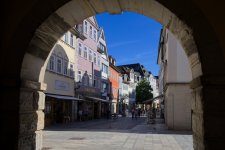
As an experiment, I just threw a photo a random file I downloaded based on when I was investigating the Canon R5ii into ChatGPT, with a prompt:

"Can you access the EXIF data on this photo. Can you make some suggestions on how to create a better balance to make it appear more natural, and what settings I could have used instead ?"

This is the sort of stuff it can return to you, and help you learn. Quite amazing really.

The photo... credit to the photographer. View: https://flic.kr/p/2swF8Bh


--
Yes — I can access the EXIF data that is still embedded in this JPEG. There is an important catch, though: the camera exposure settings have been stripped from the file, almost certainly because the image has been processed/exported through ACDSee.

EXIF I can recover​

EXIF fieldValue
CameraCanon EOS R5 Mark II
Date/time8 August 2026, 14:21:51
OrientationNormal
SoftwareACDSee Ultimate 2026
ArtistDongning LI
Resolution2172 × 1448
X/Y resolution240 dpi
GPSGPS block exists, but the actual coordinates aren't exposed by the JPEG metadata I'm seeing
Shutter speed❌ Not present
Aperture❌ Not present
ISO❌ Not present
Focal length❌ Not present
Metering mode❌ Not present
Exposure compensation❌ Not present
So unfortunately I can't tell you exactly what you shot at.
But the photograph itself tells us quite a lot.


What's happening with the exposure​


1

The composition is actually very good. The arch is being used as a natural frame, and the bright blue sky and colourful buildings make the centre of the image attractive.

The problem is tonal balance.

The arch occupies a huge proportion of the frame, and roughly 31% of the image's pixels are below a luminance of 20/255. That's extremely dark. Meanwhile, almost nothing is actually clipped in the highlights.

That tells me something quite useful:

You didn't really have a highlight-clipping problem. You had an underexposed-shadow problem.

The camera was faced with a classic high-dynamic-range situation:

dark stone arch + buildings in direct sunlight + bright sky.
If the camera metered predominantly for the bright street/sky, the arch naturally went almost black.

Why it feels slightly unnatural​

Your eye would perceive the scene approximately like this:

  • Arch: dark, but you would still see its texture and stone detail
  • Buildings: bright
  • Sky: deep blue
  • Shadows under the buildings: relatively open
The photograph instead has:

  • Arch: almost black
  • Buildings: bright
  • Sky: very saturated/deep blue
  • Street: reasonably exposed
So the arch becomes a black vignette rather than something that feels like an object in the same lighting environment.

It's actually quite a common "looks great on the camera LCD" problem.


What I would do in post-processing​

I wouldn't simply raise the overall exposure.

That would make the buildings and sky too bright.

Instead, I'd make this a local tonal correction.

My starting point in Lightroom / ACR​

I'd try approximately:

Global

  • Exposure: +0.1 to +0.25
  • Contrast: -5
  • Highlights: -10
  • Shadows: +20 to +35
  • Whites: -5
  • Blacks: +5 to +10
Then create a mask for the arch:

Arch mask

  • Exposure: +0.3 to +0.5
  • Shadows: +35 to +55
  • Blacks: +10 to +20
  • Texture: +5 to +10
The important bit is that I wouldn't lift the entire image. I'd open the arch selectively.

I'd also reduce the blue slightly​

The sky is very strongly saturated.

I'd try:

  • Blue saturation: -5 to -10
  • Blue luminance: +5
Possibly also reduce overall saturation very slightly, around -3.

Not because the blue is technically wrong — it's beautiful — but because the combination of very dark arch + extremely blue sky makes the photograph look more processed than it needs to.


But here's the really interesting part: what I would have done in-camera​

With an R5 Mark II, I would have approached this differently.

You had three good options.

1. My preferred option: expose for the highlights + lift shadows​

I would probably have used:

Evaluative metering + about +1/3 EV exposure compensation

and then relied on the R5 II's excellent dynamic range to recover the arch in RAW.

Something approximately like:

ISO 100
f/8
1/250–1/500 sec
+1/3 EV


Obviously the shutter speed depends on the actual light and lens.

The critical point isn't those exact numbers.

It's:

Expose as far to the right as you safely can without clipping the sky/buildings, then recover the arch from RAW.
Your histogram suggests there was considerable room before highlight clipping. So I suspect you could have given the whole image a little more exposure.


2. Even better: bracket the exposure​

For this particular composition, I'd probably bracket.

For example:

-2 EV / 0 EV / +2 EV

or, if the dynamic range wasn't quite that extreme:

-1.5 / 0 / +1.5 EV

Then either:

  • choose the best single RAW, or
  • blend the exposures.
The latter would give you:

bright exterior + detailed arch

without needing to push the shadows aggressively.

And because essentially nothing in the scene is moving significantly, this is an excellent candidate for HDR/bracketing.


3. The "photographer's trick": deliberately expose the arch​

There's another possibility.

If the arch is an important compositional element rather than simply foreground shadow, I'd actually consider metering the arch.

You could expose so that the stonework remains clearly visible and let the sky become somewhat brighter.

Then recover the sky in RAW.

That would change the photograph from:

black arch framing a bright scene
to:

old stone arch framing a naturally lit street
I think the second is more sophisticated.


And there is another clue in your file​

The JPEG has been processed by:

ACDSee Ultimate 2026

That makes me suspect the image you're showing me isn't the original camera JPEG.

If you still have the original CR3 RAW, that's what I'd really like to work with.

The difference could be substantial.

The R5 Mark II gives you considerably more information in the RAW file than this 2172×1448 JPEG contains. If this JPEG has already been processed, the very dark arch may actually contain recoverable information that has simply been compressed away in the export.

My overall verdict​

Composition: 8.5/10
Colour: 8/10
Exposure balance: 6/10
Potential after correction: 9/10


I wouldn't radically change this photograph. The composition is strong. I'd just make the arch about one stop visually lighter, slightly reduce the intensity of the blue, and soften the overall contrast.

The key lesson for the original capture is:

Don't try to make the camera solve the dynamic range problem with one exposure. Protect the highlights, shoot RAW, and deliberately recover the shadows — or bracket.
And because this is an R5 Mark II, I'd be particularly inclined to use the camera's dynamic range rather than accepting that almost-black foreground.

If you have the original CR3, upload that. I can inspect the actual capture metadata and tell you exactly what ISO/aperture/shutter speed/focal length you used, and then we can work out what I'd change for the same shot.


Damn! :-o

 

Attachments

  • 27A0E3CD-C58F-4186-872C-7725DA58C1BB_1_102_o.jpeg
    27A0E3CD-C58F-4186-872C-7725DA58C1BB_1_102_o.jpeg
    111.4 KB · Views: 10
Last edited by a moderator:
Talking about ai...

I use ai extensively in technical matters for work. I also use it as a tool for learning.

As an experiment, I just threw a photo a random file I downloaded based on when I was investigating the Canon R5ii into ChatGPT, with a prompt:

"Can you access the EXIF data on this photo. Can you make some suggestions on how to create a better balance to make it appear more natural, and what settings I could have used instead ?"

This is the sort of stuff it can return to you, and help you learn. Quite amazing really.

The photo... I do not know where I got it from now, so unfortunately cannot credit the photographer. :-(

View attachment 491510


--
Yes — I can access the EXIF data that is still embedded in this JPEG. There is an important catch, though: the camera exposure settings have been stripped from the file, almost certainly because the image has been processed/exported through ACDSee.

EXIF I can recover​

EXIF fieldValue
CameraCanon EOS R5 Mark II
Date/time8 August 2026, 14:21:51
OrientationNormal
SoftwareACDSee Ultimate 2026
ArtistDongning LI
Resolution2172 × 1448
X/Y resolution240 dpi
GPSGPS block exists, but the actual coordinates aren't exposed by the JPEG metadata I'm seeing
Shutter speed❌ Not present
Aperture❌ Not present
ISO❌ Not present
Focal length❌ Not present
Metering mode❌ Not present
Exposure compensation❌ Not present
So unfortunately I can't tell you exactly what you shot at.
But the photograph itself tells us quite a lot.


What's happening with the exposure​


1

The composition is actually very good. The arch is being used as a natural frame, and the bright blue sky and colourful buildings make the centre of the image attractive.

The problem is tonal balance.

The arch occupies a huge proportion of the frame, and roughly 31% of the image's pixels are below a luminance of 20/255. That's extremely dark. Meanwhile, almost nothing is actually clipped in the highlights.

That tells me something quite useful:

You didn't really have a highlight-clipping problem. You had an underexposed-shadow problem.

The camera was faced with a classic high-dynamic-range situation:


If the camera metered predominantly for the bright street/sky, the arch naturally went almost black.

Why it feels slightly unnatural​

Your eye would perceive the scene approximately like this:

  • Arch: dark, but you would still see its texture and stone detail
  • Buildings: bright
  • Sky: deep blue
  • Shadows under the buildings: relatively open
The photograph instead has:

  • Arch: almost black
  • Buildings: bright
  • Sky: very saturated/deep blue
  • Street: reasonably exposed
So the arch becomes a black vignette rather than something that feels like an object in the same lighting environment.

It's actually quite a common "looks great on the camera LCD" problem.


What I would do in post-processing​

I wouldn't simply raise the overall exposure.

That would make the buildings and sky too bright.

Instead, I'd make this a local tonal correction.

My starting point in Lightroom / ACR​

I'd try approximately:

Global

  • Exposure: +0.1 to +0.25
  • Contrast: -5
  • Highlights: -10
  • Shadows: +20 to +35
  • Whites: -5
  • Blacks: +5 to +10
Then create a mask for the arch:

Arch mask

  • Exposure: +0.3 to +0.5
  • Shadows: +35 to +55
  • Blacks: +10 to +20
  • Texture: +5 to +10
The important bit is that I wouldn't lift the entire image. I'd open the arch selectively.

I'd also reduce the blue slightly​

The sky is very strongly saturated.

I'd try:

  • Blue saturation: -5 to -10
  • Blue luminance: +5
Possibly also reduce overall saturation very slightly, around -3.

Not because the blue is technically wrong — it's beautiful — but because the combination of very dark arch + extremely blue sky makes the photograph look more processed than it needs to.


But here's the really interesting part: what I would have done in-camera​

With an R5 Mark II, I would have approached this differently.

You had three good options.

1. My preferred option: expose for the highlights + lift shadows​

I would probably have used:

Evaluative metering + about +1/3 EV exposure compensation

and then relied on the R5 II's excellent dynamic range to recover the arch in RAW.

Something approximately like:

ISO 100
f/8
1/250–1/500 sec
+1/3 EV


Obviously the shutter speed depends on the actual light and lens.

The critical point isn't those exact numbers.

It's:


Your histogram suggests there was considerable room before highlight clipping. So I suspect you could have given the whole image a little more exposure.


2. Even better: bracket the exposure​

For this particular composition, I'd probably bracket.

For example:

-2 EV / 0 EV / +2 EV

or, if the dynamic range wasn't quite that extreme:

-1.5 / 0 / +1.5 EV

Then either:

  • choose the best single RAW, or
  • blend the exposures.
The latter would give you:

bright exterior + detailed arch

without needing to push the shadows aggressively.

And because essentially nothing in the scene is moving significantly, this is an excellent candidate for HDR/bracketing.


3. The "photographer's trick": deliberately expose the arch​

There's another possibility.

If the arch is an important compositional element rather than simply foreground shadow, I'd actually consider metering the arch.

You could expose so that the stonework remains clearly visible and let the sky become somewhat brighter.

Then recover the sky in RAW.

That would change the photograph from:


to:


I think the second is more sophisticated.


And there is another clue in your file​

The JPEG has been processed by:

ACDSee Ultimate 2026

That makes me suspect the image you're showing me isn't the original camera JPEG.

If you still have the original CR3 RAW, that's what I'd really like to work with.

The difference could be substantial.

The R5 Mark II gives you considerably more information in the RAW file than this 2172×1448 JPEG contains. If this JPEG has already been processed, the very dark arch may actually contain recoverable information that has simply been compressed away in the export.

My overall verdict​

Composition: 8.5/10
Colour: 8/10
Exposure balance: 6/10
Potential after correction: 9/10


I wouldn't radically change this photograph. The composition is strong. I'd just make the arch about one stop visually lighter, slightly reduce the intensity of the blue, and soften the overall contrast.

The key lesson for the original capture is:


And because this is an R5 Mark II, I'd be particularly inclined to use the camera's dynamic range rather than accepting that almost-black foreground.

If you have the original CR3, upload that. I can inspect the actual capture metadata and tell you exactly what ISO/aperture/shutter speed/focal length you used, and then we can work out what I'd change for the same shot.


Damn! :-o

Wow.
 
Back
Top